





















Many people assume that why slim people can have high blood sugar is not even a real question. The usual picture of diabetes is someone overweight, sitting a lot, and eating badly. And yes, having a lot of weight is one of the biggest risk factors for type 2 diabetes.
But doctors regularly diagnose prediabetes, insulin resistance, and even diabetes in people who have a normal BMI. Some discover it during a routine health check. Others only after years of symptoms.
The problem is that body weight is visible. Metabolic health is not. A person can look fit from the outside and still have blood sugar problems developing quietly for years. Not because being slim is dangerous. It isn’t. But because the things that drive blood sugar problems are often happening in places nobody can see.
- Some slim people develop insulin resistance because of hidden visceral fat, genetics, low muscle mass, poor sleep, inactivity, or conditions such as LADA.
- A normal BMI cannot show where fat is stored or how well insulin is working.
- That is why some people with normal body weight still develop prediabetes or diabetes.
Read More: 8 Weight Loss Shakes For Slimming Down
Why Weight Is Not the Whole Picture: The Insulin Resistance Mechanism

When people talk about diabetes, they often talk about sugar. The real story usually starts with insulin. Insulin is a hormone made by the pancreas. Its job is simple. After you eat, glucose enters the bloodstream. Insulin helps move that glucose from the blood into cells where it can be used for energy.
In insulin resistance, that process becomes less efficient. The cells stop responding properly. Not fully. Just enough to create problems. The pancreas notices this and works harder. It starts releasing larger amounts of insulin to keep blood sugar under control. For quite a long time, blood sugar tests may still look normal because the pancreas is compensating.
This stage often goes completely unnoticed. No symptoms. No diagnosis. Nothing obvious. Then, eventually, the pancreas cannot keep matching the demand. Blood sugar starts creeping upward. First, prediabetes. Then, for some people, type 2 diabetes. What matters here is something many people never hear. Insulin resistance is not only found in people carrying visible excess weight.
Researchers have repeatedly found insulin resistance in lean individuals as well. One important reason is ectopic fat. This means fat is stored where it does not really belong. Inside liver cells. Around the pancreas. Within muscle tissue. Not necessarily under the skin, where it can be seen.
Dr. Gerald I. Shulman, an endocrinologist, says, “We studied humans with lipodystrophy – no visceral fat at all, but huge ectopic fat in the liver and muscle. They had enormous insulin resistance, full-blown diabetes.”
That hidden fat can interfere with insulin function even when someone’s BMI sits comfortably in the normal range. So the issue is often not how much fat exists. It is where the fat is being stored.
The TOFI Concept: Thin Outside, Fat Inside

There is a phrase doctors sometimes use that sounds almost made up. TOFI. Thin Outside, Fat Inside. It describes people who look slim but carry relatively high amounts of internal fat around their organs.
Most people think of fat as something visible. Fat on the stomach. Fat on the hips. Fat around the waist. Visceral fat behaves differently. It sits deeper inside the abdomen around organs such as the liver, pancreas, and intestines. You cannot always judge its presence by looking at someone.
Two people can stand next to each other with exactly the same BMI. Same height. Same weight. Very different metabolic health. One may have relatively little visceral fat and excellent insulin sensitivity. The other may carry significantly more visceral fat around the liver and pancreas and already be developing insulin resistance.
The scale cannot tell the difference. BMI cannot tell the difference either. This is one reason why BMI works well when looking at large populations but often performs poorly when judging risk for a specific person.
A practical example helps. Imagine two people with a BMI of 23. One exercises regularly, has reasonable muscle mass, sleeps well, and stays physically active throughout the day. The other spends most of the day sitting, rarely exercises, sleeps poorly, and eats mainly refined carbohydrates. Same BMI. Not necessarily the same metabolic health.
This is exactly why some people are surprised when blood tests show normal-weight diabetes or prediabetes despite appearing slim. The body does not really care what your BMI category says. The body responds to what is happening inside tissues and organs.
Lean Insulin Resistance: Who Is Most at Risk?

When people hear the term “lean insulin resistance,” they often imagine it must be extremely rare. It isn’t. Not common enough to replace obesity as the major diabetes risk factor. But common enough that doctors see it regularly. Some groups appear more vulnerable than others.
Family history is probably one of the biggest clues. A slim person with multiple relatives who developed type 2 diabetes may carry a higher risk than an overweight person with no family history. Genetics cannot be seen in a mirror. They still matter.
Ethnicity matters too. People of South Asian and East Asian backgrounds often develop metabolic complications at lower BMI levels compared with many European populations. This has been recognized strongly enough that several diabetes screening guidelines now use lower BMI thresholds for screening in these groups.
Another overlooked factor is physical inactivity. Many people assume thin automatically means fit. Those are not the same thing. Muscle is one of the body’s biggest glucose disposal systems. After meals, healthy muscle tissue helps remove glucose from the bloodstream efficiently.
A lean person with low muscle mass and very little physical activity may have poorer glucose handling than someone heavier who exercises consistently.
Diet matters too, though often not in the way social media suggests. People sometimes believe they can eat unlimited refined carbohydrates because they stay slim. The body does not work that way. Large amounts of refined carbohydrates create repeated insulin demand.
Over the years, this may contribute to insulin resistance regardless of body weight. Then there are factors people rarely connect to blood sugar. Poor sleep. Shift work. Chronic stress. High cortisol levels. These can affect insulin sensitivity even when body weight barely changes. Sometimes the first abnormal sign is not weight gain. It is a blood test.
LADA: The Type of Diabetes Most Commonly Missed in Slim Adults
There is another reason some slim adults develop high blood sugar. And technically, it is not type 2 diabetes. It is called LADA, short for Latent Autoimmune Diabetes in Adults. Many people have never heard of it. Even some patients live with the wrong diagnosis for years before it is recognized.
LADA behaves a little like a slow-moving form of type 1 diabetes. The immune system gradually attacks the insulin-producing beta cells in the pancreas. Unlike classic type 1 diabetes, the process happens more slowly and often appears during adulthood.
Because these patients are often slim and diagnosed later in life, many are initially labeled as type 2 diabetics. That can create problems. The treatment approach is not exactly the same. Over time, people with LADA usually become increasingly dependent on insulin because the pancreas is losing its ability to produce it.
This is why doctors sometimes order antibody tests, particularly GAD antibody testing, when diabetes appears in a lean adult without the usual type 2 diabetes profile. The important point here is simple. Not every case of high blood sugar in a slim person comes from insulin resistance. Sometimes a different form of diabetes is responsible.
Read More: Diets That Add Years to Your Life — and Keep You Healthy
Why Normal Blood Sugar on One Test Does Not Rule Out a Problem
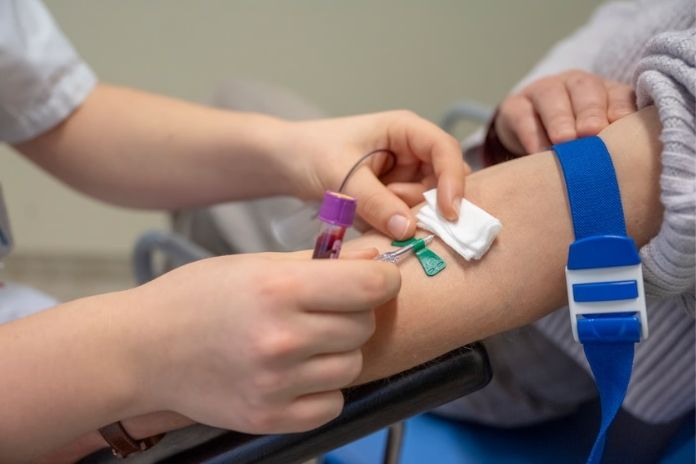
One thing that confuses many people. They get a fasting blood sugar test. The doctor says “normal.” Then they assume everything related to blood sugar is normal. Not always. Blood sugar and insulin are not exactly the same thing. In early insulin resistance, the pancreas often works overtime.
It keeps pushing out more insulin to keep glucose numbers looking normal. So the blood sugar result comes back within range even though the body is already working harder than it should. A person may be developing insulin resistance while every annual glucose test still looks reassuring. That is one reason doctors sometimes look beyond fasting glucose alone.
HbA1c gives a bigger picture because it reflects average blood sugar over roughly two to three months. “A high HbA1c value is the strongest risk factor for developing long-term complications from diabetes,” says Dr. David M. Nathan, a professor of medicine.
An oral glucose tolerance test shows what happens after a glucose challenge rather than after an overnight fast. Fasting insulin can sometimes reveal problems before glucose starts rising. None of these tests is perfect. But they often show things that a single fasting glucose cannot. Another thing worth knowing. BMI is not the only number that matters.
Waist circumference often tells a more useful story about visceral fat than body weight alone. Some slim people have relatively large waist measurements despite a normal BMI. That combination deserves attention. Not panic. Just attention.
A person with a strong family history of diabetes, low physical activity, poor sleep, or symptoms suggestive of insulin resistance should not assume one normal glucose result means there is no risk. Sometimes the problem is there. Just earlier in the process.
Signs That May Indicate Blood Sugar Issues Regardless of Weight

Most people expect diabetes symptoms to appear in someone carrying obvious excess weight. The body doesn’t follow those assumptions. Blood sugar problems can develop in people of almost any body size.
Some symptoms are easy to dismiss because they look unrelated. Feeling extremely tired after meals. Getting sleepy every afternoon despite adequate sleep. Constant cravings for sugary foods. Difficulty concentrating after eating.
These things are often blamed on being busy or stressed. Sometimes they are. Sometimes they are not. Other symptoms are more familiar. Frequent urination. Being thirsty all the time. Waking up repeatedly at night to urinate. Cuts that seem to take forever to heal. Repeated skin infections. Blurred vision that comes and goes.
These symptoms deserve attention, whether someone is slim or overweight. There is also a physical sign that many people have never heard about. Acanthosis nigricans. This appears as darker, slightly thickened skin around areas such as the neck, armpits, elbows, or groin folds. It is often linked with insulin resistance.
Not everyone with insulin resistance develops it. But when it appears, doctors pay attention. The important point is simple. Symptoms do not care about BMI categories. If the symptoms are there, testing makes more sense than guessing.
Read More: The Best Slimming Belts and Sauna Trimmers: Top Recommendations That Actually Work
Conclusion
Being slim is generally beneficial for health. Nobody should twist this discussion into saying body weight does not matter. It does. Excess weight remains one of the strongest modifiable risk factors for type 2 diabetes.
Blood sugar problems develop because of insulin resistance, genetics, visceral fat accumulation, pancreatic function, lifestyle factors, and sometimes autoimmune conditions such as LADA.
The more useful question is not “Do I look like someone who could get diabetes?” The more useful question is “Do I actually know my blood sugar numbers?” Those are not always the same thing.
- BMI does not capture individual metabolic health. People with the same BMI can have markedly different visceral fat levels and diabetes risk.
- Muscle mass influences glucose regulation. Low muscle mass can impair glucose disposal, even in lean individuals.
- TOFI individuals may be missed by screening. BMI-based risk tools can overlook metabolically unhealthy normal-weight people before glucose abnormalities emerge.
- Visceral fat is difficult to measure routinely. Accurate imaging exists but is impractical for widespread screening, underscoring the need for low-cost markers.
FAQs
1. Can a slim person develop type 2 diabetes?
Yes, a slim person can develop type 2 diabetes. Type 2 diabetes risk depends on genetics, visceral fat, physical inactivity, and diet quality, not just BMI. Normal-weight individuals may still develop insulin resistance due to internal fat distribution and family history.
2. What is lean insulin resistance?
Lean insulin resistance is reduced insulin sensitivity in people with normal body weight. Cells respond poorly to insulin, increasing insulin production. It is commonly linked to visceral fat, ectopic fat, low physical activity, poor sleep, genetics, and long-term dietary patterns.
3. How can I check if my blood sugar is healthy if I am slim?
You can check blood sugar health using fasting glucose, HbA1c, and oral glucose tolerance testing. Fasting glucose alone may miss early insulin resistance. Measuring fasting insulin and waist circumference provides additional insight, especially with family history or metabolic risk factors.
References
- Gonzalez-Cantero, J., Martin-Rodriguez, J. L., Gonzalez-Cantero, A., Arrebola, J. P., & Gonzalez-Calvin, J. L. (2018). Insulin resistance in lean and overweight non-diabetic Caucasian adults: Study of its relationship with liver triglyceride content, waist circumference and BMI. PLOS ONE, 13(2), e0192663.
- Hu, J., Zhang, R., Zou, H., Xie, L., Zhou, Z., & Xiao, Y. (2022). Latent Autoimmune Diabetes in Adults (LADA): From Immunopathogenesis to Immunotherapy. Frontiers in Endocrinology, 13.
- Riaz, M., & Lodhi, S. (2024). Beyond BMI: Exploring obesity trends in the south Asian region. Obesity Pillars, 13, 100156.
- Zdrojewicz, Z., Popowicz, E., Szyca, M., Michalik, T., & Śmieszniak, B. (2017). TOFI phenotype – its effect on the occurrence of diabetes. Pediatric Endocrinology, Diabetes, and Metabolism, 23(2), 96–100.
In this Article