

















Aging does not remove your ability to get stronger. Research shows that people who improve physically as they age often have two things in common: they believe improvement is possible, and they keep doing strength training over time.
A Yale study found that positive views about aging strongly predicted physical improvement in older adults. Even when muscle growth slows with age, the nervous system still adapts well, helping older adults build strength and stay active.
Most people think aging automatically means getting weaker. But new research looking at why some people get stronger with age suggests the story is much more hopeful. A long-term Yale study published in Geriatrics followed thousands of older adults for more than 10 years and found that physical and mental improvement later in life is genuinely possible.
That raises an important question: why do some people age better physically while others decline faster? Researchers believe the answer involves mindset, regular strength training, and the body’s surprising ability to keep adapting with age.
- Research shows that getting stronger with age is still possible, especially for older adults who maintain positive views about aging and continue strength training regularly.
- Studies found that while muscle growth slows with age, the nervous system still adapts well, helping older adults improve strength and physical function through resistance training.
- Experts say consistent progressive exercise, not age itself, is one of the biggest factors separating older adults who stay strong and active from those who decline physically.
Read More: How to Increase Appetite in Older Adults: Doctor-Approved Tips and Safe Remedies
What the Yale Study Found
The Yale study, published in Geriatrics and led by Becca R. Levy and Martin Slade, MPH, PhD, from the Yale School of Medicine, followed thousands of older adults for more than 10 years. Researchers wanted to understand why some people continue improving physically and mentally later in life while others decline more quickly.
The main finding was clear: people with more positive views about aging were much more likely to improve over time. The researchers pointed to examples such as long-distance swimmer Diana Nyad completing a 110-mile swim at age 64 and artist J. M. W. Turner creating some of his most important paintings later in life.
The researchers wanted to know if these examples were rare exceptions or part of a bigger pattern. Their findings suggest this pattern may be more common than many people realize.
Still, the study did not directly measure muscle plasticity or explain the exact biological reason behind these improvements. The findings show a strong link between positive views of aging and better outcomes, but they do not prove that mindset alone changes aging.
The Biology — Why Strength Does Not Have to Decline
Aging does reduce the body’s ability to build muscle, but it does not remove it completely. That difference is important. Studies comparing younger and older adults during resistance training show that older adults can still build meaningful muscle and strength.
In one study, knee muscles grew by 6% in older adults compared with 4% in younger adults. Arm muscles grew less in older adults, increasing by 9% compared with 22% in younger people, but the gains were still real.
The most surprising finding involved the nervous system. Older adults improved force-per-unit-of-muscle by 64% compared with 28% in younger adults for knee flexors. In simple terms, their nervous systems became much better at using the muscles they already had.
Researchers from the University of Michigan also found that strength remains one of the biggest predictors of physical function later in life. Their message was simple: no matter your age, major strength improvement is still possible with progressive resistance training. Together, these findings help explain why getting stronger with age is still biologically possible for many older adults.
What Separates the People Who Improve From Those Who Don’t
Factor 1 — Mindset Toward Aging
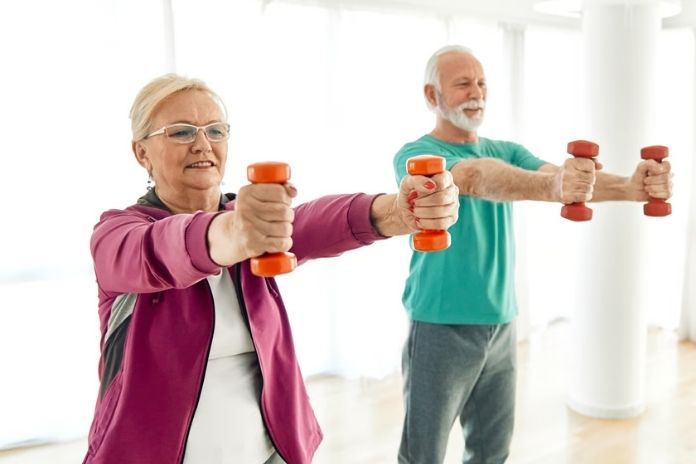
The Yale research suggests that mindset and aging are closely connected. Positive views about aging do not mean pretending aging is easy or ignoring physical problems. It simply means believing that improvement is still possible.
That belief may affect whether someone starts exercising, trains regularly, or continues to challenge themselves physically over time. The Yale study found strong links between positive aging beliefs and better long-term outcomes.
At the same time, researchers did not identify the specific behaviors associated with that mindset. It is still unclear whether mindset directly affects the body or mainly changes whether people keep healthy habits. That uncertainty is important to mention honestly.
Factor 2 — Consistent Resistance Training
Among all the factors linked to healthy aging, regular resistance training has the strongest evidence behind it. The National Institute on Aging has more than 40 years of research showing that strength training for older adults helps maintain muscle, improve movement, support independence, and increase healthy years of life.
The key is consistency over time, not extremely hard workouts. People who continue challenging their muscles gradually over the years are more likely to maintain strength and physical function as they age. This matters because sarcopenia, the age-related loss of muscle and strength, speeds up when muscles are not used regularly.
Factor 3 — Individual Differences Are Real
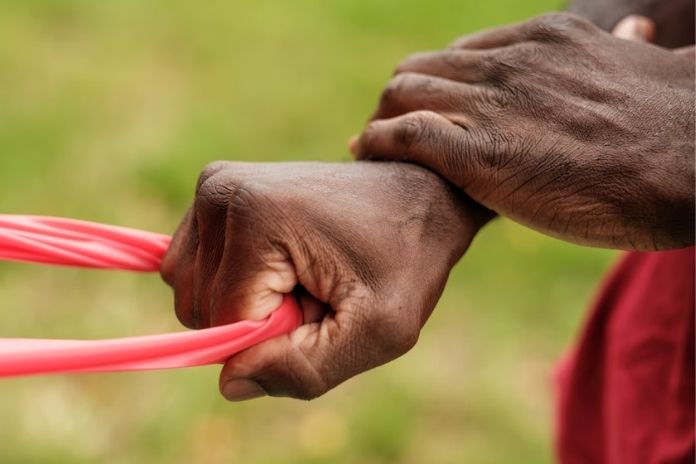
Not everyone responds to aging or exercise in the same way. Researchers at the University of Connecticut studying heterogeneity in aging found that differences in grip strength become much larger with age. In simple terms, two people of the same age can have very different physical abilities and strength levels.
Some people naturally gain muscle more slowly. Others recover differently or lose strength earlier. That is not failure. It is normal biology. Comparing yourself to others becomes less useful with age than tracking your own progress over time.
Read More: 5 Exercises Experts Recommend Most After 50 (Backed by Research)
Why Grip Strength Predicts More Than You Think
Grip strength is often used in research as a simple measure of overall strength and physical health. Researchers see it as a quick way to understand how well the body is aging physically.
A 2024 study published in the Journal of Cachexia, Sarcopenia and Muscle followed older adults across 28 countries and found that grip strength was strongly linked to overall mortality risk in the oldest adults.
People in the lowest grip-strength group had a much higher risk of death compared with those who maintained stronger grip strength. The finding shows that strength is not only about staying active or independent. It is also closely linked to long-term health and survival.
What You Can Actually Do — the Practical Takeaway
The good news is that progressive resistance exercise does not require a gym. Resistance bands, bodyweight exercises, light weights, and chair-based exercises can all help the body build strength.
The National Institute on Aging recommends that strength training for older adults should be progressive. In simple terms, the exercises need to become slightly more challenging over time if you want the body to keep adapting.
The Yale findings also suggest that how people think about aging affects whether they continue these habits regularly. Believing improvement is possible may not just be motivation. It appears to influence long-term results.
One useful strategy is to track your own progress instead of comparing yourself to others or to your younger self. Counting chair stands, tracking repetitions, or recording resistance levels can make improvement easier to see.
Read More: Can Older Adults Benefit From Protein Powder? What the Science Says
Conclusion
The people who get stronger with age are usually not rare genetic exceptions. Research suggests they often share a few important habits: they believe improvement is possible, they stay consistent with progressive resistance training, and they continue challenging their muscles and nervous system over time.
Aging changes how the body adapts, but it does not remove the ability to improve. Starting with one small strength habit today can make a real difference over time.
FAQs
Q. Can you really get stronger as you age?
Yes. Muscle growth slows with age, but the body’s ability to improve strength does not disappear. Research shows older adults can still make major gains with resistance training. In one study, older adults improved force-per-unit-of-muscle by 64% compared with 28% in younger adults, showing that nervous system adaptation stays highly trainable later in life.
Q. What is the biggest factor in aging well physically?
Research points to two major factors working together: mindset and regular resistance training. The Yale study found that positive views about aging predicted better long-term outcomes, while decades of research show that consistent strength training is one of the strongest drivers of healthy physical aging and long-term function.
Q. At what age does strength decline become irreversible?
It does not become irreversible. Researchers from the University of Michigan say that major strength improvement is possible at almost any age with progressive resistance exercise. Without training, sarcopenia often speeds up beginning in the 60s, but resistance training can reverse much of that decline even when started later in life.
References
- Delmonico, M. J., Kostek, M. C., Doldo, N. A., Hand, B. D., Bailey, J. A., Rabon-Stith, K. M., Conway, J. M., Carignan, C. R., Roth, S. M., & Hurley, B. F. (2005). Effects of moderate-velocity strength training on peak muscle power and movement velocity: Do women respond differently than men? Journal of Applied Physiology, 99(5), 1712–1718.
- Andersen, K. M., et al. (2024). Grip strength and all-cause mortality in the oldest old: A prospective cohort study across 28 countries. Journal of Cachexia, Sarcopenia and Muscle.
- University of Connecticut Health Center. (2025). Health heterogeneity in older adults exploration [PDF].
- Fiatarone, M. A., Marks, E. C., Ryan, N. D., Meredith, C. N., Lipsitz, L. A., & Evans, W. J. (1990). High-intensity strength training in nonagenarians: Effects on skeletal muscle. JAMA, 263(22), 3029–3034.
- Levy, B. R., & Slade, M. D. (2026). Aging redefined: Cognitive and physical improvement with positive age beliefs. Geriatrics, 11(2), Article 28.
In this Article