



















By 2 p.m., Sarah has already missed lunch, burned through three mental checklists, and felt her thoughts scatter in every direction. She knows the sensation well: a restless unease that lands somewhere between irritability and dread, arriving reliably around the same time each day. What she did not know was that the pattern had anything to do with what she ate.
For many adults navigating ADHD, focus, mood, and anxiety levels fluctuate in ways that feel random but often track closely with meals. Some clinicians and nutritionists now reference an executive function diet, an approach centered on an ADHD diet with high protein intake, predictable meal timing, and blood sugar stability.
While no dietary approach replaces medication or behavioral therapy, emerging evidence suggests that consistent, protein-forward eating patterns may help support attention, reduce energy crashes, and soften the anxiety that so often accompanies ADHD. Here, we break down the science behind this approach, what it looks like in practice, and when to loop in a professional.
- A high-protein ADHD diet may support steadier dopamine production and reduce the blood sugar swings that trigger anxiety-like symptoms throughout the day.
- Structured meal timing can lower decision fatigue in ADHD brains, preserving mental energy for attention and emotional regulation.
- Glucose crashes after high-carbohydrate, low-protein meals activate cortisol and adrenaline, which can mimic or worsen anxiety in people with ADHD.
- Nutrition alone does not replace evidence-based ADHD treatment; it works best as a supportive layer alongside therapy and medication.
Read More: Why You Feel Weak or Dizzy After Meals, Even When Your Blood Sugar Is Normal
What Is the “Executive Function Diet”?

The term “executive function diet” is not a clinical diagnosis or formal protocol. It is a shorthand used by some nutrition practitioners to describe an eating pattern that prioritizes foods and meal timing strategies known to support brain function, particularly in individuals whose executive function is already taxed by ADHD.
At its core, the approach has three pillars: adequate protein at each meal, complex carbohydrates over refined ones, and regular, predictable mealtimes. The goal is consistency over perfection.
Consistent meals mean consistent fuel, and for a brain that already struggles to regulate attention and impulse, running low on fuel is not a minor inconvenience. ADHD is fundamentally a disorder of executive function, the cognitive skills governing planning, prioritizing, self-regulation, and task initiation.
Research using functional MRI shows that during decision tasks, individuals with ADHD exhibit increased activation across multiple brain regions compared to neurotypical controls, meaning the ADHD brain works harder to accomplish the same cognitive processing. That extra effort depletes a finite resource.
When decision fatigue compounds an already strained system, the brain cuts corners. Skipping meals, eating impulsively, and reaching for high-sugar convenience foods become the path of least resistance. A structured eating pattern removes those decisions. There is nothing to deliberate when the same breakfast shows up at the same time each morning.
Nutrition research within the ADHD field falls within the broader discipline of nutritional psychiatry, which examines how dietary patterns influence brain chemistry and mental health outcomes. A 2023 review published in PMC examined 54 studies on nutrition and ADHD and found consistent patterns linking lower-quality diets to more severe ADHD symptoms.
The authors noted that children and adolescents with ADHD tended to consume more high-sugar and high-fat foods while eating significantly less protein, B vitamins, and key minerals than their peers without the diagnosis. None of this establishes diet as a cause of ADHD, but it reinforces that nutritional status is not a neutral variable.
Why High-Protein Meals May Help ADHD Symptoms
Protein does not travel directly to brain cells. It gets broken down into amino acids first, and those amino acids serve as raw material for neurotransmitters. Dopamine, most closely tied to ADHD, is synthesized from the amino acid tyrosine. Serotonin, which regulates mood and anxiety, comes from tryptophan.
Without adequate dietary protein, the brain has fewer precursors to work with. UCLA Health explains that protein provides the amino acids necessary for neurotransmitters and helps manage chemical imbalances linked to ADHD.
Laura Stevens, M.S., a nutritionist at Purdue University who has researched ADHD nutrition for more than 25 years, stated in ADDitude Magazine that “because the body makes brain-awakening neurotransmitters when you eat protein,” people should start their day with a breakfast that includes it and look for ways to bring protein into meals throughout the day.
Protein and fiber both slow gastric emptying, which means glucose from a meal enters the bloodstream more gradually. This produces a steadier energy curve rather than a sharp spike followed by a hard drop.
Ned Hallowell, M.D., founder of the Hallowell Centers for Cognitive and Emotional Health and author of Driven to Distraction, has long advocated protein as essential for this reason. Dr. Hallowell states that “protein helps keep blood sugar levels steady, and prevents the mental declines that come from eating a meal containing too many simple carbs.” That steadiness is not a luxury for people with ADHD. It is a foundation.
When blood sugar spikes rapidly and then falls, the body mobilizes stress hormones, primarily cortisol and adrenaline, to release glucose from stored reserves. Those same stress hormones produce physical symptoms: a racing heart, irritability, difficulty concentrating, and a general unease that is functionally indistinguishable from anxiety.
For someone with ADHD who already struggles with emotional dysregulation, a midday glucose crash amplifies everything that is already hard.
The Link Between Blood Sugar Swings and ADHD Anxiety
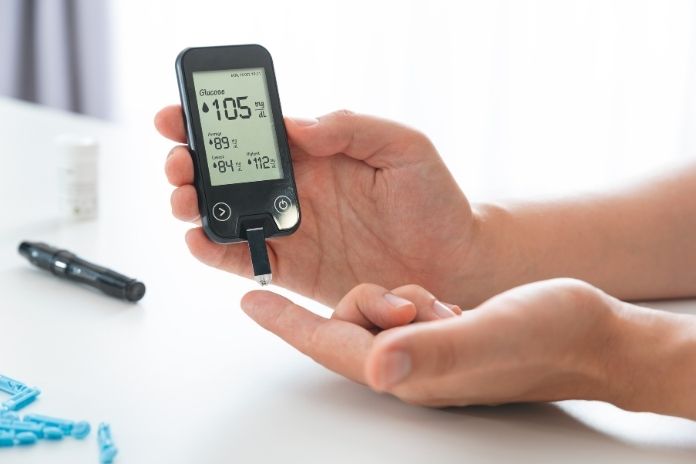
When blood sugar falls, the adrenal glands release epinephrine and cortisol to stimulate gluconeogenesis, the process of generating glucose from non-carbohydrate sources. A PMC review on stress-induced metabolic changes confirmed that psychological and physiological stress both activate catecholamine pathways that elevate cortisol and glucose simultaneously.
The system runs in both directions: stress raises blood sugar, and falling blood sugar triggers stress hormones. For people with ADHD who may have heightened cortisol reactivity, the signal tends to be louder.
The symptom overlap between hypoglycemia and anxiety is not coincidental. Both involve sympathetic nervous system activation. Shakiness, heart palpitations, sudden irritability, and the sense that something is wrong without a clear external cause are hallmarks of both states.
A 2019 PMC review on mental stress and glucose regulation found that high anxiety causes the sympathetic nervous system to release hormones that increase cortisol and glucose levels, and that these changes also affect insulin sensitivity.
The cycle loops back on itself. Research suggests individuals with ADHD may be more sensitive to blood sugar fluctuations than neurotypical individuals, though the mechanisms are not fully mapped.
Richard Paul Brown, M.D., associate clinical professor of psychiatry at Columbia University, has noted that “many diets are deficient in key vitamins, minerals, and fats that may improve attention and alertness” and that correcting those nutritional gaps through diet and supplementation can reduce symptom severity.
The association between blood sugar instability and ADHD-related anxiety is physiologically coherent, but current research does not establish direct causation.
Read More: The Best Anti-Inflammatory Breakfasts for Stable Blood Sugar and Energy
Why Routine Eating Patterns Can Support Executive Function
Every decision burns cognitive fuel, and for the ADHD brain, that fuel runs out faster. Research shows that individuals with ADHD exhibit increased brain activation during decision tasks, meaning simple choices require disproportionately more mental effort.
Applied to food, the daily question of what to eat, when, and how much drains the same executive function reserves needed for everything else. When meals happen at fixed times with familiar components, those decisions are already made.
Irregular meals create an irregular fuel supply. An ADHD brain running on an unpredictable nutritional baseline will predictably struggle with the tasks already hardest: staying on task, managing frustration, transitioning between activities, and resisting impulse.
Michael Ascher, M.D., a clinical associate professor of psychiatry at the University of Pennsylvania, describes how creating routines allows people with ADHD to automate frequent tasks and save mental energy for higher-priority demands. A consistent eating schedule does more than feed the body. It scaffolds the entire day.
Skipped meals are a particular hazard for adults with ADHD, partly because medication suppresses appetite and partly because hyperfocus overrides hunger signals.
By late afternoon, blood sugar has dropped, decision fatigue has accumulated, and the ADHD brain is functioning at its lowest daily capacity. Proactive meal timing, even mechanically eating by the clock rather than by hunger cues, disrupts that spiral before it starts.
What a High-Protein ADHD-Friendly Day Might Look Like

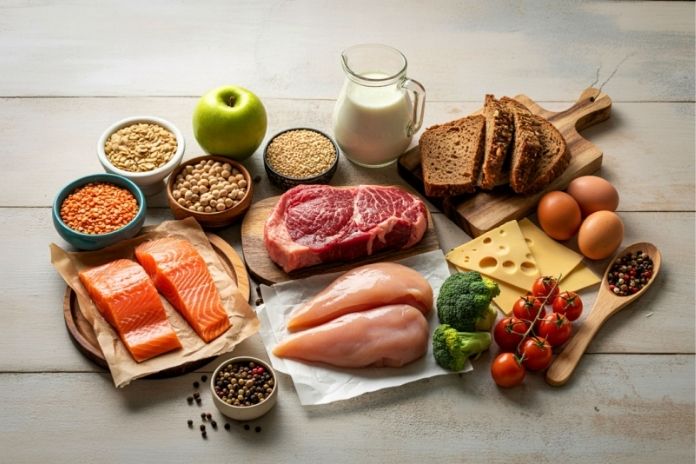
Research found that a high-protein breakfast supports alertness-related neurotransmitter production in a way that a high-carbohydrate breakfast does not. Practical options include eggs with whole-grain toast and avocado, Greek yogurt with nuts and berries, a smoothie with protein powder and leafy greens, or a breakfast burrito with eggs and black beans.
Include a meaningful protein source, pair it with fiber, and eat within an hour of waking.
An ADHD-friendly lunch divides the plate into halves and quarters: half non-starchy vegetables, one-quarter protein such as grilled chicken, tuna, tofu, or lentils, and one-quarter complex carbohydrates like brown rice, quinoa, or whole-grain bread. This structure keeps the glycemic index low and energy stable through the afternoon.
The most effective ADHD-friendly snacks pair protein with fiber-containing carbohydrates. Almonds and an apple, cheese and whole-grain crackers, hummus and raw vegetables, hard-boiled eggs, or trail mix with nuts and seeds all work well. Fiber slows glucose release while protein keeps the amino acid supply continuous.
Foods That May Support Stable Energy for ADHD
Lean animal proteins, including chicken, turkey, fish, eggs, and low-fat dairy, are among the most studied sources for ADHD dietary recommendations. Plant-based options, including lentils, chickpeas, black beans, edamame, tofu, and tempeh, offer comparable amino acid profiles when combined throughout the day.
A 2022 Korean cohort study tracked ADHD scores and dietary intake over two years and found that in the group of children whose ADHD symptoms improved over time, a notable increase in vegetable protein intake was observed compared to those whose symptoms worsened.
Low-glycemic carbohydrates slow glucose absorption and contribute to sustained mental energy. Oatmeal, legumes, whole-grain bread, brown rice, and sweet potatoes fall into this category. For ADHD brains sensitive to blood sugar fluctuations, choosing lower-glycemic carbohydrates is a practical protective measure.
UCLA Health notes that studies find omega-3 and omega-6 fatty acids show promise for improving hyperactivity, impulsivity, and attention, though the evidence is still developing. Fatty fish like salmon, sardines, and tuna are the richest dietary sources. Walnuts, flaxseeds, and chia seeds provide plant-based omega-3s.
Even mild dehydration impairs cognitive performance, and adults with ADHD frequently forget to drink water during hyperfocus. Anchoring water intake to existing meal routines reduces one more variable that degrades attention and mood throughout the day.
Limitations of the “Executive Function Diet”
The American Academy of Pediatrics recommends evidence-based medication and behavioral therapy as primary interventions for ADHD. Today’s Dietitian Magazine reviewed the nutrition evidence and concluded that dietary approaches work best as an adjunct to standard care, not a replacement.
No dietary strategy has demonstrated the effect size that stimulant medication achieves in well-controlled trials. An ADHD diet high in protein and structured around regular mealtimes will not benefit every person equally.
Responses depend on ADHD severity, comorbid conditions, medication regimens, and baseline nutritional status. Treating dietary changes as a hypothesis to test rather than a guaranteed solution is the realistic framing.
A 2025 review in Frontiers in Nutrition examining nutritional profiles in people with ADHD and neurodivergent conditions confirmed the field is advancing but still limited by small sample sizes, heterogeneous study designs, and the difficulty of isolating dietary variables from other lifestyle factors.
Association studies tell us where to look. They do not tell us how much a change will help any specific individual.
When Nutrition Changes May Help ADHD-Related Anxiety

If anxiety reliably arrives in the early-to-mid afternoon after a low-protein or carbohydrate-heavy lunch, the physiological explanation is the glucose-cortisol-anxiety loop described above. Adding protein and fat to that meal, or including a mid-morning snack, often shifts the afternoon meaningfully.
Sudden irritability, emotional reactivity disproportionate to the trigger, and a pervasive sense of being overwhelmed are classic signs that blood sugar has dropped and stress hormones have stepped in. Adults with ADHD who notice their worst emotional moments cluster around meal delays have a concrete, addressable pattern.
When eating itself feels like too much to manage, decision fatigue has usually taken over. Introducing one predictable, low-effort meal can anchor the day in a way that ripples outward into overall functioning.
Tips for Building a Sustainable Routine
Building a sustainable routine with ADHD is less about discipline and more about reducing friction. The harder something feels to start or maintain, the less likely it is to stick. What works is a system that feels simple, predictable, and easy to return to after a disruption.
- Start With One Predictable Meal: Focus on locking in just one meal, usually breakfast. Keep it consistent for a few weeks before adding more structure. This creates a stable anchor without overwhelming your routine.
- Use Simple, Repeatable Food Options: Stick to a short list of meals that are easy to prepare and require minimal thinking. Repetition is not boring here, it is efficient. Fewer choices mean less decision fatigue and better consistency.
- Pair Meals With Existing Daily Habits: Attach meals to habits you already follow, like taking medication or responding to an alarm. This reduces reliance on motivation and makes eating more automatic. Over time, it becomes part of your flow.
- Avoid Perfection-Based Expectations: You will miss meals or break routine sometimes, and that is normal. One off day does not mean the system failed. The goal is to stay consistent more often than not.
A routine works when it is easy to restart, not when it is perfectly followed. Keep it simple, flexible, and repeatable, and it becomes something you can actually sustain.
When to Seek Professional Guidance
Stimulant medications commonly suppress appetite during their active window. When this leads to extended fasting and a crash-and-binge cycle when medication wears off, both nutritional intake and glucose regulation suffer. A registered dietitian can help design meal timing strategies that work around medication schedules.
ADHD is independently associated with restrictive eating patterns, food selectivity, and disordered eating. If dietary changes create anxiety around food or feel impossible to sustain without significant distress, professional support is warranted.
Adults managing ADHD alongside conditions like diabetes, insulin resistance, PCOS, or thyroid disorders need guidance that accounts for the full clinical picture. General ADHD dietary principles do not always map cleanly onto someone managing multiple overlapping conditions.
Read More: 5 Ways to Support Healthy Blood Sugar With Your Daily Drinks
Key Takeaway
An ADHD-friendly, protein-forward diet isn’t a cure, but it can make your baseline feel more stable. When your blood sugar is steady, you avoid the sharp crashes that show up as irritability brain fog, and poor focus. That alone can reduce some of the daily friction. It’s not dramatic, but it’s noticeable over time.
Protein also supports the building blocks of dopamine and serotonin, which play a role in attention and mood. You’re not “boosting” them in a quick-fix way, but you are supporting the system they rely on. For an ADHD brain, that subtle support can matter. It creates a slightly more balanced internal environment. Less volatility, more consistency.
Consistent meal timing adds another layer of stability. You’re not constantly deciding what to eat, skipping meals, or dealing with energy dips you didn’t plan for. That reduction in decision fatigue can free up mental space. And for ADHD, conserving mental energy is half the battle.
At its core, this approach is about removing one unnecessary stressor. It won’t solve ADHD, and it shouldn’t be treated like a standalone solution. But it can make everything else work, focus, emotional regulation feel a bit more manageable. And sometimes, that small shift is exactly what helps you function better.
References
- Associations Between Dietary Intake and ADHD Scores by Repeated Measurements in School-Age Children. (2022). Nutrients.
- Brown, R. (n.d.). Nutritional deficiencies, vitamins, minerals, and ADHD. ADDitude Magazine.
- Hallowell, E. M. (2020). Feeding your ADHD brain. Hallowell Centers.
- Hunter, I., Smith, S., Davies, H., Dyall, S. C., & Gow, R. V. (2025). A closer look at the role of nutrition in children and adults with ADHD and neurodivergence. Frontiers in Nutrition, 12, 1586925.
- Lange, K. W., et al. (2023). Nutrition in the management of ADHD: A review of recent research. PMC.
- Stevens, L. (n.d.). ADHD nutrition strategies: Protein and brain function. ADDitude Magazine.
- Today’s Dietitian. (2023). CPE monthly: The role of nutrition in ADHD.
- UCLA Health. (2025). Foods that feed your ADHD mind.
- Wong, H., et al. (2019). The effects of mental stress on non-insulin-dependent diabetes. PMC.
- Stress-induced hyperglycemia. (2022). PMC.
In this Article