

















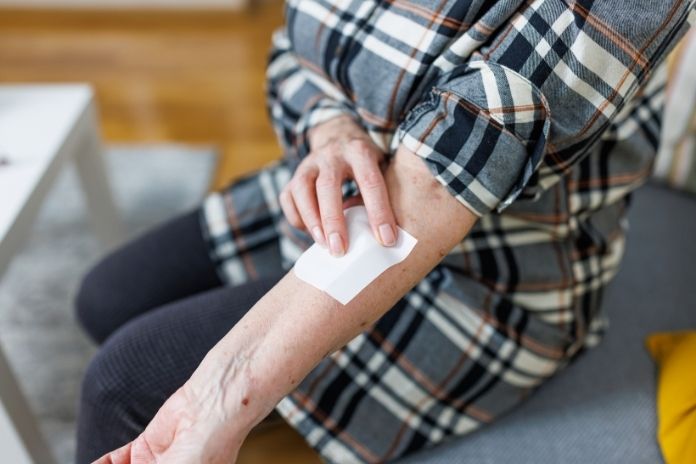
- The estradiol patch starts releasing estrogen within hours, but noticeable relief from hot flashes, night sweats, and sleep disruption usually appears within 1–2 weeks, with full symptom improvement often taking 4–8 weeks.
- Different symptoms improve at different times. Vasomotor symptoms tend to improve first, mood and sleep may take several weeks, and bone protection develops gradually over months to years with consistent use.
- If symptoms haven’t improved after 6–8 weeks or side effects persist, the dose or formulation may need adjustment, so it’s important to discuss ongoing symptoms with your healthcare provider.
Starting an estrogen patch for menopause raises an immediate question: When is this actually going to be effective? The hot flashes are relentless. Sleep is broken. The mood swings feel foreign and exhausting. And now you’re wearing a small adhesive square on your abdomen and waiting.
Here’s the honest answer: the estradiol patch begins releasing transdermal estrogen into your bloodstream within hours of application. But feeling better can take some time. Most women notice meaningful changes in hot flashes and sleep within one to two weeks. Complete relief from all menopausal symptoms can take up to eight weeks. Some things, like bone protection, take months.
This guide breaks down the estradiol patch timeline by symptom, explains why results vary so much from person to person, and tells you what to watch for, including what warrants a call to your doctor.
What Is an Estradiol Patch?
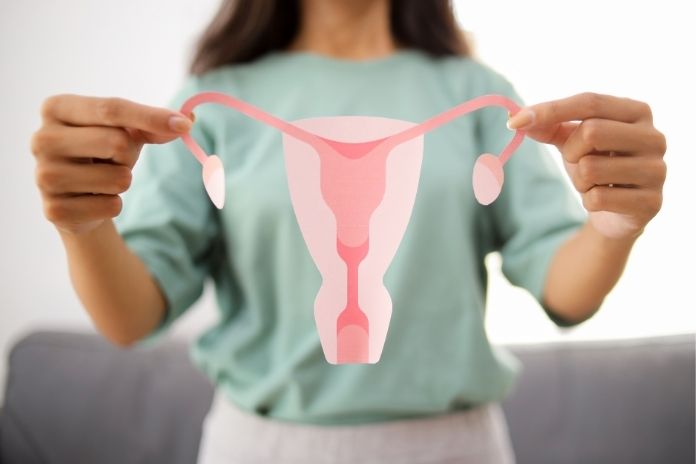
The estradiol patch is a small adhesive patch worn on the skin, usually below the waist, that delivers estradiol, the most biologically active form of estrogen, directly through the skin into the bloodstream. It’s a form of transdermal estrogen delivery, meaning it bypasses the digestive system entirely.
This matters more than it sounds. Oral estrogen is metabolized by the liver before it reaches the rest of the body, altering its chemistry and increasing certain clotting proteins in the process. Transdermal estrogen skips that first-pass liver metabolism entirely, arriving in the bloodstream in a closer-to-natural form.
The patch is typically changed once or twice a week, depending on the formulation. It’s one of the most commonly prescribed forms of hormone replacement therapy (HRT) because of its steady hormone delivery, meaning levels stay relatively consistent rather than spiking and dropping the way oral doses can.
For women navigating perimenopause or postmenopause, that steadiness often translates to more predictable symptom control than pills provide.
How the Estradiol Patch Works in the Body
Estradiol is the primary estrogen produced by the ovaries during the reproductive years. When it declines in perimenopause and drops sharply after menopause, the hypothalamus, the brain region that regulates body temperature, loses its stabilizing signal.
The result is a narrowed thermoneutral zone, the range of temperatures your body tolerates without triggering a cooling response. Small rises in core temperature that previously went unnoticed now trigger hot flashes and sweating.
Transdermal estrogen from the patch restores enough circulating estradiol to widen that zone again, dampening the frequency and severity of vasomotor events. Beyond temperature regulation, estradiol receptors are present throughout the body: in vaginal tissue, bones, the cardiovascular system, and the brain.
The patch’s effects on mood and sleep work through estradiol’s interaction with serotonin and GABA, the brain’s primary calming neurotransmitters. Effects on bone work through the suppression of osteoclast activity, the cellular process that breaks bone down. Each of these systems responds on its own timeline.
Read More: What Is Estrogen Withdrawal Anxiety and Why Does It Happen?
How Long Does It Take for the Estradiol Patch to Start Working?

Hot Flashes and Night Sweats
This is where most women notice the first real shift. A clinical study published in PubMed examining the seven-day estradiol transdermal system found that the onset of efficacy begins within one to two weeks after starting hormone therapy, with full benefit sustained across the wearing period.
A separate randomized controlled trial in Obstetrics and Gynecology found a statistically significant reduction in hot flashes over 4 weeks of transdermal estrogen use, with patients reporting an 85% decrease from baseline at the 6-week mark.
What that means practically: don’t expect silence in week one. Some women feel a reduction in intensity before frequency drops. Others notice nothing for ten days and then have a noticeably better week two. The four-to-eight-week window for full vasomotor relief is realistic, not a failure.
Vaginal Dryness and Genitourinary Symptoms
Vaginal tissue is estrogen-sensitive and responds to systemic hormone therapy, but it tends to respond more slowly than vasomotor symptoms. Most women see meaningful improvement in dryness, irritation, and discomfort with sex after several weeks of consistent patch use.
For significant genitourinary symptoms, some providers add localized vaginal estrogen alongside the patch. The two aren’t redundant. Local vaginal estrogen works at the tissue level with minimal systemic absorption and often addresses these symptoms more directly than systemic therapy alone.
Mood Changes and Sleep
This is the most variable category. Some women feel a shift in emotional steadiness within the first week or two as estradiol’s interaction with serotonin and GABA begins to restore some of its modulating effects. Others don’t notice mood improvement for a full month.
Sleep changes are closely tied to reduced hot flashes. If night sweats are driving the sleep disruption, those improve on the same timeline as vasomotor symptoms. If the sleep disruption has a more complex origin, mood, anxiety, or cortisol dysregulation, the response is slower and less predictable.
Bone Protection
This is a long game entirely. Estradiol’s protective effect on bone works by slowing the rate of bone loss rather than quickly reversing existing loss. Measurable changes in bone density appear over months to years of consistent hormone replacement therapy (HRT) use.
This is a preventive benefit, not a symptom that can be felt, and it’s best evaluated through periodic bone density monitoring with your provider.
Dr. Mary Claire Haver, MD, a board-certified OB/GYN, is clear that bone protection from hormone therapy is a long-term investment, not a quick fix: “Hormone replacement therapy can have a preventative impact in these conditions,” she told The HRT Club, referring specifically to osteoporosis and cardiovascular disease.
“Prevention of osteoporosis, brain, and cardiovascular health as estrogen provides cardiovascular and neuroprotection against aging and disease.” This is not a benefit you feel in week two. It’s one you’re building quietly, consistently, over the years.
Read More: How Does Estrogen Affect Bone Density?
Why Results Vary From Person to Person
Two women starting the same dose of the same estradiol patch on the same day can have meaningfully different experiences at week four. That’s not a flaw in the treatment. It reflects how much individual biology shapes the response to hormone therapy.
Dose and patch strength are the most obvious variables. Starting doses are intentionally conservative, and the first prescription is rarely the final one. If the starting dose doesn’t provide adequate relief, that’s information for your provider, not evidence that the therapy isn’t working. Perimenopause versus postmenopause matters too.
Women in perimenopause still have fluctuating ovarian estrogen production. A patch delivers steady transdermal estrogen into that fluctuating background, which can make the symptom picture less predictable than in postmenopause, where baseline estrogen is consistently low, and the patch’s effect is easier to read.
Body composition and metabolism affect both skin absorption and tissue distribution. A higher body fat percentage can sequester estradiol, so blood levels may be somewhat lower than in leaner individuals at the same nominal dose.
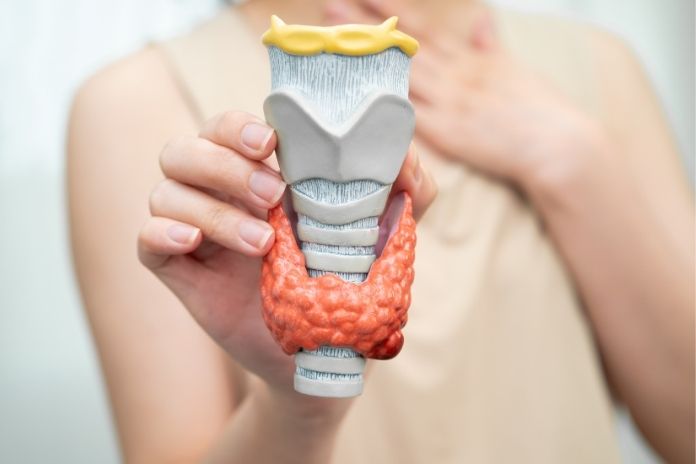
Underlying medical conditions, including thyroid disorders, adrenal dysfunction, and certain autoimmune conditions, can complicate the hormone picture in ways that affect how symptoms respond to estradiol.
Read More: Perimenopause: Symptoms to Watch and Lifestyle Strategies to Ease the Transition
What You Should Feel in the First Few Days
The first 48 to 72 hours are mostly about the patch itself, not the hormone. Skin under and around the patch may feel slightly warm, look mildly red, or itch a little. This is a common localized reaction to the adhesive and usually settles within a day.
Some women notice mild breast tenderness in the first week, particularly if their baseline estrogen was very low before starting. A mild headache or slight bloating in the first few days is also common as the body adjusts to the new hormone input.
What you’re unlikely to feel in the first few days is dramatic symptom relief. Estradiol levels need to build to a therapeutic range, and the downstream effects on the hypothalamus, neurotransmitters, and target tissues take time to express. The absence of dramatic early change is normal, not a sign of failure.
Dr. Stephanie Faubion, MD, MBA, offers a grounding perspective on what hormone therapy is actually doing: “When we give postmenopausal women hormone therapy, we’re just giving enough for symptom management, which is way less than replacing what the ovaries used to make,” she explained in a recent interview, cautioning against expecting hormone therapy to fix everything.
Signs the Estradiol Patch Is Working

The signals are often subtle at first, which is why women often miss them. A hot flash that used to wake you up fully now breaks sleep for five minutes instead of thirty. The midday wave of heat feels less intense. You’re irritable on fewer days than the week before.
Reduced frequency and intensity of hot flashes is typically the first measurable sign. Improved sleep often follows as nighttime vasomotor events become less disruptive to rest. Stabilized mood shows up next for most women, though it’s less linear than the others.
Vaginal dryness and discomfort may improve more slowly and should be tracked separately. If it hasn’t improved after 6 to 8 weeks, that’s a conversation point with your provider, not a reason to discontinue.
When to Talk to Your Doctor About Adjustments
Six to eight weeks is the general benchmark. If you’re at that point and still experiencing significant menopausal symptoms at roughly the same frequency and intensity as before you started, the starting dose may need to be increased, or the formulation reconsidered.
Persistent severe symptoms that are interfering with daily function, sleep, or work deserve earlier attention, not the patient waiting. Estradiol patch side effects that don’t resolve after the first week or two, particularly ongoing breast tenderness, persistent headaches, or unusual bloating, are worth flagging.
Breakthrough bleeding in women who have a uterus and are using combined estrogen and progestogen therapy should always be evaluated promptly.
Possible Side Effects in the Early Weeks
Most early estradiol patch side effects are mild and resolve as the body adjusts.
Breast tenderness is the most commonly reported. It usually softens after the first two to four weeks as tissues accommodate the new estrogen input. Headaches in the first week are common, particularly in women who had hormonally driven migraines previously.
Nausea is less common with the estrogen patch for menopause than with oral estrogen, precisely because first-pass liver metabolism is avoided, but mild queasiness does occur occasionally.
Skin irritation at the patch site ranges from mild redness to itching and, less often, a raised localized reaction. Rotating application sites with each patch change helps considerably.
Dr. Jen Gunter, MD, double board-certified OB/GYN shares a practical tip for women experiencing persistent patch site irritation: “Some people find that if they use a steroid nasal spray on the site first and let it dry, it can help with local irritation,” she has noted publicly, a workaround that addresses the adhesive reaction without requiring a switch to a different delivery format.
Mild bloating in the first few weeks is usually temporary and not a reason to stop.
Serious Symptoms That Require Immediate Medical Attention

Some symptoms require stopping everything and seeking care immediately. This is not the category for watchful waiting.
Chest pain or pressure, shortness of breath that comes on suddenly, leg swelling or tenderness, particularly in one calf, severe headache unlike any you’ve had before, and sudden vision changes are all emergency signals. These can indicate a blood clot, a pulmonary embolism, a stroke, or a cardiac event.
Blood clot risk is the most clinically significant safety concern with estrogen therapy. The important distinction is that transdermal estrogen carries a substantially different risk profile than oral estrogen in this regard.
A systematic review and meta-analysis published in the Journal of Clinical Endocrinology and Metabolism found that oral estrogen therapy was associated with a 63% higher risk of venous thromboembolism compared to transdermal estrogen, with no statistically significant increase in clotting risk seen with the transdermal route.
That difference matters, but it doesn’t mean zero risk for everyone. Women with known clotting disorders, prior DVT, or significant cardiovascular risk factors need individualized assessment before starting any form of hormone therapy.
Estradiol Patch vs. Oral Estrogen: Which Is Faster?
The estradiol patch timeline for symptom relief is broadly similar to oral estrogen. Both forms typically begin reducing vasomotor symptoms meaningfully within 1 to 2 weeks, with full benefit at 4 to 8 weeks. The difference isn’t primarily about speed.
The key distinction is metabolic. Oral estrogen travels through the liver first, affecting coagulation proteins, triglycerides, and sex hormone binding globulin in ways that transdermal estrogen doesn’t.
Research published in Arteriosclerosis, Thrombosis, and Vascular Biology found that oral estrogen significantly altered coagulation and fibrinolytic variables in postmenopausal women, while transdermal estrogen showed no substantial effects on hemostasis.
For women with cardiovascular risk factors, a history of migraines with aura, or elevated triglycerides, transdermal estrogen is generally the preferred route for this reason, not because it works faster, but because it’s metabolically cleaner.
Dr. Anna Cabeca, DO, triple board-certified OB/GYN, is direct about why the route of delivery matters for blood clot risk: “I don’t put any of my patients on oral HRT if they are much over age 50, and we switch if they have any risk of cardiovascular disease earlier in their lifetime.
In that case, we switch to transdermal and vaginal hormones. We want to avoid the oral route to avoid hepatic metabolism and inflammatory consequences,” she writes on her platform.
Tips for Getting the Best Results From Your Estradiol Patch

Application technique matters more than most patients realize.
Apply to clean, dry skin. Lotion, oil, or residue from a previous patch can significantly reduce adhesion and affect absorption. The lower abdomen and upper buttock are the standard sites. Avoid the breasts and any broken or irritated skin.
Rotate sites with every change. Applying repeatedly to the same spot can lead to localized skin reactions and potentially affect absorption consistency.
Replace on schedule. The patch is calibrated for a specific wear period, either 3 to 4 days or 7 days, depending on the formulation. Wearing it longer doesn’t maintain therapeutic levels. Missing a change disrupts the steady hormone delivery that makes transdermal estrogen more effective than oral forms.
Avoid direct heat over the patch. Heating pads, hot tubs, and saunas can unpredictably accelerate estradiol absorption, potentially delivering more hormone than intended in a short period.
Do not cut patches. Cutting alters the membrane or adhesive matrix that controls the release rate. It doesn’t simply reduce the dose proportionally. It can make delivery erratic.
The Bottom Line
The estradiol patch begins releasing transdermal estrogen within hours of application. Measurable changes in hot flashes and sleep for most women start within one to two weeks. Full relief of all menopausal symptoms can take 4 to 8 weeks, and bone protection is a long-term benefit that plays out over months and years.
How long the estradiol patch takes to work depends significantly on which symptom you’re tracking, your current hormone levels, your dose, and where you are in the menopausal transition. The estradiol patch timeline is not a single number. It’s a range shaped by individual biology.
How quickly does an estrogen patch work well enough to improve quality of life? For most women, noticeably. Within the first month. That answer is worth holding onto when week two feels underwhelming.
If six to eight weeks pass without meaningful improvement, or if estradiol patch side effects persist or are severe, that’s not a failure of the therapy. It’s a signal to revisit dose, formulation, or underlying factors with your provider. The conversation about hormone replacement therapy (HRT) is iterative, not one and done.
References
- Castelo-Branco, C., & Soveral, I. (2014). Clinical efficacy of estradiol transdermal system in the treatment of hot flashes in postmenopausal women. Research and Reports in Transdermal Drug Delivery
- Faubion, S. S. (2025). When women initiate estrogen therapy matters. The Menopause Society.
- Haas, S., Walsh, B., Evans, S., Krache, M., Ravnikar, V., & Schiff, I. (1988). The effect of transdermal estradiol on hormone and metabolic dynamics over a six-week period. Obstetrics and Gynecology, 71(5), 671-676.
- Laufer, L. R., et al. (1983). Clinical experience with a seven-day estradiol transdermal system. American Journal of Obstetrics and Gynecology.
- Mohammed, K., et al. (2015). Oral vs transdermal estrogen therapy and vascular events: A systematic review and meta-analysis. Journal of Clinical Endocrinology and Metabolism, 100(11), 4012-4020.
- Scarabin, P. Y., et al. (1997). Effects of oral and transdermal estrogen/progesterone regimens on blood coagulation and fibrinolysis in postmenopausal women. Arteriosclerosis, Thrombosis, and Vascular Biology, 17(11), 3071-3078.
- Simon, J. A., et al. (2007). Lowest effective transdermal 17beta-estradiol dose for relief of hot flushes in postmenopausal women. Obstetrics and Gynecology, 110(4).
- Rupa Health. (n.d.). Estradiol patches: Timeline for effectiveness and what to expect. Retrieved March 3, 2026, from
- Dr Oracle. (n.d.). How long does it take for the estradiol (estrogen). Retrieved March 3, 2026, from
- Evvy Health. (n.d.). How long does it take estradiol to work for hot flashes. Retrieved March 3, 2026, from
- JOIN MIDI. (n.d.). How long does HRT take to work. Retrieved March 3, 2026, from
- NHS. (n.d.). How and when to take or use oestrogen tablets, patches, gel, and spray. Retrieved March 3, 2026, from
- Gaya Wellness. (n.d.). How long does it take for an estradiol patch to start working?. Retrieved March 3, 2026, from
- Superdrug Online Doctor. (n.d.). HRT patches. Retrieved March 3, 2026, from
In this Article