


















- How to track macros: First, estimate your TDEE (Total Daily Energy Expenditure) and calorie needs, then set protein, carbs, and fats based on your goal—whether you want to count macros for weight loss, plan macros for muscle gain, or maintain performance.
- Use a macro tracking for beginners method that’s easy to stick with—apps like MacrosFirst or MyFitnessPal, meal prep, or portion estimation—and focus on consistency rather than perfection.
- Track results weekly, adjust calories to create a calorie deficit or surplus, prioritize adequate protein intake, and use flexible dieting so that macro tracking stays practical and sustainable.
Learning how to track macros is one of the most useful skills you can learn if your aim is fat loss, muscle building, or performance. Although calorie counting has been around for several decades, tracking macros is a step ahead in the nutrition game that not only allows you to control how much you eat but also what you eat.
Tracking macros is not a diet. It is not a regimen that involves cutting out carbs or worrying about every single gram of fat that you put into your body. Rather, it is a systematic approach to how you consume protein, carbs, and fats to achieve a particular goal.
At first, the idea of tracking macros can seem intimidating. However, once you understand the macronutrients and calorie balance, the system is simple and very easy to apply.
In this article, we will learn how to track macros and why macro tracking is essential for all your health goals. This includes macros for weight loss, macros for weight gain, or even for performance.
Read More: The Power of Macronutrients: Understanding Proteins, Carbs, and Fats in Your Diet
What Are Macros (and Why Do They Matter)?
Macronutrients include proteins, carbs, and fats. We don’t just count macros for weight loss, but these are the major energy contributors your body needs. Macronutrients are the body’s energy sources that also support the repair of tissues, the regulation of hormones, and the maintenance of almost all bodily functions.
Calories are the measure of energy, but macros determine the sources of that energy. Protein and carbs contain four calories per gram, while fats contain nine calories per gram. This means that two people consuming the same number of calories can have widely different body compositions depending on how they allocate those calories among protein, carbs, and fat. This is why macros are so important.
Macros are essential for muscle gain. Protein is essential for muscle repair, your immune system, and satiety. Carbs are the body’s primary energy source, especially during weight training and high-intensity exercise.
Fats are essential for hormone regulation, brain function, and nutrient absorption. When you get the right balance of these three, they can help determine how much muscle mass you build or maintain, how quickly you recover, and how energetic you feel.
Step 1: Define Your Fitness Goal
Your goal comes first, and macro tracking for beginners is easy too. The distribution of your macros changes depending on your goal: weight loss, muscle gain, or performance.
Weight Loss
Macros for weight loss must be discussed more often than we do. You require a calorie deficit. You consume fewer calories than you burn. However, simply consuming fewer calories is not sufficient. To maintain muscle mass, it is essential to continue consuming high amounts of protein even while on a calorie deficit.
This explains why people on a weight-loss diet using macros place a high emphasis on protein and then make slight adjustments to carbohydrates and fats.
Muscle Gain
You require a small calorie surplus, and macros for muscle gain are also needed. The surplus calories help in muscle protein synthesis. Protein remains important, but carbohydrates get prominence to support intense workouts and recovery. This is where organized muscle gain macros outperform random eating.
Maintenance/Performance
Your calorie intake should be very close to your TDEE (total daily energy expenditure). People on a performance diet increase their carbohydrate intake to maintain workout intensity.
Your goal determines how you will distribute your macros. Without a goal, macro tracking is merely a shot in the dark.
Read More: Balancing Macronutrients: Crafting a Well-Rounded Diet for Optimal Health
Step 2: Estimate Your Daily Calorie Needs
Calorie awareness is the beginning of any macro-based diet. You can’t set your macros effectively without first understanding your calorie needs.
Your TDEE takes into account your resting energy expenditure, daily activity level, exercise, and even non-exercise activity like walking or work activity. Reliable sources of fitness education, such as OPEX Fitness, have calculators to help you approximate this number.
Once you have determined your maintenance calories, you can then adjust according to your goal. A moderate cut is usually around 300-500 calories below maintenance, while building lean muscle mass requires 200-400 calories above maintenance.
Calorie awareness is the building block. Macros provide the finer details.
Step 3: Set Your Macro Targets
Macro tracking is not just essential, but it is also very easy to do. But after you lock down your total calorie needs, the next step is to allocate those calories into your protein, fat, and carb needs.
Let’s start with protein intake. Most of the individuals need 0.8-1.6 g of protein per kilogram (2.2 pounds) of body weight. It’s also important to note that getting enough protein will help you maintain muscle mass when you’re in a calorie-deficient phase and promote muscle growth when you’re in a calorie-surplus phase.
For a new macro-nutrient tracker, getting enough protein is usually more important than getting the right carb ratios.
Next up is fat. While it’s not a good idea to cut fat too low, as it’s essential for hormone regulation and long-term success, most evidence-based recommendations will have you allocate fat to make up around 20-35% of your total calorie intake.
The remaining calories will go to carbs. Because carbs are important for hard training and high-intensity activities, more active individuals will find success with higher carb intakes, while less active individuals can get by on lower carb intakes.
There’s no one-size-fits-all macro-tracking ratio that works for everyone. The point of macro-nutrient tracking is to remain flexible, not rigid.
Step 4: Choose a Macro Tracking Method

Using a Tracking App
There are a few ways to go about macro tracking, depending on how precise you want to be. In North America, digital apps for tracking are still the most popular choice. Programs such as MacrosFirst have large food databases, barcode-scanning capabilities, and the ability to automatically calculate your macros. This makes it easy to track your food and calculate your macros, which is perfect for newbies.
Manual Tracking
Another way for beginners to track macros is to do it the old-fashioned way. By reading labels, weighing your food on a digital scale, and writing it all down, you can increase your knowledge of portion sizes and those pesky extra calories. This method is more involved, but it will help you learn your portion sizes for good.
Portion Estimation
If you’re looking for something a little more straightforward, portion estimation can be done during the maintenance phase. Once you know the composition of your macros, estimating portion sizes becomes second nature.
Step 5: Log Your Food Consistently
Consistency is what makes macro tracking effective. Tracking your meals before you eat them allows you to plan rather than react, so you’re more likely to stick with it. If you track after that, you’ll find yourself missing things or underestimating what you ate.
Keep in mind that macro tracking is about trends, not perfection. A day or two high or low isn’t a big deal when you look at the week as a whole.
Forget about the “perfect day” dream. Real, sustainable gains come from repeatable habits.
Step 6: Adjust Based on Results
Macro tracking isn’t a set-it-and-forget-it process. It requires the occasional adjustment based on real results. If fat loss has plateaued for several weeks while sticking to the macro tracking plan, cut a few calories. If your goal is to build muscle and progress has stalled, or strength isn’t increasing, a small calorie boost will help.
Pay attention to how you feel, how you recover, and how hard you can push in the gym. Macro tracking is a feedback loop, not a hard-and-fast rule.
Common Mistakes When Tracking Macros
One mistake people make while tracking macros for weight loss is focusing on macros and forgetting about calories. The fact is, weight loss is still a function of calorie balance.
Another mistake while tracking macros is underestimating portion sizes. Restaurant meals and packaged foods tend to pack in more calories than people think. Having a food scale during the learning process can greatly improve accuracy.
Some individuals worry too much about small variations. The point of tracking macros is to be flexible. Small variations are to be expected.
Another mistake is forgetting about micronutrients. Fiber, vitamins, and minerals are important even if you meet your macro goals.
Read More: How to Balance Macronutrients for Sustainable Weight Loss
How to Track Macros Without Becoming Overly Restrictive
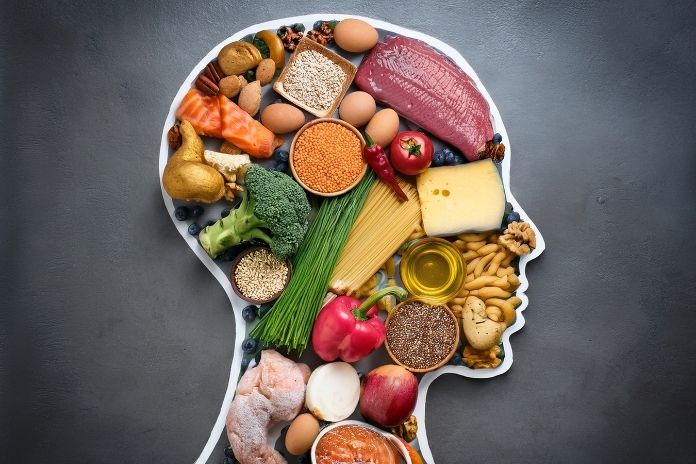
A good macro-tracking habit is flexible. The 80/20 rule, mostly healthy foods with some indulgences, prevents macro-tracking burnout. This aligns with flexible dieting, which focuses on reaching your macro goals without categorizing foods as “good” and “bad.”
The most important thing is that your weekly averages are on track, not your daily averages. Some people find it helpful to take macro-tracking breaks, especially if they are maintenance-level trackers. This helps remind your tracking habit that it is a learning experience, not an obligation.
Do You Need to Track Macros Forever?
No. Many people begin by tracking macros for a period to get a sense of portion sizes, the amount of protein consumed, and overall caloric intake. Once habits are developed, eating by feel becomes more feasible.
Macro tracking is most useful during:
- Fat loss phases
- Lean gain phases
- When trying to break through plateaus
- Pre-performance preparation
It is a skill that can be applied when needed, not a constant necessity.
Sample Macro Breakdown for Different Goals
A moderately active 180-pound individual aiming for fat loss might consume approximately 1,900 calories with elevated protein intake to preserve muscle while maintaining a calorie deficit.
The same individual pursuing muscle gain could increase intake to around 2,600 calories, emphasizing sufficient protein and higher carbohydrates within a calorie surplus.
For maintenance, calorie intake would align closely with TDEE, with macros adjusted to meet training demands and personal preferences.
Exact numbers vary based on body composition, activity level, and metabolic response.
The Bottom Line
Learning how to track macros helps to cut through the clutter of diet fads. Begin by focusing on calorie intake, prioritizing protein, and adjusting carbs and fats to suit your activity level. This will help to develop a diet plan that is consistent with your aim.
The reason macro tracking for weight loss is effective is that it combines structure and flexibility. It allows for data-driven adjustments while remaining practical. If done properly, it can help with effective fat burning, muscle building, and performance improvement without going to extremes.
The key to making it work is its focus on consistency rather than perfection, and on flexibility rather than rigidity.
References
- Veg Fit. (n.d.). BMR and maintenance calorie calculator (TDEE).
- Field, E. (n.d.). Why you’re still stuck tracking macros inconsistently (and how to fix it).
- Macros First. (n.d.). Macros First.
- UCLA Health. (n.d.). How much protein do you really need?
- Sports. (2019). Nutrition Recommendations for Bodybuilders in the Off-Season: A Narrative Review
- Max Healthcare. (n.d.). TDEE calculator.
- PartnerMD. (n.d.). Understanding macros: A beginner’s guide to protein, carbs and fats.
In this Article