




















- Chia oil is extremely high in plant-based omega-3 (ALA), but it is best used only in cold dishes because it breaks down with heat.
- Olive oil, especially extra-virgin, has stronger long-term research for heart health and works well for everyday cooking.
- The best approach for many people is to use both. Olive oil for cooking and chia oil in smoothies or salads to boost omega-3 intake.
Americans are more health-conscious than ever, and the type of fat you cook with matters. With heart disease still the leading cause of death in the United States, choosing the right oil isn’t just about flavor, it’s about long-term health.
Chia oil and olive oil are both plant-based and associated with cardiovascular benefits, but that’s where the similarity largely ends. They differ significantly in their fatty acid composition, antioxidant content, heat stability, and, importantly, the strength of scientific research supporting their benefits.
Your choice may depend on your goals. Are you trying to increase your omega-3 intake? Improve cholesterol levels? Reduce inflammation? Cook at moderate to high temperatures without damaging your oil? Each oil has strengths and limitations that make it better suited for certain uses.
In this article, we’ll compare their nutritional profiles, examine what the research says about heart health and inflammation, and evaluate how each performs in the kitchen. We’ll also look at weight management, taste differences, who may benefit most from each oil, and whether combining them makes sense for a balanced, heart-smart approach.
By the end, you’ll have a clear understanding of which oil fits your health priorities — and how to use it effectively in your everyday meals.
Read More: High-Oleic vs Regular Sunflower Oil: Which One Should You Use?
What Is Chia Oil?
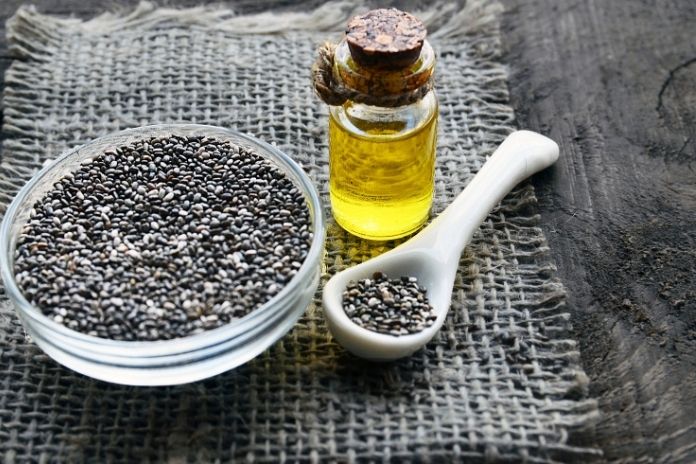
Chia oil is extracted from chia seeds (Salvia hispanica), often through cold pressing to preserve sensitive fatty acids. Its most notable characteristic is its significant level of ALA (alpha-linolenic acid), a plant-based omega-3 fatty acid.
ALA is a crucial nutrient because the body cannot produce it on its own. It regulates cell membrane structure and may also help maintain heart health by normalizing lipid levels.
In fact, in some chia oil varieties, about 65% of the oil content is comprised of ALA, making it one of the richest sources of plant-based omega-3s available today.
However, chia oil, unlike whole chia seeds, contains very little fiber and protein; in fact, it is almost entirely fat. Moreover, because of its high polyunsaturated fat content, it is more prone to oxidation when subjected to heat, air, or light. This makes it unsuitable for frying or roasting.
Chia oil is best used in cold recipes, such as smoothies, yogurt bowls, salad dressings, or as a topping for hot dishes just before serving.
What Is Olive Oil?
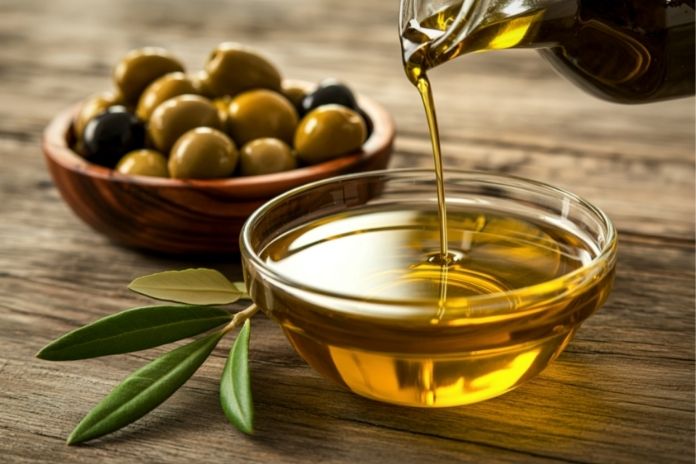
Olive oil is extracted from olives (Olea europaea) and prized for its large proportion of about 85% of monounsaturated fatty acids, particularly oleic acid.
Monounsaturated fatty acids are more stable than polyunsaturated fatty acids and are strongly associated with improved cholesterol levels.
Extra virgin olive oil is the least refined variety, retaining its natural antioxidants, called polyphenols. These give it a slightly spicy kick and are thought to reduce oxidative stress and inflammation. Refined olive oil is more processed, reducing its strong flavor and increasing its smoke point, but also decreasing its antioxidant properties.
Olive oil is a staple of the Mediterranean diet, which is among the most extensively researched diets worldwide.
Several research studies have found a strong association between consuming olive oil regularly and a reduced risk of heart disease, stroke, and metabolic disorders.
Nutritional Comparison of Chia Oil vs. Olive Oil
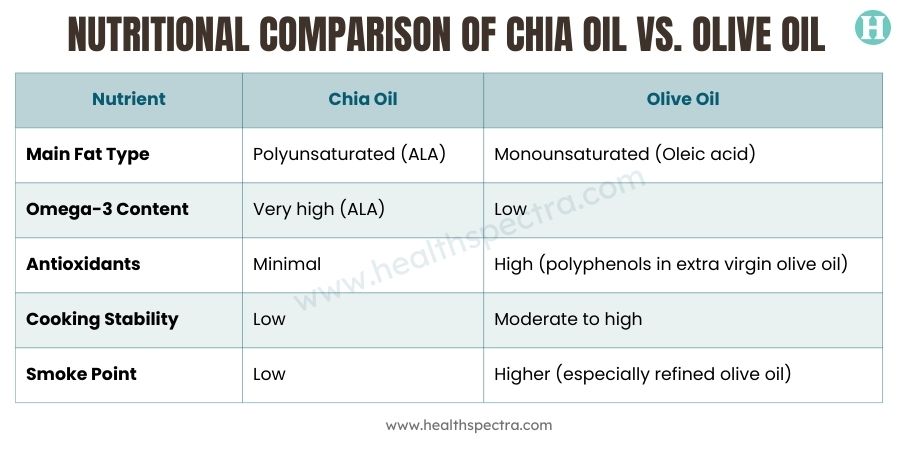
Olive oil contains about 120 calories per tablespoon. And chia oil also has nearly 120 calories per tablespoon. However, their physiological effects differ due to their fat composition and antioxidant content.
 Read More: Is Sunflower Oil Healthy? What the Research Really Says
Omega-3 Content: ALA vs Heart-Healthy Fats
Chia oil contains high levels of ALA. Increasing ALA in your diet can help reduce triglycerides and regulate fatty acids, particularly in a diet rich in omega-6 fatty acids. However, the body cannot easily convert ALA into EPA and DHA, the omega-3s you derive primarily from fatty fish.
Thus, although chia oil increases your omega-3 levels, it may not provide the same cardiovascular benefits as you get from marine sources.
Olive oil, on the other hand, contains only trace levels of omega-3 fatty acids but has significant heart health benefits. The monounsaturated fatty acids in olive oil can help increase HDL cholesterol levels, while its polyphenols protect blood vessels from oxidative damage.
In evaluating the omega-3 oils, chia oil is unique for its high plant-based content, while olive oil benefits cardiovascular health primarily through lipid regulation and antioxidant protection.
Anti-Inflammatory Potential
Inflammation is a factor for many chronic diseases, from cardiovascular issues to type 2 diabetes.
Extra virgin olive oil contains polyphenols such as oleuropein and hydroxytyrosol, which may reduce inflammation and lower oxidative stress. In many observational studies, users of olive oil have been shown to have lower levels of inflammation.
Chia oil contains ALA, which may also help reduce inflammation, particularly if it replaces highly processed seed oils high in omega-6 fatty acids. A few studies have shown small improvements in cholesterol levels and a reduction in inflammation with more ALA, but this is not as robust as the evidence for olive oil.
What is most important, however, is the larger context, not any individual oil. Both oils can be used in an anti-inflammatory diet when used as part of an overall diet high in whole foods.
Cooking and Heat Stability
Chia oil does not perform well when exposed to heat. Its polyunsaturated fatty acids readily oxidize, which reduces nutritional value and can even produce toxic substances. Thus, it is not a good choice for sautéing, frying, or baking.
Olive oil, which is more robust when heated due to its higher monounsaturated fatty acid content, is a better choice. Extra virgin olive oil can withstand the moderate heat you usually apply in cooking, while refined olive oil can withstand a hotter sizzle. Thus, olive oil is a better choice for cooking in American kitchens.
Which Is Better for Heart Health?

When it comes to proven cardiovascular protection, olive oil clearly has the stronger scientific track record.
Large, well-designed clinical trials, including research on Mediterranean-style eating patterns, consistently show that diets rich in extra-virgin olive oil are associated with lower rates of heart attack, stroke, and cardiovascular death.
Much of this benefit is attributed to olive oil’s high content of monounsaturated fats and polyphenols, which help reduce LDL (“bad”) cholesterol oxidation, improve blood vessel function, and lower inflammation.
Chia oil tells a different story. It is exceptionally rich in alpha-linolenic acid (ALA), a plant-based omega-3 fatty acid. Higher ALA intake has been linked to improved lipid profiles and modest reductions in cardiovascular risk, especially in people who don’t consume fatty fish.
However, most of the strongest heart-disease research focuses on marine omega-3s (EPA and DHA), not ALA specifically. Long-term outcome data directly studying chia oil itself remain limited.
That doesn’t mean chia oil lacks value. For Americans who eat little to no fish, it can help improve overall fatty acid balance and indirectly support heart health. But if the question is which oil has the most robust, long-term evidence for preventing heart attacks and strokes, olive oil remains the more established, evidence-based choice.
For cardiovascular protection backed by decades of research, olive oil leads. Chia oil may serve as a strategic addition, but not a replacement.
Which Is Better for Weight Management?
In terms of calorie content, chia oil and olive oil are almost equal at 120 calories per tablespoon. However, for weight management, it is the larger picture that is more important: overall energy balance, quality of diet, and lifestyle factors, and not the specific oil.
Olive oil can help you feel full if it is consumed with balanced meals that contain fiber and protein. Eating meals rich in fiber will help you feel full, which in turn may prevent you from overeating. Chia oil, when added to foods that are high in fiber, such as oats or smoothies, may also help you feel full by increasing the nutritional value of the meal.
Replacing butter, shortening, or highly processed vegetable oils with either olive oil or chia oil may enhance the quality of your diet, which in turn can help in weight management.
Read More: Refined vs Unrefined Coconut Oil: Which Is Healthier for You?
Taste and Culinary Uses
Taste is a very important factor when we wish to maintain healthy eating habits in the long term.
Extra virgin olive oil has a complex taste that can go from fruity and sweet to peppery and pungent. When you are using high-quality extra virgin olive oil (EVOO), it can turn simple meals like roasted vegetables, grilled fish, pasta, and salads into something more complex and interesting, and it is also great as a marinade, dip, or homemade salad dressing.
Chia oil, on the other hand, has a much lighter and more neutral taste. This makes it perfect for people who want to incorporate omega-3s without affecting the taste of their food. It mixes well with smoothies, yogurt, cold soups, or salad dressings, but it does not do well when it is heated.
So, if you are looking for something that tastes good and can be used in a variety of ways, then olive oil is the practical choice. If you are looking for something that will give you a boost without affecting the taste of your food, then chia oil is the better option.
Who Might Benefit More From Chia Oil?
Chia oil may be particularly beneficial for individuals who do not consume much fatty fish. It can be difficult for vegetarians and vegans to reach omega-3 goals, and chia oil is a convenient way to get a concentrated dose of plant-based omega-3s.
It may also be beneficial for individuals who consume a lot of omega-6 fatty acids from processed foods.
Increasing ALA levels can help balance fatty acid ratios, which can be beneficial for heart and metabolic function. Chia oil is a simple alternative to fish oil supplements for anyone who does not like the taste, has allergies, or wants a more sustainable option.
Who Might Benefit More From Olive Oil?
Olive oil stands out for those who value long-term heart health and nutritional value. Its use has been supported by decades of research, particularly in Mediterranean diets.
Those who cook regularly at moderate temperatures will find olive oil useful, as it can be used in place of butter, margarine, and refined vegetable oils in most recipes, making healthy eating easier to maintain.
If you wish to lower cholesterol, reduce inflammation, and follow evidence-based nutrition, regular olive oil use may offer the greatest benefits.
Can You Use Both Oils?
A combination of both oils can help you achieve a balanced diet. Olive oil is great for sautéing and grilling, while chia oil is great for cold dishes to increase the intake of plant-based omega-3 fatty acids.
For example, you can sauté vegetables in olive oil and top them with a thin layer of chia oil after cooling them. You can also mix chia oil in your smoothies or salad dressings, while olive oil remains your sautéing oil of choice.
This way, you can reap the benefits of monounsaturated fatty acids, polyphenols, and ALA in one comprehensive dietary approach.
The Bottom Line
Chia oil is a rich source of plant-based omega-3 ALA, making it particularly convenient for those who don’t eat fish. On the other hand, olive oil has more robust long-term clinical support for cardiovascular health and is very versatile in the kitchen.
Rather than comparing chia oil to olive oil, consider what each offers. Olive oil is great for general cooking and cardiovascular support, while chia oil is a supplement to omega-3s, especially in cold dishes. When combined in a balanced and whole-foods-based diet, both of these oils can be part of a healthy eating solution.
References
- Elsevier. (2023). Meta-analyses of observational studies on olive oil consumption and cognitive outcomes. ScienceDirect.
- Elsevier. (2022). Research article on olive oil and health outcomes. ScienceDirect.
- Elsevier. (2022). Role of fatty acids and extra-virgin olive oil polyphenols in health. ScienceDirect.
- National Institutes of Health. (n.d.). Chia seed oil properties and composition. PubMed Central.
- MDPI. (2023). Nutrients article on dietary fats and health.
- Health.com. (2024). Chia oil vs. olive oil: Better source of healthy fats?
- National Institutes of Health. (2020). Olive oil composition and health effects. PubMed Central.
- National Institutes of Health. (2016). Chia seeds and health benefits. PubMed Central.
In this Article