















You feel exhausted all the time. Not the kind of tired that sleep fixes, but a deep, cellular fatigue that makes even simple tasks feel heavy. Your motivation has faded. Your thinking feels slow and cloudy. Emotionally, you’re flat or numb.
A depression screening points to major depressive disorder. You start therapy. Possibly medication. But in some cases, what looks like primary depression may actually reflect low-thyroid depression, where disrupted metabolism drives mood changes.
When levels of triiodothyronine (T3) drop, brain cells receive less metabolic support. The relationship between thyroid hormones and mood helps explain why symptoms like low energy, cognitive slowing, and emotional blunting overlap so closely with classic hypothyroidism mood symptoms. This overlap is one reason some people experience treatment-resistant depression.
Why Depression and Thyroid Disorders So Often Get Confused

Mood and metabolism are not separate systems. They’re intertwined at every level. The thyroid gland regulates how quickly cells produce energy, how neurons fire, and how neurotransmitters are synthesized and recycled. When thyroid signaling slows down, the brain feels it early and intensely.
That’s why thyroid dysfunction and depression can look nearly identical on the surface.
Shared Symptoms That Blur the Line
Both major depressive disorder and hypothyroidism commonly produce the same core complaints. Persistent fatigue that doesn’t improve with rest. Slowed thinking and poor concentration. Low motivation and emotional flattening. Changes in sleep and appetite. Even weight gain or loss that feels out of proportion to lifestyle.
According to the National Institute of Mental Health, an estimated 8.3% of U.S. adults had at least one major depressive episode in the past year, which is roughly in the “8 to 10 percent” range commonly cited for annual depression prevalence among adults.
Because the symptom overlap is so strong, it’s easy for thyroid-related mood symptoms to be labeled as purely psychiatric, especially when physical complaints are subtle or long-standing.
Why Depression Screenings Often Miss the Thyroid
Most depression assessments focus on behavior and emotion. Tools like the PHQ-9 ask about mood, sleep, appetite, interest, and energy. They’re useful, but they don’t evaluate biology. No hormones are measured. No metabolic signals are assessed.
Unless a clinician specifically orders thyroid labs, the endocrine contribution may never be evaluated. This is why the American Thyroid Association recommends checking thyroid-stimulating hormone, or TSH, in patients presenting with depressive symptoms, particularly when those symptoms are severe, atypical, or resistant to standard treatment.
According to James V. Hennessey, MD, thyroid dysfunction is one of the most frequently overlooked reversible causes of mood symptoms, and failure to identify it may limit the effectiveness of psychiatric treatment.
The Often-Ignored Role of Low T3
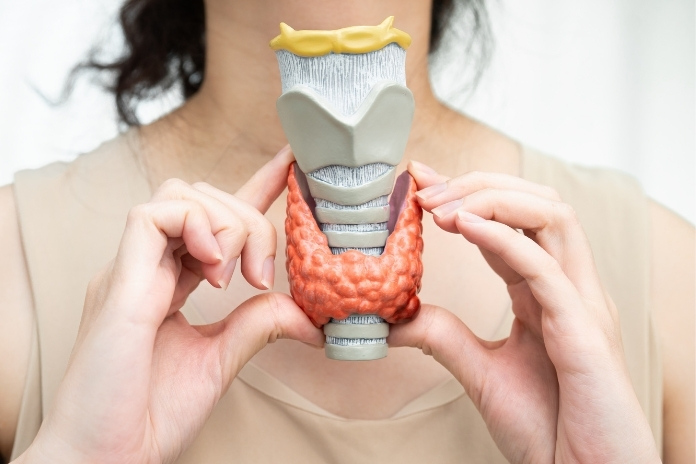
One of the biggest blind spots is low T3 syndrome, sometimes called euthyroid sick syndrome. In this state, TSH and T4 levels may appear normal, but levels of triiodothyronine, or T3, are reduced. T3 is the active hormone that actually enters cells and drives metabolic activity, including in the brain.
Low T3 can occur during chronic illness, prolonged stress, inflammation, significant calorie restriction, or systemic metabolic strain. In these settings, the body downregulates T4-to-T3 conversion as a protective response. The problem is that the brain still depends on T3 for mood regulation, motivation, and cognitive speed.
Research published in The Journal of Clinical Endocrinology & Metabolism suggests that impaired peripheral conversion of T4 to T3 can influence mood and cognitive function even when standard thyroid markers look “normal.” This is why a normal TSH does not always rule out thyroid-related depression.
What this really means is that depression and thyroid dysfunction don’t just coexist. They can masquerade as each other. And unless thyroid hormones, especially T3 dynamics, are part of the conversation, an important piece of the puzzle may stay hidden.
Read More: Unexplained Fatigue? It Could Be a Thyroid Issue
The Science Behind T3 and Mood Regulation

Triiodothyronine, or T3, is the biologically active thyroid hormone. Your thyroid gland mostly produces T4, a storage hormone. T4 only becomes useful after it’s converted into T3 inside tissues, including the brain.
Once active, T3 plays a central role in how the brain functions day to day. It regulates cerebral energy metabolism, influences neuronal growth and repair, and directly affects synaptic transmission, the process that allows brain cells to communicate. It also controls the expression of genes involved in cognition, emotional regulation, and stress response.
The National Institutes of Health has consistently emphasized that thyroid hormones are essential not just for brain development in early life but for maintaining cognitive clarity, emotional stability, and executive function throughout adulthood.
When T3 levels are low, brain metabolism slows. Neurons fire less efficiently. Cognitive processing becomes sluggish. Emotional responses flatten. What this looks like clinically is not just sadness, but brain fog, emotional numbness, slowed thinking, and loss of drive. In other words, symptoms that look exactly like major depression.
How Low T3 Alters Serotonin and Dopamine Signaling
Thyroid hormones do not work in isolation. They interact directly with neurotransmitter systems that regulate mood and motivation.
Research published in Biological Psychiatry has shown that T3 modulates serotonin receptor sensitivity and enhances serotonergic signaling in key brain regions involved in mood regulation. In simple terms, T3 helps serotonin work the way it’s supposed to.
Serotonin and dopamine together influence the following:
- Mood stability
- Motivation and initiative
- Reward processing
- Emotional resilience under stress
When T3 levels fall, serotonin signaling can weaken even if serotonin levels themselves are technically normal. Dopaminergic activity may also decline, contributing to apathy, low motivation, and anhedonia, the inability to feel pleasure.
This is why some patients don’t respond fully to antidepressants. The medication may increase serotonin availability, but if thyroid signaling is impaired, the brain still can’t use that serotonin effectively.
This connection is well recognized clinically. Research published in Molecular Psychiatry suggests that thyroid hormones, including triiodothyronine (T3), modulate the brain’s serotonin system by altering receptor activity and enhancing serotonergic neurotransmission in key mood‑regulating regions, in simple terms, helping serotonin signaling function more effectively.
The key point: low T3 doesn’t just mimic depression. It can biologically block recovery.
T3 vs T4 vs TSH: Why Standard Testing Misses the Problem
To understand low thyroid depression, you have to understand the labs.
Thyroid-stimulating hormone (TSH) is released by the pituitary gland and signals the thyroid to produce hormones. T4 is the main hormone the thyroid gland releases. Triiodothyronine (T3) is the active form that actually influences brain cells. The biological link between T3 and depression exists because T3 directly affects neurotransmitter regulation, including serotonin and thyroid hormones interacting at the receptor level.
Most routine screening stops at TSH. If TSH falls within range, thyroid function is labeled normal. But TSH reflects pituitary signaling; not much active hormone reaches brain tissue. Conversion of T4 to T3 happens locally and varies widely. Stress, inflammation, chronic illness, and nutrient deficiencies can impair this process.
This distinction matters in mood disorders. Depression linked to impaired T3 signaling, sometimes described as thyroid-induced depression, often does not fully improve with antidepressants alone. In cases of treatment-resistant depression, a deeper evaluation, including a comprehensive depression thyroid test, can reveal subtle dysfunction.
Recognizing how T3 and depression intersect shifts the question from purely psychiatric to metabolic. That shift is often where meaningful recovery begins.
Read More: Mood-Boosting Foods for Anxiety: What Science Says About What You Eat and How You Feel
Recognizing When “Depression” Might Be Thyroid-Related

Not all depression is hormonal. Many cases are psychiatric. But some follow a pattern that strongly suggests low thyroid depression, where metabolic slowdown drives emotional symptoms.
Depression tied to hypothyroidism rarely appears in isolation. It often reflects broader endocrine disruption. This form of thyroid-induced depression tends to show up alongside classic hypothyroidism mood symptoms, signaling that the issue may extend beyond neurotransmitters.
Thyroid evaluation should be strongly considered when depressive symptoms coexist with cold intolerance when others feel comfortable, unexplained weight gain, hair thinning, persistent constipation, a slower heart rate, or facial puffiness around the eyes. These systemic signs reflect reduced metabolic activity, not just altered brain chemistry.
When this physical pattern overlaps with mood changes, the connection between T3 and depression becomes harder to ignore. Recognizing potential low thyroid depression early can prevent mislabeling a metabolic condition as purely psychiatric and help guide more precise treatment.
Physical Symptoms That Strengthen the Case
Hypothyroidism often affects multiple organ systems at once. Mood changes may be only one part of a broader physiological picture.
Common accompanying signs include:
- Dry, coarse skin
- Brittle or splitting nails
- Hoarseness or changes in voice
- Menstrual irregularities or cycle changes
According to the Mayo Clinic, physicians often perform a physical exam and medical history review when someone presents with mood symptoms so they can look for signs of other illnesses or systemic causes that could explain those symptoms before diagnosing a primary psychiatric disorder. This can include evaluating for endocrine dysfunction such as thyroid disease.
In practical terms, the body is often telling the story before lab values do.
When a Full Thyroid Panel Matters
A single TSH result can miss clinically meaningful thyroid dysfunction, especially in patients with persistent or treatment-resistant depression.
In complex cases, a more complete thyroid evaluation may include:
- TSH to assess pituitary signaling
- Free T4 to measure the available precursor hormone
- Free T3 to assess active hormone levels
- Thyroid antibodies to evaluate for autoimmune thyroid disease
- Reverse T3 in select situations involving chronic stress or illness
This broader view helps identify patients whose thyroid function looks “normal” on paper but is inadequate at the tissue level, particularly in the brain.
Anyone with depression that does not fully respond to standard therapy should have a thoughtful conversation with their healthcare provider about comprehensive thyroid testing.
What Studies Reveal About Low Thyroid and Depression

Subclinical hypothyroidism is defined as elevated TSH with normal T4.
A meta-analysis published in Thyroid (2018) found that individuals with subclinical hypothyroidism had a higher prevalence of depressive symptoms compared to euthyroid controls, particularly in younger populations.
However, the relationship is complex. Not all patients with subclinical hypothyroidism experience mood changes.
Evidence Linking T3 Supplementation to Better Antidepressant Response
Several randomized controlled trials have evaluated T3 as an adjunct treatment in depression.
A landmark study in The American Journal of Psychiatry demonstrated that adding T3 to tricyclic antidepressants accelerated clinical response.
More recent research suggests T3 augmentation may benefit patients who do not respond adequately to SSRIs.
These interventions occur under medical supervision.
Emerging Research on “Thyroid-Resistant Depression”
Some researchers propose that subtle thyroid hormone signaling abnormalities, despite normal lab ranges, may contribute to persistent mood symptoms.
This remains an evolving area of endocrinology and psychiatry.
The NIH emphasizes that while promising, thyroid hormone therapy should only be used when clinically indicated, given the risks of overtreatment.
How Doctors Differentiate Between Depression and Thyroid Disorders
Endocrinologists evaluate the following:
- Hormone levels
- Symptom severity
- Physical examination findings
Reverse T3 testing remains controversial and is not routinely recommended by major endocrine societies for diagnosing hypothyroidism.
Endocrinologists focus on evidence-based reference ranges. Functional medicine practitioners may interpret “optimal” levels differently.
The American Association of Clinical Endocrinologists (AACE) advises caution in treating borderline lab values without clear clinical hypothyroidism.
Why Self-Diagnosis or Supplementation Can Be Risky
Thyroid hormone replacement therapy can cause the following:
- Palpitations
- Bone loss
- Anxiety
- Cardiac arrhythmias
Over-supplementation may induce hyperthyroidism.
Treatment decisions must be individualized and supervised by a qualified physician.
Medication as the Foundation, Not the Finish Line

Treatment usually begins with levothyroxine, a synthetic T4 hormone. For many people, correcting thyroid-stimulating hormone (TSH) improves energy and mood because T4 provides the substrate for active triiodothyronine (T3) in the brain. When that pathway works, symptoms of low thyroid depression often ease as thyroid hormones and mood regulation realign.
But lab normalization doesn’t always equal recovery. Some patients continue to experience fatigue, cognitive slowing, or emotional flatness despite normal TSH. In certain cases, this reflects persistent issues in the T4-to-T3 pathway, reinforcing the biological link between T3 and depression.
A small subset of patients, particularly those labeled with treatment-resistant depression, may benefit from carefully supervised combination therapy that includes low-dose T3. This approach is debated and is never first-line. T3 is potent, and inappropriate dosing can worsen anxiety or trigger palpitations.
Medication is only part of the picture. Thyroid physiology depends on adequate nutrients and metabolic stability. Deficiencies in iodine, selenium, zinc, iron, or vitamin D can impair hormone conversion and blunt response, even when prescriptions are correct.
Stress, sleep deprivation, and caloric restriction can contribute to patterns resembling low T3 syndrome. Supporting overall metabolic health improves outcomes in cases of thyroid-induced depression, but it does not replace appropriate medical therapy.
Persistent mood symptoms paired with extreme fatigue, unexplained weight shifts, or a family history of thyroid disease warrant re-evaluation, including a comprehensive depression thyroid test. Severe depression always requires immediate care. Thyroid-related mood disorders sit between psychiatry and endocrinology, and coordinated evaluation matters.
Key Takeaway
Depression is common, and thyroid dysfunction is more prevalent than many assume. When thyroid hormones and mood signaling fall out of balance, especially when active T3 is insufficient, the presentation can resemble major depressive disorder. That’s the core of low thyroid depression and the clinical relevance of T3 and depression.
Mood does not operate independently of metabolism. When thyroid hormones and mood regulation are impaired, emotional resilience weakens, cognition slows, and motivation drops. Recognizing this pattern allows clinicians to identify thyroid-induced depression, reconsider incomplete responses, and order appropriate testing rather than escalating medication blindly.
The solution is not self-diagnosis or unsupervised supplements. Proper evaluation, including a targeted depression thyroid test, ensures accurate interpretation and safe management. When low thyroid depression is addressed directly and when the biology behind T3 and depression is respected, outcomes are often more precise and more sustainable.
Sometimes the issue isn’t purely psychological. It’s how the body regulates energy. Treat metabolism and mood together, and recovery becomes far more complete.
References
- National Center for Biotechnology Information. (n.d.). Thyroid hormones in brain development and function. In NCBI Bookshelf.
- MDPI. (2024). Thyroid function and its impact on mood and cognition. Biomolecules, 14(2), 198.
- Springer. (2021). Sex differences in thyroid hormone regulation of mood disorders. Biology of Sex Differences, 12, 67.
- SAGE Journals. (2022). Thyroid disorders and neuropsychiatric manifestations. Thyroid, 32(11), 1445–1458.
- MindBodyO. (n.d.). Thyroid hormones and mental health.
- Frontiers in Endocrinology. (2024). Emerging insights into thyroid hormone signaling and mood regulation. Frontiers in Endocrinology, 15, 1354372.
- Loosen, P. T., & Williams, R. (2003). Thyroid hormone modulation of neurotransmitters in the brain.
- medRxiv. (2022). Thyroid dysfunction and depression: a longitudinal preprint study.
- Familiprix. (n.d.). Thyroid gland and your emotions.
- bioRxiv. (2023). Thyroid hormone signaling and neural circuits involved in mood regulation.
- Oxford Academic. (2023). Endocrine influences on emotional regulation. Journal of Evolutionary Studies, 3(7), 1345–1362.
- IntechOpen. (n.d.). Thyroid disorders and psychological health.
- MDPI. (2024). Pharmacological considerations in thyroid hormone therapy. Pharmaceuticals, 15(4), 391.
- Cleveland Clinic. (n.d.). Thyroid hormone.
- Surgery Group LA. (n.d.). Thyroid gland: impact on mental health.
- PubMed. (2001). Does thyroid supplementation accelerate tricyclic antidepressant response? American Journal of Psychiatry.
- PubMed. (2013). Neuropsychiatric manifestations of thyroid disease.
- National Institute of Mental Health. (n.d.). Major depression.
In this Article