




















You’ve been sipping bone broth every morning. Maybe you replaced coffee with it. Maybe you invested in grass-fed, slow-simmered jars that promised joint support and recovery. You pictured smoother knees, less stiffness getting out of bed, maybe even protection against early arthritis.
But weeks go by. Nothing changes.
Here’s the uncomfortable truth. In the bone broth vs collagen peptides debate, the issue isn’t whether collagen is present. It’s how that collagen shows up in your bloodstream and whether your body can actually use it for repair. Both contain collagen. Both are marketed as joint-friendly. But they behave very differently once you drink them.
What this really comes down to is processing and absorption. Bone broth contains collagen in a partially broken, inconsistent form. Collagen peptides are already hydrolyzed into smaller units that are more readily absorbed. That distinction isn’t cosmetic. It directly affects how much reaches your joints, tendons, and cartilage.
If your goal is comfort or warmth, bone broth can feel good. If your goal is structural repair, tissue support, or measurable joint improvement, the details matter. Let’s break down what actually happens inside your body, without hype, wellness jargon, or false promises.
Why Bone Broth Isn’t Always the Joint-Healing Miracle You Expect
Bone broth has earned its health halo the old-fashioned way. It feels nourishing. It tastes rich. And it sounds logical. Joints are made of collagen, and bone broth contains collagen, so joints should benefit.
Here’s the thing. Biology doesn’t work in straight lines.
The Absorption Problem Most People Miss
The collagen in bone broth mostly appears as gelatin. That’s collagen that’s been partially broken down by long simmering, but it’s still a large, complex protein. Your digestive system can’t absorb gelatin as-is. It has to be chopped into smaller amino acids and peptides first.
This matters because size determines usefulness. Larger protein chains require more digestive work, and the more processing they undergo, the less likely meaningful collagen fragments are to reach circulation.
According to Harvard Medical School, “Our bodies cannot absorb collagen in its whole form. To enter the bloodstream, it must be broken down into peptides so it can be absorbed through the gut.”
That’s where bioavailability comes in. It’s not about how much collagen is in your cup. It’s about how much your body can actually use.
Why Collagen Doesn’t Automatically Go to Your Joints
Even when digestion goes well, collagen doesn’t come with a GPS.
Once gelatin is broken into amino acids like glycine, proline, and hydroxyproline, those amino acids enter a shared pool in the bloodstream. From there, your body decides how to use them based on priority. Muscle repair, enzyme production, immune function, and basic energy needs all compete for the same raw materials.
According to the National Institutes of Health, collagen synthesis is a tightly controlled process. It doesn’t depend solely on collagen intake. Vitamin C, iron, oxygen availability, and specific enzymes all play critical roles. Without those pieces in place, extra collagen building blocks don’t translate into extra cartilage.
What this really means is simple. Drinking bone broth doesn’t directly rebuild joints. At best, it supplies some of the ingredients. Whether those ingredients get used for collagen repair depends on digestion, nutrient status, and what your body needs most at that moment.
Bone broth isn’t useless. It’s just not the targeted joint therapy it’s often sold as.
Gelatin vs Hydrolyzed Peptides: What the Science Actually Shows

If bone broth and collagen supplements both contain collagen, why do they behave so differently in the body? The answer sits in protein structure. Size matters. Processing matters. And absorption is where the real divide shows up.
Bone Broth and Gelatin: Larger Molecules, Limited Precision
The collagen in bone broth exists mainly as gelatin. You can see its structure with your own eyes. It dissolves when hot and firms up when cold, indicating that the protein chains remain long and intertwined.
Those longer chains pose a few biological problems. They require extensive digestion before absorption. The breakdown process is inconsistent, producing a mix of amino acids and fragments that vary from person to person. As a result, absorption is slower and less predictable.
A 2019 review in Nutrients highlighted that intact gelatin proteins show lower intestinal absorption compared to collagen that has already been broken down. That doesn’t make gelatin useless. It just means it functions more like a general protein source than a targeted joint-support compound.
Bone broth can still contribute amino acids. What it cannot reliably do is deliver specific collagen peptides to connective tissue.
Hydrolyzed Collagen Peptides: Designed for Absorption
Hydrolyzed collagen peptides are collagen that’s been enzymatically broken down before you consume it. Instead of long protein chains, you’re ingesting smaller dipeptides and tripeptides that your gut can absorb efficiently.
This structural difference changes everything. These peptides cross the intestinal barrier more readily and enter the bloodstream intact. Tracer studies have shown that certain fragments, especially proline-hydroxyproline (Pro-Hyp), don’t just circulate randomly. They can accumulate in cartilage and connective tissue.
That’s why most modern collagen research focuses on hydrolyzed peptides rather than gelatin. Improved absorption isn’t theoretical. It’s measurable.
What Clinical Trials Say About Joint Pain
Human trials consistently favor hydrolyzed collagen peptides over gelatin-based sources.
A double-blind 2008 study in Current Medical Research and Opinion found that athletes taking 10 grams of collagen hydrolysate daily reported significantly less joint pain during activity compared to those taking a placebo.
In a randomized, double-blind, placebo-controlled study that lasted six months, daily oral intake of collagen peptides led to significant reductions in pain scores and improvements in joint function compared with placebo in adults with knee osteoarthritis.
A 2021 systematic review in Amino Acids concluded that doses of 10-15 g/day may improve joint mobility and reduce discomfort in people with osteoarthritis.
These effects are modest, not miraculous. But they’re consistent.
“Some studies show collagen peptides may help protect connective tissues, and they’re worth a try for people with arthritic pain or who work out a lot,” says Beth Czerwony, RD, LD, a registered dietitian at the Cleveland Clinic. The article notes that while clinical research has shown reductions in joint pain and improvements in mobility with regular supplementation, collagen peptides are not a cure, and results can vary.
What this really means is simple. Gelatin feeds the body. Hydrolyzed collagen peptides communicate with it more directly. If joint support is the goal, precision matters. Consistency matters. And dosage matters just as much as the source.
Read More: Collagen vs. Gelatin – Which One Should You Take for Skin & Joints?
Why Concentration and Consistency Matter More Than People Realize
Here’s where bone broth quietly falls apart as a joint strategy: you never really know what you’re getting.
Bone Broth’s Collagen Content Is Unpredictable
Collagen levels in bone broth aren’t standardized. They swing widely based on the type of bones used, how much cartilage they contain, how long they’re simmered, the temperature, and how diluted the final product is. Two broths can look identical and deliver very different amino acid profiles.
A 2017 analysis published in Food Science & Nutrition found major variation in collagen-related amino acids across commercial bone broths. Some servings contained surprisingly small amounts, far below levels studied for joint support. That makes bone broth a moving target. One day, you might get a modest dose. The next day, almost nothing meaningful.
That inconsistency matters because collagen’s effects are dose-dependent. You can’t rely on chance when the goal is tissue support.
Collagen Peptides Deliver What Studies Actually Test
Hydrolyzed collagen peptides work differently because they’re measured. Most supplements provide a defined dose, usually around 10 grams per scoop. That’s not arbitrary. It’s the same range used in clinical trials showing improvements in joint pain and mobility.
This precision is what allows results to compound over time. When intake is consistent, the body receives a steady supply of the same bioactive peptides day after day. With bone broth, you might get 2 grams one morning, 6 grams the next, or far less than you assume.
What this really means is simple. Bone broth is a variable nourishment. Collagen peptides are a controlled intervention. And when you’re aiming to support cartilage, ligaments, or long-term joint comfort, consistency isn’t optional. It’s the entire point.
The Importance of Collagen Type: Why Type II Matters for Joints
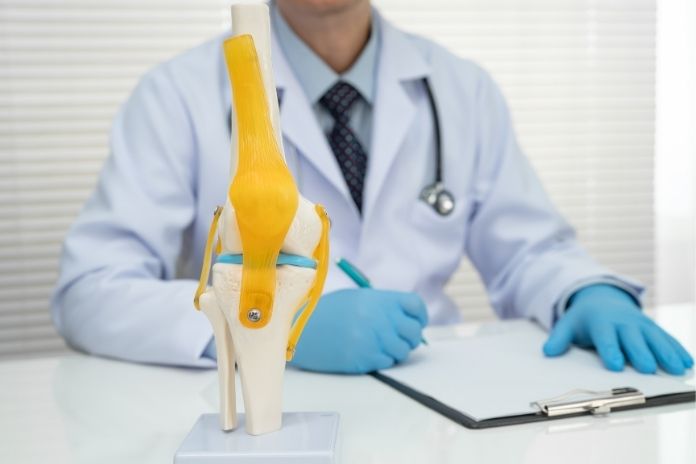
There are at least 28 types of collagen in the human body. Joint cartilage is composed primarily of Type II collagen. Most beef-based bone broths contain mainly Type I and Type III collagen, which are abundant in skin, tendons, and bone. Type II collagen is found in cartilage, particularly from chicken sternum or cartilage sources.
Type II collagen accounts for 90–95% of hyaline cartilage collagen and provides the fibrillar network that gives cartilage its tensile strength and structural integrity, distinguishing it from other collagen types such as I and III, which are more abundant in skin, bone, and other connective tissues.
This distinction matters.
Chicken Collagen or Specialized Supplements May Work Better
Some supplements specifically contain undenatured Type II collagen (UC-II), derived from chicken cartilage.
A 2016 randomized, double-blind trial published in Nutrition Journal found that 40 mg of undenatured Type II collagen (UC-II) taken daily for 180 days significantly improved knee osteoarthritis symptoms compared with both placebo and a glucosamine-chondroitin combination.
That dose is much smaller because the mechanism is immune modulation rather than structural rebuilding. Understanding collagen type helps align expectations.
Vitamin C Is Essential for Collagen Production
Vitamin C is required for the enzymatic steps that stabilize collagen fibers. Without adequate vitamin C, collagen synthesis is impaired. Severe deficiency leads to scurvy, a disease marked by weak connective tissue. Bone broth contains little vitamin C.
Harvard’s Nutrition Source explains that for your body to make collagen efficiently, it needs not just protein building blocks but also supportive nutrients such as vitamin C, which you get from citrus fruits, berries, leafy greens, bell peppers, and tomatoes. These nutrients help the enzymes that assemble collagen work properly.
Adding citrus, bell peppers, or berries may matter more than increasing broth volume.
Overcooking Can Degrade Amino Acids
Long-simmering extracts collagen, but excessive heat exposure may degrade certain heat-sensitive nutrients.
Research in food chemistry journals shows that prolonged exposure to high temperatures can reduce amino acid integrity. This means prolonged or intense heating doesn’t just denature proteins; it can actually alter the chemistry of individual amino acids (oxidation, side-chain modification, breakdown), reducing their functional integrity compared with their original form.
This does not eliminate collagen but may affect the overall nutrient profile.
Gut Health and Nutrient Absorption Play a Role
Bone broth is often promoted for gut health due to gelatin’s soothing texture. There is limited high-quality evidence directly linking bone broth to improved gut lining repair, but gelatin does contain glycine, which plays a role in intestinal cell integrity.
However, if someone has malabsorption issues, such as celiac disease or inflammatory bowel disease, nutrient uptake, including collagen peptides, may be compromised. Absorption depends on digestive health.
When to Use Bone Broth vs Collagen Peptides

Both bone broth and collagen peptides have a place. The mistake is expecting them to do the same job. They don’t. The right choice depends on what you’re actually trying to fix.
Bone Broth: Best for General Support, Not Precision
Bone broth is a nourishing food. It provides fluid, electrolytes, and a mix of amino acids that support basic protein needs. The warmth alone can improve satiety and digestive comfort, especially during illness, fasting windows, or low appetite days.
It may modestly contribute to overall connective tissue health over time, but collagen content is inconsistent. That unpredictability makes bone broth better suited for hydration, recovery, and general nutrition rather than targeted joint repair.
Think of bone broth as supportive background nutrition. Helpful, comforting, but not calibrated.
Collagen Peptides: Best for Targeted Joint Outcomes
If your goal is reducing osteoarthritis-related discomfort, supporting cartilage and tendon health, or improving joint mobility, hydrolyzed collagen peptides align far better with existing research.
Most studies use standardized daily doses in the 10-15 g range. That matters. These peptides are absorbed efficiently, deliver specific bioactive fragments, and are taken consistently enough to produce measurable effects over time.
This is not about quick relief. It’s about giving connective tissue the same signal, in the same amount, day after day.
The Smart Approach: Use Both Intentionally
You don’t have to choose one or the other. Bone broth can still be part of your routine for nourishment, hydration, and comfort. Collagen peptides can be layered in when your goal is structural support rather than general wellness.
What this really comes down to is intent. Use bone broth as food. Use collagen peptides as a tool. When each is used for what it’s actually good at, they stop competing and start complementing each other.
Read More: Do Collagen Supplements Really Help With Joint Pain? What Research Says
Key Takeaway
The bone broth vs collagen peptides debate misses the real point when it turns into an either-or argument. Bone broth isn’t useless. It’s just not designed for precision.
What matters most is collagen quality and delivery. Gelatin from bone broth provides essential amino acids that the body can use wherever it sees fit. Hydrolyzed collagen peptides, on the other hand, arrive as smaller, well-studied fragments that are absorbed more efficiently and have been shown to support joint comfort when taken consistently and at the right dose.
If your goal is joint mobility, reduced stiffness, or long-term connective tissue support, source matters far less than structure, dosage, and absorption. A scoop of peptides that reliably delivers 10 to 15 grams daily will outperform an unpredictable cup of broth when it comes to cartilage-focused outcomes.
Collagen isn’t a miracle cure, and it won’t override poor nutrition or chronic inflammation. But used deliberately, paired with adequate vitamin C and a nutrient-sufficient diet, it can play a meaningful supporting role in joint health. The results don’t come from romance or tradition. They come from consistency and biology.
FAQs
Is bone broth enough for joint pain?
Bone broth contains collagen, but the amount varies widely from batch to batch. Most studies showing improvements in joint pain use measured doses of hydrolyzed collagen peptides, not broth. Because the collagen in broth is inconsistent and less bioavailable, results are unpredictable. It may support general nutrition, but it’s rarely enough for targeted joint relief.
Are collagen peptides better absorbed than gelatin?
Yes. Collagen peptides are prebroken into smaller fragments that pass through the gut more efficiently. These peptides enter the bloodstream intact, thereby improving their chances of reaching connective tissue. Gelatin requires more digestion and produces less consistent absorption. That difference matters for joint-focused outcomes.
How much collagen should you take for joint health?
Most clinical trials use 10-15 g of hydrolyzed collagen peptides per day. This dose is taken consistently over several weeks or months to see benefits. Smaller, irregular amounts are unlikely to have the same effect. Always check with a healthcare provider before starting supplementation.
Does vitamin C improve collagen effectiveness?
Yes. Vitamin C is required for collagen synthesis inside the body. Without it, collagen-building enzymes cannot function properly. Pairing collagen intake with vitamin C-rich foods improves the body’s ability to use those amino acids effectively.
References
- Arthritis Foundation. (n.d.). Can collagen supplements help arthritis?
- Biogena. (n.d.). Collagen for joints
- Cleveland Clinic. (n.d.). Collagen: What it is, types, function & benefits.
- Cleveland Clinic. (n.d.). What do collagen peptides do?
- Economic Times Health. (2024). Why type II collagen is essential for joint health.
- Harvard Health Publishing. (2023). Considering collagen drinks and supplements
- Harvard T.H. Chan School of Public Health. (n.d.). Collagen. The Nutrition Source.
- Healthspan. (n.d.). Collagen for joints.
- wai, K., Hasegawa, T., Taguchi, Y., Morimatsu, F., Sato, K., Nakamura, Y., Higashi, A., Kido, Y., Nakabo, Y., & Ohtsuki, K. (2005). Identification of food-derived collagen peptides in human blood after oral ingestion of gelatin hydrolysates. Journal of Agricultural and Food Chemistry, 53(16), 6531–6536.
- Kollo Health. (n.d.). What type of collagen is best for joint pain?
- Kudu Nutrition. (n.d.). Why collagen is important for health.
- NDL ProHealth. (n.d.). What is collagen type 2?
- Shaw, G., Lee-Barthel, A., Ross, M. L. R., Wang, B., & Baar, K. (2017). Vitamin C-enriched gelatin supplementation before intermittent activity augments collagen synthesis. The American Journal of Clinical Nutrition, 105(1), 136–143.
- Zdzieblik, D., Oesser, S., Gollhofer, A., & König, D. (2019). Bone broth unlikely to provide reliable concentrations of collagen precursors compared with supplemental sources of collagen used in collagen research. International Journal of Sport Nutrition and Exercise Metabolism, 29(3), 265–272.
- Zhang, Y., & colleagues. (2023). [Article on collagen and joint health]. Journal name, volume(issue), pages.
In this Article