

















You’re at the gym, lying on a mat, wondering which core exercise actually deserves your time. Sit-ups feel like a full-body struggle and sometimes leave your lower back aching.
Crunches spark that burning sensation quickly, but the range of motion feels limited. Planks appear deceptively simple, yet a minute in and your abs, shoulders, and even glutes are screaming.
That confusion is exactly why the debate over sit-ups vs. crunches vs. planks is so common. All three target the core, but they do it in very different ways. Some focus on raw strength, others on endurance or stability. Some recruit multiple muscle groups, while others isolate specific sections.
Understanding the differences isn’t just about bragging rights or doing what looks impressive on Instagram. It’s about training smarter, protecting your body, and actually seeing results in the areas that matter to your goals, whether that’s a stronger spine, a flatter midsection, or improved athletic performance.
In this guide, we’ll break down sit-ups, crunches, and planks with a lens on anatomy, biomechanics, and real research. By the end, you’ll know which exercise deserves your focus, how to perform it safely, and how to tailor your core training to your body and your goals.
Understanding Your Core Muscles (And Why It Matters)

When people talk about the “core,” they often picture a six-pack, but your core is much more than just visible abs. It’s a complex system of muscles that stabilizes your spine, transfers force between your upper and lower body, and protects you from injury. Strong core muscles influence posture, athletic performance, and everyday movements far more than appearance alone.
The Main Core Muscles:
- Rectus Abdominis: The classic six-pack muscle. Flexes the spine, bringing the rib cage toward the pelvis. Sit-ups and crunches target it directly.
- Obliques (Internal and External): Located along the sides of the torso. Responsible for rotation, side bending, and resisting twisting forces.
- Transverse Abdominis (TVA): The deepest layer, wrapping around the spine like a corset. Stabilizes the torso and protects the spine during movement. Planks engage it heavily.
- Hip Flexors: Connect the spine to the legs. Assist in lifting the torso during sit-ups, but can be overworked if the abs aren’t doing enough.
Why Core Strength Matters:
- Improves posture and keeps your spine aligned.
- Protects your back and reduces the risk of injury.
- Enhances athletic performance by improving stability and force transfer.
- Supports everyday movements, from bending and lifting to twisting and standing.
According to Shawn Pedicini, a physical therapist with Harvard-affiliated Spaulding Rehabilitation Hospital, “The core is vital for your body, as it serves as the foundation for upper- and lower-body movements. Your core musculature must have a good combination of endurance, stability, and power for many activities.”
Sit-Ups: What They Target and Who They’re Best For
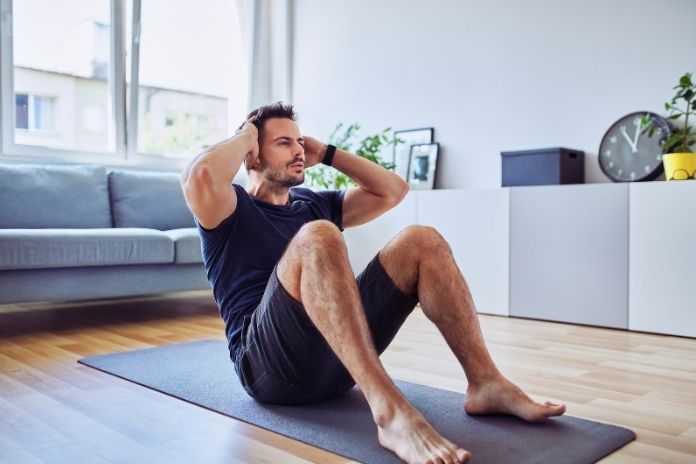
Sit-ups are one of the oldest and most debated core exercises. They involve lifting your torso from a lying position to a fully upright position, engaging multiple muscle groups along the way. While they can be highly effective for certain people, they also carry risks if performed incorrectly or by those with pre-existing conditions.
How Sit-Ups Work: A sit-up is a full trunk flexion movement, moving from lying flat to sitting upright. Unlike crunches, which isolate the abs, sit-ups recruit both the abdominal muscles and the hip flexors.
Primary Muscles Involved:
- Hip Flexors: Take the lead in the movement, helping lift the torso, but sometimes dominating if your abs are weak.
- Rectus Abdominis: The six-pack muscle that flexes the spine, contributing to trunk movement.
- Obliques (Secondary): Assist with rotation and stabilization during the lift.
Benefits of Sit-Ups:
- Improves overall trunk endurance and coordination between the hips and torso.
- Enhances explosive power for athletes who require rapid trunk flexion.
- Electromyography research shows that traditional sit-up movements engage both the abdominal muscles and hip flexors, with hip flexor activity increasing in exercises that involve lifting the legs or significant hip flexion, while abdominal activation varies with technique and position.
Downsides and Injury Risks: Sit-ups are controversial because they place high compressive and shear forces on the lumbar spine. Repeated spinal flexion under load can aggravate disc issues in susceptible individuals.
Common problems include:
- Lower back strain.
- Hip flexor dominance pulls the spine forward.
- Neck strain from poor form.
According to Mayo Clinic guidance on core and back health, movements that repeatedly flex the spine, like traditional sit-ups, can increase stress on the lower back and are best modified or avoided by people with a history of spinal issues, osteoporosis, or back pain to reduce the risk of strain or injury.
Who Sit-Ups Are Best For:
- Athletes with solid core strength.
- Individuals engaging in military or sport-specific conditioning.
- People without lower back pain or spinal concerns.
Sit-ups are generally not recommended for beginners or those with pre-existing back problems. Proper form, controlled movement, and strong abdominal engagement are essential to minimize risks and maximize benefits.
Read More: Sit-Up Variations for Weight Loss: Maximize Fat Burn with Core Workouts
Crunches: The Classic Ab Exercise
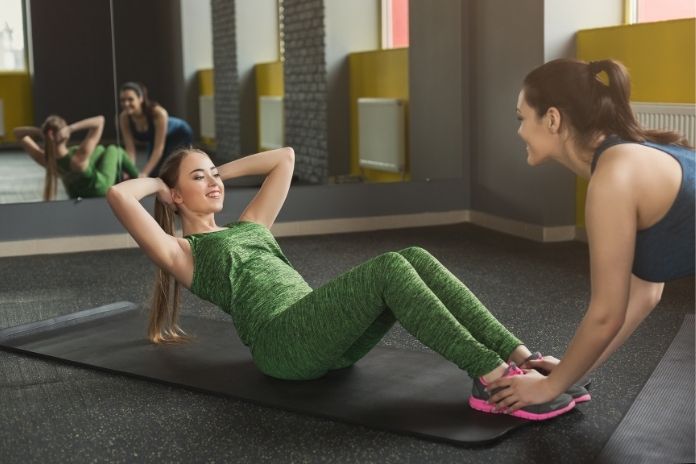
Crunches are one of the most popular core exercises and are often seen as a safer alternative to sit-ups. They focus on the upper portion of the abdominal muscles while minimizing stress on the lower back. Though simple in appearance, understanding how crunches work and their limitations can help you use them more effectively.
How Crunches Work: A crunch involves lifting only your shoulders and upper back off the floor, while keeping the lower back in contact with the mat. This short-range movement isolates the abdominal muscles without requiring full spinal flexion like sit-ups.
Primary Muscle Targeted:
- Rectus Abdominis: The six-pack muscle, engaged strongly to lift the shoulders.
- Hip Flexors: Involvement is minimal, reducing strain on the lower spine.
Benefits of Crunches:
- Provides better isolation of the upper abs.
- Places less stress on the lumbar spine compared with sit-ups.
- Easier to perform with proper form, making it beginner-friendly.
- Exercise physiology research indexed in PubMed shows that crunches activate the rectus abdominis effectively while minimizing lower back load when executed correctly.
Downsides and Limitations: While crunches are safer, they are not a complete core solution. Common drawbacks include:
- Limited range of motion, which only targets part of the abdominal muscles.
- Minimal engagement of deep stabilizing core muscles, such as the transverse abdominis.
- Limited transfer to functional movements like lifting, twisting, or stabilizing the spine during daily activities.
- Neck strain is common if the head is pulled forward instead of using abdominal strength to lift the shoulders.
Who Crunches Are Best For:
- Beginners learning proper ab activation.
- People primarily focused on muscle definition.
- Those seeking low-impact abdominal training without risking back strain.
Crunches are effective for targeting the upper abs, but they should ideally be combined with other core exercises that engage the entire trunk and deep stabilizing muscles for a balanced, functional core.
Read More: The 3D Core Workout – Why You Need More Than Just Crunches
Planks: The Stability Powerhouse
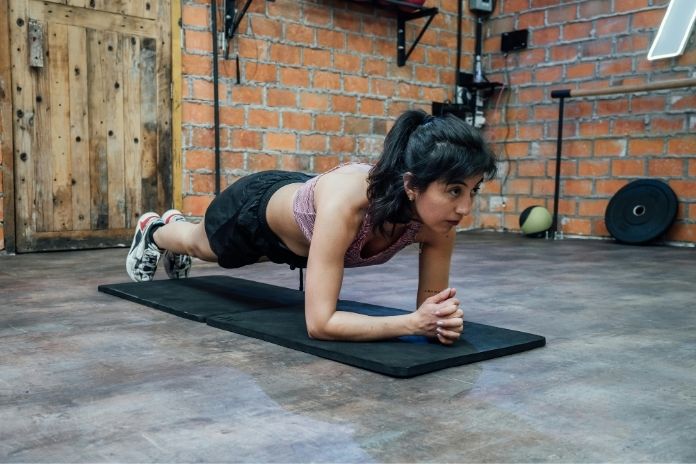
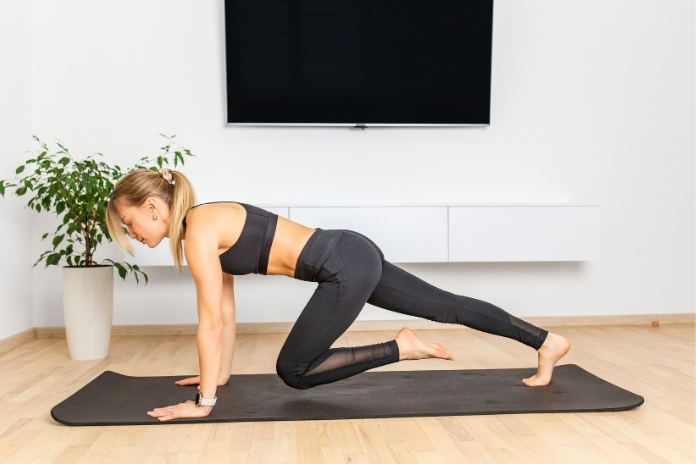
Planks have emerged as a cornerstone of modern core training because they emphasize stability, endurance, and total-body engagement rather than just spinal flexion. Unlike sit-ups or crunches, planks work by keeping the body still while muscles contract, making them both safe and functional for daily life and athletic performance.
How Planks Work: Planks are isometric exercises, meaning the muscles contract without movement. By holding your body in a straight line, you engage multiple muscle groups simultaneously, training your core to resist movement rather than producing it.
Muscles Engaged:
- Transverse Abdominis: Deep stabilizer wrapping around the spine.
- Rectus Abdominis: Front abdominal wall.
- Obliques: Side muscles that resist twisting.
- Glutes: Hip stabilizers.
- Shoulders: Support the upper body.
- Spinal Stabilizers: Help protect the back and maintain posture.
This combination makes planks one of the most comprehensive core exercises for stability and injury prevention.
Benefits of Planks:
- Strengthens deep core muscles for long-term spinal support.
- Improves posture and balance.
- Reduces the risk of lower back injuries.
- Builds endurance in the core and surrounding muscles.
According to Dr. Stuart McGill, PhD, a leading spine biomechanics researcher, core training that focuses on resisting unwanted movement, such as planks and other anti-flexion exercises, is safer and more functional for long-term spinal health than repeated spinal flexion movements like traditional sit-ups.
His work emphasizes that a strong, stable core protects the spine by resisting motion rather than repeatedly bending it.
Downsides and Limitations: While generally safe, planks have some considerations:
- Wrist or shoulder fatigue can occur during longer holds.
- Poor form (sagging hips or elevated shoulders) reduces effectiveness and may strain joints.
- Progress may feel slow without variations like side planks, plank reaches, or weighted planks.
Who Planks Are Best For:
- Individuals with lower back pain are seeking a safe, stabilizing exercise.
- Beginners and advanced trainees alike can benefit, as intensity can be adjusted.
- Anyone focused on building long-term core health and functional strength.
Planks may not give you that “six-pack burn” of crunches or sit-ups, but they provide superior functional strength, stability, and spinal protection, making them a cornerstone for a well-rounded core routine.
Read More: How to Strengthen Your Deep Core (Not Just Your Abs)
Sit-Ups vs. Crunches vs. Planks: Which Core Exercise Should You Choose?
When it comes to core training, there’s no one-size-fits-all solution. Sit-ups, crunches, and planks all strengthen your midsection, but each targets muscles differently, carries different risks, and aligns better with specific goals. Choosing the right exercise depends on what you want: functional strength, visible abs, athletic performance, or spine-friendly training.
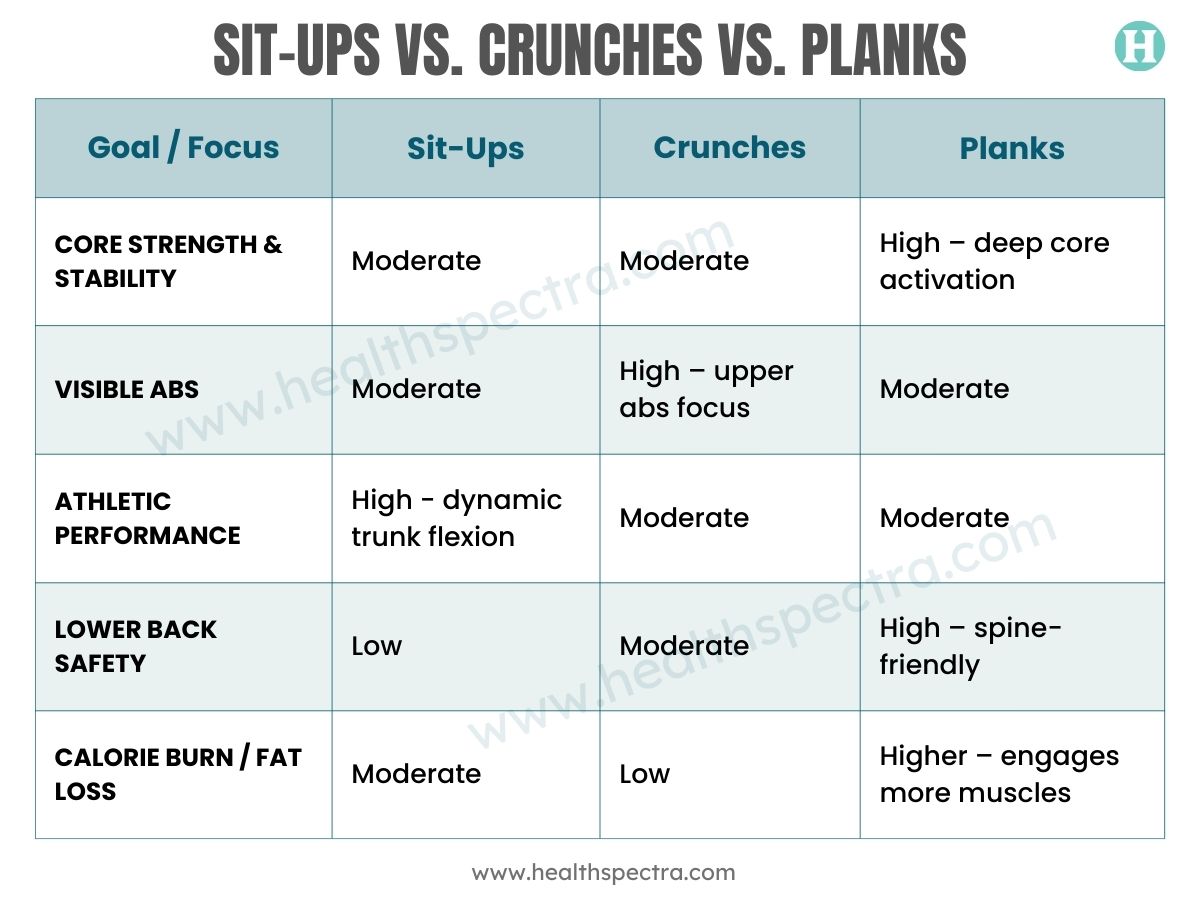 Each exercise has a place in a balanced core routine. Planks are the safest and most effective for functional strength and spinal health. Crunches are useful if your goal is targeted abdominal definition, while sit-ups remain relevant for athletes needing explosive trunk movement.
For most people, combining planks with occasional crunches or controlled sit-ups provides the best balance of strength, stability, and aesthetics without overloading the spine.
Safety Tips for Core Exercises
Maintaining proper form is critical for effective results and injury prevention. Each core exercise has unique risks, so following safety guidelines ensures you train smart and protect your spine.
Sit-Up Safety Guidelines
- Protect your neck: Avoid pulling on your head or neck; let your core muscles lift your torso.
- Control your movement: Perform each repetition slowly and deliberately to reduce spinal stress.
- Listen to your lower back: Stop immediately if you feel pain, discomfort, or strain.
- Know when to skip: Avoid sit-ups if you have herniated discs, chronic back pain, or spinal issues.
Crunch Safety Guidelines
- Maintain neck alignment: Keep your chin slightly lifted and away from your chest.
- Engage the abs first: Activate your core before lifting your shoulders to ensure proper muscle use.
- Coordinate your breathing: Exhale as you crunch up and inhale as you lower down.
- Avoid momentum: Focus on slow, controlled movements rather than jerky repetitions.
Plank Safety Guidelines
- Neutral spine alignment: Keep your back straight, avoiding sagging hips or arching.
- Engage the full core: Squeeze your abs, glutes, and shoulders to maintain stability.
- Monitor discomfort: Stop if your lower back sags, shoulders ache, or wrists feel strained.
- Progress gradually: Start with shorter durations and increase time only as form is maintained.
Key Takeaway: Safety is more important than reps or duration. Proper technique ensures maximum results, reduces the risk of injury, and allows you to build a strong, functional core over time.
Beginner-Friendly Core Exercise Alternatives
Not everyone can jump straight into full sit-ups, crunches, or standard planks. If traditional exercises feel too challenging, uncomfortable, or risk your back, these beginner-friendly options provide a safe and effective way to build core strength while minimizing strain.
- Modified Planks: Performed on the knees or against an incline surface like a bench or wall, modified planks reduce the load on your body while still activating deep core muscles, glutes, and spinal stabilizers. Focus on maintaining a neutral spine and engaging your abs throughout the exercise.
- Dead Bugs: Lying on your back, you slowly extend opposite arms and legs while keeping your core engaged. This movement trains deep core control without stressing the lower back. Move slowly and keep your lower back lightly pressed into the floor to maximize effectiveness.
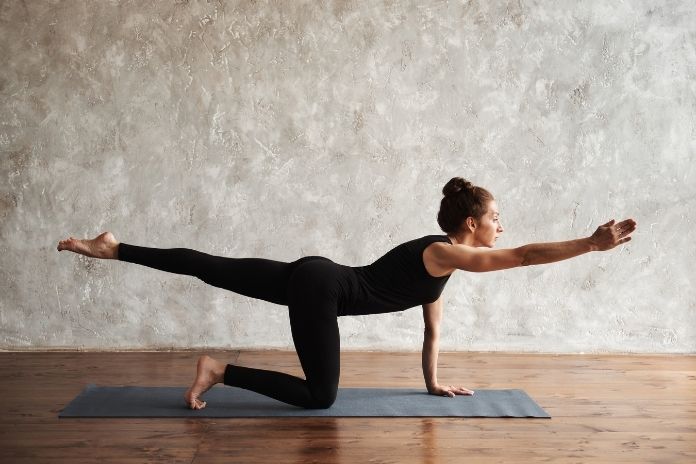
- Bird-Dog: From an all-fours position, extend one arm and the opposite leg, then alternate. This exercise improves balance, coordination, and spinal stability while strengthening the core and glutes. Keep your spine neutral and avoid rotating your hips; quality over speed is key.
- Standing Crunches: Crunching movements performed while standing, often with rotation or side bends, offer a lower-impact alternative to floor exercises. They engage the rectus abdominis and obliques while being easier on the lower back. Focus on controlled movements and exhaling during each crunch.
Key Takeaway: These beginner-friendly alternatives allow you to build foundational core strength safely. Once your stability and endurance improve, you can gradually progress to traditional sit-ups, crunches, or planks without risking injury.
Sample Weekly Core Routine Using All Three
A strong core improves posture, balance, and overall functional strength while reducing the risk of back pain. This beginner-friendly weekly routine combines stability, isolation, and dynamic exercises to target all major abdominal muscles. Each session focuses on a different aspect of core training, allowing adequate recovery between workouts.
A balanced approach works best.
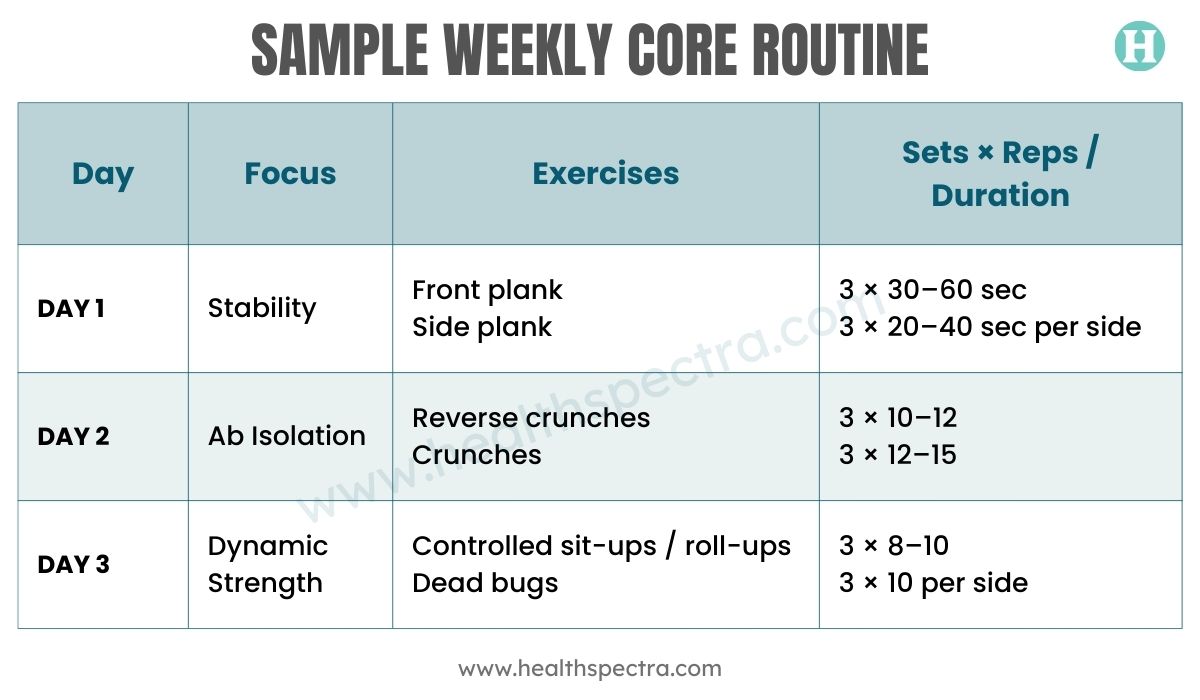 Rest: Allow at least one day between core sessions to promote recovery and muscle growth.
Read More: Targeting Abs: Daily Exercises for Core Strengthening
Conclusion
Choosing the right core exercise depends on your goals, body, and long-term health. Among sit-ups, crunches, and planks, planks emerge as the most balanced and safest option. They engage the deep stabilizing muscles of your core, protect your spine, improve posture, and build functional strength that translates to daily life and sports alike.
Crunches remain a solid choice for those focused on visible ab definition or who are just starting their core training journey. They allow controlled flexion of the spine with lower injury risk, helping you activate the rectus abdominis efficiently.
Sit-ups are most beneficial in athletic contexts, where dynamic trunk flexion and coordination are important. However, they carry a higher risk for the lower back and hip flexors, meaning they should be approached cautiously, especially for beginners or anyone with spinal issues.
The key is integration over isolation. A smart core routine combines all three exercises in a way that matches your needs: plank-based routines for stability and spinal protection, crunches for targeted ab activation, and sit-ups for functional and athletic strength. This mix allows you to build a strong, resilient core without compromising safety.
Ultimately, the best core exercise is not about fashion, Instagram trends, or how “impressive” it looks; it’s the one that keeps you strong, injury-free, and progressing toward your goals over the long term. Core training should be sustainable, adaptable, and protective, ensuring your spine, posture, and overall fitness benefit for years to come.
References
- FitnessRec. (n.d.). Core stability vs. core strength: Build a bulletproof midsection and lift safer.
- Mayo Clinic. (n.d.). Osteoporosis: In-depth.
- Harvard Health Publishing. (n.d.). Do more for your core.
- Physio-Pedia. (n.d.). Core muscles.
- Hospital for Special Surgery. (n.d.). What are core muscles?
- Pearls of Nutrition. (2022, December). Understanding your core.
- Fitness.edu.au. (n.d.). Understanding the core: More than just abs.
- Prince William County Government. (n.d.). Understanding your core: More than just abs.
- Harvard Health Publishing. (2018, September 4). Understanding and improving core strength.
In this Article