













Every year, vaccines prevent millions of deaths worldwide. Yet misinformation continues to put lives at risk. Understanding the facts about vaccines isn’t just about protecting yourself; it’s about protecting your family, your community, and those who are too vulnerable to be vaccinated.
“The importance of vaccination is to try to keep people healthy and prevent infections,” said Dr. Nancy Crum, an infectious disease physician in Galion, Ohio. “Obviously, there’s a narrow range of bacteria and viruses that we do have immunizations for.”
“But for those pathogens, taking a vaccine for prevention is a huge advancement and saves millions of lives each year,” she added.
Let’s separate myth from science.
Read More: Pap Smear vs. HPV Test: What’s the Difference and Why Both Matter
1. Vaccines Cause Autism

The Myth: Vaccines, particularly the MMR (measles, mumps, rubella) vaccine, cause autism.
The Facts: This myth originated from a fraudulent 1998 study by Andrew Wakefield, who lost his medical license after investigators discovered he had financial conflicts of interest and manipulated data.
The study has been thoroughly debunked by numerous large-scale studies involving millions of children. Current research suggests autism develops before birth, and no scientific evidence links vaccines to autism spectrum disorders.
“There’s no relationship between any vaccine and autism,” says Renee Slade, MD, a pediatrician in the Rush Pediatric Primary Care Center.
2. You Only Need Vaccines as a Child
The Myth: Vaccination is only necessary during childhood.
The Facts: Many vaccines require booster shots during adolescence and adulthood. Additionally, new vaccines are recommended as you age, such as the shingles vaccine for adults over 50 and annual flu shots.
If you missed vaccines as a child due to illness or other reasons, you can still receive them as an adult.
3. Diseases Were Already Disappearing Before Vaccines
The Myth: Improved sanitation and hygiene eliminated diseases before vaccines were introduced.
The Facts: While better hygiene helped reduce some diseases, vaccines were crucial in controlling and eliminating many infectious diseases. Recent measles outbreaks in the United States prove that when vaccination rates drop, these diseases quickly return.
Diseases like polio, which paralyzed thousands of children annually, didn’t disappear until vaccines were widely administered.
4. Vaccines Contain Harmful Ingredients
The Myth: Vaccines contain dangerous chemicals that can harm your body.
The Facts: Vaccine ingredients are present in amounts far smaller than what we’re naturally exposed to in our environment. The dose makes the poison – substances that could be harmful in large quantities are safe in the tiny amounts found in vaccines.
All vaccine ingredients serve specific purposes and undergo rigorous safety testing.
5. Delaying Vaccines Is Safer
The Myth: It’s better to wait until children are older before vaccinating them.
The Facts: The vaccination schedule is designed to protect children when they’re most vulnerable. Many serious diseases are most dangerous to infants and young children. Delaying vaccines leaves children unprotected during their highest-risk period and doesn’t improve safety.
Read More: What Vaccines Do You Need as an Adult? A Complete Guide by Age and Risk
6. People with Egg Allergies Can’t Get Flu Shots
The Myth: Anyone with an egg allergy must avoid the flu vaccine.
The Facts: Most people with egg allergies can safely receive the flu vaccine. Egg-free flu vaccine options are also available for adults 18 and older. Even people with severe egg allergies typically experience only mild reactions like hives, which can be easily managed.
7. Most Vaccinated People Still Get Sick
The Myth: Vaccines don’t work because vaccinated people still get diseases.
The Facts: No vaccine is 100% effective, but they dramatically reduce your risk of disease. Vaccines work by helping your immune system recognize and fight specific pathogens.
Even when breakthrough infections occur, vaccinated individuals typically experience milder symptoms and fewer complications than those who are unvaccinated.
8. Herd Immunity Protects My Unvaccinated Child
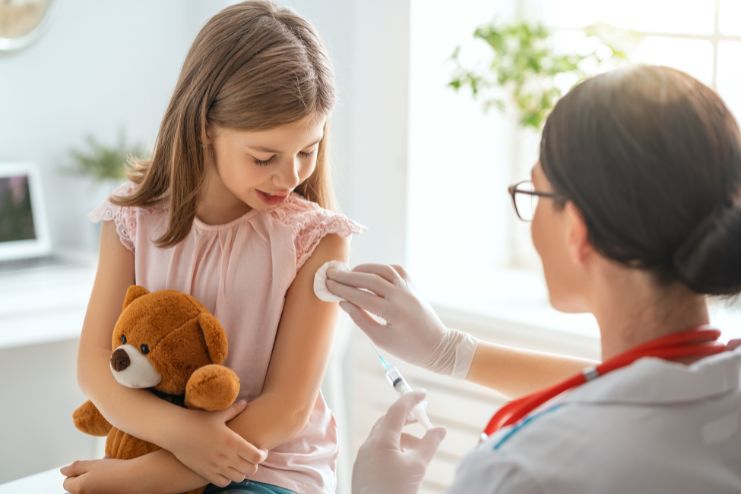
The Myth: If other children are vaccinated, my child doesn’t need vaccines.
The Facts: Relying on herd immunity is dangerous and irresponsible. Your child interacts with people beyond your immediate circle—at stores, schools, and public places.
As more parents skip vaccines, herd immunity breaks down, putting everyone at risk, especially infants too young for vaccines and people with compromised immune systems who can’t be vaccinated.
9. Vaccine Schedules Should Be Spread Out
The Myth: Giving multiple vaccines at once overwhelms a child’s immune system.
The Facts: Children’s immune systems can handle multiple vaccines simultaneously. The recommended schedule is based on extensive research showing when protection is needed most.
Spreading out vaccines leaves children vulnerable to disease for longer periods and requires more doctor visits, increasing the chance parents will fall behind on the schedule.
Read More: The Hidden Dangers of Overusing Antibiotics: What You Need to Know
10. You Don’t Need the Shingles Vaccine If You Never Had Chickenpox
The Myth: Only people who had chickenpox as children need the shingles vaccine.
The Facts: The CDC recommends adults over 50 receive the shingles vaccine regardless of whether they remember having chickenpox.
Many people had mild cases and don’t remember them, and the chickenpox virus can still be present in your body. It’s better to be protected than risk a painful shingles outbreak later.
11. Vaccines Give You the Disease They’re Meant to Prevent
The Myth: Vaccines contain diseases and can make you sick with what they’re supposed to prevent.
The Facts: Vaccines cannot cause the diseases they protect against. Some vaccines contain weakened or inactivated forms of viruses, which cannot cause full-blown illness.
Mild symptoms like soreness, low fever, or fatigue after vaccination are signs your immune system is building protection, not signs of disease.
12. Vaccine Effectiveness Has Never Been Proven
The Myth: There’s no evidence that vaccines actually work.
The Facts: Vaccines are among the most studied medical interventions in history. Decades of research involving millions of people worldwide prove vaccines are safe and effective.
Diseases like polio, which once paralyzed thousands of children annually in the United States, have been virtually eliminated through vaccination. In the decade before the measles vaccine became available in 1963, an estimated 3 to 4 million Americans were infected each year, with an average of 6,000 measles-related deaths reported annually.
Read More: A New Promising HIV Vaccine Strategy Has Been Developed, New Study Suggests
13. Not Vaccinating Only Affects My Child

The Myth: Choosing not to vaccinate is a personal decision that only impacts my family.
The Facts: Most vaccine-preventable diseases are highly contagious. When you don’t vaccinate your child, you’re putting others at risk, including infants too young for vaccines, pregnant women, elderly individuals, and people with weakened immune systems who cannot be vaccinated. Community immunity only works when enough people are vaccinated.
The Bottom Line
Vaccination is one of the most important public health achievements in history, preventing millions of deaths and serious illnesses each year. While no medical intervention is without risk, the overwhelming evidence shows vaccines are safe and effective.
Don’t let myths and misinformation put your family and community at risk.
Ready to protect your family? Talk to your healthcare provider today about staying up to date on recommended vaccines.
Visit the CDC’s vaccine schedule page or call your doctor to book an appointment. Your decision to vaccinate protects not just your loved ones, but your entire community.
Read More: What Happens if you Miss the 2nd Covid-19 Shot?
Frequently Asked Questions
How do vaccines work?
Vaccines work by training your immune system to recognize and fight specific diseases. They contain weakened or inactive parts of a particular organism (antigen) that trigger an immune response. This allows your body to build antibodies without getting sick, so you’re protected if you encounter the real disease later.
Are vaccine side effects serious?
Most vaccine side effects are mild and temporary, such as soreness at the injection site, low-grade fever, or fatigue. These symptoms typically resolve within a few days and are signs your immune system is building protection. Serious side effects are extremely rare and are far less risky than the diseases vaccines prevent.
Why are so many vaccines given to young children?
Young children are most vulnerable to many serious diseases, which is why the vaccine schedule is designed to protect them as early as safely possible. The schedule is based on decades of research showing when children are most at risk and when vaccines are most effective.
Can I catch a disease from someone who was recently vaccinated?
This is extremely rare and depends on the type of vaccine. Most vaccines use inactivated viruses that cannot spread. A few vaccines use weakened live viruses (like the nasal flu vaccine), but transmission is exceptionally uncommon and poses little risk to others.
What is herd immunity, and why does it matter?
Herd immunity (also called community immunity) occurs when a high percentage of a population is vaccinated, making it difficult for diseases to spread. This protects vulnerable individuals who cannot be vaccinated, such as newborns, people with certain medical conditions, and those with weakened immune systems.
How do we know vaccines are safe?
Vaccines undergo rigorous testing in multiple phases of clinical trials before approval. After approval, they continue to be monitored through systems like the Vaccine Adverse Event Reporting System (VAERS). This ongoing surveillance has involved millions of people over many decades.
Why do I need vaccines if diseases are rare now?
Diseases are rare precisely because of high vaccination rates. When vaccination rates drop, diseases quickly return, as we’ve seen with recent measles outbreaks. Maintaining high vaccination coverage is essential to keep these diseases from resurfacing.
Can vaccines overload my child’s immune system?
No. Children’s immune systems can handle thousands of antigens (foreign substances) at once. The antigens in all recommended childhood vaccines combined are far fewer than what children encounter naturally every day from the environment.
Should I delay vaccines if my child has a mild cold?
In most cases, mild illnesses like a cold are not a reason to delay vaccination. However, you should always consult with your healthcare provider about your specific situation. Delaying vaccines unnecessarily leaves children unprotected when they’re vulnerable.
Where can I find reliable information about vaccines?
Trusted sources include the Centers for Disease Control and Prevention (CDC), World Health Organization (WHO), Mayo Clinic, your healthcare provider, and academic medical centers. Be cautious of information from non-medical sources or social media.
References
- https://pmc.ncbi.nlm.nih.gov/articles/PMC6768751/
- https://www.ncbi.nlm.nih.gov/books/NBK25349/
- https://pmc.ncbi.nlm.nih.gov/articles/PMC2908388/
- https://pmc.ncbi.nlm.nih.gov/articles/PMC8694782/
- https://www.cdc.gov/vaccine-safety/about/autism.html
- https://pmc.ncbi.nlm.nih.gov/articles/PMC1124634/
- https://publichealth.jhu.edu/2025/the-evidence-on-vaccines-and-autism
- https://pmc.ncbi.nlm.nih.gov/articles/PMC3136032/
- https://pmc.ncbi.nlm.nih.gov/articles/PMC2831678/
- https://www.cdc.gov/vaccines/hcp/imz-schedules/child-adolescent-age.html
- https://www.cdc.gov/vaccines-children/schedules/index.html
- https://www.cdc.gov/vaccines/by-age/index.html
- https://www.who.int/news-room/questions-and-answers/item/herd-immunity-lockdowns-and-covid-19
- https://www.mayoclinic.org/diseases-conditions/coronavirus/in-depth/herd-immunity-and-coronavirus/art-20486808
- https://pmc.ncbi.nlm.nih.gov/articles/PMC7831753/
- https://www.publichealth.columbia.edu/news/relationship-between-vaccines-herd-immunity
- https://www.who.int/news-room/feature-stories/detail/how-do-vaccines-work
- https://pmc.ncbi.nlm.nih.gov/articles/PMC10957248/
- https://www.mayoclinic.org/healthy-lifestyle/infant-and-toddler-health/in-depth/vaccines/art-20048334
- https://www.mayoclinic.org/healthy-lifestyle/adult-health/in-depth/vaccines/art-20046750
- https://pmc.ncbi.nlm.nih.gov/articles/PMC6410476/
- https://www.cdc.gov/measles/about/history.html
- https://pmc.ncbi.nlm.nih.gov/articles/PMC10946219/
- https://www.who.int/news-room/spotlight/history-of-vaccination/history-of-polio-vaccination
- https://www.who.int/news-room/spotlight/history-of-vaccination/history-of-measles-vaccination
- https://www.rush.edu/news/8-myths-about-vaccines-and-kids
- https://doctors.rush.edu/details/1166
- https://www.ama-assn.org/public-health/prevention-wellness/what-doctors-wish-patients-knew-about-family-immunizations
- https://find-doctor.ama-assn.org/doctor/nancy-faye-crum-md/3128667
In this Article