



















You fall asleep without much trouble. Then, sometime around 3 in the morning, your eyes open. The room is dark. Your body feels wired. You stare at the ceiling, and sleep refuses to come back. An hour later, you’re still awake, watching the clock edge toward the time your alarm will go off. By morning, you feel gutted.
If this pattern happens more nights than not, you’re likely dealing with maintenance insomnia, a form of sleep disturbance where the problem is not falling asleep but staying asleep. It is one of the most common and least understood sleep complaints in clinical practice, affecting tens of millions of adults in the United States.
The frustrating part is that your body is not randomly misfiring. There are specific biological, hormonal, and psychological mechanisms that make waking up at 3 AM and not being able to fall back asleep not only possible but, for some people, predictable.
This article covers what maintenance insomnia actually is, why 3 AM is such a common wake-up point, which biological and psychological factors drive middle-of-the-night insomnia, what the research says about effective treatments, and when it is time to talk to a healthcare professional.
What Is Maintenance Insomnia?

Definition of Sleep Maintenance Difficulty
Maintenance insomnia refers to a pattern of repeated awakenings during the night accompanied by difficulty returning to sleep. Unlike the person who lies awake for an hour before falling asleep, someone with sleep maintenance difficulty typically drifts off without trouble at bedtime. The problem emerges in the middle of the night, often during the same rough window each time.
Sleep maintenance difficulty is defined clinically not just by the awakening itself but by what happens after. A brief arousal of a few minutes that resolves on its own is normal. The concern is when getting back to sleep takes 30 minutes or longer or when the awakening signals the effective end of the night.
How It Differs From Other Types of Insomnia
Insomnia is not one single experience. Clinicians recognize at least three distinct patterns:
Sleep-onset insomnia involves difficulty falling asleep at bedtime, with the person lying awake for extended periods before sleep begins. Maintenance insomnia is about staying asleep once sleep is established.
Early morning awakening insomnia involves waking significantly earlier than intended, typically around 4 or 5 AM, and being unable to sleep further. These patterns can overlap, and some people experience more than one, but the underlying drivers and treatment strategies can differ meaningfully between them.
When It May Be Part of Insomnia Disorder
Occasional nighttime awakenings are a universal human experience. The line between a rough stretch and a clinical sleep disorder is defined by persistence, frequency, and functional impact.
When nighttime awakenings occur at least three nights per week, last for three months or longer, and cause measurable daytime impairment, including fatigue, mood disruption, concentration problems, or reduced performance, they may meet the diagnostic criteria for insomnia disorder as defined in the DSM-5.
Why 3 AM Is a Common Time to Wake Up

Natural Sleep Cycles During the Night
Sleep is not a uniform state. It unfolds in cycles of roughly 90 to 110 minutes, each containing a progression through non-REM stages (light, then deep) followed by a period of REM sleep. A typical night involves four to six of these cycles, and they are not all equal.
The deepest, most restorative slow-wave sleep dominates the first half of the night. By the time several hours have passed, sleep architecture shifts. The final cycles of the night contain less deep sleep and more REM sleep, which is lighter and more easily disrupted.
This means that the early hours of the morning, roughly 2 to 5 AM depending on your sleep timing, represent a biological window of vulnerability where minor stimuli are far more likely to produce a full awakening than they would have been at 10 PM.
The Body’s Early-Morning Hormone Shift
The biology of that 3 AM window involves more than just lighter sleep stages. Multiple physiological systems are simultaneously transitioning in ways that prime the body for wakefulness. Cortisol, the body’s primary alerting hormone, follows a 24-hour circadian rhythm. It drops to its lowest point around midnight and then begins climbing steadily.
Research cited in a clinical review on early morning awakening and cortisol dysregulation notes that cortisol shows measurable small spikes around 3 AM and 6 AM, with its largest peak occurring in the 8 to 10 AM window. For most people, these early-morning hormonal shifts proceed unnoticed. For those with disrupted sleep or elevated stress reactivity, that initial cortisol rise can be enough to tip a light sleep stage into full wakefulness.
Body core temperature also begins rising in the early morning hours as the brain prepares for the day. This gradual warming is a normal part of circadian regulation, but it introduces an additional factor that works against the continuity of deep sleep in the second half of the night.
Reduced Sleep Pressure Late in the Night
Sleep pressure, technically called homeostatic sleep drive, is the body’s accumulation of adenosine in the brain over hours of wakefulness. It builds throughout the day and peaks at bedtime, making sleep feel nearly irresistible. After several hours of sleep, that pressure has been substantially discharged. The result is that late-night sleep is structurally more fragile, needing less of a push to break.
This is not a malfunction. It is the design. But for people with hyperarousal tendencies, circadian disruption, or elevated nighttime stress hormones, that window of reduced sleep pressure in the early morning hours becomes a reliable point of failure.
Biological Factors That Can Trigger 3 AM Wake-Ups

Stress and the Brain’s Hyperarousal System
One of the most important frameworks for understanding chronic maintenance insomnia is hyperarousal. Rather than viewing insomnia as purely a sleep disorder, leading sleep researchers increasingly describe it as a disorder of excessive arousal that simply becomes most visible at night.
Dr. Jade Wu, PhD, DBSM, has explained in an interview that “insomnia really is a 24-hour hyperarousal disorder… It’s not really a sleep disorder; it’s more of a hyperarousal disorder that makes you tired and antsy during the day and irritable during the day, and makes you more likely to perceive wakefulness and feel wakeful during the night.”
In people with this pattern, stress does not simply add to difficulty sleeping. It dysregulates the entire arousal system, elevating nighttime cortisol, increasing metabolic rate, and keeping the brain in a state of vigilance that prevents the deeper stages of sleep from fully stabilizing.
Circadian Rhythm Misalignment
The circadian rhythm is a roughly 24-hour internal clock governed by the suprachiasmatic nucleus in the hypothalamus. It regulates the timing of virtually every biological process, including sleep, hormone release, body temperature, and appetite. When this clock becomes misaligned with the external light-dark cycle, sleep architecture suffers.
Common sources of circadian rhythm sleep disruption include late-night exposure to blue light from screens, irregular sleep and wake schedules, shift work, and jet lag from crossing time zones. When the internal clock is shifted earlier than normal, a condition associated with aging and sometimes called “advanced sleep phase,” the brain begins orchestrating its wake-up physiology too early, making the 3 AM window even more precarious.
Age-Related Changes in Sleep
Age is one of the most consistent predictors of middle-of-the-night insomnia. As adults move through their 40s, 50s, and beyond, slow-wave sleep declines significantly, and the sleep architecture that remains becomes lighter and more fragmented.
A review on cortisol and early morning awakening notes that older adults not only release more cortisol during the night compared to younger adults but also show increased reactivity to cortisol, meaning a smaller hormonal signal can produce a full awakening.
This interaction between age-related sleep architecture changes and a more reactive stress hormone system helps explain why early morning waking becomes so much more common with age.
Medical and Physiological Triggers
Maintenance insomnia does not always arise from primary sleep or stress factors. A range of medical conditions can fragment sleep through the night. Chronic pain disrupts continuity across all stages, while hormonal changes during perimenopause and menopause can trigger night sweats and increase cortisol reactivity.
Gastroesophageal reflux often worsens when lying down, and obstructive sleep apnea causes repeated airway obstructions that lead to frequent partial awakenings, especially in the early morning hours.
Certain medications, including some antidepressants, beta-blockers, and corticosteroids, can also disrupt sleep maintenance as a side effect. A healthcare evaluation is appropriate when awakenings are accompanied by physical symptoms, snoring, witnessed breathing pauses, or restless leg sensations.
Read More: Circadian Rhythms: Unlocking the Secrets of Your Body’s Internal Clock
Psychological Patterns That Reinforce Nighttime Wakefulness
The Clock-Watching Cycle
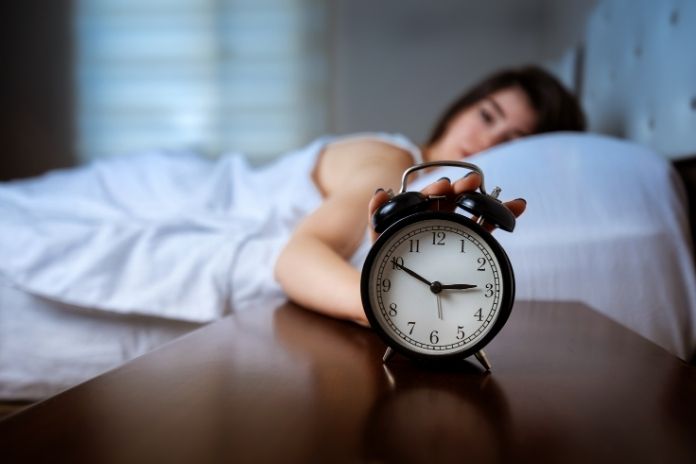
One of the more clinically significant behavioral patterns in early-morning awakening insomnia is what sleep specialists sometimes call the clock-watching cycle. After waking in the early morning hours, many people immediately check the time.
That single action sets off a cascade: the brain calculates how many hours of sleep remain, registers a shortfall, generates anxiety about tomorrow’s functioning, and produces a state of alert wakefulness that makes returning to sleep far harder.
Dr. Jade Wu has specifically recommended in Newsweek coverage of her sleep research that people avoid checking the time during nighttime awakenings, noting that “watching minutes and hours pass by, while not being able to sleep, can increase feelings of anxiousness or frustration.” It is not helpful in any way.”
Learned Sleep Disruption
Repeated nighttime awakenings can condition the brain over time. The brain is an association-making machine. When waking at 3 AM occurs night after night, often followed by anxiety, frustrated clock-checking, and prolonged wakefulness, the brain begins to anticipate that pattern.
The awakening itself becomes a learned cue for wakefulness, independent of whatever biological factors originally triggered it.
Dr. Michael Grandner, PhD, CBSM, has described this mechanism, explaining that “the act of trying to fall asleep, whether it’s the beginning of the night, middle of the night, or wherever, becomes predictably stressful” because the arousal systems associated with the sleep effort counteract the very process the person is trying to initiate.
His broader framing is that chronic insomnia involves a conditioned association in which bed and nighttime become reliable triggers for stress and wakefulness rather than relaxation.
Practical Strategies That May Help You Fall Back Asleep

Avoid Stimulation During Night Awakenings
The behavioral prescription during a nighttime awakening is largely about reducing sensory and cognitive stimulation. Keep the room dark or use a sleep mask. Do not look at your phone. Turn the clock face away or move it out of sight. Resist the urge to calculate remaining sleep time. The goal is to communicate safety and calm to a nervous system that is scanning for threat.
Slow, extended exhale breathing, sometimes called physiological sighing, can activate the parasympathetic nervous system and lower the cortisol-driven arousal response. Inhale normally through the nose, then add a second short inhale before releasing a long, slow exhale through the mouth. Repeating this a few times signals to the body that no threat is present.
Use a Calm Reset If Awake for Too Long
Most sleep clinicians recommend that if you have been awake in bed for approximately 20 minutes without returning to sleep, getting up briefly is preferable to lying in place. The reasoning is rooted in stimulus control: staying in bed while awake reinforces the learned association between bed and wakefulness.
Leaving the bed, sitting somewhere dim and quiet, and doing something low-stimulation like gentle reading or slow breathing, then returning when sleep pressure feels genuine, helps maintain the bed as a sleep-associated environment.
This is not a punishment. It is a deliberate recalibration of what the brain expects when it is in bed in the middle of the night.
Strengthen Your Sleep Drive During the Day
The fragility of early morning sleep is partly a function of insufficient sleep pressure by that point in the night.
Daytime habits that protect and build sleep drive include maintaining a consistent wake time seven days a week, getting morning light exposure within the first hour of waking to anchor the circadian clock, limiting long or late-afternoon naps that bleed off sleep pressure before bedtime, and avoiding caffeine after early afternoon, since caffeine blocks adenosine receptors and artificially suppresses sleep drive.
Read More: Tired but Can’t Sleep at Night? Common Reasons and What Actually Helps
Evidence-Based Treatments for Persistent Maintenance Insomnia

Behavioral Sleep Therapy
When how to fall back asleep after waking up becomes a recurring, months-long struggle, structured treatment is more effective than self-management alone. The most robustly evidence-based treatment for insomnia, including maintenance of insomnia specifically, is Cognitive Behavioral Therapy for Insomnia (CBT-I).
CBT-I is not general psychotherapy. It is a structured, time-limited protocol that targets the specific thought patterns and behavioral cycles that perpetuate insomnia, including sleep effort, clock-watching, conditioned arousal, and maladaptive sleep scheduling. It typically involves components including sleep restriction therapy, stimulus control, cognitive restructuring around sleep beliefs, and relaxation training.
Dr. Michael Grandner has described CBT-I in a Project Sleep podcast as “more like physical therapy than psychotherapy, where it’s really a training protocol to re-teach your brain how to sleep.” He notes that “human brains love patterns” and that CBT-I systematically reprograms the association between bed and sleep rather than suppressing wakefulness temporarily with medication.
A study published in the Annals of Internal Medicine comparing CBT-I to pharmacotherapy found behavioral treatment to be at least as effective in the short term and significantly more durable over time, with benefits persisting at 12-month follow-up, while medication benefits did not. The American College of Physicians recommends CBT-I as the first-line treatment for chronic insomnia in adults.
When Medication May Be Considered
Short-term pharmacological treatment may be appropriate in specific circumstances, including acute situational insomnia, insomnia in the context of a medical procedure, or as a bridge while CBT-I is initiated.
Medications prescribed for sleep maintenance insomnia include low-dose doxepin, certain benzodiazepine receptor agonists, and suvorexant, an orexin receptor antagonist approved specifically for sleep maintenance.
Clinicians generally prefer behavioral approaches as the primary intervention because medications do not address the underlying arousal dysregulation and can produce tolerance or dependence with extended use.
When Nighttime Wake-Ups Should Be Evaluated
Consider discussing sleep symptoms with a healthcare professional if:
- Awakenings occur most nights of the week
- Returning to sleep consistently takes 30 minutes or longer
- The pattern has persisted for three months or more
- Daytime fatigue, concentration impairment, or mood changes are present
- Awakenings are accompanied by snoring, gasping, breathing pauses, or leg discomfort
Persistent maintenance insomnia that does not respond to behavioral strategies, or that is accompanied by the symptoms listed above, may indicate an underlying sleep disorder such as obstructive sleep apnea or restless leg syndrome. These require diagnostic evaluation, typically including a sleep study, before appropriate treatment can begin.
A longitudinal analysis published in Sleep Medicine Reviews found that untreated chronic insomnia is associated with significantly elevated risk of depression, anxiety disorders, and cardiovascular disease, underscoring the importance of evaluation when symptoms are persistent rather than transient.
Read More: 12 Scientifically Proven Tips for Better Sleep at Night
Key Takeaway
Waking up at 3 AM and not being able to fall back asleep is not random. It reflects a convergence of predictable biological events: sleep architecture naturally becoming lighter, cortisol beginning its early morning rise, body temperature climbing, and sleep pressure declining after hours of sleep.
For people with elevated stress reactivity, circadian disruption, or learned patterns of nighttime wakefulness, these normal processes cross a threshold into maintenance insomnia that disrupts both sleep quality and daytime function.
The good news is that middle-of-the-night insomnia is among the most treatable sleep problems in clinical practice. CBT-I has a strong evidence base, and the behavioral strategies that underpin it, consistent wake times, stimulus control, reducing clock-watching, and building sleep pressure, are accessible without a prescription.
When symptoms are persistent and significantly impairing, professional evaluation and structured treatment offer a reliable path toward more continuous, restorative sleep.
References
- American College of Physicians. (2016). Management of chronic insomnia disorder in adults. Annals of Internal Medicine, 165(2), 125-133.
- Cunnington, D., Junge, M. F., & Fernando, A. T. (2013). Insomnia: Prevalence, consequences, and effective treatment. Medical Journal of Australia, 199(8), S36-S40.
- Grandner, M. A. (2022). Why you can’t sleep and how to fix it. FoundMyFitness with Dr. Rhonda Patrick.
- Kessler, R. C., Berglund, P. A., Coulouvrat, C., Hajak, G., Roth, T., Shahly, V., Shillington, A. C., Stephenson, J. J., & Walsh, J. K. (2011). Insomnia and the performance of US workers: Results from the America Insomnia Survey. Sleep, 34(9), 1161-1171.
- Morin, C. M., Vallieres, A., Guay, B., Ivers, H., Savard, J., Merette, C., Bastien, C., & Bastien, C. H. (2009). Cognitive behavioral therapy, singly and combined with medication, for persistent insomnia. JAMA, 301(19), 2005-2015.
- Qaseem, A., Kansagara, D., Forciea, M. A., Cooke, M., & Denberg, T. D. (2016). Management of chronic insomnia disorder in adults: A clinical practice guideline from the American College of Physicians. Annals of Internal Medicine, 165(2), 125-133.
- Roth, T. (2007). Insomnia: Definition, prevalence, etiology, and consequences. Journal of Clinical Sleep Medicine, 3(5 Suppl), S7-S10.
- Riemann, D., Spiegelhalder, K., Feige, B., Voderholzer, U., Berger, M., Perlis, M., & Nissen, C. (2010). The hyperarousal model of insomnia: A review of the concept and its evidence. Sleep Medicine Reviews, 14(1), 19-31.
- Schutte-Rodin, S., Broch, L., Buysse, D., Dorsey, C., & Sateia, M. (2008). Clinical guideline for the evaluation and management of chronic insomnia in adults. Journal of Clinical Sleep Medicine, 4(5), 487-504.
- Wu, J. (2023). Insomnia feeds on you trying to get sleep. Newsweek.
- Wu, J. (2022). Busting sleep and insomnia myths with Dr. Jade Wu. Insomnia Coach Podcast, Episode 13.
- Sleep Foundation. (2025, August 21). Why do I wake up at 3 a.m.?
- Harvard Health Publishing. (2025, October 24). The 3 a.m. wake-up: Why it happens to women more often after 55.
In this Article