

















- Water aerobics eases joint stress while boosting lymph flow.
- Buoyancy, pressure, and resistance help strengthen muscles without pain.
- Gentle, consistent pool workouts improve mobility, energy, and confidence.
When you have lipedema, working out can be frustrating. Your legs may swell more, feel painful, or get unbearably heavy when you start a walking program or join a gym. Bruising appears easily. Fatigue hits fast. What helps other people may make your symptoms worse.
For many people with lipedema, finding a movement routine that supports the body rather than strains it feels nearly impossible. That is where water aerobics for lipedema becomes a true ally.
This article covers why exercise feels different with lipedema, how pool therapy for lipedema works in the body, the science behind aquatic lymphatic drainage exercises, the best pool routines to try, how often to train, safety tips, and when to get professional support.
Read More: Dive into Fitness: 8 Gentle Water Aerobic Exercises for Seniors
Why Exercise Feels Different (and Harder) with Lipedema
Lipedema is a chronic fat disorder in which fat accumulates unevenly, mostly in the lower body. It usually appears in the calves, thighs, and hips, and sometimes the arms. Unlike ordinary weight gain, lipedema fat feels tender and sore, and it bruises easily.
It almost always affects women. It often starts or gets worse after major hormonal shifts such as puberty, pregnancy, or menopause.
That said, physical activity still has a meaningful impact on your body and mind, and it can ease lipedema symptoms even if it cannot reverse the condition.
Land-based lipedema exercise comes with real challenges:
- Pressing on the affected tissues frequently causes pain. High-impact activities like jogging and jumping put extra mechanical strain on areas that are already sensitive.
- Biomechanical changes and joint instability are common. Excess limb volume alters your posture and gait, which increases strain on the ankles, hips, and knees.
Because of these challenges, specialists increasingly recommend joint-friendly movement and low-impact workouts for lipedema to support circulation without overtaxing tissues.
Why the Pool Is a Game-Changer for Lipedema
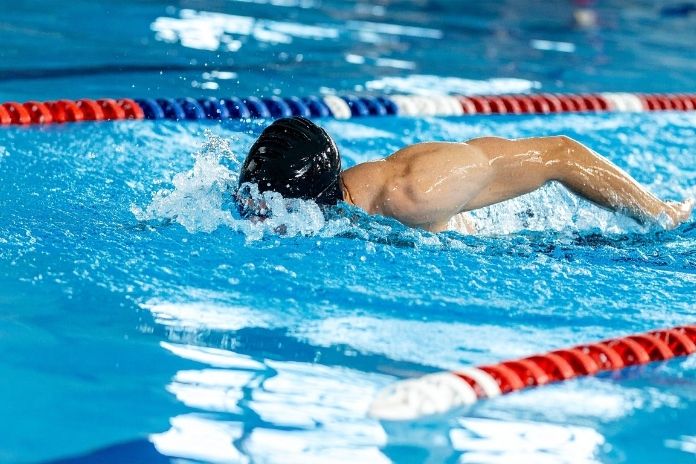
The aquatic environment changes how your body responds to exercise in a profound way. Three physical properties make pool therapy for lipedema so effective: buoyancy, hydrostatic pressure, and viscosity.
Buoyancy: Joint Weight Relief. Water reduces the load that your joints have to carry. According to the Mayo Clinic Health System, buoyancy can eliminate up to 90% of body weight when you are submerged to the neck, with roughly 50% relief at waist depth. For someone whose legs hurt and swell with every step, that is a dramatic difference.
Hydrostatic Pressure: A Natural Compression. Hydrostatic pressure is the steady force that water exerts on your body. This pressure increases with depth and functions like a full-body compression garment, helping push fluid from the limbs back toward the core. It is the same principle behind the compression garments used in lipedema and lymphedema management, but delivered evenly by the water around you.
Viscosity: Built-In Resistance. Water creates resistance in every direction you move, which supports muscle strengthening without the need for weights. Combined with buoyancy, this means you can build strength while dramatically reducing joint stress, something that simply is not possible to replicate on land.
Temperature Regulation: Keeping Swelling in Check. Cooler pool water (generally in the 82 to 88 degree Fahrenheit range) can help prevent the swelling that heat tends to trigger. For people with lipedema, warm or hot water may cause limbs to swell more.
This is why most aquatic therapy for chronic conditions is conducted in pools kept at a moderate temperature. If you are new to pool exercise, check the water temperature before you get in and ask the facility whether they can accommodate cooler-water preferences.
Together, these properties make the water feel therapeutic rather than punishing, which is exactly the kind of self-care for lipedema that helps people stay consistent.
The Science Behind Water Aerobics and Lymph Flow
The benefits of water aerobics for lipedema are grounded in real physiology, not just anecdote.
When you are submerged even to the waist, the surrounding water pressure compresses your body automatically. This acts like compression clothing used to treat lymphedema, helping push lymph fluid upward toward the chest, where it can be filtered and returned to the bloodstream.
Water also offers resistance in every direction. That resistance activates your muscles, and when those muscles contract, they squeeze the neighboring lymph vessels, which helps fluid move more effectively.
Research on aquatic exercise for lymphatic conditions, including a review published in the Journal of Vascular Surgery, confirms that hydrostatic pressure can stimulate lymphatic circulation and reduce limb edema.
Studies examining aquatic exercise in people with lower-body swelling and lipedema have found benefits, including reduced swelling, improved cardiovascular function, and lower fatigue.
According to a review by Leslyn Keith, OTD, CLT-LANA, at Lipedema Simplified, several studies show that immersion-based exercise produces measurable improvements in limb heaviness and fluid retention in people with lipedema and related lymphatic disorders.
Read More: Aquatic Fitness: Benefits of Water-Based Cardio and Toning Exercises
Best Types of Water Workouts for Lipedema
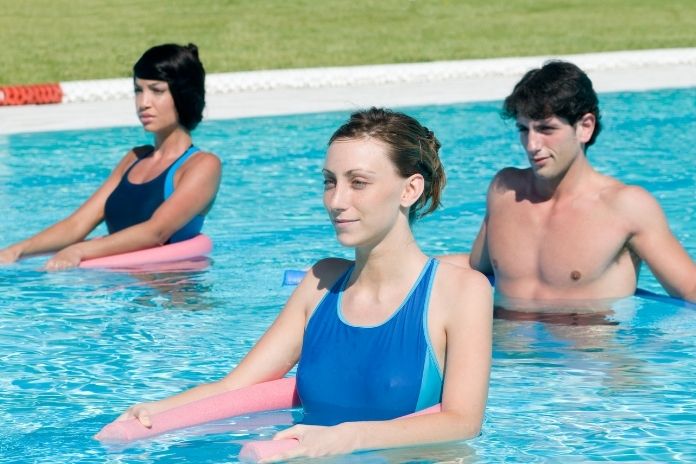
Lipedema exercise in water can address strength, flexibility, mobility, and endurance. Here are the five most effective approaches.
1. Water Walking or Jogging
Water walking is one of the most accessible forms of pool therapy for lipedema. You simply move through water that reaches your waist or chest, letting your arms swing naturally and feel the gentle push as they move through the water. It is simple, easy on your joints, and gets your blood moving while strengthening your legs.
Because the water fights back a little with every step, your muscles work harder without it ever feeling like too much. It is a solid way to build endurance and support lymphatic drainage exercise without stressing your body.
Aqua jogging, which involves running in place in deeper water without touching the pool floor, takes this a step further. A flotation belt can provide extra support. This variation boosts cardiovascular fitness and muscular endurance while keeping joint tension low.
2. Aqua Aerobics or Aqua Zumba
Aqua aerobics brings together walking, jogging, gentle leaping, and rhythmic movement in the pool, usually with an instructor leading the group. You get a full-body workout that is easy on your joints, builds muscle tone, helps your body drain fluids more effectively, and improves heart health. Group sessions also reinforce consistency, which is crucial to getting the most out of water exercise for lipedema.
3. Deep-Water Exercise with Float Belts
A flotation belt lets you work out in deep water without touching the pool floor, making it especially helpful for aquatic therapy lipedema exercises. Suspending your body this way eliminates ground-reaction force entirely, which minimizes joint strain and reduces mechanical pressure on sensitive tissues.
4. Pool Resistance Training
Using noodles, water dumbbells, or resistance gloves adds drag to your movements in the water. You do not need heavy weights. These tools effectively challenge the muscles around your joints, and because water pushes back evenly on your whole body, your muscles work in a more balanced way. This is especially helpful for people who carry weight differently across their bodies, as is common with lipedema. Stronger muscles also improve stability and make everyday movement more comfortable.
5. Stretching and Mobility Work
Stretching in the pool increases your range of motion and eases stiffness. However, people with lipedema often have hypermobile joints, which means overstretching can cause joint instability or pain. Always assess your joint flexibility and consult a physical therapist before starting a stretching or yoga program. Water-based stretching is best done at the end of a session, when muscles are warm, to reduce the risk of cramping.
Read More: Fitness That Fits Your Life: Build a Routine That Lasts
How Often Should You Do Water Aerobics?
Most experts recommend aiming for 3 to 5 pool sessions per week, each lasting about 30 to 45 minutes. This range gives your body enough regular movement to support lymph flow and cardiovascular health while also allowing adequate recovery time between sessions.
Recovery matters just as much as exercise when you have lipedema, because overexertion can trigger inflammation and worsen the very symptoms you are trying to manage.
If you are new to exercise or returning after a break, start with 2 shorter sessions per week and build gradually. Consistency beats intensity every time. A 30-minute gentle session three times a week will serve you far better than one exhausting workout followed by days of soreness.
Water aerobics is very low-impact, so when done at a sensible pace, injury risk is minimal. The key is to listen to your body and progress on a timeline that works for you.
Safety Tips for Exercising with Lipedema in the Pool
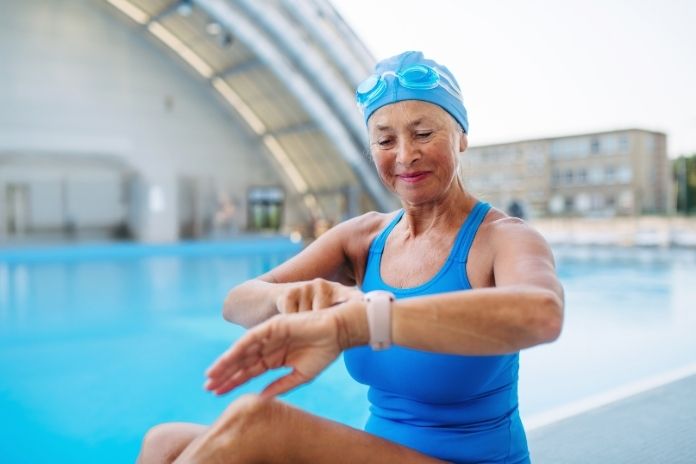
- Start slowly, especially if exercise is new to you. Begin with shorter sessions and shorter distances, then build over time as your body adapts.
- Avoid hot pools. Warm or hot water can increase swelling in lipedema-affected limbs. Look for pools kept at a moderate temperature, ideally below 88 degrees Fahrenheit.
- Stay hydrated.You still sweat in the water even if you cannot feel it. Drink water before, during, and after your session. Dehydration slows lymph flow and can worsen fatigue.
- Wear compression garments after your session, not during. The water itself acts as compression while you are in the pool. After you get out, put on your garments promptly to maintain fluid management as your body returns to a dry environment. Always follow your therapist’s specific guidance on garment use, as individual needs vary.
- Eat foods that support inflammation reduction. An anti-inflammatory diet can complement your pool routine and help your body manage swelling more effectively.
- Listen to your body and rest when you need to. Small, consistent efforts beat going all-out and then burning out.
- Stop immediately if you feel pain, numbness, dizziness, or shortness of breath. These are signals that your body needs a break. Do not push through warning signs.
Additional Benefits of Pool Exercise Beyond Physical Health
The gains from aquatic therapy go well beyond the physical.
Research supports what many people with chronic conditions already know intuitively: getting into the water changes your whole relationship with movement. A 2022 scoping review published in Complementary Therapies in Medicine found that aquatic exercise, including aqua aerobics, trends toward generating positive changes in mood, anxiety, self-esteem, and psychological well-being across multiple study populations.
For people living with lipedema, who often experience significant emotional distress related to body image, the pool can offer a rare space where movement feels possible and even enjoyable.
Regular aquatic therapy lipedema participation may also:
- Ease body image anxiety by creating a sense of physical capability and freedom.
- Build meaningful social connections through group exercise classes.
- Improve sleep quality, which is frequently disrupted in people living with chronic pain.
- Boost daytime energy by reducing the fatigue that comes with poor lymphatic circulation.
Group aquatic physical therapy, in particular, can foster a sense of community and reduce the isolation that chronic illness often brings.
When to Talk to a Doctor or Physical Therapist

Always consult your primary care physician before starting a new exercise routine. They can help you build a safe program tailored to your current symptoms and refer you to additional treatment options, including decongestive therapy.
Beyond your initial check-in, reach out to your healthcare provider or a physical therapist if you notice any of the following:
- Persistent pain or significant swelling that does not improve after a few days of rest.
- New or unexplained bruising, or changes in skin texture or color in affected areas.
- A sense that your mobility is declining rather than improving over time.
For the most tailored guidance, ask for a referral to a lymphatic physical therapist or an aquatic rehabilitation specialist. These professionals understand the specific physiology of lipedema and can design a water-based program that addresses your exact stage and symptom profile.
A certified lymphedema therapist can also advise you on the right compression garments to use after your sessions.
Read More: Low Impact Workouts That Burn Calories: 10 Exercises That Torch Fat
Conclusion
Living with lipedema does not mean you have to stop moving. It means choosing movement that supports your body rather than strains it. Water aerobics for lipedema does exactly that. It is safe, gentle on the body, and genuinely helps you stay active without making pain or swelling worse.
Thanks to the buoyancy, pressure, and resistance that water provides, aquatic exercise gets your lymph moving, eases the heavy feeling in your legs, and lets you build real strength without beating up your joints. Pool therapy for lipedema addresses the physical challenges of the condition in ways that land-based exercise simply cannot match.
But honestly, the best part may be how getting into the water changes the whole experience of exercise. It feels empowering. It feels like something you can actually do. And that shift in how exercise feels is often what makes the difference between a routine that sticks and one that does not.
References
- Avinav. (January 20, 2023). Lipedema: Causes and Solutions.
- Dr Girouard M.D. (June 23, 2024). Why Lipedema Fat Resists Diet & Exercise.
- JOBST Canada. (n.d.). Lipedema and exercise.
- Avinav. (July 24, 2023). Lipedema and Exercise: Finding the right balance.
- Cleveland Clinic. (January 6, 2023). Lipedema.
- WebMD. (October 8, 2025). Lipedema: Symptoms, treatment, and causes.
- Mayo Clinic Health System. (August 12, 2015). Aquatic exercise: Gentle on your bones, joints, and muscles
- Denise Garceau, PT. (November 2, 2022). Aquatic Therapy: What it is and How it Can Help
- Therapy A. (July 4, 2020). Water exercise for lipedema and lymphedema.
- Lipoedema UK. Physical Activity & Movement.
- Leslyn Keith. (October 15, 2021). Water Exercise and Lipedema.
- Yaneth Perea. (May 12, 2025). Lipoedema and Exercise: Best Workouts for Mobility and Pain Relief.
- Jane Hosking. (August 11, 2025). Why Aquatic Exercise Is Amazing for Lymphatic Drainage
In this Article