












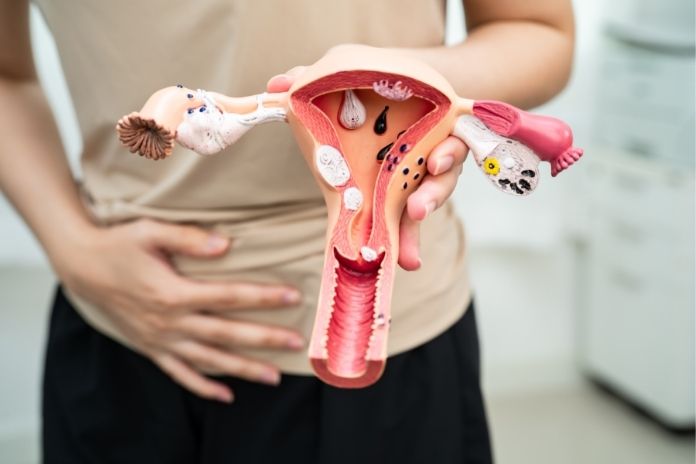
Many people notice a strange, one-sided pain in the middle of their cycle. Not period pain, not a stomach issue, just one sharp or dull feeling on either the left or right. This is called ovulation pain, or mittelschmerz (a German word meaning “middle pain”). Around 20–40% of people who ovulate feel it at some point, and for some, it comes almost every month.
Most of the time, it is harmless. But the problem is, the same area, the same type of pain, can also happen in serious health conditions like appendicitis or ectopic pregnancy. That’s why there is a confusion between ovulation pain vs. appendicitis.
This article explains what is actually happening inside the body (the real mechanism, not generic), how to recognize normal vs abnormal pain during ovulation, and when you should not ignore it.
- Ovulation pain is that random one-sided lower belly pain in the middle of the cycle. Mittelschmerz has been found to coincide with the peak in plasma LH (luteinizing hormone) levels when the follicle is enlarging and has not yet ruptured. The LH rise increases ovarian perifollicular smooth muscle contractility via a prostaglandin-mediated pathway, potentially causing pain. It does not indicate disease or affect fertility.
- It can feel sharp or just like a dull ache, and it stays for a few hours or sometimes 1–2 days. Usually, nothing to worry about. But if pain is getting worse, with fever, dizziness, or happening after a missed period, then don’t ignore it; get it checked.
- It can help you guess your fertile days, but never depend on it fully.
What Is Mittelschmerz?
Mittelschmerz is a one-sided lower abdominal or pelvic pain that comes around ovulation time. “The process of ovulation is indeed that – [you’re] popping a little cyst,” says Dr. Mary Jane Minkin, a gynecologist. It usually comes somewhere between day 7 and day 24 of the cycle. In a typical 28-day cycle, it is around day 14, but more accurately, it is about two weeks before the next period, not always a fixed day.
Pain usually lasts for a few minutes to just a few hours. In some cases, it can even stretch up to 24–48 hours. If it goes beyond that, then it is never just typical ovulation pain and just needs checking.
It usually happens on the side of the ovary, releasing the egg. So in one month ovulation pain is on the left side and in the next month on the right side. But not always alternating.
Important point:
- It is not a disease
- It does not reduce fertility
- It is just a body signal of the ovulation process happening
What Actually Causes Ovulation Pain?
Most articles explain Mittelschmerz by simply saying, “the egg is released, so pain happens.” That’s an oversimplification—the actual mechanism is more layered.
1. LH surge and prostaglandins (the main trigger people miss)
Pain often starts before the egg is released, not after. This happens due to an LH (luteinizing hormone) surge.
The LH surge increases prostaglandins, which are chemical messengers that cause smooth muscle contraction. Around the ovary, these contractions create pressure and discomfort. So pain begins even before the follicle breaks. This is why the timing of pain and ovulation is not exactly the same.
2. Follicle stretching
The dominant follicle grows up to 18–22 mm. That is quite large compared to the normal ovarian surface. This stretching activates pain-sensitive nerves. Some people have more sensitive nerves, so they feel it more.
“At ovulation, the follicle grows right before an egg is released, causing the surface of the ovary to be stretched, which can cause pain,” says Dr. Amy Novatt, an OBGYN.
3. Fluid and slight bleeding irritation
When a follicle ruptures, it releases fluid and sometimes a small amount of blood. This enters the abdominal cavity (peritoneal space). That lining is very sensitive. Even a small irritation can cause sharp or cramp-like pain.
4. Fallopian tube contractions
After ovulation, the fallopian tube starts rhythmic movements to pick up and transport the egg. These movements can also create a cramping sensation.
Why pain varies so much
In some cycles, you feel nothing. Some cycles have sharp pain. Because in each cycle, the contribution of the above mechanisms changes. So there is no single cause. It is a combination effect.
What Ovulation Pain Feels Like, and Why It’s Often on the Right
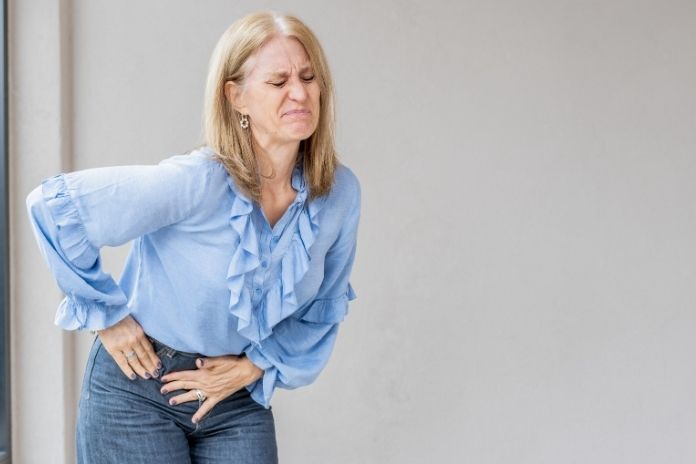
1. Pain character and associated symptoms
Ovulation pain is not the same for everyone.
- It can be a dull ache or a sudden, sharp stabbing
- Located on one side of the lower abdomen or pelvis
- Sometimes radiates to the lower back on the same side
- Lasts minutes to hours, sometimes up to 1–2 days
Some people also notice other ovulation pain symptoms: slight spotting (due to estrogen drop), clear, stretchy cervical mucus, and mild bloating or nausea. What is NOT normal: fever, vomiting, pain getting worse continuously, and pain on both sides strongly. These are warning signs.
2. Why ovulation pain is often on the right
Many people say, “Why is ovulation pain on the right side?” There are two reasons:
- The right ovary tends to ovulate more often in many individuals. This is observed in studies but not always discussed in basic articles.
- Different blood drainage system: The right ovarian vein drains into the inferior vena cava. The left kidney drains into the left renal vein.
This difference affects hormone clearance and the local environment around the ovary. That can influence follicle development and ovulation frequency. If your pain is always on the same side for many cycles, it is worth mentioning to the doctor.
When to Worry about Ovulation Pain: Conditions That Can Mimic Ovulation Pain
This is where most content fails, just listing diseases without providing helpful information that correctly identifies ovulation pain. Here is a practical comparison:
1. Normal ovulation pain
- Mid-cycle timing
- One-sided
- Mild to moderate
- Goes away in less than 48 hours
- No fever, no severe vomiting
2. Appendicitis
- Pain starts near the belly button, then shifts to the lower right
- Pain keeps increasing, not decreasing
- Fever, nausea, and vomiting commonly occur
- Pressing and releasing causes sharp pain
Pain is not related to cycle timing.
3. Ectopic pregnancy (emergency)
- Happens after a missed period or late cycle
- One-sided pain but worsening
- Shoulder tip pain (internal bleeding sign)
- Dizziness or fainting
This ectopic pregnancy pain is life-threatening if the fallopian tube is ruptured.
4. Ovarian torsion (emergency symptoms)
- Sudden severe pain, very intense
- It does not come and go; it’s constant
- Vomiting is common
- Feels like the worst pain ever
These symptoms need immediate treatment to save the ovary.
5. Ruptured hemorrhagic cyst
- Sudden sharp pain
- May improve, then worsen again
- Sometimes shoulder pain
- Most cases settle, but heavy bleeding needs care
“Rarely, there can be a lot of bleeding or a large cyst that ruptures, which could need emergency surgery,” Dr. Leena Nathan, a gynecologist, explains.
6. Endometriosis
This one is often a missed connection.
- Pain gets worse every cycle
- Maybe on both sides
- Very painful periods also present
- Pain not limited to ovulation only
Reason: Lesions near the ovaries react strongly to hormonal changes and inflammation. So ovulation pain becomes amplified.
7. Pelvic inflammatory disease (PID)
- Pain with fever
- Abnormal vaginal discharge
- General feeling of being unwell
It’s recommended to take antibiotics fast.
How Mittelschmerz Is Diagnosed
Usually, no big tests are needed to diagnose this condition. Doctors rely on patterns:
- Happens mid-cycle
- One-sided
- Resolves in 1–2 days
- Repeats in a similar way across cycles
Keeping a cycle diary for 2–3 months helps confirm a pattern. If something feels off:
- A pelvic exam is done
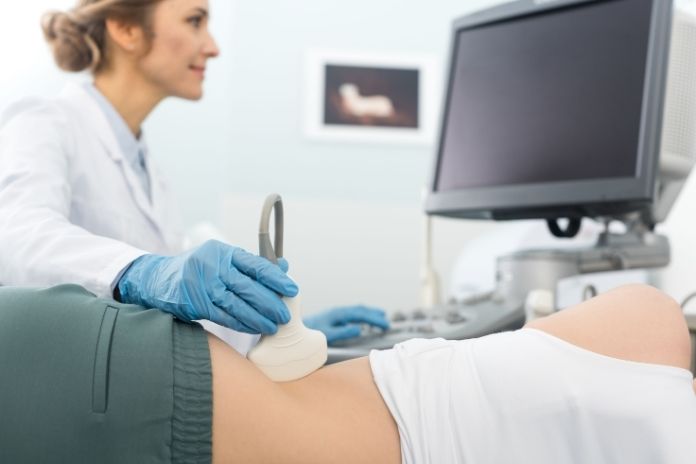
- Ultrasound is done if a cyst or endometriosis is suspected
- A pregnancy test is done if there is any doubt related to it
Important: A pregnancy test is a must when pain is unusual. It rules out ectopic pregnancy.
Treatment and Relief: What Actually Helps
1. NSAIDs (most effective)
Medicines like ibuprofen or naproxen work best for mittelschmerz treatment. Reason is not random.
They block prostaglandins, which are the main drivers of pain in ovulation. That’s why they work better than simple paracetamol.
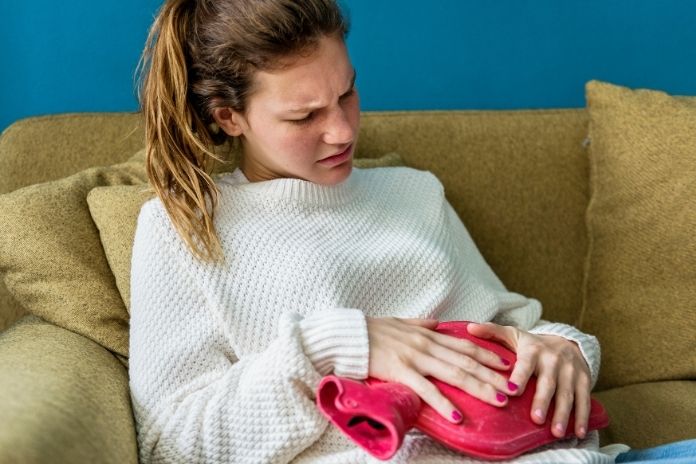
2. Heat therapy
A warm compress or a hot bath relaxes muscles and reduces discomfort.
3. Rest
Movement can irritate the abdominal lining more due to fluid release. Rest helps reduce that irritation.
4. Hormonal contraception
If pain is severe every month, birth control pills can stop ovulation. No ovulation = no ovulation pain. It is not suitable if trying to conceive. Most people don’t need ovulation pain treatment. Pain settles on its own.
Using Ovulation Pain to Track Fertility, and Its Limitations
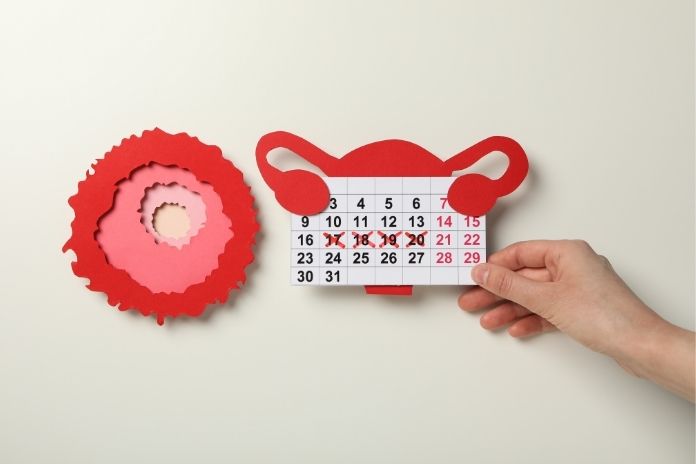
Many people use ovulation pain for fertility tracking. But there is a misunderstanding. Pain happens with the LH surge, not due to the exact egg release. So, it tells you the fertile window is open. The best timing for intercourse is the day of pain or the next day.
But limitations are there:
- It cannot confirm that ovulation has already happened
- Sperm can survive up to 5 days
- So it’s not reliable as a birth control method
Better to combine with ovulation predictor kits (OPKs) and basal body temperature. Also important: feeling pain does not mean you are “more fertile.” It only shows that the ovulation process is occurring.
When to See a Doctor
1. Emergency (go immediately)
- Severe, sudden worsening pain
- Shoulder-tip pain
- Dizziness or fainting
- Missed period with one-sided pain
2. Urgent (same day)
- Fever above 38°C
- Unusual vaginal discharge
- Pain lasting more than 48 hours
3. Routine check
- Pain is getting worse every cycle
- Pain affecting daily life
- Always on the same side without change
- Suspected endometriosis
4. No need to worry
- Mild to moderate
- Mid-cycle
- One-sided
- Resolves quickly
- Responds to ibuprofen
Final Thoughts
Ovulation pain, or mittelschmerz, is common and usually harmless. But understanding the real mechanism changes how you respond. LH surge and prostaglandins explain why NSAIDs work and why pain timing is slightly before egg release.
The most important thing is pattern recognition. Mid-cycle pain is often normal, but not always. But if the pain gets severe, stays longer, or comes with fever, a missed period, or dizziness, then do not ignore it.
Listen to the pattern, not just the pain.
- Ovulation pain is not just “egg release pain.” It starts earlier due to LH surge and prostaglandin activity; this mechanism is often not explained in general content.
- Right-sided pain is more common because of both ovulation frequency and vascular differences, not random coincidence.
- Pain pattern matters more than pain itself. Timing with duration and associated symptoms decides if it is normal.
- Endometriosis can make ovulation pain worse, cycle by cycle. This link is under-discussed and important.
- Ovulation pain can help in fertility awareness, but it cannot confirm a safe infertile phase, which is still a major gap in public understanding.
- Pain lasting more than 48 hours, pain accompanied by fever or vomiting, or pain coinciding with a missed period or positive pregnancy test warrants urgent medical evaluation, not home management.
FAQs
1. How long does ovulation pain last?
Usually, a few minutes to a few hours. In some cases, it can last up to 24–48 hours.
2. What does mittelschmerz feel like?
It can feel like a dull ache, a pulling sensation, or a sudden sharp pain on one side of the lower abdomen. Some cycles are mild, and some are stronger. It can also shift sides month to month.
3. How do I know if it’s ovulation pain or appendicitis?
Ovulation pain is mid-cycle, short-lived, and not worsening. Appendicitis starts near the navel, shifts right, and keeps getting worse with fever and vomiting.
4. Can ovulation pain affect fertility?
No. It does not reduce fertility. In fact, it shows ovulation is happening. But it is not a perfect fertility tracking method on its own.
5. Why is ovulation pain only on one side?
Because only one ovary releases an egg in a cycle. Pain usually comes from that ovary. Sometimes it alternates, sometimes one side dominates.
References
- Cleveland Clinic. (2026, March 9). Ovulation pain.
- Fukuda, M., Fukuda, K., Andersen, C. Y., & Byskov, A. G. (2000). Right-sided ovulation favours pregnancy more than left-sided ovulation. Human Reproduction, 15(9), 1921–1926.
- Ling, L., Xia, D., Jin, Y., Hong, R., Wang, J., & Liang, Y. (2024). Effect of follicle size on pregnancy outcomes in patients undergoing first letrozole-intrauterine insemination. European Journal of Medical Research, 29(1), 184.
- Brott, N. R., & Le, J. K. (2023). Mittelschmerz. StatPearls [Internet]. StatPearls Publishing.
In this Article