


















People often perceive commercial breaks as disruptions, but you can turn them into a chance to enhance your well-being. Ad breaks are ideal for brief spurts of exercise because they typically last two to three minutes. You can turn these moments into effective micro workouts at home that raise your heart rate and interrupt extended periods of inactivity.
This article will discuss how exercises during TV commercials can improve cardiovascular health, how to organize a commercial break workout, and ten efficient bodyweight cardio exercises you can perform in your living room. Additionally, you’ll get instructions for making this a sustainable living-room workout routine without a gym, as well as sample routines and safety advice.
- Turn TV time into fitness time with simple, high-impact moves.
- Short bursts of activity boost heart health and reduce the risk of sitting.
- No equipment is needed, just consistency and intensity during ad breaks.
Read More: Best 4-Day Workout Split: How to Train for Muscle, Strength, and Recovery
Why Short Commercial Break Workouts Can Support Heart Health
Long periods of sitting are common in modern lifestyles, especially while using screens. This sedentary lifestyle reduces cardiorespiratory fitness and increases cardiovascular risk.
How Brief Activity Spikes Heart Rate: Your heart rate increases rapidly with brief, vigorous actions like jumping or fast stepping. Your cardiovascular system is temporarily challenged by this rise, which eventually helps to enhance endurance. Even 1 minute bodyweight exercises can stimulate circulation and oxygen delivery.
Micro-Vigorous Movement in Daily Routines: These short, high-intensity home exercises serve as “mini workouts” that build throughout the day. You build fitness through regular, small doses of effort rather than requiring a 45-minute workout.
Breaking Up Sedentary TV Time: Interrupting long periods of sitting with home-based exercise improves metabolic health and reduces stiffness. The Journal of Applied Physiology reports that alternating periods of inactivity and physical activity enhance vascular and glycemic control.
How to Use This “No-Gym” Routine
The best thing about a no-gym cardio workout at home is how easy it is. You don’t need any equipment, a schedule, or even a certain place to work out. It is how to plan your workout during the break:
- Do one move during each break for a commercial
- Put in some effort for 30 to 60 seconds
- Focus more on the intensity than the length
- Take a nap when the show starts up again
Read More: How to Get Rid of Bat Wings — Causes, Workouts & Science-Backed Tips for Toned Arms
10 Bodyweight Moves You Can Do During Commercials
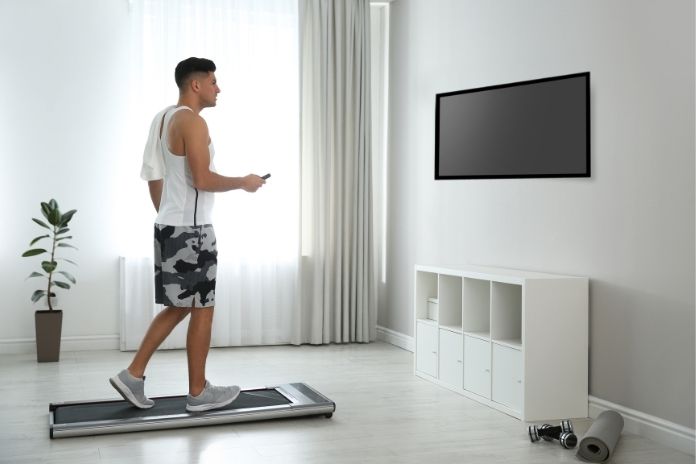
These bodyweight exercises for heart health are intended to increase heart rate and breathing rapidly. For a whole routine, alternate between them throughout various breaks.
1. Mountain Climbers
- With your arms straight and your hands right under your shoulders, begin on your hands and knees.
- With your hands and toes supporting your torso, extend your legs back behind you. From the back of your head to your heels, your body should form a straight line (similar to a standard elevated push-up or plank).
- Then, as if you were sprinting, quickly switch legs after hopping one foot near your chest. When you move, try not to let your hips creep up.
- As you continue switching legs, stay in the plank position.
2. Sofa Squat Jumps
- Squat down till your hips barely touch the couch.
- To stand, push through your heels while keeping your chest elevated.
- Leap skyward with explosive force, land gently, and repeat.
3. Elevated Incline Push-Ups
- Look for an elevated surface to use for the slope, such as a wall, seat, or step.
- Place your hands on the raised surface, little wider than shoulder-width apart, and stand with feet together.
- Keep your body straight as you descend toward the surface until your chest is almost touching it.
- Keep your elbows close to your body and raise your torso until your arms fully extend.
- Repeat the exercise for the recommended number of repetitions, carefully lowering yourself back down after each repetition.
4. High Knees in Place
- Place both your feet hip-width apart and stand erect. Maintain an active core, relaxed shoulders, and an elevated chest.
- Drive your left arm forward while raising your right leg to hip level. Switch quickly, lower the right foot, and use the opposing arm to raise the left knee.
- Keep your knees high and your posture straight as you continue this running-in-place motion at a fast, steady pace.
- Keep your breathing steady and natural as you move your arms in opposition to your legs.
- Depending on how long you want to work out, perform for roughly 30 seconds.
5. Shadow Boxing
- Place your feet firmly on the ground to begin.
- With your dominant leg, take a step back. It will be your right leg if you are right-handed. It will be your left leg if you are left-handed.
- Your non-dominant foot’s toes should point directly ahead, like a clock pointing at twelve. Your right toes should point in the direction of the second on the clock if your right leg is behind. Your left toes should point in the direction of eight on the clock if your left leg is behind you.
- Maintain a small bend in your knees and slightly raise your back heel. You’re prepared to box.
6. Lateral Skaters
- To prepare for lateral movement and absorb impact, stand hip-width apart with your knees slightly bent, your chest raised, and your core tight.
- Keep your shoulders square and your hips level as you shift weight onto your left leg and raise the opposing foot slightly off the ground.
- To jump laterally, bend your standing knee and push hard through your midfoot while swinging your free leg to gain velocity.
- Bend your knees slightly as you land on the other foot, absorb the impact with your hips and knees, and get ready to push off again right away.
- To prevent any damage, keep a steady rhythm and use the entire range of each repetition; if balance or form breaks, shorten the distance or step-touch.
7. “Burpee-Lite”
- With your feet shoulder-width apart and your core engaged, stand erect.
- To achieve a powerful plank stance while maintaining a straight body, step or hop back with your feet.
- To return to a standing position, take a step or jump forward with your feet.
- Leap skyward with great force, then gently land with your knees slightly bent.
- To generate quick, high-intensity at-home workouts, keep moving at a steady pace.
8. Step-Ups (Stairs or Ottoman)
- Place your feet hip-width apart in front of a strong step, steps, or ottoman.
- To step up, place your right foot on the ground and push through your heel.
- Step back down, raise your left foot, and swiftly switch legs.
- Maintain a steady, fast pace while alternating.
- Maintaining an elevated chest and an active core is ideal for a workout in the living room.
9. Plank Jacks
- Start with your feet hip-width apart and your hands shoulder-width apart. Draw your belly button toward your spine to activate your core muscles.
- Leap your feet out to the sides from the beginning position while maintaining a steady upper body and a strong core.
- Make sure your feet stay off the ground as you quickly return to the beginning position.
- Keep up a steady pace and good technique while you perform the exercise for the required number of repetitions.
10. Power Lunges (Jump Lunges)
- Stand in a split stance with your right knee in front and bent for at least 90 degrees and your back knee just above the ground.
- Bend both elbows to 90 degrees with the left elbow forward and the right elbow back.
- Extend both knees to propel yourself off the ground and explode skyward.
- Swiftly bring your left knee and right elbow back as they come forward while you are suspended in midair.
- After landing in the same split stance, flex both knees back to the starting position to absorb the impact.
Read More: Cardio vs. Strength vs. Hybrid: WhichWorkout Style Suits You?
Sample “Commercial Break” Workout Plans
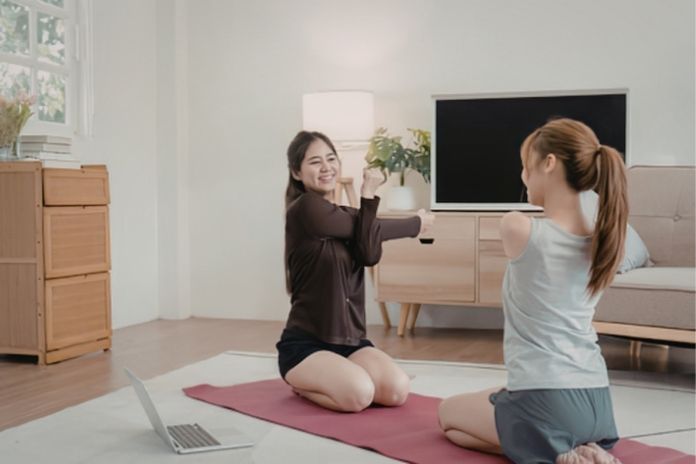
The ease with which you may incorporate exercises during TV commercials into your daily routine is one of their greatest benefits.
30-minute performance:
- Two commercial pauses
- Do two exercises, each lasting sixty seconds
60-minute performance:
- Four commercial pauses
- Do four exercises, each lasting 60 seconds
Games of sports:
- Use ad breaks or timeouts
- Do 30-second bodyweight cardio bursts
Read More: Toning Workouts for Men vs Women: What’s the Difference?
Tips to Make It Safe and Effective
While these home-based exercise routines are convenient, safety should always come first:
- Clear a small workout space
- Use stable furniture for support
- Wear supportive footwear if needed
- Increase the intensity progressively after starting slowly
Who This Routine Works Best For
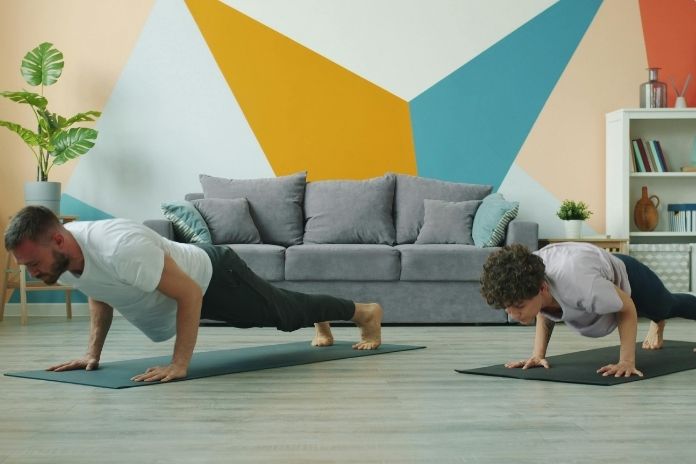
This flexible, no-gym cardio workout at home approach suits a wide range of people:
- Busy individuals with limited time
- Beginners starting home-based exercise
- People are trying to reduce sedentary habits
- Anyone seeking quick cardio without equipment
How Often Should You Do Commercial Break Workouts?
Intensity alone is not as important as consistency. You can perform these micro workouts at home:
- For overall health, every day
- For structured exercise, three to five times a week
- In addition to longer workouts for greater benefits
Adults should strive for at least 150 mins of moderate-intensity activity or 75 mins of activity each week, according to the World Health Organization.
When to Modify or Skip High-Intensity Moves
Not everyone is a good fit for every movement. You should adjust your living room workout routine if you experience joint pain, are recovering from an injury, or feel dizzy or overly fatigued.
In such cases, replace jumping exercises with lower-impact functional movements, such as step-ups or incline push-ups.
Read More: The Ultimate 7-Minute Workout for Busy Bees: Quick & Effective!
Conclusion
Turning idle time into movement can make a big difference in your overall fitness. By adding exercises during TV commercials, you can stay active without changing your routine. These short bursts of exercise are good for your heart health in the long run, help you spend less time sitting, and raise your heart rate.
If you’re new to any exercise or want to stay active without a set schedule, this method is easy to follow because it’s so simple. These small things add up over time, giving you more energy, strength, and stamina.
In this Article