













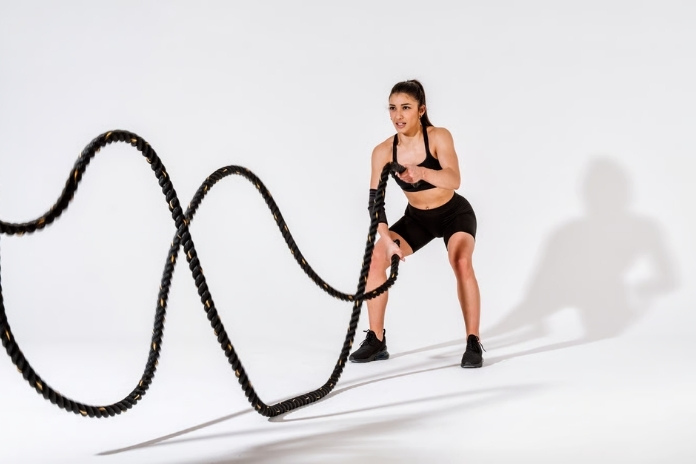
After 40, your body begins losing muscle mass at a rate of 3–8% per decade, a process known as sarcopenia. The good news is that strength training is the most effective tool available for slowing that process. No gym membership required.
Two of the most versatile and accessible options out there right now are battle ropes and resistance bands, and the debate over battle ropes vs. resistance bands is one worth understanding before you invest your time and money.
Both tools deliver real results. Both can be used at home. And, depending on your goals, one may serve you considerably better than the other. Here is what the research actually shows, and how to decide which belongs in your routine.
- After 40, you lose 3–8% of muscle mass per decade. Both battle ropes and resistance bands are proven tools for fighting that decline.
- Battle ropes excel at cardiovascular conditioning, core activation, and explosive full-body training; resistance bands deliver comparable strength gains to conventional weights with lower joint stress.
- There is no single winner: your best choice depends on your goals, space, and fitness level, and using both together produces the most complete results.
Battle Ropes: The Power Tool
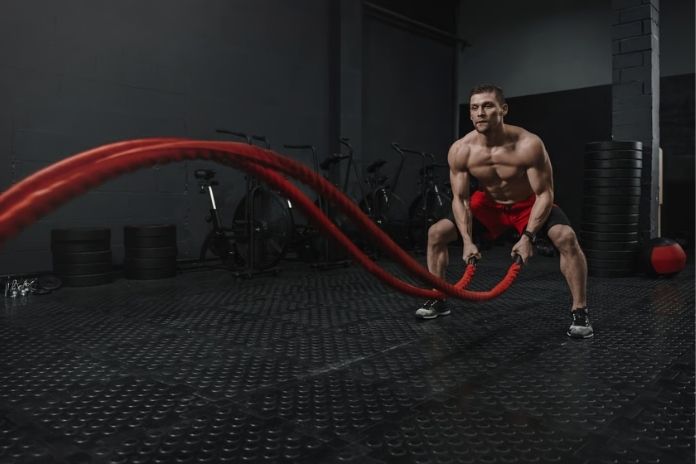
Battle ropes are thick, heavy ropes, typically 30–50 feet long and weighing between 16 and 30 pounds, anchored to a fixed point while you create waves, slams, and spirals with your arms.
Despite having a reputation as equipment reserved for elite athletes, they are genuinely accessible for most fitness levels. The rope’s weight stays constant, which makes it easy to scale intensity simply by adjusting your speed, wave height, or rest intervals.
“What most people don’t realize is that battle ropes are sneaky. They don’t just ask your arms to move up and down. They demand shoulder stability, core control, and solid posture to keep the spine supported while the arms generate force,” says Justin Kraft, founder of Aspire 2 More Fitness.
He adds, “If any of those pieces aren’t ready, the ropes start pulling the body out of position. Before long, the lower back takes over, the shoulders shrug, and the whole thing turns into a frantic flail instead of a purposeful movement.”
Benefits of Battle Ropes: A Full-Body Workout
Battle ropes offer a full-body workout that targets the abdomen, shoulders, lower and upper back, arms, and lower body. Here is what the research and practical experience show:
- Full-body muscle activation.A peer-reviewed study in the Journal of Strength and Conditioning Research found that battle rope exercises drive muscle activity to 51–73% MVIC in the deltoids, obliques, and lumbar muscles, above the 40% threshold required for strength gains. An ACE-commissioned study confirmed all eight muscles tested crossed that threshold during slams and waves.
- Targeted muscle control.Unilateral (alternating arm) waves hit the external obliques harder, while double-arm waves drive greater lumbar erector spinae activation. Switching your wave style shifts the emphasis with no equipment change needed.
- Cardiovascular conditioning.As little as three weeks of battle rope HIIT produces measurable improvements in upper-body oxygen consumption, shoulder strength, and muscular endurance, making ropes one of the few tools that build cardio and strength simultaneously.
- Posture and functional fitness.Consistent rope training strengthens the core stabilizers that support upright posture and everyday movement, from carrying groceries to climbing stairs.
For adults over 40, battle ropes offer a particularly valuable benefit: they are fundamentally low-impact. Unlike running or jumping, rope waves and slams place minimal stress on the knees and hips while still driving heart rate up substantially. This makes them a credible cardio-plus-strength option for people managing joint sensitivity.
Limitations of Battle Ropes:
Battle ropes are effective, but they come with real practical and physical limitations worth knowing before you start.
- Injury risk from poor form.Higher-impact variations like slams place a significant load on the shoulders, knees, and lower back when technique breaks down. Lifting the ropes too high strains the shoulder joints; squatting incorrectly during slams stresses the knees. Starting with slow alternating waves and building from there is the right approach.
- Space and anchor requirements.You need roughly 15–20 feet of clear floor and a secure fixed anchor point. That rules out most small apartments and shared spaces.
- Quick fatigue.The high intensity means beginners tire fast, which can cut sessions short before a meaningful training stimulus is achieved.
- Limited lower body focus.Without intentional squat or lunge variations added to your movements, battle ropes are primarily an upper-body and core tool.
Safety note for beginners over 40: Before attempting slams or high-speed variations, spend your first two to three sessions with slow alternating waves only. Focus on keeping your core braced, knees soft, and elbows slightly bent throughout. If you experience shoulder or lower back pain at any point, stop and consult a healthcare provider before continuing.
Resistance Bands: The Flexible Option
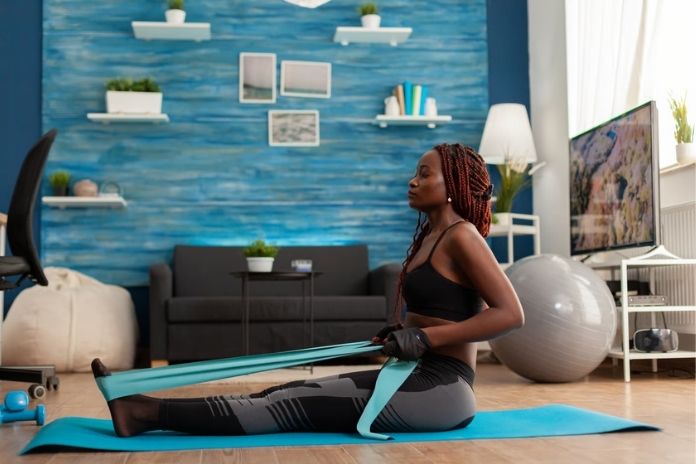
Resistance bands are elastic bands that build muscle and improve flexibility by creating tension that increases as the band stretches. They accommodate the full range of motion in a joint rather than locking you into a fixed movement path, which makes them particularly well-suited to functional training and rehabilitation.
One of the most important findings in exercise science, and one that surprises many people, is that elastic resistance training produces strength gains statistically equivalent to conventional weight machines and free weights.
A systematic review and meta-analysis of eight randomized controlled trials found no significant difference in upper or lower limb strength gains between the two methods.
For adults managing age-related muscle loss, the evidence is even more compelling: elastic band training was identified as one of the most efficient resistance training modalities for improving grip strength, gait speed, and skeletal muscle index in older adults with sarcopenia, confirmed across multiple randomized controlled trials.
Key Strength Benefits of Resistance Bands:
Do not let the simplicity fool you. Resistance bands are one of the most research-backed tools available for building functional strength, and they are particularly well-matched to the needs of adults over 40. Here is why:
- Variable resistance that works with your body.Tension increases as the band stretches, challenging muscles across the full range of motion rather than only at peak contraction. This mirrors real-life movements like pushing, pulling, and squatting, and trains muscles to work in coordination.
- Constant tension for better muscle activation.Because bands maintain constant tension throughout the movement, they activate stabilizing muscles often neglected with traditional weights, improving joint stability, coordination, and balance.
- Joint-friendly by design. The low-impact nature of band training makes them especially well-suited to people managing joint sensitivity, recovering from injury, or returning to exercise after a long break.
- Progressive overload made simple. Resistance bands support progressive overload, the practice of gradually increasing the challenge over time to continue making gains. With bands, progression is straightforward: move to a higher-resistance band, shorten the band length, or add reps. This structured approach is what separates recreational exercise from genuine strength training.
- Portable and affordable. A quality set of bands costs $15–$50, fits in a bag, and requires no anchor or dedicated space, making consistent training possible anywhere.
“Resistance bands add the benefit of dynamic feedback as opposed to a regular, static yoga strap which can help you ease into an intense stretch,” says Joy Keller, a certified personal trainer and executive editor for the IDEA Health and Fitness Association. She adds, “Bands can help you keep good form and go deeper into many important stretches to train flexibility incrementally and safely.”
Limitations of Using Resistance Bands:
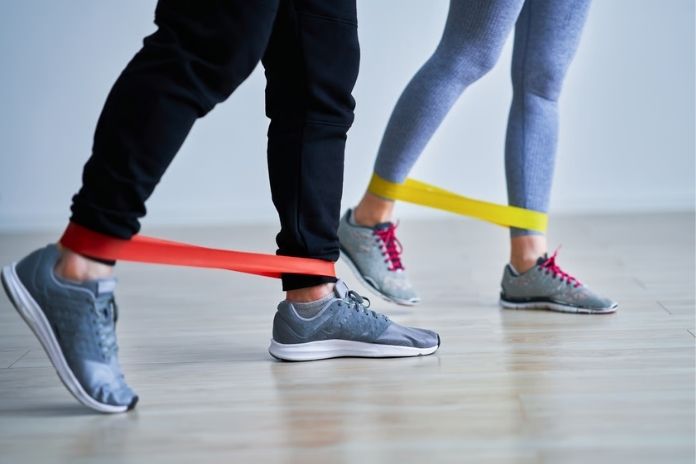
Bands are versatile and effective, but they are not the right tool for every situation. Keep these trade-offs in mind before making them your only training tool:
- Not enough stimulus for advanced trainers. For those focused on building significant muscle mass, bands alone may not generate adequate progressive overload. At that level, they work best as a supplement to heavier free weights or machines.
- Snapping risk. Lower-quality bands can snap mid-use, which poses a real injury risk. Investing in a reputable set is worth it.
- Harder to track intensity. Without a fixed weight, it can be difficult to measure and monitor progression the way you would with dumbbells or a barbell.
Battle Ropes v/s Resistance Bands: Which One is Better?
The honest answer is that neither tool is universally better, as they solve different problems. Here is a direct comparison across the factors that matter most for adults over 40:
Strength and Muscle Building. Resistance bands have stronger evidence base for pure strength gains, particularly for older adults. The elastic resistance meta-analysis showing parity with conventional weights is a landmark finding. Battle ropes build muscular endurance and explosive power effectively, but they are not primarily a hypertrophy tool.
Cardiovascular Benefit. Battle ropes are the clear winner here. They elevate heart rate rapidly and sustain it throughout the session, delivering meaningful aerobic conditioning alongside strength work. Resistance bands can include cardio elements, but are not inherently a cardiovascular tool.
Joint Safety. Both tools are low-impact. Resistance bands are gentler by design. Battle ropes are also low-impact in most variations, but explosive movements like slams introduce more loading on the shoulders and lower back, which requires careful form.
Space and Accessibility. Resistance bands are the winner by a wide margin. They fit in a bag, require no anchor, and cost far less than a set of battle ropes. Battle ropes need a dedicated space and a secure mounting point.
Suitability by Goal:
- Fat loss and cardiovascular conditioning: Battle ropes
- Muscle preservation and strength after 40: Resistance bands (with progressive overload)
- Rehabilitation or joint-sensitive training: Resistance bands
- Functional fitness and core stability: Both, with battle ropes offering greater core activation
- Home training with limited space: Resistance bands
Tips for Combining Both for a Balanced Strength Program
The most effective approach for most adults over 40 is to use both tools within a single weekly structure. Resistance bands cover your foundational strength work, while battle ropes add cardiovascular conditioning and core activation that bands cannot replicate.
A simple three-day framework to start with:
Day 1 (Resistance Bands — Lower Body Focus): Banded squats, glute bridges, lateral band walks, and resistance band deadlifts. 3 sets of 12–15 reps each.
Day 2 (Battle Ropes — Cardio and Core): 20 seconds of alternating waves, 40 seconds rest, for 6–8 rounds. Finish with 2 sets of double-arm waves for 30 seconds.
Day 3 (Resistance Bands — Upper Body Focus): Banded rows, chest press, shoulder press, and bicep curls. 3 sets of 12–15 reps each.
Rest for at least one day between sessions. Add battle ropes as a finisher to band days once your conditioning improves.
The key principle: use resistance bands for controlled, targeted work that builds stability and joint strength, then layer in battle rope intervals to push your endurance. Alternating the two tools across the week prevents overtraining and adds enough variety to keep your routine sustainable over months, not just weeks.
Final Thoughts: Do What Aligns with Your Goals
For adults over 40, both battle ropes and resistance bands are legitimate, research-supported tools for preserving and building strength. If there is one evidence-backed recommendation, start with resistance bands.
The research on elastic resistance and sarcopenia is consistent and compelling. Bands build real strength, protect joints, and require minimal investment in space or equipment. Add battle ropes once you have a foundation, using them primarily for cardiovascular conditioning and core activation rather than expecting them to be your primary strength tool.
Be realistic about what either tool can do on its own. Neither replaces a complete strength training program. Both work best when used consistently, with progressive overload, over months rather than weeks. The goal is not to find the perfect piece of equipment. It is to find one you will actually use.
If you are new to strength training after a long break, recovering from an injury, or managing a chronic condition like arthritis or joint pain, check with your doctor or a physical therapist before starting. A few minutes of that conversation can make the difference between a program that works and one that sidelines you.
Start simple, stay consistent, and give your body time to respond. It will.
References
- Calatayud, J., Martin, F., Colado, J. C., Benítez, J. C., Jakobsen, M. D., & Andersen, L. L. (2015). Muscle activity during unilateral vs. bilateral battle rope exercises. Journal of Strength and Conditioning Research, 29(10), 2854–2859.
- Chen, W. H., Wu, H. J., Lo, S. L., Chen, H., Yang, W. W., Huang, C. F., & Liu, C. (2018). Eight-week battle rope training improves multiple physical fitness dimensions and shooting accuracy in collegiate basketball players. Journal of Strength and Conditioning Research, 32(10), 2715–2724.
- Lopes, J. S. S., Machado, A. F., Micheletti, J. K., de Almeida, A. C., Cavina, A. P., & Pastre, C. M. (2019). Effects of training with elastic resistance versus conventional resistance on muscular strength: A systematic review and meta-analysis. SAGE Open Medicine, 7.
- Schoenfeld, B., & Grgic, J. (2022). Physiological responses to increasing battling rope weight during two 3-week high-intensity interval training programs. Journal of Strength and Conditioning Research, 36(2), 352–358.
- Yoo, S. Z., Cho, S. Y., & Roh, H. T. (2022). The effect of resistance training on the rehabilitation of elderly patients with sarcopenia: A meta-analysis. International Journal of Environmental Research and Public Health, 19(24).
- Porcari, J. P. (2019). Muscle activation during battle rope exercises. ACE Certified.
- Mayo Clinic. (2023). Strength training: Get stronger, leaner, healthier.
In this Article