


















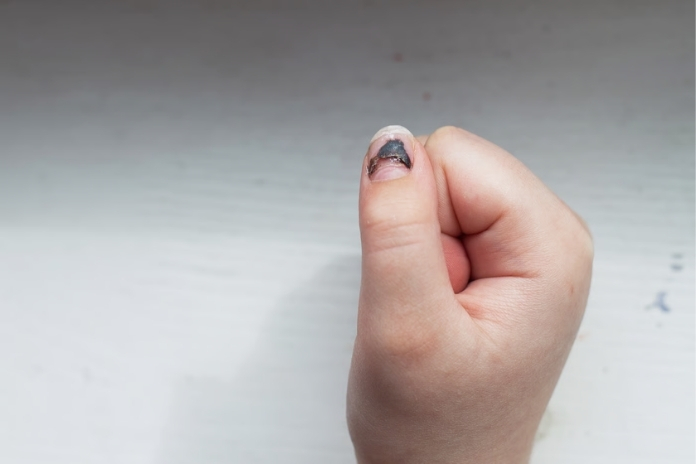
A dark line under the nail usually gets ignored for months. Many people think it is a fungal infection, a vitamin problem, an injury, or just normal pigmentation. But in some cases, that line is nail melanoma, also called subungual melanoma, a rare form of skin cancer that grows inside the nail unit.
It is uncommon, but one reason it becomes dangerous is that the diagnosis often happens late. The early signs are very quiet. No dramatic symptoms. No severe pain. Just small nail changes that slowly become more obvious over time.
- A persistent dark line under the nail should not always be ignored.
- Nail melanoma, also called subungual melanoma, is a rare skin cancer that often starts as a vertical brown-black streak.
- Most nail streaks are harmless, but changing or persistent nail discoloration should be checked by a dermatologist because early diagnosis matters.
What Is Nail Melanoma?
Nail melanoma is a type of melanoma that develops under the fingernail or toenail, usually in the nail matrix, where the nail growth starts. Doctors also call it “subungual melanoma.” Unlike common skin melanoma, which is caused mainly by sun exposure, nail melanoma can occur in areas that never see sunlight.
This condition can affect anyone, though it is more common in adults over 50 and in people with darker skin tones. An important thing many people do not know is that nail melanoma usually affects only one nail. Most commonly, the thumb, big toe, or index finger.
The difficult part is how ordinary it can look at the beginning. Many patients first think they bruised their nail somewhere. Some use antifungal creams for months before a proper diagnosis takes place. Some salons even mistake it for nail trauma or pigment staining.
The nail is a small body part, so people rarely inspect it carefully. That delay is exactly why awareness matters here.
Early Signs of Nail Melanoma Most People Miss
1. A Dark Vertical Line on the Nail
The most classic sign of nail melanoma is a dark vertical streak running from the cuticle to the nail tip. Doctors call this longitudinal melanonychia. The line may look brown, dark brown, black, or uneven grey-black.
In the early stage, the stripe may be thin. Later, it slowly becomes wider. This widening is one of the important warning signs. Benign pigment lines often stay stable for years. Melanoma-related lines tend to evolve.
Another detail doctors look at is irregularity. A harmless pigment band usually has neat borders and uniform color. Nail melanoma often looks messy under magnification, darker in some places and lighter in others.
Many people wait because there is no pain. That is a mistake sometimes. Early nail melanoma can stay painless for a long time.
2. Changes in Nail Color or Pigmentation
Some melanomas do not create one neat stripe. Instead, the nail slowly becomes darker over weeks or months. The pigmentation may spread unevenly across the nail plate.
This is why people confuse it with a fungal infection. Fungus also changes nail color. But fungal nails often become yellowish, crumbly, and thick, and can affect multiple nails at once. Nail melanoma usually affects only one nail, and the pigmentation tends to be more brown-black than yellow.
Another thing doctors notice is a sudden change. A line present for 15 years without change is less concerning than a newer streak that is darkening or broadening. Pigment behavior matters more than pigment itself.
3. Pigment Spreading to Surrounding Skin
One of the most important warning signs is called Hutchinson’s sign. This happens when pigment extends beyond the nail and spreads onto nearby skin or cuticle. This matters because melanoma cells are no longer limited only to the nail structure. The surrounding skin also begins to show brown-black discoloration.
Sometimes this spread is subtle. Not dramatic black staining. Just faint pigment near the cuticle edge. Many patients ignore it, thinking it might be dirt, dye, a mehendi stain, or a friction mark.
Dermatologists take this sign seriously because it strongly raises suspicion for melanoma under the nail. Not every Hutchinson’s sign means cancer. But it always deserves a proper medical evaluation.
4. Nail Splitting, Cracking, or Distortion
As nail melanoma grows, it can disrupt normal nail formation. The nail may split vertically, crack easily, become brittle, or develop unusual shape changes. This stage often gets mistaken for repeated trauma. Especially in toenails. Runners, athletes, and workers who wear tight shoes often assume that nail damage is caused by pressure.
The difference is the healing pattern. Normal trauma grows outward with nails. Melanoma-related damage remains persistent or slowly worsens.
Some patients describe one nail lifting or becoming uneven, while the rest of the nails remain normal. That asymmetry is important clinically. The body usually repairs ordinary nail injuries with time. Cancer-related changes tend to resist normal healing.
5. Persistent “Bruise” That Doesn’t Heal
This is maybe the easiest practical clue for ordinary people. A nail bruise from trauma moves upward as the nail grows. After a few months, it reaches the edge and disappears.
Melanoma under the nail behaves differently. The dark area remains fixed near the base or keeps spreading instead of moving outward.
People sometimes cannot even remember injury history, but still assume a bruise. In reality, most significant nail injuries are remembered because they hurt badly. A painless “bruise” that lasts for many months without movement deserves attention. Especially if it is becoming darker.
6. Pain or Tenderness (Less Common Early)
Pain is usually not the first symptom. That surprises people because many think cancer always hurts. Early nail melanoma often causes zero discomfort.
Pain, bleeding, tenderness, swelling, or ulceration usually appear later, as the lesion enlarges and invades surrounding tissue.
This late appearance of symptoms is another reason the diagnosis gets delayed. People wait until they experience pain before seeing a doctor. Sometimes too long. Absence of pain does not mean absence of danger.
Nail Melanoma vs Nail Bruise: How to Tell the Difference
This comparison confuses many people because both conditions create dark discoloration. A bruise under the nail generally follows injury. The color changes gradually from dark red-purple to brown as it heals. Most importantly, it moves outward as nails grow.
Melanoma under the nail usually stays anchored near the nail base. It may widen. Pigment often appears irregular rather than uniform. The edges may appear blurred or asymmetric. Bruises also usually fade eventually. Nail melanoma tends to persist or progress.
Still, not every dark line means cancer. Many harmless conditions create nail pigmentation:
- Ethnic pigmentation
- Medication effects
- Fungal infection
- Trauma
- Benign moles inside the nail matrix
This is why self-diagnosis becomes risky. Persistent or changing nail discoloration should be examined properly.
Who Is at Higher Risk of Developing Nail Melanoma?

Nail melanoma is rare overall, but certain groups show a higher risk. People over age 50 are diagnosed more commonly. Those with darker skin tones have a relatively higher proportion of melanoma in the nails compared with sun-exposed skin.
A personal or family history of melanoma increases concern, too. Repeated nail trauma may also play some role, though evidence here is still not fully clear. Chronic friction, tight footwear, and sports injuries are being studied.
Important point: many patients with nail melanoma had no major known risk factor. That is why unusual nail changes should not be dismissed only because somebody “does not fit the profile.”
Why Nail Melanoma Is Often Diagnosed Late
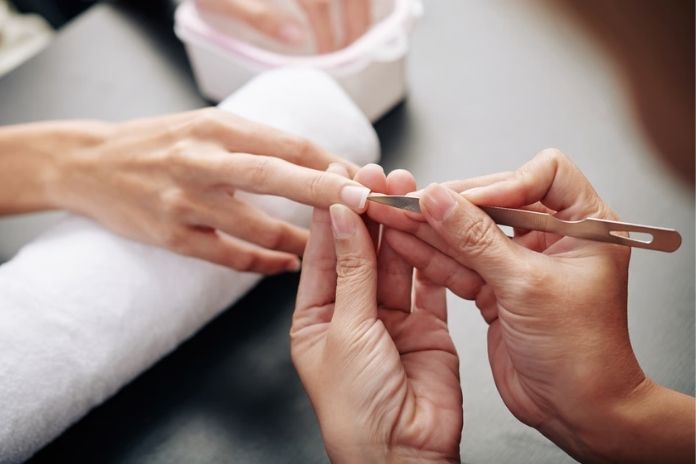
One reason for the late diagnosis of nail melanoma or subungual melanoma is its rarity. Most dark nail streaks are not melanoma. So both patients and sometimes clinicians first suspect more common conditions. Another reason is slow progression. Some melanomas evolve over years, creating false reassurance.
Nail salons sometimes repeatedly cover warning signs with polish, acrylic nails, or extensions. The underlying change remains hidden.
There is also a lack of awareness. People know about suspicious skin moles much more than suspicious nail changes. And culturally, many people do not inspect toenails carefully unless pain develops. The result is a delayed biopsy. By diagnosis time, cancer may already be deeper and harder to treat.
When to See a Doctor For Nail Melanoma

You should not panic over every dark line. But some situations clearly need evaluation by a dermatologist or skin cancer specialist.
Seek medical attention if:
- A dark streak is new
- The line is widening
- Pigment spreads onto the cuticle or skin
- One nail looks very different from the others
- Discoloration persists for months
- The nail becomes distorted without a clear injury
- Bleeding or ulceration develops
Photographing the nail every few weeks can help track changes objectively.
Waiting “to see if it disappears” for one or two years is common with nail melanoma. That delay is what doctors try to avoid.
Read More: How to Identify Cancerous Moles: Signs You Shouldn’t Ignore
How Nail Melanoma Is Diagnosed
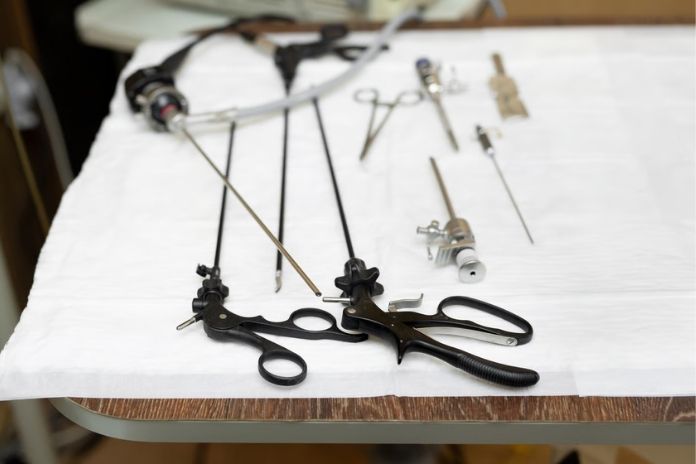
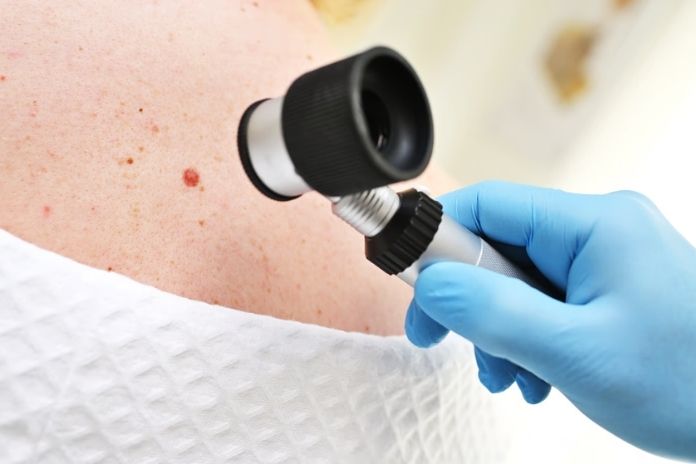
“Subungual melanoma often has a delayed diagnosis,” Dr. Casey Duncan, an oncology surgeon, explains. “People think it’s a fungus or a bruised nail and don’t seek care. That can be dangerous, as this is cancer and it can, and does, spread.” Diagnosis starts with clinical examination. Dermatologists often use dermoscopy, a magnified imaging tool helping them study pigment patterns more clearly.
Certain irregular patterns increase suspicion:
- Uneven colour
- Irregular borders
- Broadening band
- Asymmetry
- Hutchinson’s sign
But a definitive diagnosis requires a biopsy.
A nail biopsy can sound frightening to many patients because nail procedures seem painful. But it is necessary when melanoma suspicion exists. The doctor removes a small tissue sample from the nail matrix or nail bed for microscopic analysis. This biopsy tells whether pigment cells are benign or malignant.
Many people delay a biopsy because they fear permanently damaging their nail. But delaying diagnosis of melanoma is much riskier than a temporary cosmetic change.
If melanoma is confirmed, treatment depends on stage and depth. Earlier-stage disease has much better outcomes.
Read More: Hard Lump Under the Skin: Causes, Diagnosis, and When to Worry
Why Nail Melanoma Is Different From Typical Skin Melanoma
An interesting thing about nail melanoma is that sun exposure is not the main driver, like other melanomas. That changes public understanding a lot. “Remembering to check your nails along with your skin is crucial. Unlike other skin cancers, subungual melanoma isn’t linked to sun exposure, and the exact cause is unclear – so staying vigilant is key,” says Dr. Allison Vidimos, a dermatologist.
People think that if an area has never seen the sun, cancer cannot occur there. But nail melanoma often develops through distinct biological pathways.
It is also harder to spot visually. A mole on the arm is visible daily. The nail matrix is partly hidden beneath the cuticle and nail plate.
Another difference is emotional reaction. Because nails seem “small,” people underestimate the seriousness initially. But melanoma biology does not care whether it starts on the back, foot, or under the nail.
Read More: Tanning Injections: Do They Work, Are They Safe, and What Doctors Say
The Bottom Line
Nail melanoma is rare, but missing it early can carry serious consequences. The earliest signs are often subtle: a dark vertical line, widening pigment, nail distortion, or discoloration that refuses to grow out like a normal bruise. Many cases are mistaken for injuries or fungal infections for months or years.
Most dark nail streaks are not cancer. But persistent or changing nail pigmentation warrants proper evaluation rather than assumption. A quick examination and, if needed, biopsy can rule out something dangerous long before advanced disease develops.
- A black line on a nail is usually harmless, but a widening or change in pigment requires medical evaluation because melanoma can mimic normal nail conditions.
- Hutchinson’s sign, pigment spreading onto surrounding skin, is one of the strongest warning signs doctors watch for.
- Research on nail melanoma remains limited compared with sun-related melanoma because the disease is rare and often diagnosed late.
- Nail melanoma is biologically different from many common melanomas and is not strongly linked to UV exposure alone.
- Artificial nails, polish, and repeated cosmetic coverings may indirectly contribute to delayed diagnosis because evolving nail changes remain hidden for extended periods.
FAQs
1. What does nail melanoma look like?
Nail melanoma usually appears as a brown or black vertical streak on the nail. The band may widen, show uneven color, or extend onto surrounding skin. Nail splitting, distortion, or persistent changes often raise suspicion over time.
2. Is every dark line under the nail a melanoma?
No, most dark lines under the nail are not melanoma. Common causes for nail or subungual melanoma include trauma, fungal infection, medications, or benign pigmentation. Concerning features include progressive widening, irregular borders, color variation, or pigment spreading beyond the nail.
3. Can nail melanoma happen without pain?
Yes, nail melanoma is often painless in the early stages. Many patients ignore it because there is no discomfort. Pain, bleeding, or tenderness usually develop later, so the absence of pain should not be considered a reassuring sign.
4. Does nail melanoma affect toenails or fingernails more?
Nail melanoma can affect both fingernails and toenails. However, the thumb and big toe are most commonly involved. Toenail melanoma is often diagnosed later because changes are overlooked or attributed to repeated trauma or footwear pressure.
5. How is nail melanoma or subungual melanoma treated?
Treatment of nail melanoma, or subungual melanoma, depends on the stage and tumor depth. Early disease is managed with surgical excision, while advanced cases may need wider surgery, lymph node assessment, or systemic therapies. Early diagnosis significantly improves survival and treatment outcomes.
References
- Baran, R., & Kechijian, P. (1996). Hutchinson’s sign: A reappraisal. The Journal of the American Academy of Dermatology, 34(1), 87–90.
- Conway, J., Bellet, J. S., Rubin, A. I., & Lipner, S. R. (2023). Adult and Pediatric Nail Unit Melanoma: Epidemiology, Diagnosis, and Treatment. Cells, 12(6), 964–964.
- NIH. (2018). Nail fungus: Polish, cream or tablets? In www.ncbi.nlm.nih.gov. Institute for Quality and Efficiency in Health Care (IQWiG).
- Thompson, B., Jenkins, T., Sanchez, J., Frederick, M., Posligua-Alban, A., & Barbosa, N. S. (2023). Melanoma: Does It Present Differently in Darker Skin Tones? MedEdPORTAL.
In this Article