



















Most people think diabetes and cancer are two fully separate diseases. But now another side is becoming important; sometimes cancer itself can create sudden diabetes. This is especially true with pancreatic cancer.
In many patients, blood sugar starts becoming abnormal before the cancer is even found. Sometimes, it occurs only a few months before diagnosis. Sometimes one or two years earlier. This changed how doctors see “new-onset diabetes” in older adults.
Now, researchers are saying that in a small number of people, this sudden diabetes may actually be one early warning sign from the pancreas. The bigger issue about pancreatic cancer is that it hides very quietly. That is why doctors are now paying more attention to diabetes patterns, not only glucose numbers.
- Yes, some cancers can cause sudden diabetes. This is most strongly connected with pancreatic cancer.
- Doctors are now seeing that some people develop new diabetes months before pancreatic cancer gets diagnosed.
- Especially if diabetes starts after 50, with weight loss, a low BMI, or no family history, it may need more investigation and not only sugar medications.
Read More: The Wedding Prep Guide: Can You Fade Acanthosis Nigricans Fast?
The Short Answer: Yes, and It Is Most Important for One Cancer Type
Yes, cancer can cause diabetes. “These are mainly liver, pancreas, endometrium, colon and rectum, breast, and bladder cancers,” said Dr. Betul Hatipoglu, professor of medicine.
But this connection matters most with pancreatic cancer because the pancreas itself controls insulin production inside the body. Researchers now believe many pancreatic tumors start affecting blood sugar metabolism very early. Even before cancer becomes large enough to cause obvious symptoms.
This is important because pancreatic cancer is one of the deadliest cancers, mainly due to late diagnosis. Most cases are found after the spread has already happened. Surgery then becomes difficult or impossible. So doctors are searching for earlier clues. And new-onset diabetes became one of the strongest clues researchers noticed repeatedly.
Many studies found that people diagnosed with pancreatic cancer often had abnormal blood sugar before cancer diagnosis. Some had prediabetes. Some had sudden-onset diabetes. Some had diabetes that suddenly became harder to control.
Earlier, doctors thought diabetes only increased pancreatic cancer risk slowly over the years. But now, evidence is suggesting pancreatic cancer itself may directly trigger diabetes. That means in some patients, diabetes is not a separate disease. It may actually be one metabolic effect of a hidden tumor.
How Pancreatic Cancer Causes Diabetes: The Mechanism
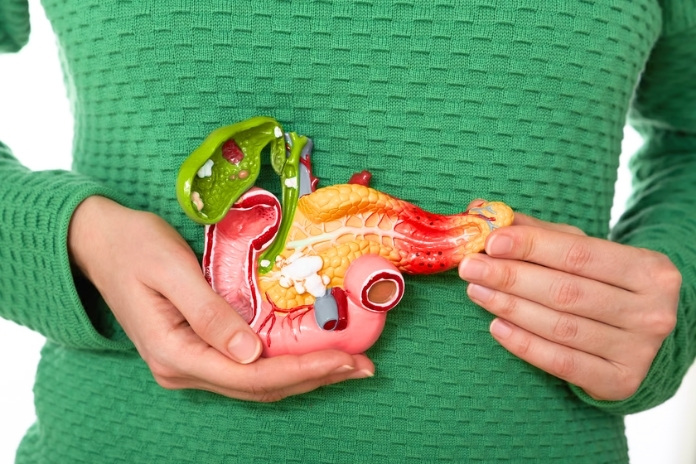
The pancreas has two major jobs in the body. One job is digestion. It makes enzymes that help break down food. The second job is hormone production. The pancreas makes insulin and other hormones that control blood sugar.
Inside the pancreas are beta cells, which produce insulin. When pancreatic cancer develops, these insulin-producing cells can stop working properly. Because of this, insulin levels start falling. Blood sugar then rises.
But researchers now think the tumor effect is more complicated than only physical damage. Some studies show pancreatic tumors may release inflammatory chemicals and proteins, which disturb normal glucose metabolism across the whole body. The tumor may create insulin resistance also. So the body cannot use insulin properly anymore.
This explains why some people develop diabetes even before the tumor becomes very large. One strange thing doctors noticed: many pancreatic cancer patients lose weight while their diabetes keeps getting worse. That is the opposite of the normal Type 2 diabetes pattern. In ordinary Type 2 diabetes, many people are overweight for years before diagnosis.
But in pancreatic cancer-related diabetes, patients may become thinner while their sugar levels rise quickly. This made researchers suspect a different biology is happening. This type of diabetes is called Type 3c diabetes, also known as pancreatogenic diabetes.
Type 3c diabetes happens because pancreatic tissue itself gets damaged. Similar diabetes is also seen in chronic pancreatitis and cystic fibrosis, where the pancreas slowly gets destroyed. Research estimates that almost 80% of pancreatic cancer patients have some form of abnormal glucose metabolism.
Around two-thirds have diabetes or prediabetes. And many cases are sudden new-onset diabetes. One more interesting thing doctors observed: after tumor removal surgery, diabetes sometimes improves. That strongly suggests the tumor itself was helping cause the blood sugar problem.
The Red Flag Pattern: When New Diabetes Suggests Cancer

Most diabetes is not cancer. The challenge for doctors is identifying which diabetes cases look unusual. Researchers found certain patterns appearing again and again in pancreatic cancer patients. The biggest red flag is new-onset diabetes starting after age 50.
“So, it’s possible that new onset of metabolic disease, particularly diabetes, could be the first warning sign of an impending pancreatic cancer diagnosis,” says Dr. Stephen Pandol, a gastroenterologist. Another important sign of new-onset diabetes in pancreatic cancer is unexplained weight loss.
This matters a lot because weight loss and rising sugar together are an unusual combination. Doctors also become more alert if a person has a low BMI or normal body weight. A thin person suddenly getting diabetes without a strong family history does not fit the classic Type 2 pattern properly.
No family history matters either. Family history does not guarantee diabetes. But the absence of common risk factors makes doctors think deeper. Another warning sign is rapidly worsening diabetes. Some people had stable sugar for years, then suddenly medicines stopped working well.
Cancer-induced diabetes often behaves aggressively. Sugar control becomes difficult. Standard medicines may not work strongly enough. Doctors also look for symptoms that happen together with diabetes, such as:
- Unexplained back pain
- Upper abdominal discomfort
- Appetite loss
- Pale stools
- Jaundice
- Unusual tiredness
- Muscle loss
Also, pancreatic cancer has a very small early detection window. By the time strong symptoms appear, the disease is often already advanced. So researchers are now trying to build prediction models for identifying which new diabetes patients should get pancreas scans.
Doctors do not want unnecessary CT scans for everybody with diabetes. That is not practical. But they also do not want to miss high-risk patients. So now medicine is trying to find a middle ground.
Why Pancreatic Cancer Diabetes Looks Different From Normal Type 2 Diabetes
In normal Type 2 diabetes, the body slowly becomes resistant to insulin over many years. Blood sugar rises gradually. Usually, weight gain and belly fat are already present. But pancreatic cancer and diabetes often appear quickly. Sometimes, a person who has never had a sugar problem suddenly develops severe glucose abnormality within months.
Some patients actually eat less and lose weight while their sugar levels are still going high. This confused doctors initially because ordinary diabetes and cancer diabetes were behaving differently. Researchers now think pancreatic tumors may change how the body uses energy overall.
The tumor may release substances that push muscles and the liver into abnormal glucose metabolism. Some experts describe pancreatic cancer as almost like a metabolic hijacking disease because it changes the whole-body energy balance. This also explains why many pancreatic cancer patients develop weakness and muscle wasting early.
Another thing researchers are trying to study now is tumor biomarkers. Scientists want blood tests that can separate ordinary diabetes from cancer-related diabetes earlier. Right now, this is still difficult. There is no single perfect blood test yet.
Beyond Pancreatic Cancer: Other Cancers That Can Affect Blood Sugar

One example is glucagonoma, a rare tumor in the pancreas. It releases too much glucagon hormone, so blood sugar rises fast. Many patients also get a very unusual skin rash called necrolytic migratory erythema.
Liver cancer can affect sugar control, too, because the liver helps manage how glucose is stored and released in the body. Tumors involving adrenal or pituitary glands may increase hormones like cortisol and growth hormone, which can make insulin resistance much worse.
Cancer treatment itself also causes sudden diabetes sometimes. Steroids like dexamethasone or prednisolone, commonly given during cancer treatment, can push sugars very high even in people who never had diabetes before. Some immunotherapy and chemotherapy drugs can also affect insulin-producing cells and suddenly change blood sugar control.
What to Do If You Develop Sudden Diabetes: When to Ask About Cancer Screening

Most people with new diabetes do not have pancreatic cancer. But you should discuss further testing with a doctor if sudden diabetes appears together with:
- Age above 50
- Unexplained weight loss
- Low BMI
- No family history of diabetes
- Difficult sugar control
- Back pain or abdominal pain
- Jaundice
- Pale stools
- Appetite loss
Doctors may advise a CT scan or an MRI of the abdomen, depending on the overall risk pattern.
Read More: Beyond Weight Loss: GLP-1 Benefits for Heart Disease and Diabetes Prevention
Final Thoughts
The connection between cancer and diabetes is more complex than most people realize. Now, researchers’ understanding of the relationship can also move in the opposite direction. Doctors are now trying to understand those warning signs better.
The biggest challenge ahead is identifying exactly which diabetes patients need deeper cancer investigation and which do not. That answer is still developing. But medicine is already changing how it views sudden diabetes in older adults.
- New-onset diabetes over 50 can sometimes be the first clue of pancreatic cancer.
- Weight loss with high sugar is more suspicious than weight gain.
- Type 3c diabetes happens when the pancreas itself gets damaged.
- Doctors still do not fully know why some tumors trigger diabetes early.
- Future screening may use scans plus blood markers, not sugar tests alone.
FAQs
1. Can pancreatic cancer cause diabetes?
Yes, pancreatic cancer can cause diabetes due to the disruption of insulin-producing cells and metabolic regulation. New-onset diabetes may occur before diagnosis, often termed type 3c diabetes, reflecting pancreatic dysfunction rather than primary insulin resistance seen in typical type 2 diabetes.
2. Is a sudden onset of diabetes a sign of cancer?
Sometimes, sudden-onset diabetes can be a sign of pancreatic cancer, particularly after age 50, with weight loss or no family history. However, most new diabetes cases are unrelated, so clinical context and further evaluation are essential for accurate diagnosis.
3. Can cancer treatment cause diabetes?
Yes, cancer treatment can cause diabetes, especially steroid-induced diabetes with steroid medications that increase blood glucose levels. Certain immunotherapy agents may also damage pancreatic beta cells, leading to insulin deficiency and sudden onset of insulin-dependent diabetes in some patients.
References
- Li, Y., Zhang, J., Xu, J., & Liu, S. (2021). The Metabolism Symbiosis Between Pancreatic Cancer and Tumor Microenvironment. Frontiers in Oncology, 11.
- Liu, Z., Hayashi, H., Matsumura, K., Uemura, N., Shiraishi, Y., Sato, H., & Baba, H. (2023). Biological and Clinical Impacts of Glucose Metabolism in Pancreatic Ductal Adenocarcinoma. Cancers, 15(2), 498.
- NIH. (2026, January 30). Researchers identify new blood markers that may detect early pancreatic cancer.
- Pannala, R., Basu, A., Petersen, G. M., & Chari, S. T. (2009). New-onset diabetes: a potential clue to the early diagnosis of pancreatic cancer. The Lancet. Oncology, 10(1), 88–95.
- Patterson, L., Toledo, F. G. S., Maitra, A., & Chari, S. T. (2024). Pancreatic Cancer–Induced Metabolic Dysregulation Syndrome: Clinical Profile, Proposed Mechanisms, and Unanswered Questions. Gastroenterology.
- Yang, J., Wen, C., Guo, H., Chai, Y., Sun, G., & Cheng, H. (2025). Targeting early diagnosis and treatment of pancreatic cancer among the diabetic population: a comprehensive review of biomarker screening strategies. Diabetology & Metabolic Syndrome, 17(1).
In this Article