
















Sometime around her 47th birthday, a woman who has always considered herself steady starts crying at small things. Her sleep fractures into pieces, and mornings feel heavier than they used to. The work she once enjoyed begins to flatten out, and she wonders if something more than stress is happening.
The link between menopause and depression is one of the most quietly misunderstood patterns in midlife health. Mood shifts during perimenopause are common and often pass on their own. But when sadness lingers, motivation drops, and ordinary days feel harder than they should, the picture may be closer to clinical depression than to a temporary rough patch.
The good news is that there are several effective ways to feel better, ranging from therapy to medication to lifestyle changes. This article walks through the signs to watch for, what causes them, the difference between mood swings and depression, and the support options that work.
- Menopause and depression are linked through hormonal shifts, sleep disruption, and life stress.
- Persistent low mood, lost interest, and trouble functioning for two weeks or more lean toward clinical depression rather than typical perimenopause mood swings.
- Effective treatments include cognitive behavioral therapy, antidepressants, hormone therapy, and steady lifestyle support.
- Urgent help is warranted for thoughts of self-harm. The 988 Lifeline is available around the clock in the U.S.
Read More: How Long Does Menopause Last? What to Expect at Each Stage
Can Menopause Cause Depression?

Menopause does not flip a switch on depression for every woman. It does, however, create a window where some people become more vulnerable to mood disturbances, especially in the years leading up to the final menstrual period.
How Hormone Changes May Affect Mood
Estrogen does more than regulate the reproductive system. It influences serotonin, norepinephrine, and other brain chemicals tied to mood, sleep, and stress response. When estrogen levels start swinging unpredictably during perimenopause, that biochemistry gets pulled along with it.
The sensitivity to these shifts varies widely. Some women barely notice anything emotional, while others feel destabilized for months.
“There is quite strong evidence that there is a special kind of depression linked to the hormonal changes,” says Dr. Pauline Maki, PhD, professor of psychiatry, psychology, and obstetrics and gynecology at the University of Illinois at Chicago and a past president of the North American Menopause Society.
A landmark analysis from the Study of Women’s Health Across the Nation found that the odds of experiencing major depression were significantly higher when women were perimenopausal or postmenopausal compared to when they were premenopausal, even after accounting for prior history of depression. That finding reframed perimenopause as a genuine risk window, not just a stretch of life that happens to overlap with stress.
Read More: 8 Perimenopause Health Mistakes Many Women Don’t Realize They’re Making
Why This Stage of Life Can Feel Especially Stressful
Hormones are only one part of the story. Midlife often arrives with caregiving for aging parents, teenagers leaving home, career pressure, relationship transitions, and the first serious health concerns of one’s own. Any of these alone could weigh on mood. Together, they can compound.
Sleep is another piece. Hot flashes and night sweats interrupt deep sleep, and broken sleep is a well-established trigger for low mood. The result is a layered experience where biology, sleep, and life circumstances all act on each other.
Menopause Does Not Automatically Cause Depression
Most women move through menopause without developing a depressive disorder. That distinction matters because the assumption that menopause and misery go hand in hand can keep women from getting evaluated when something more serious is brewing.
When depression does emerge in this stage, it usually reflects a mix of hormonal vulnerability, life stress, sleep disruption, and personal history rather than menopause alone.
Signs of Depression During Menopause
Depression looks different from person to person, but there are recognizable patterns worth knowing. The signs often build gradually, which is part of why they get missed.
Emotional Symptoms to Notice
Persistent sadness is the symptom most people associate with depression, but it is not always front and center. Some women describe feeling emotionally flat, hopeless, or unusually irritable. Anxiety often shows up alongside, sometimes with a sharper edge than the sadness itself.
These emotional shifts can also feel out of character. A woman who used to handle stress well may find herself snapping at her partner or crying during a routine meeting and not understanding why.
Changes in Motivation and Enjoyment
A loss of interest in things that used to bring pleasure is one of the most reliable markers of clinical depression. Hobbies sit untouched. Friendships feel like obligations. Even small daily pleasures, like coffee or a favorite show, lose their pull.
This withdrawal can quietly shrink a person’s world. Social activity tapers off, then stops, and the isolation feeds the depression in a slow loop.
Physical and Cognitive Symptoms
Depression is not only emotional. Fatigue, appetite shifts, slowed thinking, and trouble concentrating are common, and they can be especially confusing during menopause because some overlap with hot flashes, sleep changes, and brain fog. Brain fog beyond what stress alone would explain is worth flagging, particularly if it pairs with low mood.
When Symptoms Last Long Enough to Matter
Clinical depression has a duration component. When low mood, loss of interest, or several other symptoms persist most days for at least two weeks and start interfering with work, relationships, or self-care, it is no longer in the territory of a passing slump. That two-week threshold is a useful one to keep in mind.
Read More: Perimenopause Fatigue: Causes and Energy-Boosting Tips
Menopause Mood Changes vs Clinical Depression: How to Tell the Difference
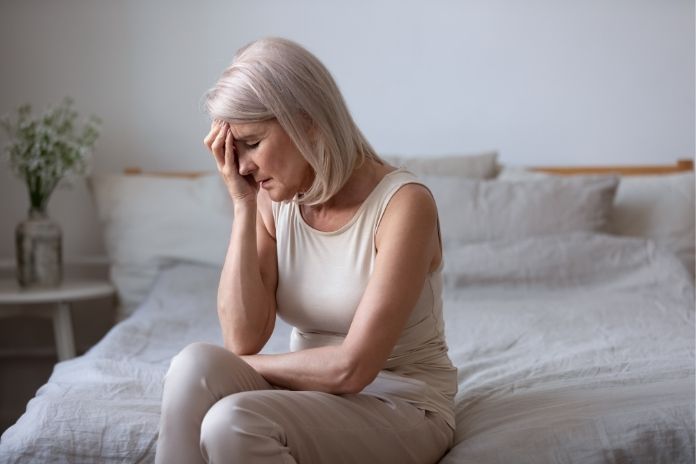
The line between ordinary mood shifts and depression during menopause can blur easily. Sorting one from the other helps decide whether to wait it out, change a few habits, or seek a fuller evaluation.
Common Mood Swings in Perimenopause
Perimenopausal mood swings tend to be reactive and short-lived. A woman might feel weepy on a Tuesday morning and be back to herself by afternoon. Irritability flares around hot flashes, then settles. Sleep affects everything for a day or two, then improves.
These shifts are uncomfortable but typically do not derail daily life. They come and go in step with cycles, sleep, and stress.
Features More Consistent With Depression
Depression looks steadier and more pervasive. The low mood does not lift after a good night’s sleep, and pleasure does not return after a relaxing weekend. Functioning slips, often quietly, across work and home. The other tell is duration. Mood swings last hours to days. Depression sits for weeks at a time and tends to deepen rather than resolve.
Why Professional Assessment Can Help
Several conditions mimic depression in midlife. Thyroid dysfunction, anemia, untreated sleep apnea, and anxiety disorders can all produce similar symptoms. A clinician can sort through these possibilities with bloodwork, history, and screening questionnaires that take less time than most women expect.
Read More: Estrogen, Progesterone, and Testosterone: What Every Woman Needs to Know
Risk Factors That May Increase Vulnerability
Not every woman entering perimenopause carries the same risk for depression. Certain factors raise the odds, and knowing them helps with early recognition. A history of depression, postpartum depression, or premenstrual dysphoric disorder is one of the strongest predictors of mood symptoms during the menopause transition.
Hormonal sensitivity tends to track across reproductive stages. Women whose moods shifted with the menstrual cycle or after childbirth often respond similarly to perimenopausal hormone changes.
Sleep is more than a comfort issue during menopause. Frequent night sweats, fragmented sleep, and insomnia have all been linked to higher depression risk in midlife women. When sleep is reliably broken night after night, the brain’s emotional regulation systems strain.
“Sleep disruptions can contribute to difficulty concentrating, brain fog, and mood swings,” notes Dr. JoAnn Manson, MD, DrPH, the Michael and Lee Bell Professor of Women’s Health at Harvard Medical School and chief of preventive medicine at Brigham and Women’s Hospital.
Bereavement, divorce, job loss, financial strain, and caregiver burnout all raise depression risk at any age, and they cluster in midlife. When these events stack on top of hormonal vulnerability, the cumulative load can tip into a depressive episode.
Living with chronic pain, cardiovascular disease, diabetes, or thyroid disorders increases the risk independently. These conditions also share treatment paths with depression, so addressing them often benefits mood as a side effect.
What Can Help: Evidence-Based Support Options

Effective treatment for depression during menopause exists, and most women feel better with the right plan. Approaches usually combine more than one tool.
Talk Therapy
Cognitive behavioral therapy is one of the best-studied options for menopause-related mood symptoms. A 2022 systematic review and meta-analysis of 14 randomized controlled trials found that cognitive and behavioral therapies significantly reduced depression, anxiety, hot flushes, night sweats, and fatigue while improving quality of life in menopausal women.
The effect sizes were moderate, which translates to real-world differences women can feel. Therapy also helps with the practical pieces of midlife. Boundary setting, sleep behaviors, and reframing unhelpful thoughts all become tangible skills rather than vague advice.
Medication Options
Antidepressants, particularly SSRIs and SNRIs, are often the first-line medical treatment for moderate to severe depression during menopause. Some, including paroxetine and venlafaxine, also reduce hot flashes, which can address two issues with one prescription.
Decisions about medication need a clinician’s eye on personal history, other medications, and any contraindications.
Menopause Hormone Therapy
For some women, hormone therapy is part of the answer. A randomized clinical trial published in JAMA Psychiatry found that twelve months of transdermal estradiol plus intermittent micronized progesterone prevented clinically significant depressive symptoms more effectively than placebo in initially euthymic perimenopausal and early postmenopausal women.
Of those on placebo, 32.3 percent developed significant depressive symptoms, compared with 17.3 percent on hormone therapy.
Hormone therapy is not appropriate for everyone, and it is not a stand-alone depression treatment in most cases. It works best when hormonal changes are clearly part of the picture, and the decision should be made with a clinician familiar with menopause care.
Treating Sleep Problems and Hot Flashes
Improving sleep often improves mood, sometimes dramatically. When hot flashes are the main sleep disruptor, treating them, whether with hormone therapy, non-hormonal medications, or cognitive behavioral therapy for insomnia, tends to lift mood as a downstream effect.
Daily Habits That Support Mental Health During Menopause
Lifestyle is not a substitute for treatment when depression is moderate or severe, but it shapes how a person feels every day and supports whatever clinical plan is in place. Movement is one of the most consistent mood boosters available.
Aerobic exercise, strength training, and even brisk walking improve sleep, stress resilience, and depressive symptoms in midlife women. The dose does not need to be heroic. Most evidence points to about 150 minutes a week of moderate activity as a useful starting target.
A regular bedtime, a cool bedroom, limited screens before sleep, and a wind-down routine all give the nervous system a fighting chance against night sweats. Caffeine and alcohol both interfere with sleep architecture and can worsen hot flashes, which is worth noting if either feels essential to a current routine.
Balanced meals with steady protein, fiber, and healthy fats help stabilize energy and mood across the day. Heavy alcohol intake worsens both sleep and depression and can trigger hot flashes for some women. Cutting back, even modestly, often produces noticeable shifts in how the next day feels.
Isolation deepens depression. Friends, family, support groups, and community spaces all act as buffers, even when they feel like effort. Women who connect with others going through menopause often find unexpected relief in simply hearing that their experience is shared.
Mindfulness, breathwork, journaling, time outdoors, and creative outlets all blunt the body’s stress response. They are not cures, but they pull baseline tension down enough that other interventions work better.
When to Seek Help Urgently
Most depression during menopause builds slowly. Some situations call for faster action. When daily functioning slips, when getting out of bed feels like a project, or when symptoms worsen quickly over days rather than weeks, the situation calls for prompt evaluation. Severe depression responds better to treatment when it is caught early.
Any thoughts of self-harm or suicide are a reason to reach out for urgent help right away. In the United States, the 988 Suicide and Crisis Lifeline is available around the clock by call or text. Local emergency services should be contacted in any immediate crisis.
Severe anxiety, panic attacks, or stretches of sleep deprivation that feel unsafe to drive or function through warrant prompt medical attention. These are treatable and do not need to be ridden out alone.
How to Start the Conversation With a Doctor
Walking into a clinician’s office prepared makes the visit shorter and the plan stronger. A simple log of mood, sleep, hot flashes, cycle changes, and stressors over two to four weeks gives a clinician something concrete to work with. Apps and notebooks both work. Patterns often emerge that the person tracking did not see in the moment.
General statements like “I feel off” carry less weight than specifics. Notes about missed deadlines, pulled-back relationships, lost interest in hobbies, or canceled plans paint a clearer picture and help guide treatment intensity. A thorough workup includes mental health screening, menopause symptom review, medication review, and basic medical labs.
Dr. Stephanie Faubion, MD, MBA, director of the Mayo Clinic Center for Women’s Health and former medical director of the North American Menopause Society, has called perimenopause a “window of vulnerability” for mood symptoms, even in women without a prior history of depression.
Asking for an evaluation that takes both hormonal and mental health pieces seriously is reasonable and increasingly standard.
Read More: Best Diet for Menopause: Foods That Help and Foods to Limit
Takeaway: You Don’t Have to Push Through Alone
Depression during menopause is real, common enough to take seriously, and very treatable. Brushing it off as “just hormones” or a phase to white-knuckle through can delay care that would actually make a difference. The hormonal shifts of perimenopause are part of the picture, but so are sleep, stress, history, and the slow accumulation of midlife pressures.
The right plan looks different for everyone. For one woman, it might be therapy and a stronger sleep routine. For another, it might involve antidepressants, hormone therapy, or both. For many, the first step is simply naming what is happening and refusing to settle for feeling this way as a baseline.
If low mood, anxiety, or loss of interest are persistent, professional support is worth seeking. Menopause and depression do not have to define this stage of life. With the right tools and people in place, this period can be navigated with steadiness and even, eventually, with a sense of having come through something hard and grown from it.
References
- Bromberger, J. T., Kravitz, H. M., Chang, Y. F., Cyranowski, J. M., Brown, C., & Matthews, K. A. (2011). Major depression during and after the menopausal transition: Study of Women’s Health Across the Nation (SWAN). Psychological Medicine, 41(9), 1879-1888.
- Gordon, J. L., Rubinow, D. R., Eisenlohr-Moul, T. A., Xia, K., Schmidt, P. J., & Girdler, S. S. (2018). Efficacy of transdermal estradiol and micronized progesterone in the prevention of depressive symptoms in the menopause transition: A randomized clinical trial. JAMA Psychiatry, 75(2), 149-157.
- Li, Y., Li, S., Jiang, T., Wang, K., Tian, Z., Liu, R., & Wei, J. (2022). Efficacy of cognitive therapy and behavior therapy for menopausal symptoms: A systematic review and meta-analysis. Psychological Medicine, 52(3), 433-445.
- Maki, P. M., Kornstein, S. G., Joffe, H., Bromberger, J. T., Freeman, E. W., Athappilly, G., Bobo, W. V., Rubin, L. H., Koleva, H. K., Cohen, L. S., & Soares, C. N. (2019). Guidelines for the evaluation and treatment of perimenopausal depression: Summary and recommendations. Journal of Women’s Health, 28(2), 117-134.
- Brigham and Women’s Hospital. (n.d.). Perimenopause and depression: Q&A with Dr. Hadine Joffe. Mass General Brigham.
- National Institute of Mental Health. (n.d.). Depression. U.S. Department of Health and Human Services.
- SciLine. (2024). Dr. JoAnn Manson: Menopause myths, misconceptions, and facts.
In this Article