









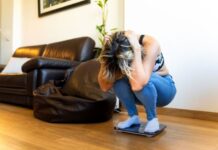






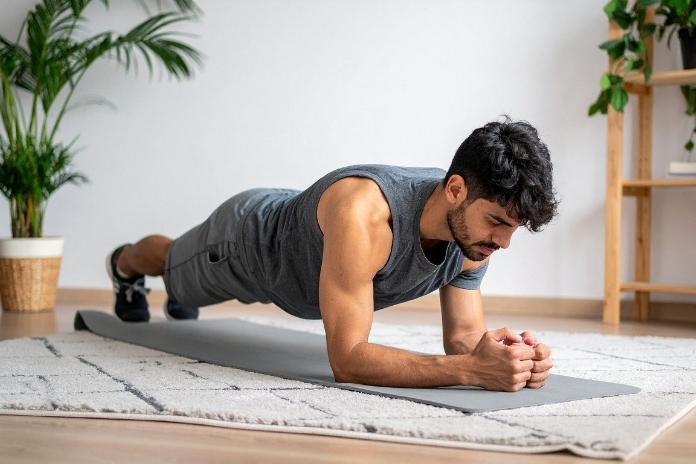
Most people encounter the 60-second plank the same way: a trainer throws it out as a target, a fitness app marks it as a milestone, or a challenge video makes it look effortless. The number sticks. And then a person tries it in their 40s, or after a few years away from structured exercise, and wonders what is wrong with them when they hit 30 seconds, and their hips start to drop. Nothing is wrong. The benchmark is wrong for them.
Plank time by age varies considerably across the adult lifespan, shaped by age-related muscle changes, training history, body composition, and what someone has been doing with their core for the past several decades. Treating 60 seconds as a single universal threshold misses that reality entirely and, for most people, either sets an unrealistic bar or underestimates what they can build toward.
This article lays out realistic, age-based plank benchmarks grounded in exercise science research. More importantly, it makes the case that how you hold a plank matters far more than how long you hold it.
- The 60-second plank is a popular but arbitrary benchmark, not a clinically validated standard; realistic plank hold times vary significantly by age, training history, body weight, and injury status, and comparing yourself to a single number without context provides little useful information.
- Plank benchmarks decline roughly 10 to 15% per decade after age 35, which means a 40-year-old and a 25-year-old are working against meaningfully different physiological baselines when they hold the same position for the same duration.
- Form breakdown, including sagging hips, elevated hips, shoulder shrugging, and breath-holding, signals the effective end of a set regardless of how much time remains on the clock; stopping when form fails is not weakness; it is smart training.
- Adding sets before adding duration, using modified plank variations, and incorporating side planks produce better core endurance outcomes than grinding through increasingly long single holds with degraded technique.
Why the 60-Second Plank Became a Popular Benchmark
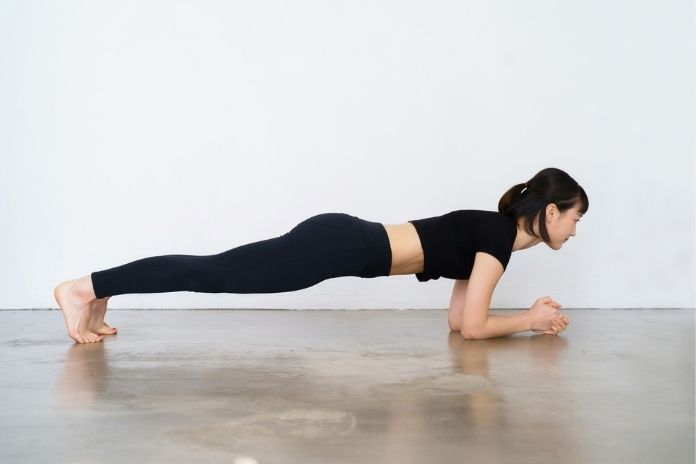
Sixty seconds is a clean, memorable goal. It fits neatly into fitness challenges, gym class standards, and social media formats. Trainers and wellness writers gravitated toward it in part because the plank offered a safer-seeming alternative to the sit-up, which had accumulated decades of criticism for placing repetitive compressive load on the lumbar spine.
Recommending a 60-second target gave practitioners a concrete, if arbitrary, reference point. The problem is that this round number was never derived from a population-wide assessment of what healthy adults across all ages can actually sustain.
Normative data from a study of 471 college-aged participants published in the Journal of Human Kinetics found average plank hold times of 124 seconds for males and 83 seconds for females in that young, active sample. The numbers drop substantially across older age groups and lower fitness levels. A flat 60-second rule applied across the board tells very little about actual core fitness or progress.
Training experience also splits outcomes widely. Two people of the same age, with the same body weight, can have plank times that differ by 60 seconds or more based purely on how consistently they have trained their core.
What a Plank Actually Measures
The plank is an isometric exercise, meaning working muscles contract and generate force without changing length. That distinction from dynamic exercises like crunches matters because it more closely mirrors how the core functions during most everyday tasks and athletic movements.
When performed correctly, a plank recruits the rectus abdominis, transversus abdominis, internal and external obliques, erector spinae, multifidus, gluteus maximus and medius, and the anterior deltoids simultaneously. The transversus abdominis, which wraps around the trunk like a corset, provides the deep spinal stabilization that makes the exercise particularly valuable for injury prevention and postural control.
A 2024 study published in PMC comparing ultrasound-measured muscle activation across core stability exercises confirmed that the front plank and side plank produce meaningfully different activation patterns in the deep core musculature, underscoring that what you hold matters as much as how long.
What a plank measures, then, is muscular endurance across this integrated anterior chain, along with the ability to maintain spinal stability under sustained load. It is not primarily a measure of abdominal strength. Core stability and raw muscle force are different qualities, and a person can have strong individual core muscles while still scoring poorly on a plank if they lack the motor control to coordinate all of them under sustained demand.
Factors That Influence Plank Hold Time Guidelines
Several factors determine where any individual will land relative to these benchmarks. Age-related muscle loss plays a central role. Muscle mass decreases at approximately 1% per year after age 30, a process that accelerates meaningfully after 65.
Research on sarcopenia published in PubMed notes that this loss affects both contractile capacity and muscular endurance, with postural stabilizers among the affected tissues. The practical result for plank performance is a measurable decline in how long the core can sustain isometric load without form breakdown.
Body weight and leverage affect the mechanical demand. A person with a higher body weight distributes more load across the shoulder girdle, lumbar spine, and core musculature, making the same hold physiologically harder than it would be for a lighter individual at identical fitness levels. Training history is the most significant modifiable factor.
Consistent core training over months and years builds motor patterns, muscular endurance, and neuromuscular efficiency that translate directly to longer, cleaner holds. Injury and pain limitations, particularly in the lower back, wrists, and shoulders, can significantly shorten safe duration. This is not a fitness failure. It is information about where modification is needed.
Read More: Sit-Ups vs. Crunches vs. Planks: Which Exercise Is Best for Your Core?
Realistic Plank Benchmarks by Age Group
The ranges below are compiled from fitness testing norms and exercise science research, including normative data developed by Strand et al. (2014) and plank fitness norms from Linfield University. They represent general population benchmarks, not elite athletes, and should be understood as reference ranges rather than pass-fail thresholds.
20s: Building Baseline Endurance
People in their 20s are generally at or near their peak muscular endurance capacity. The ranges for this group reflect a wide spread because training backgrounds vary enormously.
- Beginner: 20 to 40 seconds. A reasonable starting point for someone new to structured core training or returning from a long break.
- Average: 45 to 75 seconds. Typical for someone with some regular fitness activity and no significant training gaps.
- Advanced: 90 seconds and above. Consistent core and general fitness training typically brings hold times into this range.
30s: Maintaining Core Stability
The physiological differences between the 20s and 30s are modest for people who stay active. The greater variable is lifestyle: career demands, family responsibilities, and desk-based work habits begin to affect posture, hip flexor tightness, and training consistency.
Beginner: 20 to 35 seconds. Average: 40 to 70 seconds.
Advanced: 75 to 90 seconds and above. For people in their 30s, maintaining core stability should feel achievable. The emphasis begins to shift toward keeping training consistent rather than always chasing new time records.
40s: Focus on Control Over Duration
The 40s represent a meaningful inflection point. Collagen quality shifts, recovery takes longer, and if training has been inconsistent, the gap between baseline and training-adapted capacity widens. Research cited in fitness testing norms indicates that plank endurance drops roughly 10 to 15% per decade after age 35 in the general population.
Beginner: 15 to 30 seconds. Average: 30 to 60 seconds. Advanced: 60 to 75 seconds and above.
Reaching a 60-second hold in your 40s with clean form is a genuine achievement. The priority for this group is control over the pelvis and shoulder girdle, not adding more time.
50s: Emphasis on Joint-Friendly Strength
Adults in their 50s often navigate a combination of declining muscle endurance, changing joint tolerance, and residual effects of injuries accumulated over decades. Core strength at this stage should support daily movement and reduce fall and injury risk.
Beginner: 10 to 25 seconds. Average: 25 to 50 seconds. Advanced: 50 to 70 seconds.
A 55-year-old holding 40 seconds with a neutral spine, controlled breathing, and no compensatory hip hiking is doing more useful core work than someone half their age grinding through 90 seconds with sagging hips. The form distinction is the whole point.
60s and Beyond: Functional Core Endurance
Core training remains valuable well into older age. A 2023 systematic review and network meta-analysis in the Journal of Cachexia, Sarcopenia and Muscle confirmed that resistance and endurance exercise are effective for improving muscle strength and physical performance in older adults. The plank fits naturally into this framework as a low-impact, bodyweight-based isometric option.
Beginner: 10 to 20 seconds. Average: 20 to 40 seconds. Advanced: 45 to 60 seconds.
Even modest plank holds performed consistently contribute to spinal stability, posture, and the functional core strength that supports walking, lifting, and rising from chairs.
Read More: How to Build Muscle Over 40: Age-Specific Training Tips
Why Longer Isn’t Always Better
There is a common assumption in fitness culture that more is always better. With planks, this assumption causes real problems.
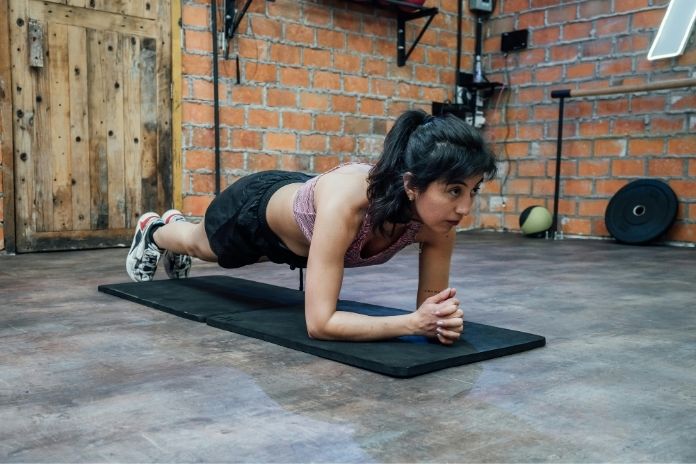
Once a plank extends beyond the point where proper form can be maintained, the exercise stops training the core effectively and starts training compensations. The hip flexors, shoulder muscles, and lumbar extensors take over the load-bearing role from the deep stabilizers. The result is a longer time on the clock with reduced stimulus to the muscles the exercise is supposed to target.
Stuart McGill, PhD, has stated that the goal of core endurance work is to “enhance endurance, not strength” and that this means adding repetitions, not extending duration beyond the point where form degrades. Holding a plank for a personal record while compensating through the hips and lumbar spine does not build resilience. It trains the wrong pattern.
Signs Your Plank Form Is Breaking Down
Sagging hips. The pelvis drops below the line of the body, transferring load to the lumbar spine and sharply reducing deep core engagement. This is the most common breakdown.
Elevated hips. Picking the hips upward shifts work to the hip flexors and away from the core stabilizers that make the exercise valuable.
Shoulder shrugging. When the upper trapezius takes over from the deltoids and serratus anterior, the shoulder girdle is no longer in a stable supporting position.
Holding breath. Breath-holding during sustained isometric effort spikes blood pressure and reduces oxygen delivery to working muscles. Steady, controlled breathing throughout the hold is part of correct form.
When any of these patterns appear, the set ends. Not the workout. The set.
Safer Alternatives to Extending Plank Time
Multiple shorter holds are more effective for most people than one maximal effort. Three sets of 20 to 30 seconds with tight form and 30 seconds of rest between sets produce more useful core stimulus than a single 90-second hold with degraded technique. This approach is directly supported by McGill’s programming in his core rehabilitation research.
Modified plank variations allow people to reduce mechanical demand while still training the intended muscles. Elevating the hands on a bench shortens the moment arm and reduces load, making the exercise accessible for people with lower back sensitivity or reduced upper body strength.
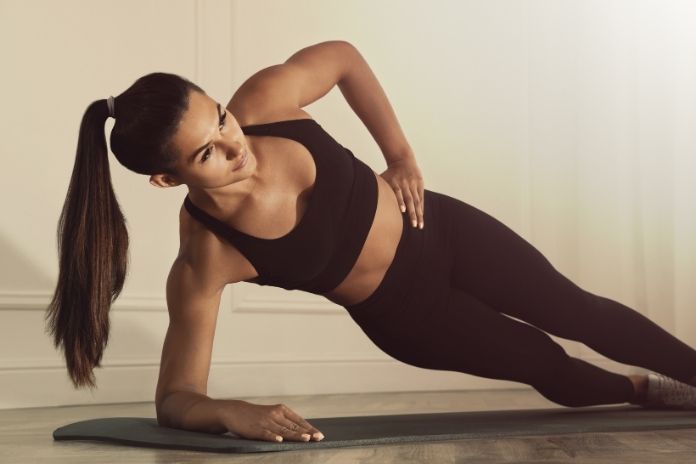
Side planks target the lateral core, specifically the obliques and quadratus lumborum, in ways the standard front plank cannot. The 2024 PMC activation study referenced earlier found that the side plank produced significantly greater transversus abdominis relative thickness than the front plank. Including side planks builds more complete core stability.
Elevated surface planks, performed with hands on a counter rather than the floor, reduce load on the wrists and shoulders, making them particularly useful for older adults and anyone managing wrist or shoulder discomfort.
How to Progress Your Plank Safely
Adding sets before adding duration is the more effective approach to building plank endurance fitness assessments over time. Three sets of a manageable hold produce better results than one extended struggle.
Time increases should be modest, generally 5 seconds at a time, and only after the current duration can be held with clean form across all sets. Tracking consistency over weeks matters more than daily maximums. Rest periods of 30 seconds between sets allow the deep core stabilizers to recover without fully discharging the training stimulus.
Read More: Strength Training for Longevity: Best Workouts to Stay Strong and Age Gracefully
When Planks May Need Modification
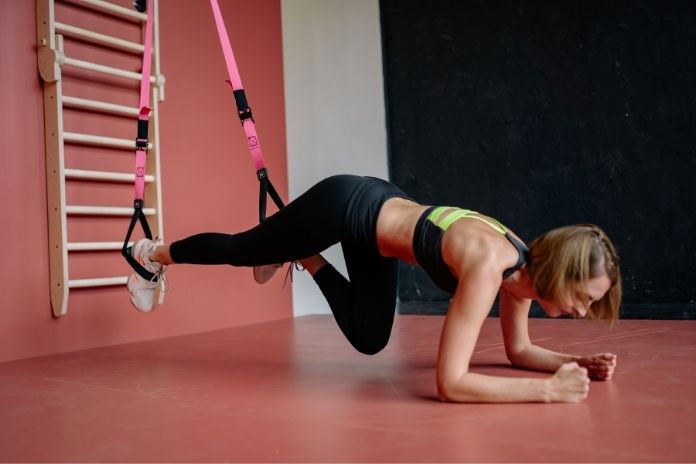
Lower back discomfort during a plank often reflects a form issue, typically anterior pelvic tilt or insufficient glute engagement. Correcting the position resolves it for many people. Persistent or sharp pain requires evaluation before continuing.
Shoulder pain typically reflects impingement or poor scapular positioning. Elevating the surface or switching to a forearm plank can reduce load while a professional assessment is sought.
Wrist issues are a common barrier to straight-arm planks. Forearm planks remove wrist extension load entirely.
Postpartum considerations are significant. Diastasis recti is common after childbirth, and the front plank can increase intra-abdominal pressure in ways that worsen the condition. Modified versions with elevated surfaces are generally safer during early recovery. A pelvic floor physical therapist can assess readiness for full plank holds.
What These Plank Endurance Norms Don’t Measure
The plank is a static assessment tool. It does not measure dynamic core strength, the ability to produce or control force during movement. Rotational stability, the capacity to resist unwanted twisting during throwing, swinging, or direction changes, is not reflected in a standard plank time. Nor is anti-lateral flexion strength, the ability to resist side-bending under load.
Functional movement capacity, the practical ability to squat, hinge, carry, and rotate without pain or compensation, depends on a broader set of qualities than any single isometric hold can reveal. A person who holds 90 seconds but cannot safely perform a hip hinge has an incomplete core training picture.
Overall fitness, including cardiovascular capacity, mobility, strength, and movement quality, cannot be inferred from plank performance alone.
Conclusion: What Plank Time by Age Actually Tells You
Plank time by age is a useful reference point, and the benchmarks in this article give a realistic picture of what people at different life stages can typically achieve with consistent training. But context matters as much as the number. A 40-year-old holding 35 seconds with a rigid spine, neutral pelvis, and steady breath is doing better core work than a 25-year-old grinding through 90 seconds with sagging hips and a held breath.
The most important variable is not duration. It is whether the muscles being targeted are actually doing the work. For most people, building toward 20 to 40 seconds of clean, controlled form and then adding sets before adding time is more effective and more sustainable than chasing a round number. The goal of core training is a stable, durable spine that supports decades of movement, and that goal is better served by quality than by the clock.
References
- Behm, D. G. (2018). The science and physiology of flexibility and stretching. Routledge.
- Chase, K. A., Brigham, C. E., Peterson, J. T., & Coste, S. C. (2014). Fitness norms for the plank exercise. International Journal of Exercise Science: Conference Proceedings, 8(2).
- McGill, S. M. (2017). Ultimate back fitness and performance (6th ed.). Backfitpro Inc.
- McGill, S. M. (2018). Back mechanic. Backfitpro Inc.
- Nuss, K. J. (2014). Norms for an isometric muscle endurance test. Journal of Human Kinetics, 40, 93.
- Rodriguez, G., et al. (2024). A comparison between core stability exercises and muscle thickness using two different activation maneuvers. PMC.
- Shen, Y., et al. (2023). Exercise for sarcopenia in older people: A systematic review and network meta-analysis. Journal of Cachexia, Sarcopenia and Muscle, 14(3), 1199–1211.
- Venturelli, M., et al. (2019). Sarcopenia: Aging-related loss of muscle mass and function. PubMed.
- Physiopedia. (n.d.). Plank exercise.
- Kang, J., et al. (2024). Effects of plank exercise on core stability and endurance. Journal of Physical Therapy Science.
- Head2Toe Physio. (n.d.). Age-based plank duration guidelines: A physiotherapist’s critique.
- Health.com. (2025). How long should you be able to hold a plank?
- Sparacino, A. (2025, April 3). The average amount of time to hold a plank. Men’s Health.
- Solan, M. (2019, November 13). Straight talk on planking. Harvard Health Publishing.
- Marathon Handbook. (2026, March 24). Average plank time by age and sex.
- Women’s Fitness Talk. (n.d.). This is how long you should hold a plank for. Medium.
In this Article