












Most people try to fix bad sleep at bedtime. They take melatonin, download a white noise app, and buy heavier curtains. The real problem is that for the hour or two before they got into bed, their brain received precisely the wrong signals.
By the time they lie down, their nervous system is still running the alert response, still treating the environment as daytime, still producing the cortisol that blocks the sleep it desperately needs.
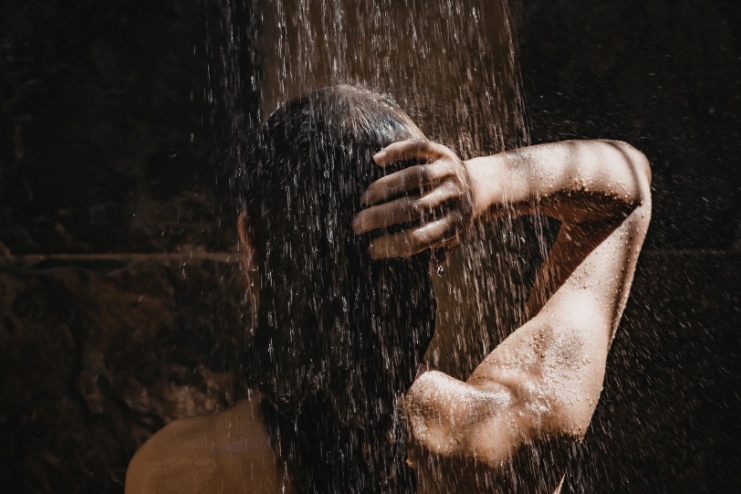
The dark shower is a deceptively simple intervention that addresses this upstream. The idea is to take your pre-sleep shower in near-darkness or very low, amber-toned light, at a specific temperature, for a specific duration, timed to optimize the two physiological mechanisms that most reliably initiate sleep.
It’s the intersection of chronobiology, thermoregulation, and sensory neuroscience, three fields that have converged in the last decade on a fairly consistent picture of what the brain actually needs to begin its transition into rest.
In this article, we’ll break down the dark shower sleep benefits, the science behind dark showering for better sleep, and how light exposure, body temperature, and nervous system signals interact to influence sleep. You’ll also learn how a simple shower before bed for sleep can support melatonin production, stabilize your circadian rhythm, and help your body shift naturally into rest mode.
Read More: Is It Better to Shower in the Morning or at Night? Here’s What Dermatologists Say
What Is “Dark Showering” and Why Are People Trying It?
The Rise of Low-Light Showering Routines
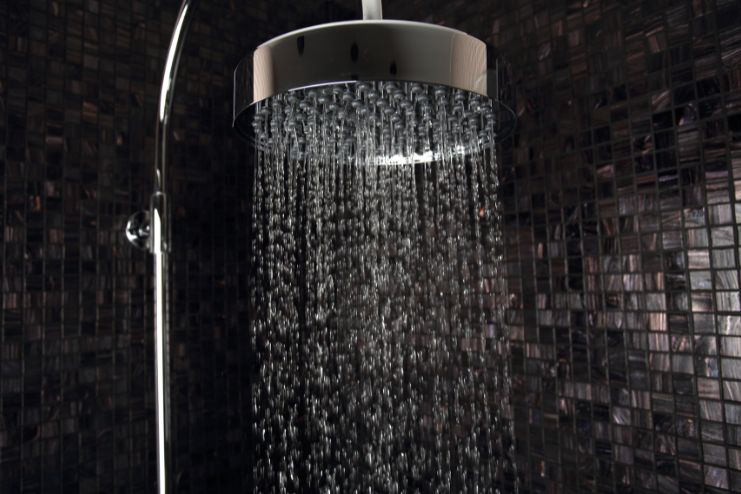
Dark showering gained traction on wellness platforms, mostly through the lived experience of people who stumbled onto it by accident. The anecdotal resonance spread quickly among people dealing with stress-driven insomnia, digital overstimulation, and the general inability to decelerate after high-stimulation evenings.
The practice addresses a specific and very modern problem: most contemporary pre-sleep environments are brightly lit, visually busy, and acoustically active until the moment a person lies down and closes their eyes. The bedroom light turns off, but the brain hasn’t been given adequate runway.
Dark showering for better sleep works because it doesn’t just reduce light. It reduces the total sensory load of the pre-sleep environment and creates a physical and thermal experience that directly accelerates the body’s night-readiness process. The combination of these effects is what distinguishes it from simply taking a dimmer shower.
The Science Behind the Term “Sleep Switch”
The transition from wakefulness to sleep isn’t a sudden event. It’s a gradual biological de-escalation involving multiple interacting systems: the autonomic nervous system shifting from sympathetic, alert, and reactive dominance toward parasympathetic, calm, and restorative states; the melatonin hormone rising as evening light diminishes; and core body temperature beginning its natural pre-sleep descent.
The “sleep switch” isn’t a single mechanism. It’s the convergence of these signals in sufficient magnitude that the brain registers as nighttime and initiates sleep architecture. A dark shower hits multiple points of that convergence simultaneously.
It modulates light input to support melatonin hormone production, and it uses the thermal properties of warm water to accelerate the core body temperature drop that signals sleep readiness. Moreover, it creates a sensory environment that promotes the nervous system deactivation that fight-or-flight vs. rest-and-digest physiology requires.
How Dark Showering Activates Your Brain’s Sleep Mode
Step 1: Light Regulation and Melatonin Production
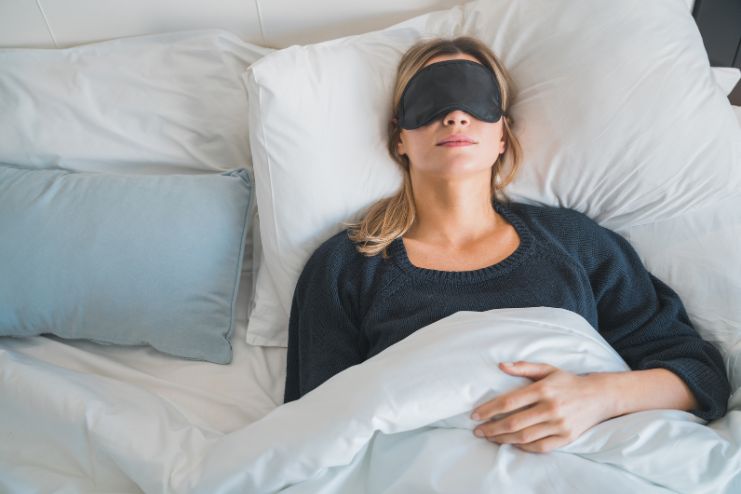
Melatonin and light exposure are inversely linked. Specialized retinal cells called intrinsically photosensitive retinal ganglion cells are particularly sensitive to short-wavelength blue light, the spectrum emitted by LED overhead lighting and most screens. When they detect it, they suppress melatonin output and maintain the brain’s daytime alertness state.
A typical bathroom at night is one of the more hostile environments for melatonin and light exposure management. Bright overhead LEDs bounce off white tile at high intensity, with an effect on melatonin suppression comparable to continued screen use.
Swapping to amber-tinted lighting, such as a dimmable warm-toned LED, a salt lamp, or candles, changes the spectral composition dramatically. Amber and red-spectrum light have minimal effect on circadian photoreceptors.
Dr. Jade Wu, PhD, DBSM, explains the light suppression mechanism directly: “When the light from your screen gets into your eyes, it tricks your body into thinking it’s daytime, which can suppress melatonin secretion.”
The same principle applies to any bright light in the pre-sleep window. Your brain is inside a dark cave, she notes. It only knows what the environment is doing through your senses. Dim those senses, and you begin speaking the language the circadian rhythm sleep tips literature has documented for decades.
Step 2: The 1-Degree Core Body Temperature Drop
Here is the counterintuitive biology at the center of dark showering for better sleep: to fall asleep faster, you need your core temperature to drop. And one of the most reliable ways to produce that drop is to get into warm water first.
The average circadian temperature rhythm involves a core body temperature drop of approximately 1 degree Celsius in the hour before habitual sleep. This cooling is the biological signal the brain uses to time sleep onset.
People with insomnia frequently show disrupted thermoregulatory patterns, with smaller or delayed temperature drops that delay sleep onset correspondingly. A warm shower-temperature sleep intervention exploits this through vasodilation. When you step into water at 40 to 42.5°C (104 to 108.5°F), blood vessels in your peripheral skin dilate.
Blood moves from the warm core toward the cooler surface and radiates heat outward. When you step out, the enhanced heat dissipation continues, and your core temperature drops rapidly. The brain reads it as the nighttime signal and begins initiating sleep architecture.
A systematic review and meta-analysis published in Sleep Medicine Reviews, analyzing 13 quantitative studies and 5,322 candidate articles, found that passive body heating at 40 to 42.5°C scheduled one to two hours before bedtime, for as little as 10 minutes, was associated with improved self-rated sleep quality, improved sleep efficiency, and significant shortening of sleep onset latency.
The effect was mediated specifically by the magnitude of the core body temperature drop achieved through increased peripheral blood perfusion.
Dr. Matthew Walker, PhD, explained the mechanism with characteristic clarity: “What happens with a bath… is you actually bring all of the blood to the surface. So you are essentially like a snake charmer, you are charming the heat out of the core of your body to the surface of your body.”
The optimal timing is 60 to 90 minutes before your intended sleep time, allowing the vasodilation response to peak and the resulting core temperature drop to arrive at its lowest point precisely when you get into bed.
Step 3: Sensory Reset and Cortisol Reduction
The near-dark shower environment removes most incoming visual stimulation. With minimal light, the visual cortex downregulates. What remains is tactile, warm water on skin, and auditory, the consistent sound of running water. Both function as sensory grounding stimuli that occupy attention without generating the evaluative arousal that visual information produces.
Cortisol and relaxation interact directly here. Elevated evening cortisol suppresses melatonin, raises core body temperature, and maintains sympathetic nervous system arousal. The warm water and reduced sensory load of a dark shower create conditions that promote cortisol reduction.
A randomized controlled study published in the International Journal of Molecular Sciences found that multi-sensory relaxation interventions combining thermal and reduced-stimulation sensory environments produced measurable reductions in salivary cortisol and promoted autonomic nervous system shifts toward parasympathetic dominance.
How to Practice Dark Showering Safely
Light Setup Options
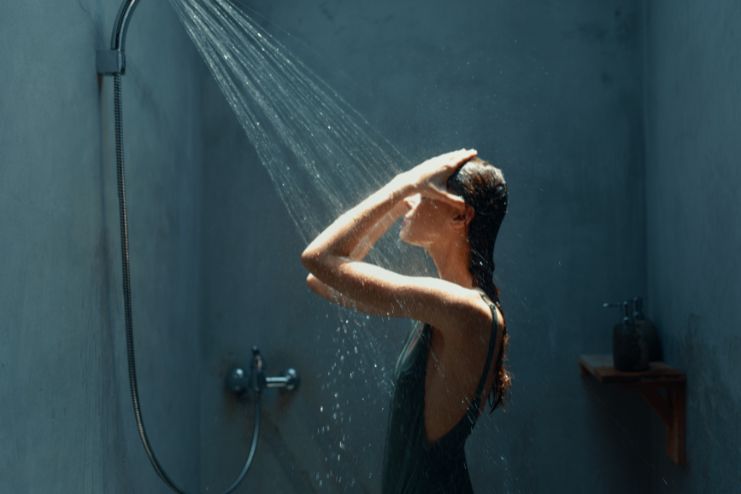
Total darkness in a bathroom carries a genuine safety risk on wet surfaces. The goal is low, warm-spectrum light, not no light. Dimmable amber or warm-white LED bulbs (2700K or lower) set to minimum output are the most practical permanent solution.
Many smart bulbs can be pre-scheduled to shift at the same time each evening, creating an effortless circadian rhythm sleep tips anchor.
Battery-operated candles or LED salt lamps on a shelf create effective low-level ambient light. Red-spectrum night lights (approximately 630 to 700 nm) are perhaps the simplest option, as they have essentially no suppressive effect on melatonin hormone production.
Ideal Timing and Duration
The target window is one to two hours before your intended sleep time. This gives the vasodilation response and heat dissipation process enough time to run before you get into bed.
Warm shower temperature sleep targets are 40 to 42.5°C (104 to 108.5°F). A duration of 10 to 15 minutes is sufficient to trigger the thermoregulatory response. Older adults and people with cardiovascular conditions should use the lower end of this range.
Combine With a Consistent Night Routine
The dark shower is most powerful as one element of a consistent pre-sleep routine. When a specific sequence of behaviors consistently precedes sleep, the brain begins to associate those behaviors with sleep initiation, lowering the activation threshold and making the transition faster and more reliable.
Dr. Wendy Troxel, PhD, DBSM, explains, “Small, consistent rituals signal safety and predictability to the nervous system, making sleep feel more accessible.”
Pair the dark shower with screen dimming in the preceding hour, herbal tea immediately after, and light reading or mindfulness practice before sleep. Each element contributes its own mechanism, and their consistent occurrence together deepens the conditioned sleep association over weeks of practice.
What to Expect: Short- and Long-Term Benefits
Immediate Effects
Warm water at 40 to 42.5°C is one of the most direct stimulants of bedtime routine relaxation: it increases tissue perfusion, reduces muscle tension, and activates thermoregulatory parasympathetic responses. Emerging from the shower, people commonly report a physical heaviness, the somatic experience of the sympathetic nervous system standing down.
Mental quieting follows from the sensory deloading. The narrow sensory field gives the brain limited input to process, which reduces the cognitive arousal that drives pre-sleep rumination. Sleep onset within 30 to 60 minutes is the expected outcome for most people who apply the timing and temperature guidelines correctly.
The meta-analytic data on warm pre-sleep showering found average reductions in sleep onset latency of 9 to 10 minutes, an effect size comparable to or greater than many over-the-counter sleep aids, without any pharmacological mechanism.
Over Time
A longitudinal study published in PMC tracking hot-water bathing before bedtime in 1,094 older adults found that the association between pre-sleep bathing and shorter sleep onset latency held across repeated measurements over months, confirming that the effect is consistent rather than novelty-driven.
Participants whose bathing was timed 60 to 120 minutes before sleep showed the most significant improvements in both actigraphically measured and self-reported sleep onset latency.
Over weeks and months of consistent dark showering, the ritual itself becomes a conditioned sleep cue, and the parasympathetic shift begins earlier in the routine as the association strengthens.
Resting heart rate and evening cortisol tend to track downward, and reduced night awakenings are frequently reported, particularly in people whose sleep fragmentation was driven by temperature dysregulation or hyperarousal.
Key Considerations and Expert Insights
The dark shower is not a clinical treatment for sleep disorders. Insomnia with significant daytime impairment, sleep apnea, restless legs syndrome, and other clinical sleep conditions require formal evaluation and evidence-based behavioral or medical treatment.
In those contexts, the dark shower functions as a complementary habit within a broader approach, not a substitute for appropriate care. Shower temperature matters more than most people intuitively adjust for.
A shower that is too hot, above 43°C, may delay rather than accelerate sleep by producing a larger initial core temperature elevation that takes longer to resolve. A cold shower, sometimes marketed as stimulating, has a different thermoregulatory signature and is not supported by the same body of evidence for sleep onset improvement.
Timing errors are the most common practical mistake. The 40 to 42.5°C range is where the research converges. Showering right before bed, within 30 minutes of lying down, doesn’t allow the post-shower temperature dissipation to run its course. The body is still in the process of heat-dumping when sleep is attempted, which can work against sleep initiation.
Individual variation exists and is worth acknowledging. Some people are more thermoregulatory-sensitive than others. Some find 40°C comfortable and relaxing; others find the same temperature too stimulating for their baseline.
The temperature and duration guidelines are a starting point, not a prescription, and calibrating them to personal response over a week or two of practice produces better long-term results than strictly following a single number.
Read More: Cold Showers vs. Ice Baths: Which Recovery Method Works Best?
Key Takeaway
The dark-shower sleep benefits are not the product of a single mechanism. They emerge from the convergence of three distinct physiological levers, all activated simultaneously within a ten-to-fifteen-minute routine that requires no equipment beyond a dimmer switch and a consistent clock.
Melatonin and light exposure management begin the process. Remove the blue-spectrum light that suppresses the brain’s night signal, and the pineal gland can do its job.
Practiced consistently, timed correctly, and paired with a screen-free transition to bed, the bedtime mindfulness technique of the dark shower gives the brain the runway it needs to land. One degree of temperature drop.
Ten minutes of low light. Ninety minutes of lead time before sleep. That’s the intervention. The science behind it has been building for decades. The habit takes about a week to establish.
References
- Breus, M. J. (2018). Oprah’s sleep doctor shares 5 surprising ways to get the rest you need
- Haghayegh, S., Khoshnevis, S., Smolensky, M. H., Diller, K. R., & Castriotta, R. J. (2019). Before-bedtime passive body heating by warm shower or bath to improve sleep
- Mikicin, M., Borowiecki, M., & Kowalczyk, M. (2023). Investigating the impact of guided imagery on stress, brain functions, and attention: A randomized trial
- Tai, Y., Obayashi, K., Yamagami, Y., Yoshimoto, K., Kurumatani, N., Nishio, K., & Saeki, K. (2021)
- Troxel, W. M. (2025). Simple, restful rituals for a good night’s sleep
- University of Texas at Austin. (2019). Take a warm bath 1–2 hours before bedtime to get better sleep, researchers find
- Walker, M. (2019). Quoted in: Trouble sleeping? Try a warm bath to cool down
- Wu, J. (2023). Morning light exposure: Your secret weapon for healthier screen time at night
- Yamagami, Y., Tai, Y., Yoshimoto, K., Kurumatani, N., Nishio, K., & Saeki, K. (2023). Effects of bathing-induced changes in body temperature on sleep
- The Conversation. (2026). The science behind the trend for showering in the dark before bed
- RTÉ Brainstorm. (2026, February 20). Dark showering sleep hack: Light, relax
- Health. (n.d.). What is dark showering?
- Real Simple. (n.d.). Dark showering for better sleep
- Engoo Daily News. (n.d.). Why showering in the dark may help you sleep
- The Print. (n.d.). Can showering in the dark before bed give you better sleep?
- Today. (n.d.). Dark showering for better sleep
- New York Post. (2025, November 10). Dark showering is the new trend for better sleep
- NBC DFW. (n.d.). Does dark showering help you sleep?
- PhillyVoice. (n.d.). Dark showering, relaxation, melatonin, and sleep
In this Article