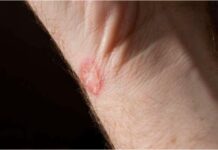



















People who live with eczema usually do not ask one simple question, such as, “Which supplement is good?”
Their actual questions are different.
Why does the skin flare even when the cream is applied properly?
Why does itching start again after just a few calm weeks?
Why does one small trigger, sweat, heat, dust, soap, travel, stress, or a change in water, bring back the whole cycle?
Fish oil comes into this discussion not because it is fashionable, but because eczema is not only a skin surface problem. It is a problem of how skin cells behave, how fats within the skin are organized, and how immune signals persist long after the trigger has passed.
Most online articles talk about omega-3 as a “natural anti-inflammatory”. That description is shallow and not very helpful for someone who has been struggling for years.
This article examines fish oil for eczema in a practical and clinical way, where it fits, where it does not, and why some people experience benefits while many do not.
What Is Fish Oil and Why Is It Linked to Skin Health

Fish oil is not a vitamin. It is a mixture of fats extracted from oily fish. The two fats that are relevant here are:
- EPA (eicosapentaenoic acid)
- DHA (docosahexaenoic acid)
These fats are found in cell membranes throughout the body. Skin cells are no exception.
In eczema, two internal problems remain active for a long time:
- The skin barrier is fragile
- Immune signaling inside the skin remains easily activated
Both of these processes are controlled partly by lipid biology.
The outer layer of skin is built like a brick wall. Skin cells are the bricks. Lipids are the cement.
When lipid organization is disrupted, the wall leaks. Water escapes. Irritants pass inside. Nerves become sensitive. Scratching increases.
At the same time, immune cells within the skin release inflammatory substances even in the absence of infection.
Fish oil becomes relevant because omega-3 fats directly enter the systems that regulate:
- Membrane structure
- Lipid mediator production
- Inflammatory signal termination
This is very different from applying oil to the skin’s surface.
How Fish Oil May Help with Eczema

1. Reduces inflammation
Eczema inflammation is not the same as infection-related inflammation. It is repeated immune activation without a serious external threat.
The body produces inflammatory mediators from fatty acids. Most modern diets provide a large amount of omega-6 fatty acids. These become raw material for mediators that tend to maintain and amplify inflammation.
EPA competes for the same enzymes.
This competition changes the type of mediators produced. More importantly, EPA and DHA are used to generate molecules that actively tell immune cells to slow down and withdraw after activation.
This second part is often ignored.
Many people with eczema do not have excessive immune activation alone. They also have weak shutdown signals.
Fish oil does not block inflammation. It alters how long the inflammatory process remains active. This explains why it cannot behave like a medicine that reduces redness within days.
2. Strengthens skin barrier function
Barrier repair is not only about moisturizing.
Keratinocytes, the main skin cells, undergo a precise process of maturation before forming the outer layer of the skin. Lipid handling inside these cells affects how tight and resilient this layer becomes.
Omega-3 fats modify cell membrane composition and influence lipid synthesis pathways.
Some small mechanistic studies show that omega-3 exposure alters the expression of differentiation markers in skin cells. This supports the idea that long-term intake can indirectly support barrier formation.
This fits the biology. Barrier quality can improve before immune behavior improves.
3. Supports immune balance
Eczema is not a simple allergy.
It involves:
- Persistent activation of T-cell pathways
- Altered dendritic cell behavior
- Abnormal cytokine patterns in skin tissue
Omega-3 fatty acids influence immune cell membrane properties and intracellular signaling.
More importantly, omega-3-derived mediators play a role in the resolution of inflammation, the organized biological phase that ends immune responses.
Eczema seems to be characterised by repeated failure to resolve properly. This is why reducing triggers alone is often not sufficient.
What Research Says About Fish Oil and Eczema
When people search for evidence, they usually expect a clear answer. Unfortunately, eczema research rarely provides such clarity.
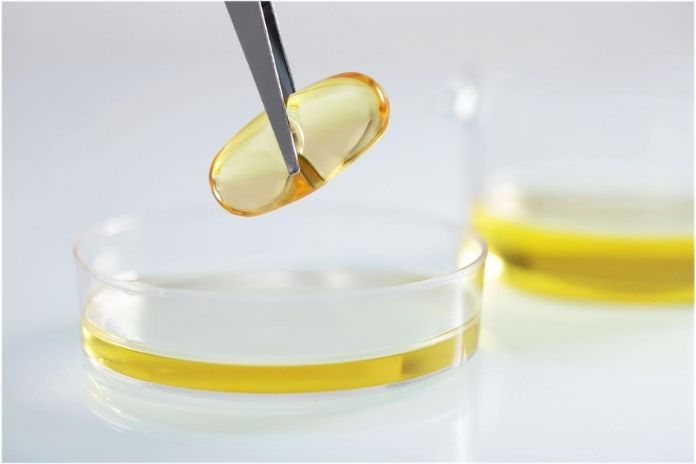
Clinical trials testing fish oil supplementation have shown:
- Small improvement in some severity scores
- No improvement in others
- Large variation between individuals
However, there is an important limitation behind almost all existing studies. Most trials assume that eczema is one disease.
In real clinical practice, eczema presents as:
- Severe barrier-defect dominant disease
- Immune-dominant disease
- Infection-prone disease
- Stress-linked flare pattern
- Climate and sweat-sensitive disease
When these phenotypes are combined in a single trial, any nutritional intervention will appear weak.
Another important limitation is that most trials do not measure whether supplementation actually changes fatty acid status inside the body.
Giving capsules does not guarantee a biological effect.
Recommended Dosage and How to Take Fish Oil for Eczema
There is no approved dose for eczema. Most research protocols use 1,000-3,000 mg per day of combined EPA and DHA.
From a clinical point of view, the following details matter much more than the headline number.
- First, check the EPA and DHA content rather than the total weight of fish oil.
- Second, begin with a low dose and increase slowly. Many people stop taking it because of reflux and stomach discomfort when they start at high doses.
- Third, divide the dose and take it with meals.
One useful but rarely discussed test is the omega-3 index. This blood test reflects long-term incorporation of EPA and DHA into red blood cell membranes.
Without such a marker, it is not possible to know whether the body is responding metabolically. For eczema, a reasonable trial period is at least ten to twelve weeks. Shorter trials are unlikely to reflect real changes in skin biology.
Best Forms and Sources of Omega-3s

Fish oil supplements
Standard fish oil remains the primary form studied. For eczema, there is no convincing evidence that one branded form is superior.
However, product quality matters more than formulation claims.
Look for:
- Clearly stated EPA and DHA content
- Third-party quality testing
- Expiry date well in the future
Oxidized oil is a genuine concern.
Krill oil
Krill oil contains omega-3 fats bound to phospholipids. Absorption may be slightly better, but most capsules contain small absolute amounts of EPA and DHA. Direct evidence for eczema is minimal.
Algal oil
Algal oil is useful for people who avoid fish. However, most algal products provide mainly DHA.
For inflammatory modulation, EPA appears to be more relevant. For eczema, products supplying both EPA and DHA are preferable.
Whole food sources
Eating oily fish is healthy. But reaching sustained anti-inflammatory omega-3 levels only through diet is difficult for many adults.
Another neglected point is fat balance. Most people consume very high quantities of omega-6-rich oils. This background intake influences enzyme competition and mediator production. Supplementing omega-3 while continuing a very high omega-6 intake may limit its biological impact.
This dietary context is rarely addressed in supplement advice.
Read More: Benefits of Oily Fish: Why You Should Eat It and How to Do It Right
Possible Side Effects and Precautions
Most people tolerate fish oil reasonably well. Common complaints include:
- Reflux
- Fishy aftertaste
- Mild abdominal discomfort
- Loose stools
More important precautions:
- People using anticoagulants
- Bleeding disorders
- Planned surgical procedures
- Fish allergy
High-dose omega-3 supplementation may slightly prolong bleeding time. Quality is again important. Oxidized oils not only cause gastrointestinal discomfort but may also counteract anti-inflammatory effects. Strong smell and poor storage conditions are warning signs.
Read More: Fish Oil Benefits for Weight Loss – How Does it Work?
Should You Try Fish Oil for Eczema?
Fish oil should not be started with unrealistic expectations.
This caution is echoed by some physicians outside dermatology as well. Dr. Luke Laffin has noted, “When it comes to fish oil – at best – you’re just losing money on supplements that never do anything. At worst, they can have negative impacts.”
It reflects an important principle: supplements should never be used just casually or without a clear rationale.
It will not replace moisturisers.
It will not remove the need for topical anti-inflammatory medicines.
It will not immediately stop itching. Dr. Emma Guttman-Yassky says that the itching can actually be unbearable.
It may be reasonable to consider fish oil in the following situations:
- Eczema remains active despite consistent topical care
- Flare-ups occur without clear contact or allergen triggers
- Oily fish intake is very low
- There is interest in reducing background disease activity rather than only controlling acute flares
The goal is not symptom relief within days. The goal is a small, gradual reduction in skin reactivity and inflammatory tendency. Some people respond. Many do not. This variability should not be seen as a failure of the supplement alone. It reflects the biological diversity of eczema.
Read More: 8 Common Side Effects of Fish Oil Supplements
Final Thoughts
Fish oil never acts on eczema the way a cream acts on a rash. It acts on the internal environment that determines how the skin reacts to daily stressors.
So, modifying that environment may really help some individuals reduce the problem. But, omega-3 supplementation cannot correct genetic barrier defects, climate sensitivity, occupational exposures, or poor topical adherence. It is one supportive measure, not a central treatment.
- Fish oil influences immune resolution pathways and cellular lipid behavior.
- Meaningful effects, if they occur, require sustained intake of EPA and DHA.
- The omega-3 index is an underused marker to assess biological response to supplementation.
- Excess omega-6 intake may reduce the functional benefit of omega-3 supplementation.
- Current clinical trials do not classify eczema phenotypes or integrate fatty acid biomarkers.
FAQs
1. Can fish oil permanently cure eczema?
No. Fish oil alone never cures eczema.
2. How long should I take fish oil to see if it is helping?
At least ten to twelve weeks.
3. Is flaxseed oil equal to fish oil for eczema?
No. Conversion of plant-based ALA to EPA and DHA is low in humans.
4. Can children with eczema take fish oil?
Yes, but consult a doctor for proper dose guidance.
5. Should I stop my topical medicines when starting fish oil?
No. Fish oil should be used only as an additional measure.
References
- Dempsey, M., Rockwell, M. S., & Wentz, L. M. (2023). The influence of dietary and supplemental omega-3 fatty acids on the omega-3 index: A scoping review. Frontiers in Nutrition, 10, 1072653.
- Mayo Clinic Staff. (2023, August 10). Fish oil. Mayo Clinic.
- NIH. (2018, April 13). Omega-3s from fish oil supplements no better than placebo for dry eye. National Institutes of Health (NIH).
In this Article