


















Espresso or Black Coffee: Same Kick or Total Mix-Up?
Black coffee and espresso both start off with the same roasted coffee beans, but the way they are brewed creates two very different experiences in the cup.
While black coffee is commonly brewed using gravity-based methods such as drip, pour-over, French press, or percolator, where hot water slowly filters through medium-coarse grounds.
Conversely, espresso is made by forcing pressurized hot water through extremely fine coffee grounds at a very high pressure, in a matter of seconds.
These contrasting methods of brewing coffee shape the flavor, texture, caffeine delivery, and even the health impact of each drink in fundamentally different ways.
Read More: Protein Powder in Coffee: How to Do It, Why It Works, and What to Watch Out For
What Is Black Coffee?
Black coffee is made with just coffee and water, served without milk, sugar, or flavorings, bringing out the natural characteristics of the bean. Traditional drip machines, pour-over cones, French presses, and percolators all use gravity to pull water through grounds over several minutes.
This long extraction from medium to medium-coarse grinds gives a cup that is smooth and mild, though it may be described as bright or acidic depending on roast and origin.
For many, black coffee is ideal when sipped steadily, and subtle floral, fruity, or nutty notes can be appreciated.
What Is Espresso?
Think of espresso as a brewing method rather than a type of bean, although some blends are marketed as “espresso roast.”
Espresso is brewed by forcing pressurized, near-boiling water through a tightly packed puck of fine grounds for 25–30 seconds at roughly 9 bars of pressure. This forces the water through the coffee, extracting intense flavor compounds and emulsified oils, resulting in a small but powerful shot with a bold, rich taste and a creamy mouthfeel.
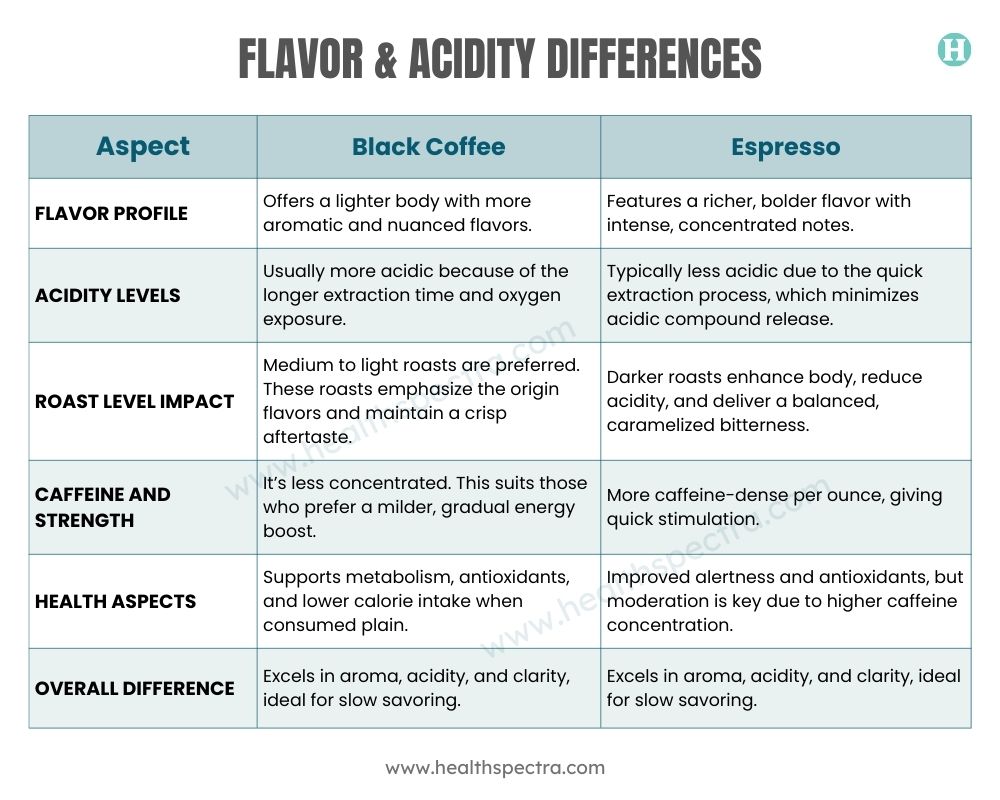
Compared to regular coffee, the resulting shot of espresso is thicker, more concentrated, and often perceived as less acidic because the rapid extraction pulls fewer acids into the cup.
Read More: Are Energy Drinks Worse Than Coffee? A Nutritionist Weighs In
Key Differences Between Black Coffee and Espresso
Differences between espresso and black coffee start with the grind and brewing process. Among the major differences is the brewing time.
While black coffee takes longer to brew due to gravity and requires more water, the blitz that occurs in espresso brewing happens within seconds. This directly results in the darkness and strength of the coffee.
While black coffee emphasizes clarity and complexity, espresso focuses on richness and intensity. The different brewing times, grind sizes, and water pressures are what make espresso bold and dense, while black coffee remains smoother and more delicate in flavor.
Grind Size
Espresso requires extremely fine, powdery grinds to resist pressures of 9+ bar without clogging, ensuring optimal extraction rates.
Black coffee requires larger, sandy grinds for drip or immersion brewing to achieve balanced flavor extraction without becoming bitter.
Brewing Method
These drinks differ fundamentally in how they’re brewed, influencing their taste, aroma, and texture.
Black coffee is prepared using a gravity-based extraction, where hot water slowly filters through ground coffee, commonly in drip, pour-over, or French press methods. This slower process extracts coffee oils and flavors more gently, resulting in a lighter-bodied brew with subtle and balanced notes.
Espresso, however, is made using pressure-based extraction, where hot water (around 9 bars of pressure) is forced through finely ground coffee for about 25–30 seconds. This method extracts intense flavors, oils, and crema, the golden layer on top, creating a concentrated shot.
Serving Size
The serving size is one of the most noticeable distinctions between black coffee and espresso.
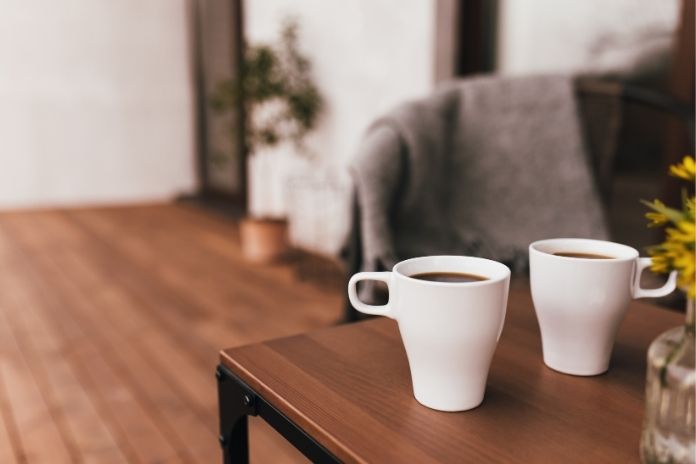
A typical black coffee serving ranges from 240 to 350 ml (8–12 oz), often enjoyed in large mugs or takeaway cups. It’s designed for slow sipping, ideal for mornings or extended work sessions. Because of its larger volume and moderate strength, people often drink it plain or with milk and sugar.
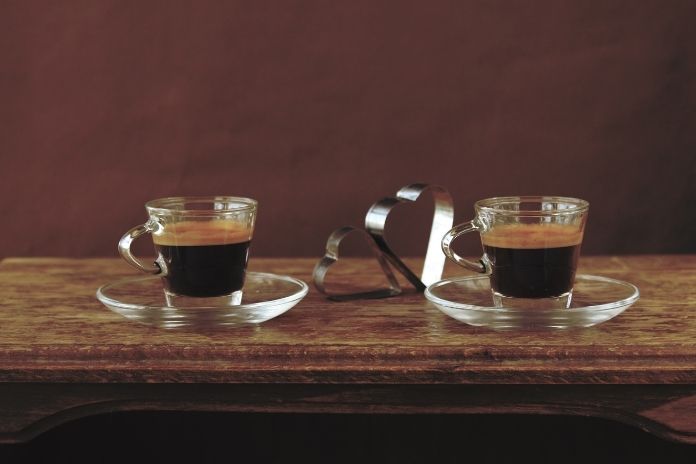
An espresso, in contrast, is much smaller, usually 30 to 60 ml (1–2 oz) served in a demitasse cup. This compact size packs high flavor concentration, meant to be consumed quickly rather than sipped leisurely.
Despite its small volume, an espresso delivers a robust caffeine kick and serves as the base for several popular drinks like cappuccinos, macchiatos, and lattes.
Essentially, black coffee offers duration and comfort, while espresso delivers a brief, intense burst of flavor and energy.
Texture
Texture plays a major role in the sensory experience of both black coffee and espresso.
Black coffee has a thin, smooth consistency, resulting from the slower gravity-based brewing process that uses coarser grounds and more water. The liquid feels light on the palate, highlighting clarity and flavor nuances such as acidity, nuttiness, or floral notes, depending on the brew method and beans used.
In contrast, espresso has a thick, creamy texture due to high-pressure extraction. The process emulsifies the coffee’s natural oils, producing a rich, velvety body topped with a layer of crema, a caramel-colored foam that enhances aroma and mouthfeel.
Espresso feels almost syrupy and coats the tongue with intensity, offering a lingering aftertaste. While black coffee refreshes and hydrates, espresso envelops the senses with concentrated flavor and silky smoothness, making texture a defining characteristic of each coffee style.
Caffeine Levels
Both black coffee and espresso contain caffeine, but their concentration and total content differ based on brewing method and serving size.
A single espresso shot (about 30–60 ml) typically contains 60–80 mg of caffeine, making it highly concentrated per ounce.
In contrast, a cup of black coffee (240–350 ml) usually holds 95–200 mg of caffeine in total.
This means that while black coffee contains more caffeine overall, espresso is much stronger ounce for ounce. The high pressure and fine grind used in espresso extraction produce a dense beverage with an immediate energy kick, ideal for quick stimulation.
Black coffee, with its larger serving volume and slower extraction, provides a more prolonged and balanced caffeine release. In simple terms, espresso is the caffeine “shot,” delivering potency in a small dose, while black coffee offers a sustained alertness spread across a more leisurely drink.
Read More: What Happens If You Drink 3 Cups of Coffee a Day?
Caffeine Comparison
Espresso Caffeine
A single shot of espresso, which is only 1 ounce (30 ml), holds 63 mg of caffeine. However, while the total dosage of caffeine is lower compared to a cup of black coffee, an espresso shot is quite concentrated enough to provide a hefty dose of caffeine within just a few sips.
This is because the high pressure of the brewing process is able to quickly extract caffeine and other soluble materials from the finely ground coffee beans, thereby creating a beverage that is strong, rich, and invigorating.
Furthermore, since an espresso is normally only taken in small amounts, it provides a rapid burst of energy, thereby becoming a favorite beverage among individuals who require immediate caffeine stimulation.
Ironically, while an espresso is only small when compared to a cup of black coffee, its caffeine concentration per ounce is actually much stronger than the black coffee version, thereby becoming the beverage of choice among individuals requiring immediate stimulation or when preparing cappuccinos or lattes.
Black Coffee Caffeine
An 8oz cup of black coffee holds about 90–120 mg of caffeine. Black coffee uses coarser coffee grounds and has a longer brewing time than espresso, so it extracts caffeine at a slower rate. However, it holds a higher caffeine content per serving than espresso, regardless of its caffeine concentration per ounce of coffee.
That’s why black coffee is a great choice when a slower caffeine effect is needed, providing a steady energy boost throughout the day compared to consuming espresso shots.
In fact, black coffee is often used as a single serving instead of several espresso shots in a single setting, mainly because it is a top choice for individuals who actually need a slower caffeine effect in their system.
Caffeine Absorption Speed
The rate of caffeine absorption from coffee and espresso is substantially different. This is because of the concentration and the manner of coffee consumption. An espresso, because of its density and high concentration, gives a quick caffeine “hit.” Caffeine is quickly absorbed by the body from a small and strong dose, and then an immediate feeling of alertness and energized condition is attained.
Therefore, an espresso is the best in moments of quick wake-up or time-outs in the middle of hectic days. In contrast, the caffeine from the black coffee is gradually absorbed into the bloodstream due to the high volume and the slower rate of consumption.
Thus, there is an extended and steady feeling of energizing and sustained energy increase, and there is no immediate crash. Persons taking the black coffee consistently experience the even and predictable stimulations.
Read More: How Long Does Caffeine Stay in Your System? Timing, Effects, and What to Know
 Read More: Black Coffee Before a Workout: Does It Really Burn More Fat?
Nutrition: Which Is Healthier?
Black coffee is no better or worse for health than espresso; they simply suit different needs. The large volume and antioxidant load of black coffee may support heart and brain health over time, while its slower caffeine release can enhance focus without a hard crash when consumed in moderation.
Espresso’s lower acidity profile and reduced liquid volume can be easier for those with digestive concerns, or for those who need to limit their overall fluid intake. In both cases, it is the moderate consumption coupled with an overall healthy lifestyle that really matters for long-term wellness.
Cost and Convenience Comparison
Another critical factor driving a wedge between espresso and black coffee drinkers is cost and convenience. Black coffee is generally more affordable to make at home, since all it requires is a drip machine, pour-over cone, or French press, along with standard ground coffee.
Espresso requires more specialized equipment, such as an espresso machine or pod system, which increases upfront and ongoing costs. If one considers one’s budget and simplicity most vital, then black coffee would be it; if one loves café-style drinks and is able to invest in gear, espresso offers much more versatility.
Which One Should You Choose? (Practical Guidance)

When it comes down to which is better for you, start with your taste preference and routine. Drink black coffee if you prefer milder flavors, more volume to sip, slower caffeine release, and simple, affordable brewing.
Choose espresso if you want a strong, bold flavor, a quick caffeine hit, lower perceived acidity, and a base for drinks such as lattes, cappuccinos, and mochas.
Both black coffee and espresso can fit in a healthy lifestyle; therefore, the best cup will be something that matches your energy needs and digestion, along with the ritual of coffee you enjoy on a daily basis.
Read More: Gut-Friendly Alternatives to Coffee – What to Drink Instead
FAQs
Is espresso stronger than black coffee?
Espresso is stronger per ounce due to its concentrated high-pressure extraction, delivering bold flavor and about 63 mg caffeine in a 1-oz shot. Black coffee tastes milder with less intensity per ounce but more total caffeine (90-120 mg) in an 8 oz serving from slower brewing. Strength depends on concentration vs. volume.
Does espresso have less caffeine than coffee?
Yes, per typical serving: a 1-oz espresso shot has ~63 mg caffeine, while an 8-oz black coffee cup has 90-120 mg due to larger volume. Per ounce, espresso has more caffeine concentration.
Which is healthier: espresso or black coffee?
Both offer antioxidants, alertness, and metabolism benefits with 0-5 calories plain. Black coffee provides more total antioxidants from a larger volume; espresso has lower acidity and is gentler on digestion. Choice depends on individual tolerance.
Is espresso more acidic than coffee?
No, espresso is often less acidic due to a quick 25-30 second extraction under pressure, reducing acid pull. Black coffee can be more acidic from longer gravity-based brewing.
Which is better for weight loss?
Both aid weight loss via caffeine boosting metabolism and low calories (0-5 per serving). Black coffee’s larger volume may enhance satiety; espresso suits quick boosts. Pair with a diet for best results.
Final Summary
Espresso and black coffee may come from the same coffee bean, but their brewing methods, flavor intensity, caffeine concentration, and health effects set them apart. Espresso uses pressure-based extraction, delivering a thick, concentrated shot with bold flavor, low acidity, and a quick caffeine hit perfect for those who prefer intensity and instant energy.
Black coffee, brewed through gravity-based methods like pour-over or drip, has a lighter body, more nuanced aroma, and slightly higher acidity, offering a soothing and sustained boost over time.
When it comes to espresso vs black coffee, the better choice ultimately depends on personal preference. You might favor espresso for its strength and richness or black coffee for its smoothness and complexity.
Those sensitive to caffeine or acidity may find black coffee gentler on the stomach, while espresso appeals to those seeking a quick, flavorful shot of energy without diluting the coffee’s true essence.
References
- Harvard T.H. Chan School of Public Health. (2020). Coffee. The Nutrition Source.
- Bidel, S., & Tuomilehto, J. (2013). The emerging health benefits of coffee with an emphasis on type 2 diabetes and cardiovascular disease. European Endocrinology, 9(2), 99–106.
- Mayo Clinic. (n.d.). Coffee and health.
- Poole, R., Kennedy, O. J., Roderick, P., Fallowfield, J. A., Hayes, P. C., & Parkes, J. (2017). Coffee consumption and health: Umbrella review of meta-analyses of multiple health outcomes. BMJ (Clinical Research ed.), 359, j5024.
- Poole, R., Lissianskaya, A., & Parkes, J. (2020). Coffee and health outcomes: A systematic review of men and women. Nutrition Research Reviews.
- Godos, J., Micek, A., Brzostek, T., Toledo, E., Hébert, J. R., & Grosso, G. (2021). Coffee consumption and risk of cardiovascular diseases: A dose-response meta-analysis of prospective cohort studies. Nutrients, 13(6), 1973.
- Ding, M., Bhupathiraju, S. N., Satija, A., van Dam, R. M., & Hu, F. B. (2014). Long-term coffee consumption and risk of cardiovascular disease: A systematic review and a dose-response meta-analysis of prospective cohort studies. Circulation, 129(6), 643–659.
- Lasica, A. M., & McCullough, P. A. (2021). Coffee and cardiovascular disease: A review. Food and Chemical Toxicology, 149, 111962.
- ClinicalTrials.gov. (2021). Coffee consumption and health outcomes (COFFEE) [Identifier: NCT04827251]. National Library of Medicine (U.S.).
- Tufts University. (2025, June 16). Hold the cream and sugar: Black coffee linked to lower risk of death.
- WebMD. (n.d.). Health benefits of black coffee.
- PharmEasy. (n.d.). 10 health benefits of black coffee.
- Kauvery Hospitals Bangalore. (n.d.). Benefits of black coffee.
- Tastewise. (n.d.). Espresso vs black coffee.
- Colipse Coffee. (n.d.). Espresso vs coffee.
- Compass Coffee. (n.d.). Coffee vs espresso: Unraveling the caffeine mystery.
In this Article