


















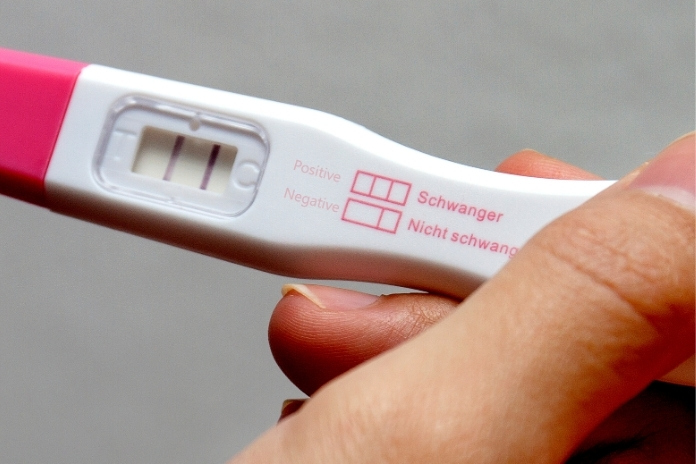
After a few minutes of waiting after taking a pregnancy test, you detect a faint line. Your heart is pounding; is this a good sign, or is it just a trick of the evaporation line? Many women find themselves in this predicament, and the uncertainty may be both thrilling and unsettling.
The wait for a test result could seem endless due to the excitement of a potential positive outcome or the fear of a possible poor outcome. Most people scrutinize every detail of the test, even the smallest lines, because of this worry. They may therefore become confused between an evaporation line and a real positive result as a result of this.
This article will teach how to tell evaporation lines from genuine positives, explain why they occur, and guide you through the following stages so you can confidently validate your results.
Read More: Pregnancy Wellness Kits: 5 All-in-One Packages for Supporting Mom-to-Be Health
What Is an Evaporation Line?
You might notice a faint line if you’re using a urine pregnancy test at home. However, what may a faint line actually mean? A positive test result or an evaporation line is one of the two possible explanations.
Evaporation lines are often colorless (or have a faded gray tint) and rather faint. There will be no colored dye present. Evap lines sometimes don’t go all the way down the track, and may also be thinner than the control line.
Instead of being genuine lines, evaporation lines are colorless streaks. They usually show up if someone waits longer than is advised to read the test result. If the test becomes wet, an evaporation line may also show up.
On the other hand, “a positive pregnancy test will appear as a colored line that should look just like the control line,” says Robert Setton, MD, a reproductive endocrinologist and infertility specialist at Shady Grove Fertility in New York. Depending on the test you have done, these could be either pink or blue.
However, it can be exceedingly challenging to differentiate faint positive pregnancy tests—which are rare—from evaporation lines.”A faint positive test line can occur in a true pregnancy if the test is taken shortly after implantation and the hCG level is still low, or if the urine is very diluted,” says Dr. Lisbeth Chang, MD, an OB-GYN at Dignity Health Medical Group: Northridge.
What Is a True Positive Pregnancy Test?
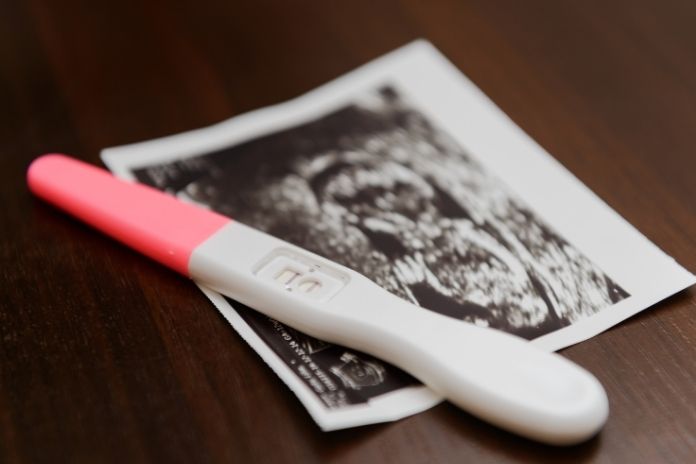
The presence of the human chorionic gonadotropin (hCG), a hormone that is produced shortly after a fertilized egg implants into the uterus, is the characteristic of an actual positive pregnancy test. Home pregnancy tests are built to identify this hCG concentration and are the best initial indicator of pregnancy.
If you test positive, but the line on the test appears faint. Then you are said to have a faint line positive result for a pregnancy test. Faint line positives demonstrate a presence of HCG in your urine, but at a lower level.
There are many reasons that faint line positives occur, such as testing too early or because you drank a large amount of liquid before testing, which muddled the urine.
You can prevent receiving faint positive lines by testing with your first urine in the morning and waiting for the optimal curve to read. A retest will give you the best results. The best time to take a pregnancy test is two to three days after your missed period.
In general, a positive line on a test, however faint, indicates pregnancy, as long as it shows within the recommended time frame.
Read More: Managing Pregnancy Discomfort: Tips for Easing Common Aches and Pains
What Can Cause Faint Positives?

Even if your at-home pregnancy test appears to be positive, you may be perplexed as to why the results are ambiguous. There are several reasons why you might notice a faint line rather than a brilliant one:
Your Urine is too diluted: Even if you are pregnant, the test results may not be favorable if you drank a lot of water just before the test. Early in the morning, when your urine is at its most concentrated, is the ideal time to take the test.
You’re testing too soon: Although specific early detection tests may identify pregnancies a few days earlier, doctors advise starting pregnancy testing the day after you miss your period. Give it extra time after conception for the hCG levels to rise. Waiting can be difficult, especially if you’re anxious or excited.
The Test was not used correctly by you: Uncertain outcomes could have arisen from your failure to follow the directions on the packaging properly. It’s okay! Just read the directions and retake the exam.
You used a Less-Sensitive Test: Not every at-home pregnancy test is made equal; therefore, you used one that was less sensitive. Some will begin to exhibit a favorable response even at lower hCG concentrations because they are more sensitive than others. Therefore, when you take an early pregnancy test, choose an at-home test designed for early detection.
How to Avoid Misreading a Test

Getting a faint line on your pregnancy test can be both confusing and concerning. To help avoid an unclear result, consider the following:
Timing: Unless you are using an early detection pregnancy test, it is best to wait until the first day of your missed period for accuracy.
Check the expiration first: Always ensure your at-home test is not expired before taking it, as expired at-home pregnancy tests may not give accurate results.
First thing in the morning: Take the pregnancy test first thing in the morning, before drinking any water, to avoid diluted urine and ensure a more accurate at-home result.
Please read the instructions: Every home pregnancy test is a little different, so it is a good idea to read and study the instructions of the test in advance.
Talk with a doctor: If you take medications that may affect your home pregnancy test results, schedule a follow-up pregnancy test with your doctor in about two weeks.
Try another home pregnancy test: You can skip the guesswork by using a digital pregnancy test that will present results in a straightforward and easy-to-read way.
Following these steps can eliminate any confusion or mistakes in the results of your test and help you have greater confidence in your results.
Read More: 10 Must-Have Products for Prenatal Care: Essentials for a Healthy Pregnancy Journey
What to Do If You’re Unsure
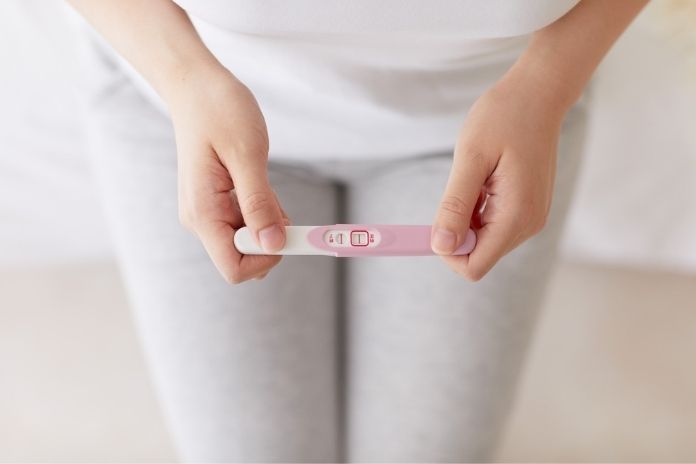
There are simple steps to confirm your results if you’re still wondering if that faint line is an evaporation line or a true positive.
The easiest option is to take another test within 48 hours. For early pregnancy, hCG levels typically double every two to three days. If you are pregnant, the line should be darker or more evident on the follow-up test. You will also get the most accurate reading by using first-morning pee again.
You can also get a blood test done at your doctor’s office for a definite answer. A blood test is more accurate than urine testing in the very early weeks of pregnancy because a blood test can detect even trace amounts of hCG and also track changes over time.
It may also be a good idea to contact a doctor if the lines are still not definitive and if you have pregnancy symptoms such as breast tenderness, nausea, or missed periods. A medical professional can assess your symptoms, likely obtain laboratory results, and finally give you some answers.
Read More: Anemia in Pregnancy: 6 Prenatal Vitamins to Support Healthy Iron Levels
Conclusion
It can be stressful to know how to read a pregnancy test, especially when there is a faint line that makes you question if this is a pregnancy or a negative test result. Most of the time, a true positive appears during the time limit and will be different from the control line color (pink or blue, depending on the brand).
It’s critical to distinguish between faint positives and evaporation lines to make an informed choice and reach the correct conclusion. Be sure to follow the directions. Take note of the time limit for results, while paying attention to a few color indicators and consistency, so that you get an accurate test result with clear signals.
These suggestions may help reduce test anxiety and help ensure accuracy; however, consulting with a physician is always recommended. Always speak with your healthcare provider about the test results to verify the pregnancy.
References
- https://femia.health/health-library/getting-pregnant/trying-to-conceive/evaporation-line-vs-faint-positive/
- https://www.parents.com/evaporation-line-on-pregnancy-test-7553272
- https://www.in.pampers.com/pregnancy/healthy-pregnancy/article/evaporation-line-versus-faint-positive
- https://www.rmany.com/our-team/physicians/dr-robert-setton
- https://www.dignityhealth.org/ourdoctors/1861551541-lisbeth-chang
- https://www.clearblue.com/pregnancy-tests/positive-results
- https://www.clearblue.com/pregnancy-tests/faint-line
- https://www.naturalcycles.com/cyclematters/faint-line-on-a-pregnancy-test
- https://www.nhs.uk/pregnancy/trying-for-a-baby/doing-a-pregnancy-test/
- https://flo.health/getting-pregnant/trying-to-conceive/pregnancy-tests/false-negative-pregnancy-test
In this Article