















Granola showed up in the late 1960s, right in the middle of the hippie movement. Compared to breakfast cereal, which has been around for over a hundred years, it’s actually pretty new.
People talk a lot about the health benefits of granola, and that’s one reason companies can slap a higher price tag on it. Sometimes, maybe that’s fair. But let’s be real: granola is often just as packed with sugar as regular cereals or even candy bars. Sometimes it’s worse.
Many people think that eating granola for breakfast is one of the healthiest ways to start the day. It has a healthy appearance, is made with nuts and oats, and frequently has labels like “natural” or “heart-healthy.” However, some people observe that their weight-loss progress slows despite these well-meaning efforts.
This article will discuss the main mistakes individuals make when selecting morning cereals, how granola can subtly hinder weight loss, and how moving to high-protein alternatives can help improve hunger control.
Read More: Breakfast Foods That Make You Poop: Natural Morning Options for Better Digestion
Why Your Morning Granola Might Be Stalling Your Weight Loss
Granola is well known for being a nutritious breakfast option. People often associate it with natural ingredients, clean nutrition, and fitness. Granola can, however, be unexpectedly high in calories and sugar, something that many people are unaware of.
So it should not come as a surprise that a nationally representative study conducted by Consumer Reports in March 2024 among 2,000 adults in the United States found that 59 percent had not eaten granola in the past few days.
It can impede weight-loss efforts when consumed daily without regard for portion control. You can make better breakfast choices without sacrificing your favorite foods if you understand why this happens.
Calorie-Dense
When trying to lose weight, this is really crucial. Compared to typical breakfast cereals, which contain between 100 and 120 calories, granolas have between 200 and 250 calories.
Granola, on the other hand, is significantly more substantial than corn flakes or rice puffs, but you should be wary of it if you are attempting to lose weight. The number of calories in your granola can increase significantly if you add sweetened yogurt or whole milk on top.
On the other hand, for someone trying to reduce their weight, this is a significant portion of their daily calorie budget in a single meal, and it often does not provide sufficient protein to keep them full.
Blood Sugar Spikes and Crashes
Although the labels of many granola products include phrases such as “Honey Toasted” and “Maple Syrup,” the first sweetener listed on the ingredient list is nearly always sugar.
Manufacturers frequently list sugar multiple times, each under a different name, which confuses people.
Consuming a high-sugar breakfast causes a rapid increase in your blood sugar levels. You may experience fatigue, irritability, or hunger within a few hours after this surge, which is typically followed by a rapid reduction in blood sugar levels. As a consequence of this, you can reach for snacks earlier than you had intended, which raises the overall number of calories you consume during the day.
Added Oils and Fats
Although good fats are beneficial, they are also high in calories. Grains, seeds, and oils all contribute to the granola’s richness, but they also contribute to the granola’s high calorie content.
To produce its characteristic crunchy clusters, granola often includes oils or nut butters. Coconut oil, sunflower oil, almond butter, and peanut butter are examples of substances commonly used. Even though these components are natural and contain beneficial lipids, they are also high in calories.
Consuming excessive amounts of healthy fats, particularly before breakfast, can make it more difficult to maintain a calorie deficit, despite their essential role in nutrition.
According to a 2020 review article in the journal Circulation, coconut oil raised LDL cholesterol by an average of more than 10 points compared with oils high in healthy fats.
The “Health Halo” Effect
People often label foods they consider healthy as “health halo” foods. Because of their stellar reputation, these are the items that end up in your shopping basket. Frequently used marketing terms for granola include “fit,” “natural,” “whole grain,” and “organic.” The “health halo” effect is what nutritionists refer to as being produced by these labels.
For instance, because it is the better option, someone may generously pour granola while precisely measuring a portion of sugary cereal. This behavior can eventually result in hundreds of extra calories being consumed daily without the user even realizing it.
The health halo effect doesn’t just apply to granola. Trail mix, energy bars, and smoothies also show this impact. Granola, on the other hand, is among the most popular breakfast foods where this problem arises.
Granola Isn’t as Filling
Many granolas are not very filling, even when they are high in calories. It is because they frequently have a low protein content but a high sugar and refined carbohydrate content.
One of the most crucial nutrients for feeling full is protein. It stabilizes the blood sugar, slows down the digestion, and prolongs the feeling of fullness. You’re more likely to feel hungry sooner if your breakfast is low in protein.
Many varieties of granola are heart-healthy. “Granola’s oats are rich in beta-glucan, a soluble fiber that can help lower cholesterol,” says Lauren Harris-Pincus, M.S., RDN. She adds, “Adding oats to your diet may improve total and “bad” LDL cholesterol, as well as body mass index (BMI) and waist circumference.”
Read More: 8 Breakfast Mistakes That Could Be Slowing Your Metabolism
The Better Breakfast Formula for Sustainable Weight Loss
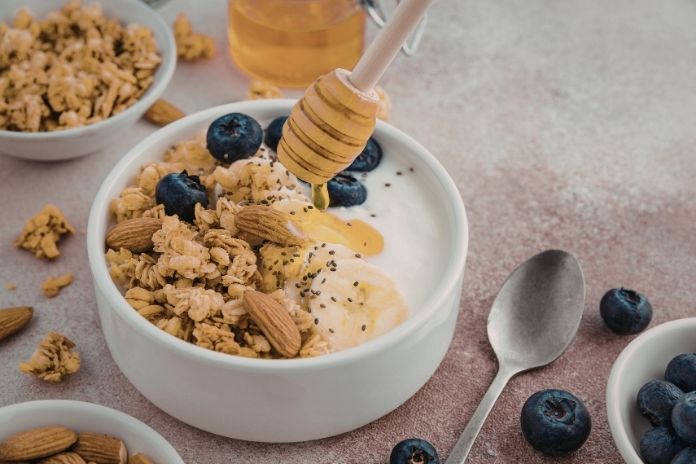
If you want to lose weight without even feeling hungry all day, then your breakfast needs to work with your body, not against it. The main trick is to focus on foods that will keep you satisfied, provide steady energy, and help you manage calories.
Prioritize Protein and Fiber
Protein and fiber are the real stars here. Protein knocks down the hunger hormones, keeps your metabolism humming, and also protects your muscles. It also sticks with you since it digests slowly, so you stay full longer. Fiber helps, too, making your breakfast more filling and helping keep those mid-morning cravings in check.
Here’s the thing: fiber is your friend. When you get it from whole grains and plants, it slows down digestion and keeps your blood sugar on an even keel. That means you skip the usual crash that comes after a sugary breakfast.
Check Sugar and Serving Size
To make more informed decisions about cereal, one of the easiest ways is to read the nutrition label. Check the actual numbers instead of relying on the claims printed on the front of the packaging.
Be on the lookout for granolas that have less than 10 grams of sugar and approximately 150 calories per tablespoon. It is best to keep the ingredient list as brief and straightforward as possible. Moreover, pay close attention to the ingredient list. If sugar, syrup, or honey is among the first few ingredients, the product likely contains a higher amount of added sugars.
Mix Smart, Not More
If you enjoy the flavor and consistency of granola, you do not have to give it up entirely. Instead, use it strategically. It is a successful strategy that involves combining a tiny amount of granola with a cereal that is either high in protein or low in calories.
By using this method, you will experience the crunch and flavor you crave while simultaneously reducing your total calorie intake. You may also use granola as a topping rather than the primary base. It is still another solution.
3 High-Protein Cereals That Support Weight Loss
Switching to a high-protein cereal can significantly affect your hunger and your energy levels throughout the day. These three choices strike a balance between low sugar, fiber, and protein.
ELEAT High-Protein Granola
Health-conscious people have long regarded granola as a preferred snack. Granola’s crunchy texture, sweet flavor, and ingredient combination make it easy to believe it’s a naturally healthy food.
Granola isn’t all made equal, either. Many store-bought types give consumers a false impression of healthiness because they contain unhealthy fats, processed sugars, and excess calories. The wholegrain oats in ELEAT high-protein granola are a nutritional powerhouse.
Because they digest slowly and provide a steady energy source, oats are a low-GI (glycemic index) carbohydrate that helps keep blood sugar levels stable. It also has a remarkable protein content. It’s a great choice for people who want to increase their protein intake because each serving contains up to 15 g of protein.
A 2016 study found that consuming the amount of beta-glucan in about one cup of dried oats daily lowered LDL cholesterol, also known as “bad” cholesterol, by about 4%.
Kashi GO (formerly GoLean)
Kashi Go Lean is often considered a healthy cereal option due to its high protein and high fiber content, offering 13 grams of protein and 10 grams of dietary fiber per 1-cup serving. It may be a good option for people looking for a healthy breakfast, thanks to the nutrients that promote fullness and digestive health.
Though it’s 6 grams of sugar per serving, the 1-cup serving size is larger than usual, and not all users will enjoy the taste and texture. Kashi Go Lean might be a useful supplement for people who place a high value on fiber and plant-based protein.
Catalina Crunch Cereal
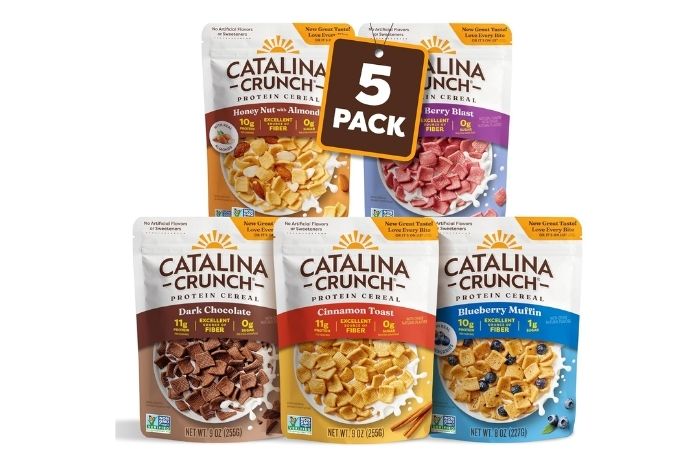
A cereal suitable for ketogenic diets, Catalina Crunch is renowned for its very low sugar content and high protein and fiber content. In addition to providing a delightful crunch, manufacturers carefully craft it to help maintain stable blood sugar levels.
Compared to traditional cereals, it has a lower sugar content and a higher protein content, which can help sustain a feeling of fullness longer.
Shop Here: Catalina Crunch Cereal
Read More: Mindful Mornings: Breakfast Habits That Set You Up for a Stress-Free Day
Smart Ways to Keep Granola Without Derailing Progress

Granola is a tasty option, but using it as part of a weight-loss regimen requires some planning. Here’s how to properly balance it.
Keep Your Portion Control: Adhere to the serving size, which is usually 1/4 to 1/3 cup. For precision, use a measuring scoop.
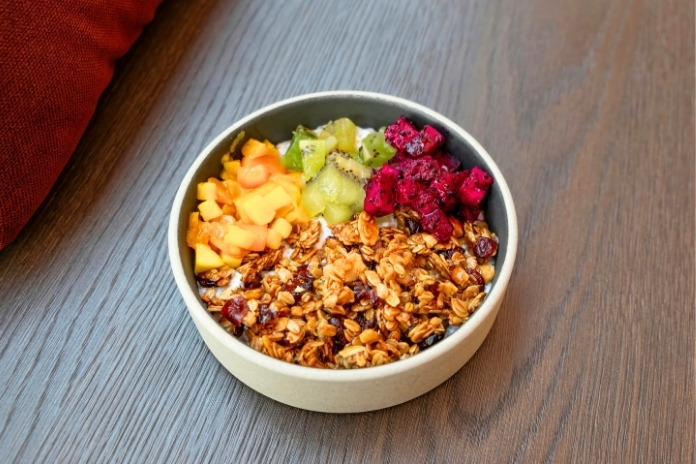
Pair It Wisely: Serve granola with a nutrient-dense, low-calorie food. You can add it with almond milk or plain Greek yogurt, or use it as a garnish for fresh fruit.
Consider It a Topping: For extra crunch and flavor, sprinkle granola on top of your breakfast instead of making it the main attraction.
When to Use It: Granola can be a fantastic pre- or post-workout snack that helps recharge your muscles and provide energy when you need it most.
Read More: 12 Foods For Breakfast For Weight Loss In A Healthy Way
Conclusion
Granola isn’t the enemy, but it’s easy to eat more than you realize. All that sugar and those hidden calories can sneak up on you and end up slowing down your weight loss, even if you think you’re being careful.
So, don’t toss granola out yet; get a bit smarter about how you use it. Go for options packed with protein and fiber, keep your portions in check, and pair them with a high-protein option. Little changes like these can really make a difference.
References
- The Training Floor. (2017, May 18). 3 reasons your granola may be hurting your diet.
- MaNaDr. (2023, April 26). Does granola help you lose weight?
- Opera Foods. (2025, July 16). Is granola good for weight loss?
- Stowell, A. (2024, January 24). Health halos.
- Elena Rodriguez. (09 February, 2026). Is Kashi Go Lean a Healthy Cereal? A Complete Guide.
In this Article