















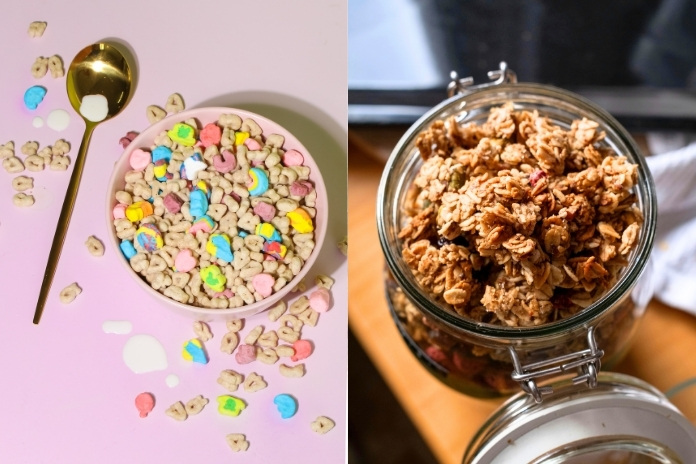
You’re standing in the cereal aisle, turning boxes over and scanning labels. On one side is a plain whole-grain cereal that looks boring but honest. On the other is granola, packed with clusters, nuts, and words like natural, honey, and artisan splashed across the front. Most people instinctively reach for the granola. It feels healthier. More wholesome. More grown-up.
Here’s the catch. In the cereal vs granola debate, some granolas pack an astonishing amount of added sugar. In fact, a single serving of certain granolas can contain up to 20 times more sugar than some basic whole-grain cereals. That doesn’t automatically make cereal the better food, and it doesn’t mean granola is bad.
It means the health halo around granola often hides what’s really inside the box. What actually separates cereal from granola isn’t the ingredients list alone. It’s how much sugar is added, how small the serving size really is, how calorie-dense each option becomes once you pour a realistic bowl, and how the choice fits into your broader nutrition goals.
A food item can contain whole ingredients and still be easy to overeat. Another can look plain and still do exactly what you need it to do. So instead of picking sides, the smarter move is understanding the trade-offs.
Once you know what to look for, the decision becomes less about marketing and more about what actually works for your body. Let’s break it down clearly, without hype or food fear.
Cereal vs. Granola: The Added Sugar Reality
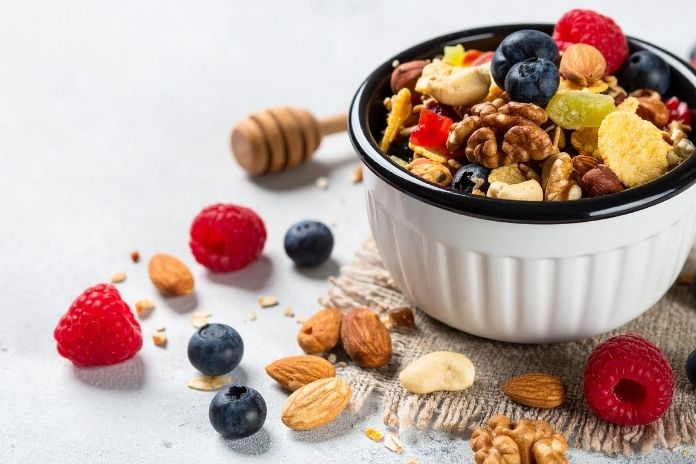
Granola carries a strong health halo. Cereal doesn’t. Words like natural, honey, and artisan push many people toward granola without a second thought. But once you flip the box and read the nutrition label, the sugar gap becomes hard to ignore.
Plain cereals like Cheerios or Shredded Wheat typically contain zero to one gram of sugar per serving. Most of that is naturally occurring. Many popular granolas, on the other hand, land closer to 20-30 grams per serving. That’s not a small difference. That’s an entirely different metabolic load before your day has even started.
Serving Size Is the Silent Problem
Granola doesn’t just contain more sugar. It’s also easier to overeat.
Most granola labels list a serving as half a cup. In reality, people pour closer to a full cup, sometimes more. That instantly doubles the sugar and calorie count. Cereals usually list larger serving sizes and are more forgiving if you are careful with the portion.
This is one of the main reasons granola feels healthy but quietly adds up.
Why Granola Needs Sugar in the First Place
Granola isn’t just oats baked in the oven. Those crunchy clusters exist because of sugar.
Honey, maple syrup, brown sugar, cane sugar, or molasses act as binding agents. They hold the oats and nuts together and caramelize during baking. That caramelization is what creates crunch and flavor. Without added sugar, granola would be dry, loose, and far less appealing.
The texture people love comes at the cost of consuming too much sugar.
“Natural” Sweeteners Aren’t Metabolically Special
Honey and maple syrup sound healthier, and they are nutritionally rich in trace minerals. But in your body, they still function as added sugar.
The National Institutes of Health notes that excess intake of added sugars, regardless of source, contributes to insulin resistance, elevated triglycerides, and weight gain when consumed regularly. Natural does not mean neutral.
So, Which Is Better? Neither cereal nor granola is automatically good or bad. Plain, minimally sweetened cereals paired with protein and fat often lead to more stable energy and lower total sugar intake. Granola can still fit into a healthy diet, but it works best in smaller portions or as a topping, not the base of your bowl.
The real takeaway is simple. Ignore the front of the box. Read the sugar line. And remember that the food that looks healthier isn’t always the one that treats your metabolism better.
Read More: 5 Healthy Breakfast Bowls to Kick-start Your Morning
Beyond Sugar: How Cereal and Granola Compare Nutritionally
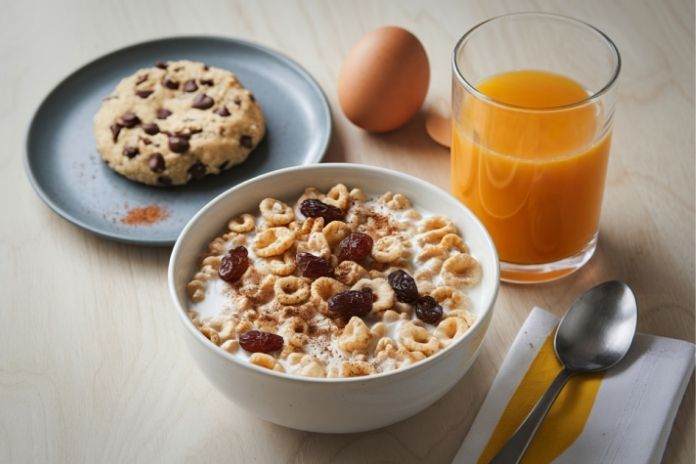
Sugar gets most of the attention in the cereal vs. granola debate, but it’s not the only factor that matters. Fiber, protein, calorie density, and overall nutrient quality play a big role in how these foods actually affect your body.
Fiber and Protein: Where Granola Can Have an Edge
Granola often includes oats, nuts, and seeds, which naturally boost both fiber and protein. A typical half-cup serving provides roughly three to five grams of fiber and four to six grams of protein. That combination can help slow digestion and support more stable blood sugar levels.
Plain whole-grain cereals can deliver similar fiber, often in the three to six gram range per serving, but protein content tends to be lower, usually around two to four grams.
Fiber matters more than most people realize. According to the Centers for Disease Control and Prevention, most Americans fall well short of the recommended daily intake of 25-38 grams. Protein also plays a role in appetite regulation. Research consistently shows that higher-protein breakfasts improve satiety and reduce overeating later in the day.
Granola can offer a nutritional advantage here, but only when sugar isn’t dominating the ingredient list.
Whole Grains and Nutrient Quality
Both cereal and granola can be solid sources of whole grains, which are associated with a lower risk of heart disease and type 2 diabetes. The key is ingredient quality.
Whether you’re choosing cereal or granola, look for whole grains listed first, such as whole oats, whole wheat, whole-grain corn, or brown rice. These provide fiber, phytonutrients, and slow-digesting carbohydrates that support metabolic health.
Many cereals are fortified with iron, folic acid, and B vitamins. This fortification has played a meaningful role in reducing nutrient deficiencies across the U.S., particularly for iron and folate.
Granola is less commonly fortified, but it often provides naturally occurring nutrients like magnesium and vitamin E from nuts, as well as unsaturated fats that support cardiovascular health.
Neither option is inherently superior. The nutritional value depends on formulation, not category.
Calories and Energy Density
This is where granola quietly shifts the equation.
Because it contains nuts, oils, and sweeteners, granola is calorie-dense. One cup can easily reach 400 to 600 calories. A cup of plain whole-grain cereal, by comparison, often lands closer to 100 to 200 calories.
That difference matters, especially for weight management.
Dr. Dariush Mozaffarian, cardiologist and nutrition researcher at Tufts University Friedman School of Nutrition Science and Policy, has emphasized through his long‑term nutrition research that the quality of one’s diet, not just the number of calories counted, is strongly associated with weight gain or prevention of weight gain over time.
Granola isn’t unhealthy. It’s concentrated. And concentrated foods require more attention to portion size.
Read More: Mindful Mornings: Breakfast Habits That Set You Up for a Stress-Free Day
Understanding How Much Sugar Is Too Much
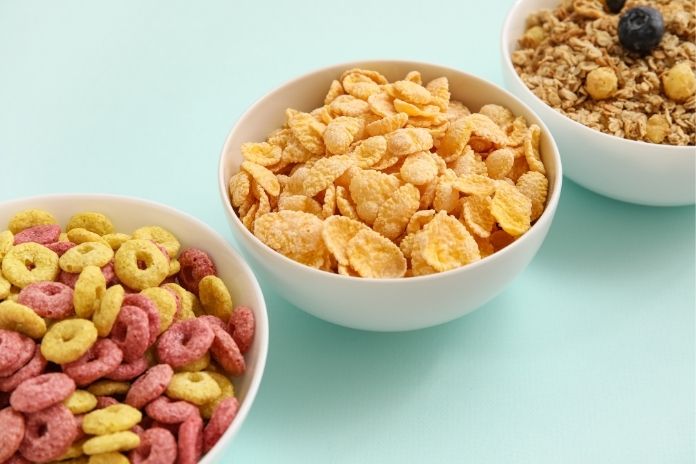
Added sugar adds up faster than most people expect. The American Heart Association recommends limiting added sugar to no more than 25 grams per day for women and 36 grams per day for men. For children, the recommended limits are even lower.
Now put that in context. If your breakfast alone contains 20 to 27 grams of added sugar, you’ve already used most, or all, of your daily allowance before noon. The Dietary Guidelines for Americans echo this concern, advising that added sugars should make up less than 10 percent of total daily calories.
What this really means is that breakfast choices quietly set the tone for your entire day.
How “Healthy” Breakfasts Turn into Sugar Bombs
Sugar rarely comes from just one source. It stacks.
A bowl of sweetened granola combined with flavored yogurt, sweetened almond milk, and a handful of dried fruit can easily push total sugar intake past 40 to 50 grams in one sitting. On paper, every item looks nutritious. In reality, the combined sugar load is substantial.
Cleveland Clinic notes that frequent high-sugar meals can trigger rapid blood glucose spikes followed by crashes, which often increase hunger and cravings later in the day. That cycle makes it harder to regulate appetite and energy levels. This is why total sugar matters more than the sugar content of any single ingredient.
How to Choose the Healthier Option for You
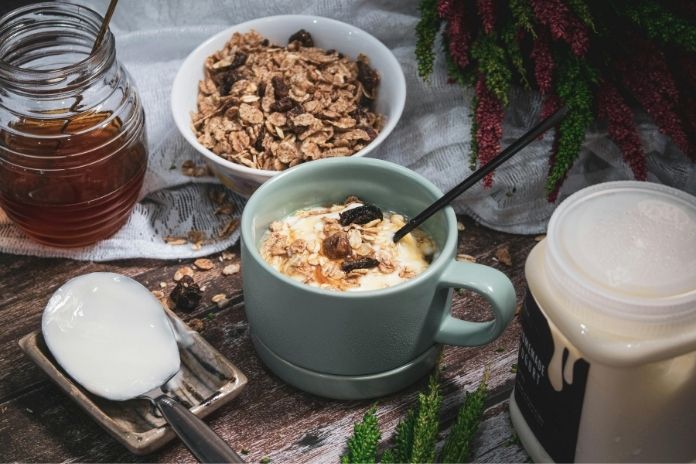
There’s no universal winner in the cereal versus granola debate. The better choice depends on your goals, your portion sizes, and what you eat with it.
If Your Priority Is Cutting Sugar
Low-sugar cereals are often the simplest solution. Look for options with fewer than five grams of added sugar per serving and ingredient lists that don’t rely on multiple sweeteners.
Instead of choosing sweetness from the box, add it yourself. Fresh fruit works well here. Berries, in particular, provide fiber and antioxidants without added sugar, and the National Institutes of Health highlights their cardiovascular benefits due to polyphenol content.
You stay in control of both sweetness and portion size.
If You Crave Crunch and Texture
Granola isn’t off-limits. It just needs boundaries. Choose versions with six grams or less of added sugar per serving and avoid products where syrups dominate the ingredient list. Portion size matters even more here. Using one to two tablespoons as a topping rather than filling an entire bowl dramatically reduces sugar and calories while keeping the texture people enjoy.
Homemade granola can also be a smart option when made with oats, nuts, seeds, and a light touch of honey. The key is intentional sweetness, not default sweetness.
If You Need Balanced Nutrition
Some people rely on fortified cereals to meet iron, folate, or B vitamin needs. In those cases, cereal can be a practical base, especially when paired thoughtfully. Adding milk, Greek yogurt, nuts, or seeds improves the balance of protein and fat and stabilizes blood sugar.
According to Harvard Health Publishing, meals that combine fiber, protein, and healthy fats help slow carbohydrate absorption, which leads to steadier blood glucose levels and greater feelings of fullness. When you balance carbs with protein and fat, blood sugar doesn’t spike as sharply and stays more stable over time, which supports appetite control and longer‑lasting satiety.
The cereal itself matters, but the combination matters more.
Read More: Gut-Friendly Overnight Oats with Berries: A Probiotic Breakfast
Simple Breakfast Swaps That Keep Sugar in Check
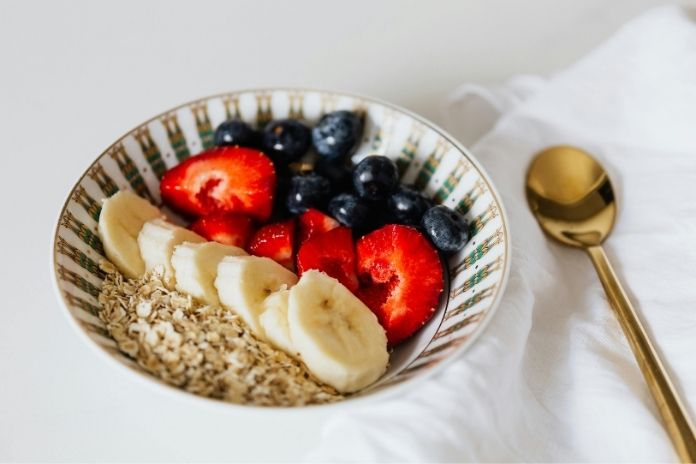
Here’s the thing: you don’t need to completely overhaul your mornings to eat smarter. The key is taking back control from hidden sugars in packaged foods.
Swapping sweetened granola for plain rolled oats is one of the easiest wins. Add a teaspoon of honey yourself, and you’re likely consuming far less sugar than what’s already packed into the box.
The same applies when mixing cereals, combining a low-sugar option with a small amount of granola preserves crunch while dramatically cutting sugar.
Texture matters more than sweetness for most people. Crunchy elements like chia seeds, walnuts, pecans, or sliced almonds bring fiber, protein, and healthy fats, which slow digestion and help you feel full longer, reducing mid-morning energy crashes.
Yogurt is another common sugar trap. Switching from flavored to unsweetened yogurt can instantly remove 10 to 20 grams of added sugar. If plain yogurt feels bland at first, fresh fruit or a sprinkle of cinnamon adds natural flavor without excess sugar.
As Dr. Michelle Hauser, M.D., of Harvard Health Publishing, notes, choosing plain, minimally sweetened foods and adding sweetness yourself helps you naturally limit sugar intake because you almost always use less than what’s already added in packaged products.
Starting with plain yogurt and unflavored oatmeal lets you avoid hidden sugars and gain more control over how much sweetness you actually eat.
It all comes down to control. These swaps don’t make breakfast joyless; they shift the balance toward foods that support steady energy, better appetite management, and long-term health.
Read More: 8 Breakfast Mistakes That Could Be Slowing Your Metabolism
Key Takeaway
The cereal-versus-granola debate misses the point if it becomes a branding contest. Words like natural, whole grain, or artisan don’t tell you how much sugar you’re eating, how calorie-dense your breakfast is, or whether it will actually keep you full. Granola isn’t inherently bad. In the right portion, it can provide fiber, unsaturated fats, and a modest protein boost.
The problem is that many versions are concentrated sources of added sugar and calories, and portions tend to creep far beyond what’s listed on the label. Cereal isn’t automatically better either.
While plain whole-grain cereals can be low in sugar and fortified with important nutrients like iron and B vitamins, many popular options are heavily sweetened and offer little staying power on their own.
What this really comes down to is balance. A solid breakfast prioritizes whole grains, keeps added sugar reasonable, and includes enough protein and fiber to stabilize blood sugar and prevent mid-morning crashes.
That balance can come from cereal, granola, or a combination of both. The label doesn’t decide what’s healthy. Your portions, your pairings, and your consistency do. A bowl built with intention will always beat one built on marketing.
FAQs
Is granola healthier than cereal?
Not by default. Many granolas are calorie-dense and heavily sweetened, even when they look wholesome. Plain whole-grain cereals often contain far less added sugar and fewer calories per serving. The healthier option depends on sugar content, portion size, and how it fits into your overall meal.
What is the healthiest cereal for weight loss?
The best choice is a whole-grain cereal that’s low in added sugar and reasonably filling. Aim for under 5 grams of added sugar, at least 3 grams of fiber, and a calorie count that allows room for protein like milk or yogurt. The goal is steady energy, not quick sweetness.
How much sugar is too much for breakfast?
If breakfast delivers more than 10 grams of added sugar, it can quickly crowd out the rest of your daily allowance. High-sugar breakfasts often lead to blood sugar spikes and early hunger. Keeping sugar intake modest helps with appetite control and energy stability.
Are natural sweeteners better than refined sugar?
Not in the way most people think. Honey and maple syrup are still added sugars and raise blood glucose similarly to white sugar. Small amounts are fine, but large doses carry the same metabolic downsides. The total amount matters more than the source.
References
- Baxter, S. D., et al. (2022). Breakfast cereals, granola, and their effects on satiety and glycemic response: A review. Nutrition Reviews, 80(7), 1475–1490.
- Slavin, J. (2014). Breakfast cereals and dietary fiber: Implications for health. PMC Nutrition, 10(2), 1–9.
- Amazing Raze. (n.d.). Granola vs. cereal: Which is healthier?
- Insidetracker Blog. (n.d.). Is granola a healthy food?
- Isabelle McKenzie. (n.d.). What you need to know about sugar in granola.
- Nutrisense. (n.d.). Healthiest breakfast cereals.
- Pachamama Hong Kong. (n.d.). Cereal vs muesli vs granola vs oatmeal.
- Indulge Express. (2025, April 24). Is granola healthier than muesli?
- Harvard Health Publishing. (n.d.-a). How to break the sugar habit and help your health in the process.
- Harvard Health Publishing. (n.d.-b). Smart snack strategies.
- Cleveland Clinic. (n.d.). Finding the sweet spot for sugar consumption.
In this Article