


















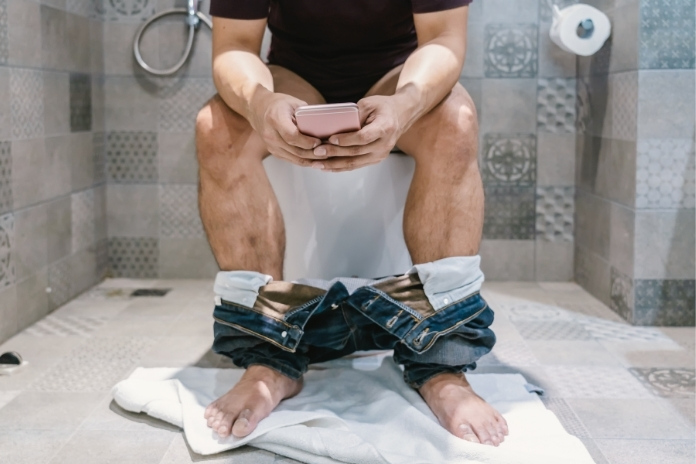
In a time when everything is digital, and we can accomplish so many things with our phones, the mobile phone has become a necessary tool for even using the bathroom. People these days carry their phones virtually anywhere, including restrooms. Listening to music while taking a shower is a widespread practice.
Although texting or browsing your phone while “performing” your business may seem innocuous, studies show that spending more than a few minutes on the toilet could be linked to a higher risk of multiple health problems.
Many people read while on the toilet, but the smartphone’s time-sucking capabilities can pose a danger of spending extended periods on the commode.
A recent study published indicated that those who read on their phones while on the toilet are 46% more likely to get hemorrhoids, which are swollen veins in the lower rectum, often believed to result from excessive pressure. Unknown to you, this habit could be damaging to your physical and mental health.
This article will show you how using your phone while visiting the restroom has unexpected effects on your digestion, cleanliness, and general health, in addition to your screen time.
Read More: Toilet Infections: Types, Symptoms, Prevention, and Treatment
Using Your Phone on the Toilet—Key Risks
Using your phone in the restroom can influence your habits and have several adverse health effects, including poor posture and difficulty focusing. You might be surprised to learn that using a phone in the restroom can have adverse health effects.
Risks to Hygiene and Sanitation: Using a phone in a bathroom can compromise your hygiene because bathrooms are often a haven for bacteria and germs. The spread of these bacteria from the restroom to your cell phone is a frequent occurrence. If this were to occur, you would be at risk of catching diseases brought on by bacteria.
Haemorrhoids: According to a new study, using a smartphone during a number two is associated with a 46% higher risk of getting hemorrhoids. According to the survey, 37% of individuals who used their phones while using the restroom spent more than five minutes there, even though a healthy bathroom visit should only take two to three minutes.
Anal Tears or Fissures: Prolonged toilet use might result in anal tears or fissures. The anal lining has tiny cuts in it. Bright crimson blood and severe pain, compared to passing shattered glass during a bowel movement, are common symptoms of anal fissures. Because the anal lining is thin, prolonged sitting on the toilet can cause blood to collect, stretching the lining and increasing its vulnerability to harm as feces flow out.
Eye Strain and Visual Discomfort: Staring at your phone’s screen all the time can cause eye strain, which may lead to headaches and other visual discomfort. People tend to keep their phones closer to them because of the unfavorable lighting and frequently uncomfortable seating spaces in bathrooms. Over time, you may also feel awkward, have dry eyes, and have blurred vision.
Prolapse: After sitting on the toilet, the body may expel more than only feces. Long periods of urination can raise your risk of rectal prolapse, a disorder in which your rectum falls out of your body. One man had this unusual ailment and would frequently play smartphone games on the toilet for up to thirty minutes. When he was trying to have a bowel movement one day, he discovered that his rectum was sticking out of his body by almost 14 cm.
Ulcers and Pressure Sores: Long periods of sitting on the toilet, especially for older people, can raise the risk of developing pressure sores on the skin that comes into contact with the toilet seat.
High-Stress Level: People commonly refer to the toilet as a restroom because they view it as a place to unwind. However, stress levels can rise as a result of any stressful activity, such as replying to emails at work or using social media. It is contradictory to the relaxation time that a restroom stop should offer and negates the objective.
“We’re still uncovering the many ways smartphones and our modern way of life impact our health,” says senior author and gastroenterologist Trisha Satya Pasricha of the Beth Israel Deaconess Medical Center in Boston.
“It’s possible that how and where we use them – such as while in the bathroom – can have unintended consequences.”
Read More: Overactive Bladder vs. UTI: How to Know the Difference
Why Phones Are Already Germ Magnets
Almost every part of our everyday lives is dependent on our smartphones. These devices are nearly constantly accessible for everything from managing job responsibilities and obtaining entertainment to maintaining relationships with friends and family.
Additionally, many individuals check their smartphones as soon as they wake up in the morning. Over 90% of people on the planet own or use a smartphone, and many of them couldn’t even function without one.
But according to current scientific research, our iPhones are 20 times more bacterially dense than a public restroom seat. It is a shocking reality.
This thorough analysis explores the startling facts, examines how our daily routines contribute to this contamination, and provides practical solutions to keep both you and your phone clean.
Many of us may reconsider our phone hygiene practices in light of the invisible world of tiny life hidden within the electronics we touch and hold against our faces thousands of times every day.
- Smartphones: 25,127 CFU/in² of bacteria per square inch
- Seats in public restrooms: 1,201 bacteria/square inch (CFU/in2)
Hands are known to be a source of infection since they are constantly absorbing bacteria and viruses. The phones we touch are no different. Numerous investigations into the microbiological colonization of mobile telephones have revealed that a wide variety of potentially harmful germs can infect them.
These consist of:
1. Coli: causes diarrhea and is found in human feces.
- Staphylococcus causes skin infections.
- Actinobacteria: can cause diphtheria and tuberculosis.
- Urinary tract infections caused by Citrobacter can be excruciating.
- Meningitis is known to be caused by Enterococcus.
According to research, a significant number of bacteria on phones are frequently antibiotic-resistant, meaning that traditional antibiotics cannot effectively treat them. It is concerning since these bacteria can lead to potentially fatal infections of the skin, digestive tract, and respiratory system.
The Bathroom Factor: Toilet Plume + Phone Contamination
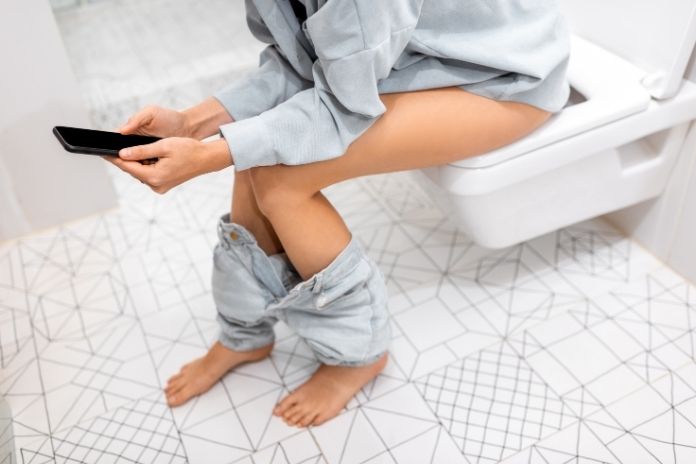
Dr Primrose Freestone, professor of clinical microbiology at the University of Leicester, says fecal bacteria can easily reach your phone in the bathroom.
It includes Pseudomonas, which causes lung and blood infections, and E. coli, which can cause unpleasant diarrhea and cramping in the stomach.
Unseen to the naked eye, a plume of microscopic liquid droplets containing bacteria and feces is violently blasted when we flush a toilet.
This so-called ‘toilet plume’ can move five feet (1.5 meters) in eight seconds, according to an earlier study conducted at the University of Colorado Boulder.
As a result, anything within five feet of the toilet bowl—including the wall, the floor, and any books nearby—can get polluted.
Additionally, research indicates that even with the toilet lid closed, this terrible plume still manages to escape.
As a result, Professor Freestone urges people to keep their phone well away from the toilet, or even better, out of the bathroom entirely.
‘Toilet areas adjacent to toilets, because of the toilet spray trajectory, are pretty contaminated,’ she told MailOnline.
Read More: 12 Causes for Frequent Urination And Treatment For It
Mental & Behavioral Effects
Although this may seem like an opportunity to multitask, the use of your phone in the bathroom can have some underlying consequences for your mental and behavioral health.
- First, distraction is taking your focus away from a primary bodily function. You become consumed with scrolling instead of focusing on relaxing and letting your body do its job.
- Second, there’s a psychological element to this. When you go for your phone during any moment of stimulus-free time, like bathroom breaks, it creates the habit of needing stimulation all the time. This kind of “always on” behavior can produce an increase in anxiety or restlessness over time.
- Third, the bathroom is usually one of the few places where you can unplug because it is private. If the toilet becomes a place of news, notifications, or endless scrolls, then your brain never really gets a rest.
What Effects Does Using a Phone in the Toilet Have on a Person?

In general, smartphones have infiltrated even our most intimate moments, such as our toilet breaks. Several unexpected effects of using a phone in the restroom can have on your sexual life and general health, even if you aren’t aware of them. If your partner seems uninterested in having sex and does not want to change their behavior, there are several indicators that you are in a time-pass relationship.
Anal Health and Piles: You spend a lot of time sitting on the commode, which leads to an anti-gravity position when you use a phone in the restroom for an extended period of time. This tension can compress your rectal region and may cause the formation of uncomfortable hemorrhoids, also called piles.
Reduced Blood Flow: Prolonged phone calls in the restroom can cause your pelvic area, including your genitals, to have less blood flow. If you’re a man, you should be aware that decreased blood flow may affect your sexual health and responsiveness, which may make it harder for you to get and keep an erection. If you’re a woman, your sexual arousal and responsiveness may be affected by inadequate blood flow.
Sleep Disruption: Using a phone in the toilet late at night can also cause sleep disturbances since the blue light from the screens throws off your circadian clock. Fatigue and low energy can result from the erratic sleep patterns brought on by late-night phone use.
Read More: What Does Cloudy Urine Mean? Cloudy Urine Causes And Treatment
Expert Tips to Break the Habit (and Stay Healthy)

It takes more than just determination to break the habit of using your phone when you go to the bathroom; you have to develop better habits.
- To break the habit of unconsciously grabbing your phone at designated times of the day, begin by changing your physical relationship to your phone. For example, temporarily place your phone in another room at mealtime or during work.
- Make a plan for your digital detox. Even though many of us have an intrinsic need for devices to communicate or for social and business purposes, we can indeed exist without them daily.
- Next, start by intentionally changing your phone’s settings. Turn off unwanted notifications, set your display to grayscale, making it less appealing. Consider using apps that track time on your phone and applications to help you reflect on your habits. It is a good time to start being more conscious of the time spent on screens and gradually decrease it.
- While it may seem contradictory, one way to limit your phone usage and learn how to spend less time with it is to use the very apps that limit your screen time. If you’re tracking screen time and getting close to your limits, you might need a wake-up call to stop using your smartphone.
- Finally, find other things that genuinely interest you and use them to replace your phone time. In addition to addressing the underlying needs that may be causing excessive phone use, these activities can help develop new, healthy habits. Examples include reading physical books, engaging in handicrafts or hobbies, and speaking with friends and family in person.
Read More: Coconut Oil for Hemorrhoids | How to Get Rid of Hemorrhoids
Conclusion
Although our smartphones are essential tools, dangerous microorganisms can thrive on them. Beyond the limitations, there are several negative consequences associated with using your phone in the restroom. It might also cause anxiety and damage your personal connections. Living a joyful life can be achieved by limiting the habit.
The main lesson is straightforward: a phone-free restroom promotes improved digestion and hygiene. You may shield yourself from needless pollution and allow your body to work normally by eliminating distractions.
Try not to scroll in the restroom for a whole week. That’s the challenge. Observe how your bathroom breaks feel cleaner, shorter, and more relaxing.
References
- https://www.nbcnews.com/health/health-news/phone-use-hemorrhoids-bathroom-social-media-scrolling-rcna228080
- https://theconversation.com/seven-health-conditions-that-show-why-using-your-phone-on-the-toilet-is-a-bad-idea-264808
- https://www.theguardian.com/money/2023/oct/09/toilet-scrolling-bathroom-phone-use-health-haemorrhoids
- https://www.sciencealert.com/using-your-phone-on-the-toilet-may-dramatically-increase-your-risk-of-hemorrhoids
- https://innerhealthcolonic.com/toilet-scrolling-how-bathroom-phone-use-impacts-your-health-and-habits/
- https://bestpractice.bmj.com/topics/en-gb/563
- https://findadoc.bidmc.org/details/5679/
- https://science.howstuffworks.com/life/cellular-microscopic/smartphone-germs.htm
- https://pmc.ncbi.nlm.nih.gov/articles/PMC6130244/
- https://thenicheng.com/study-warns-phone-taken-to-toilet-can-attract-fecal-bacteria-causing-diarrhea-stomach-cramps-blood-and-lungs-infections/
- https://www.dailymail.co.uk/sciencetech/article-14821101/horrifying-truth-NEVER-use-phone-toilet.html
- https://le.ac.uk/people/primrose-freestone
- https://www.bidmc.org/about-bidmc/news/2025/09/how-smartphones-may-increase-hemorrhoid-risk
- https://health.yahoo.com/conditions/digestive-health/articles/scrolling-phone-toilet-could-having-202538507.html
In this Article