














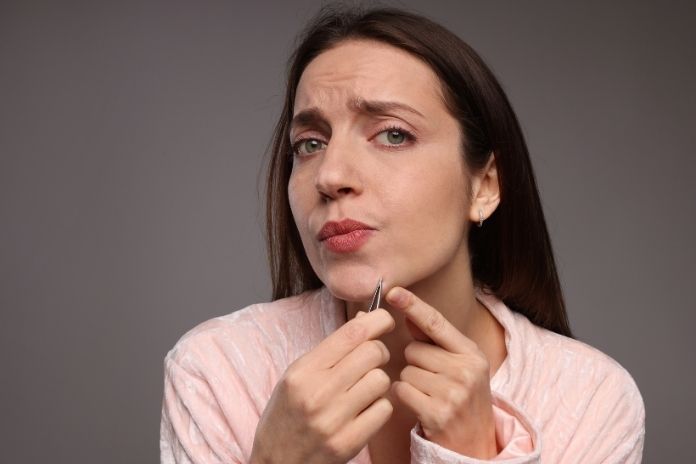
Finding random dark hairs on the chin or neck areas can really feel very strange because many hairs come suddenly and grow much longer or thicker compared to the surrounding hair. In many women, these hairs start becoming noticeable after the 30s or 40s, even when they never had facial hair before.
This is normally harmless and related to hormones changing slowly over time. But in some people, chin hair becomes more frequent or widespread or comes with other symptoms that suggest an underlying hormonal condition.
- A few random dark hairs on the chin or neck are very common and usually happen because hair follicles become more sensitive to androgens like testosterone.
- One or two isolated hairs are usually normal.
- Rapidly increasing facial hair, irregular periods, jaw acne, scalp thinning, or hair spreading to the chest and abdomen should be medically checked.
Read More: Dark Skin Under Your Breasts? How to Tell If It’s Acanthosis Nigricans, Intertrigo, or Ringworm
The Biology: How Hormones Change Tiny Invisible Hairs Into Thick Dark Ones
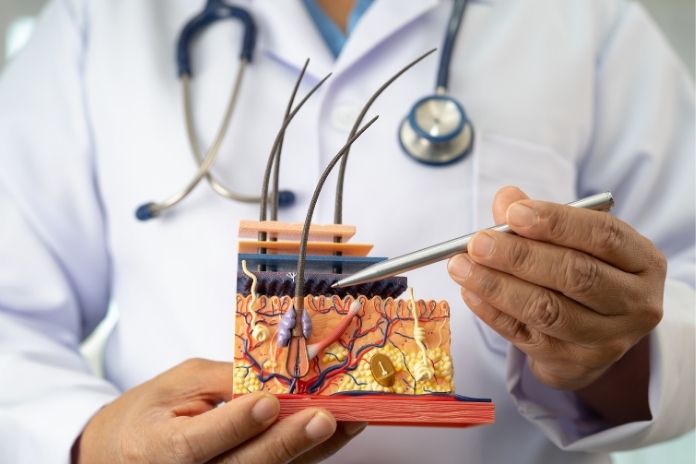
Human skin is already covered with vellus hair, or peach fuzz, fine, soft, light-colored hair. Some follicles are genetically more sensitive to androgens, the hormones linked to hair growth. Androgens like testosterone, DHEA-S, and androstenedione are often called “male hormones,” but women naturally produce them too in the ovaries and adrenal glands.
In small amounts, they support bone health, libido, muscle function, and metabolism. Hair growth depends not just on hormone levels but also on how sensitive each follicle is to those hormones. That’s why two women with the same testosterone levels can have very different amounts of chin hair.
When follicles in androgen-sensitive areas get stimulated repeatedly, they slowly change character. The conversion from tiny vellus follicles to terminal follicles happens. Terminal hairs are darker, coarser, longer, and contain more pigment. This conversion does not happen overnight.
Usually, the follicle goes through several growth cycles before the hair becomes thick enough to notice. The chin, upper lip, jawline, and upper neck are particularly sensitive areas because these follicles contain more androgen receptors than many other parts of the face. That is why random long hairs often appear there first.
“Initially horrifying, yes,” says Dr. Margaret E. Wierman, endocrinologist, “but all perfectly normal.”
Another thing many people do not realize is that follicles “remember” hormonal exposure. Once a follicle converts strongly into terminal hair production, it often keeps producing thicker hairs even if hormone levels later improve. That is why some women continue having chin hair after menopause or after PCOS treatment improves.
Common Causes of Dark Chin and Neck Hairs: Ranked by Frequency
Natural Aging and Hormonal Ratio Changes
Many women assume testosterone suddenly increases with age. Usually, that is not what happens. What changes more dramatically is estrogen decline. During reproductive years, estrogen balances androgen activity in many tissues, including skin and hair follicles. As perimenopause starts, this balance shifts.
Even when testosterone levels remain stable, lower estrogen means testosterone has a relatively stronger influence. Hair follicles that ignored androgens in earlier decades may suddenly start responding.
This explains a common situation dermatologists hear: “Why am I growing chin hairs, even though I never had chin hair in my 20s, and then suddenly after 40 I started getting these thick black hairs?”
Menopause also changes the skin environment itself. Collagen declines, oil production changes, and follicle cycling become less predictable. Some scalp follicles become weaker, causing thinning hair, while facial follicles become more androgen-responsive at the same time. This opposite effect confuses many people.
Genetics and Ethnic Background
This inheritance is more about follicle sensitivity and how enzymes inside the follicle process hormones locally. Some follicles convert weak androgens into stronger ones more efficiently. Women from South Asian, Middle Eastern, Mediterranean, Hispanic, and African backgrounds often naturally have stronger facial hair growth patterns compared to Northern European populations.
One important thing many people misunderstand is that “normal” facial hair amount differs between ethnic groups. A degree of hair growth considered mild in one population may appear excessive in another. This is why doctors do not diagnose hirsutism based only on one isolated hair or subjective appearance.
PCOS (Polycystic Ovary Syndrome)
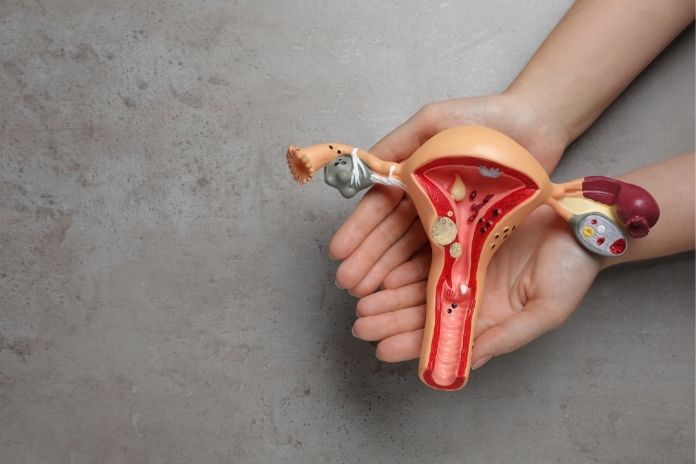
In PCOS, the ovaries produce excess androgens. Insulin resistance also plays a major role because high insulin levels stimulate ovarian androgen production further. This creates a hormonal environment where androgen-sensitive follicles become increasingly active.
PCOS-related facial hair tends to become progressive and more diffuse. Instead of one isolated hair, multiple dark, coarse hairs start appearing along the chin, jawline, upper lip, and sideburn area.
Other signs often appear alongside it:
- Irregular or skipped periods
- Jawline acne
- Oily skin
- Scalp hair thinning
- Weight gain or difficulty losing weight
- Dark skin patches around the neck or underarms
- Fertility problems
Some lean women with PCOS mainly notice chin hair and acne without major weight issues. Interestingly, many PCOS patients have “normal” blood testosterone on lab tests. Their follicles may simply be extra sensitive to androgens.
Thyroid Dysfunction
When thyroid hormones become abnormal, follicles can behave unpredictably. Hair texture may change, shedding may increase, and pigmentation patterns may alter. Hypothyroidism more commonly causes diffuse hair thinning and dry, brittle hair. But some women also notice dark, coarse facial and chin hair becoming more visible because follicle cycling becomes disrupted.
Another reason thyroid disease gets linked with facial hair complaints is that it overlaps with hormonal imbalance generally. Menstrual irregularities, metabolic slowing, and ovarian hormone disruption can happen together. The thyroid itself usually does not directly produce chin hair. Instead, it changes the hormonal environment around the follicle.
Adrenal Causes
Certain adrenal disorders can increase androgen production:
- Congenital adrenal hyperplasia (CAH)
- Adrenal tumours
- Cushing’s syndrome
Fast progression together with a deeper voice, increased muscle mass, irregular periods, or clitoral enlargement may suggest significant androgen excess needing urgent evaluation. Most women with one or two chin hairs do not have adrenal disease. But rapid-onset hirsutism should never be ignored.
Medications
These include:
- Anabolic steroids
- Testosterone-containing products
- Some progesterone medications
- Cyclosporine
- Minoxidil
- Certain epilepsy drugs
Sometimes people forget to mention supplements. “Hormone boosting” gym supplements or DHEA products bought online can increase androgen activity too. Even topical testosterone transfer from a partner using testosterone gel has occasionally caused facial hair growth in women through skin contact exposure.
Idiopathic Hirsutism
This means noticeable facial hair growth without abnormal hormone tests. Idiopathic hirsutism often starts after puberty and progresses slowly over the years. Family history is usually strong. Scientists suspect local enzyme activity inside follicles matters more than circulating hormone levels in many cases.
This is why some women feel frustrated after “normal” test results despite obvious hair growth. The hair growth is real even when blood tests are normal.
Read More: From Skin to Immunity: The Incredible Benefits of Black Seed Oil for Your Health
One or Two Hairs vs True Hirsutism: The Difference Matters
Almost every woman develops a few isolated coarse facial hairs eventually. This alone is not considered a disease. Doctors separate normal isolated hairs from hirsutism, which means excess terminal hair growth in a male-pattern distribution. The pattern matters more than the existence of one hair. Hirsutism typically involves:
- Chin
- Upper lip
- Chest
- Abdomen
- Lower back
- Inner thighs
- Sideburns
Dermatologists and endocrinologists sometimes use the Ferriman-Gallwey score. This system grades hair growth across nine body areas from 0 to 4. Scores above 8 generally suggest clinically significant hirsutism. But the scoring system has limitations. It was originally developed mainly in lighter-skinned populations and may not reflect ethnic variation properly.
A practical rule works better for most people:
- One to three isolated chin hairs are usually normal
- Progressive spreading coarse hair growth should be evaluated
Why Some Chin Hairs Grow Extremely Long Overnight
Actually, facial hair can stay unnoticed for weeks because growth is gradual and the hair lies flat against the skin. Then, suddenly, the lighting angle changes or the hair reaches enough length to stick outward.
Terminal hairs also grow in different cycles than surrounding vellus hairs. Some follicles stay in the active growth phase longer than others, allowing individual hairs to become surprisingly long. Another interesting factor is pigment contrast. A single dark hair on lighter skin becomes visually dramatic, even if it is thin.
When to See a Doctor For Random Dark Hair On Chin Or Neck

Medical evaluation is worth considering if:
- Facial hair is increasing steadily
- Coarse hairs spread beyond the chin area
- Periods become irregular
- Scalp hair thinning develops
- Severe jaw acne appears
- Voice deepens
- Sudden rapid onset happens
- Weight changes become difficult to explain
Doctors may order:
- Testosterone
- DHEA-S
- Thyroid function tests
- Prolactin
- Insulin and glucose testing
- Pelvic ultrasound if PCOS suspected
Very sudden hirsutism sometimes needs imaging to exclude androgen-secreting tumors, though these are rare.
Treatment and Management Options For Random Dark Hair
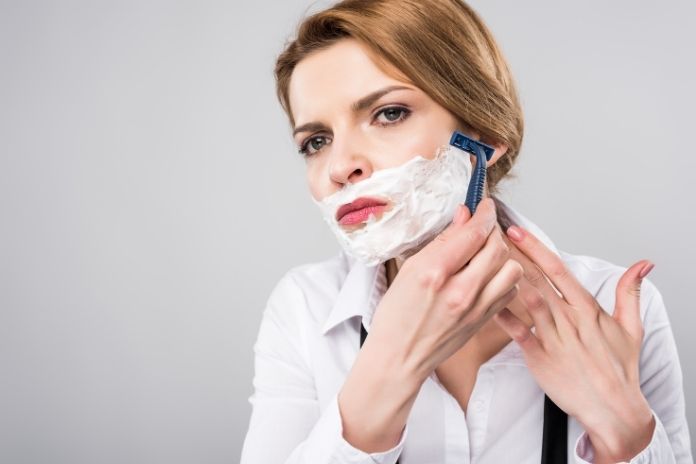
For isolated random chin hairs in women, the treatment option is mainly cosmetic and personal preference. Tweezing works well for occasional hairs. Shaving is also safe despite old myths. Shaving does not change follicle thickness or growth rate.
The blunt tip simply feels rougher during regrowth. Threading and waxing remove hair from the root but may irritate sensitive skin if done repeatedly. Laser hair removal works best for dark, coarse hair because the laser targets pigment inside the follicle.
Several sessions are needed because follicles cycle through different growth phases. Hormonal facial hair often needs maintenance treatments over time. Electrolysis is slower but can permanently destroy individual follicles and works on lighter hairs, too.
For hormonal hirsutism:
- Combined oral contraceptives reduce ovarian androgen production
- Spironolactone blocks androgen effects at the follicles
- Cyproterone acetate reduces androgen activity
- Topical eflornithine slows facial hair growth
“Some interventions are really expensive, but there are cheaper options, too. What we choose also depends on the degree of hirsutism and the person’s pain tolerance,” endocrinologist Dr. Vinni Makin says. Treatment response takes patience. Hair follicles grow slowly, so improvement often needs six months or more.
An important thing doctors now recognize is the psychological impact. Even mild chin hair can create major distress because facial appearance carries strong emotional meaning. The severity of emotional impact does not always match the amount of hair growth clinically.
Read More: What Causes Random Dark Hairs? Common Reasons and When to Be Concerned
Conclusion
A few dark hairs on the chin or neck are extremely common and usually not a sign that something is wrong. They happen when certain hair follicles are more sensitive to androgens and gradually turn soft “peach fuzz” into thicker, darker hairs. Genetics, aging, menopause, and conditions like PCOS can all play a role.
For many women, a few stray hairs are completely normal and mostly a cosmetic issue. But if the hair suddenly increases, spreads, or comes with symptoms like irregular periods, acne, or scalp hair thinning, it’s worth getting checked because hormone-related hirsutism in women can often be treated.
- Hair follicles respond differently to hormones even when blood testosterone is normal.
- Menopause-related facial hair is often caused by falling estrogen.
- Researchers still do not fully understand why certain follicles become extremely androgen-sensitive in idiopathic hirsutism.
- Rapidly increasing facial hair matters more medically than one or two isolated hairs.
- Future research may focus more on follicle-level hormone activity instead of only blood hormone testing because many women with hirsutism have normal lab results.
References
- Cleveland Clinic. (n.d.). About Those Hairs on Your Chinny Chin Chin.
- Javorsky, E., Perkins, A. C., Hillebrand, G., Miyamoto, K., & Kimball, A. B. (2014). Race, Rather than Skin Pigmentation, Predicts Facial Hair Growth in Women. The Journal of Clinical and Aesthetic Dermatology, 7(5), 24.
- Spritzer, P. M., Marchesan, L. B., Santos, B. R., & Fighera, T. M. (2022). Hirsutism, Normal Androgens and Diagnosis of PCOS. Diagnostics, 12(8), 1922.
- Viscomi, B., Muniz, M., & Sattler, S. (2025). Managing Menopausal Skin Changes: A Narrative Review of Skin Quality Changes, Their Aesthetic Impact, and the Actual Role of Hormone Replacement Therapy in Improvement. Journal of Cosmetic Dermatology, 24(S4).
In this Article