












Elena started setting an alarm for 3 AM just so she could fall back asleep before waking up on her own. She had read that the liver’s peak metabolic hours fall between 1 and 3 AM and convinced herself her insomnia was a detox problem. She switched to rooibos tea at night. Then she switched to turmeric. Neither fixed the waking. That experience is more common than most people realize.
The idea that nighttime wakeups at a specific hour signal liver dysfunction has spread widely through wellness circles, but the scientific basis is thin. Rooibos vs. turmeric for liver support is a genuine comparison worth making, but only after understanding what these herbs can and cannot actually do and what is more likely causing the 3 AM problem in the first place.
- Waking at 3 AM is a common experience with multiple causes, including cortisol rhythm, blood sugar fluctuations, stress, and alcohol metabolism. The “liver time” explanation from traditional Chinese medicine is not supported by Western sleep medicine or hepatology.
- Rooibos is naturally caffeine-free, gentle on the gastrointestinal tract, and the more sleep-compatible option for consistent nightly use, with emerging human evidence for antioxidant and lipid profile support.
- Turmeric has stronger and more direct clinical evidence for liver enzyme support in the context of NAFLD, but that evidence comes from concentrated curcumin supplements at doses unachievable from brewed tea.
- Addressing evening alcohol, meal timing, screen exposure, and sleep schedule consistency will produce more measurable improvement in nighttime waking than either tea choice alone.
Read More: Balance Your Stress: The Top 6 At-Home Cortisol Tests for Stress Management
Does Waking at 3 AM Really Mean a Liver Problem?
The claim that 3 AM waking indicates liver trouble draws from traditional Chinese medicine, which maps organ activity to two-hour windows across the circadian clock. This concept originates in TCM meridian theory, not in Western hepatology or sleep medicine.
The liver does carry out important metabolic processes during sleep, including glycogen storage, protein synthesis, and detoxification, but these are not exclusive to a narrow nighttime window and do not cause wakefulness in otherwise healthy individuals. Waking between 2 and 4 AM is consistent with natural REM cycling.
Most adults cycle through roughly 90-minute sleep stages, with slow-wave sleep concentrated earlier in the night and REM sleep appearing toward the early morning hours. Nighttime cortisol also begins rising during this window as part of the normal hypothalamic-pituitary-adrenal axis rhythm, which alone can produce lighter sleep and early waking.
Stress, blood sugar fluctuations, alcohol metabolism, and an inconsistent sleep schedule are among the most common and well-documented contributors to recurrent nighttime waking, none of which are liver-specific.
How Herbal Teas Might Influence Nighttime Wakeups
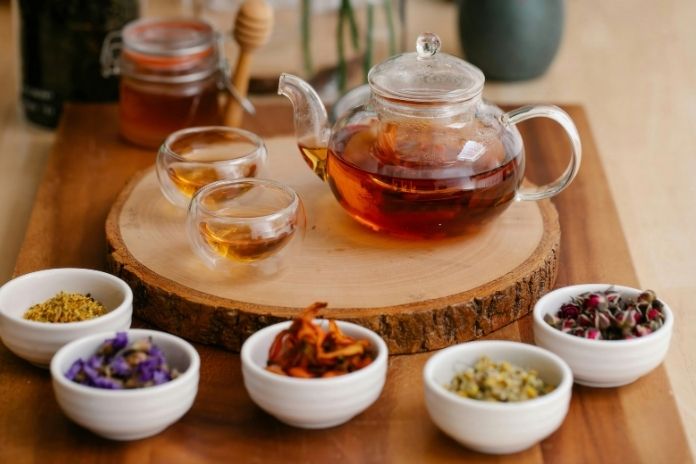
Caffeine-free herbal teas taken before bed can support sleep through several indirect mechanisms. Warmth activates a mild parasympathetic response, certain herbal compounds have mild sedative or anxiolytic properties, and the evening ritual itself can serve as a behavioral cue for relaxation that helps reduce cortisol.
Both rooibos and turmeric contain bioactive compounds with anti-inflammatory and antioxidant effects that may modestly improve sleep continuity over time, though these benefits operate over weeks rather than in a single evening.
Neither tea will reverse liver disease, replace medical treatment for hepatic dysfunction, or resolve structural sleep disruptions caused by anxiety, blood sugar dysregulation, or sleep apnea. No herbal tea directly targets the REM waking threshold, corrects cortisol dysregulation in a single dose, or delivers the curcumin concentrations used in clinical liver research from a few grams of powder steeped in water.
Rooibos Tea: Potential Benefits for Nighttime Liver Support
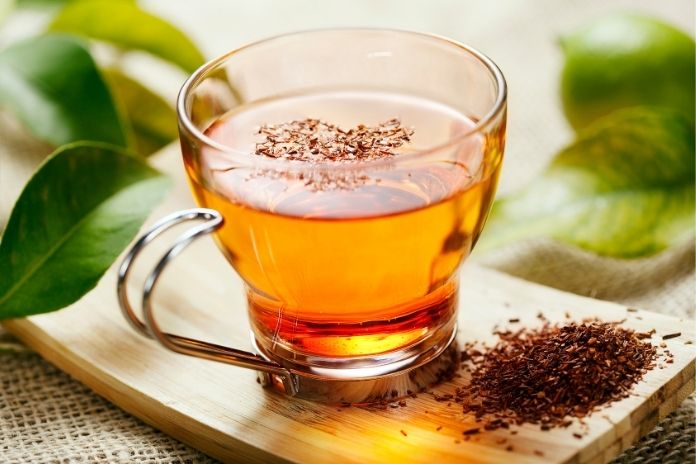
Rooibos is derived from the South African shrub Aspalathus linearis and is naturally free of caffeine and very low in tannins. It does not suppress melatonin, does not stimulate the central nervous system, and is unlikely to irritate the gastrointestinal tract at nighttime doses. For someone building a consistent evening wind-down routine, rooibos is an objectively safe and well-tolerated choice.
Rooibos is rich in antioxidant polyphenols, particularly aspalathin and nothofagin, which are unique to this plant. A study published in PMC examining rooibos in rats with induced oxidative liver stress found that unfermented rooibos restored hepatic antioxidant capacity and showed a trend toward reducing lipid peroxidation in the liver. These findings are promising but come from animal models, which limit direct applicability to humans.
A 2023 scoping review in the Journal of Public Health in Africa evaluating 18 human studies noted that rooibos enhanced lipid profiles and boosted antioxidant status in both healthy and at-risk individuals, while acknowledging that the human evidence base remains limited in size and methodological rigor.
Some preliminary research suggests rooibos may modulate the stress hormone response, with animal studies pointing to possible effects on cortisol and the adrenal axis. If replicated in well-designed human trials, this would be meaningful given that nighttime cortisol dysregulation is a key driver of early morning waking.
The evidence at this stage does not support making strong claims about rooibos directly reducing 3 AM waking through a cortisol mechanism, but it positions rooibos as the more sleep-compatible option between the two teas.
Turmeric Tea: Potential Benefits for Liver Health
Turmeric derives most of its bioactivity from curcumin, a polyphenol with well-documented anti-inflammatory and antioxidant properties. Curcumin inhibits the NF-kB inflammatory pathway, reduces oxidative stress markers, and has shown hepatoprotective effects in both cell and animal models. These properties form the scientific basis for interest in turmeric as nighttime liver support.
The clinical evidence for curcumin’s effect on liver health is more developed than for rooibos, particularly in the context of non-alcoholic fatty liver disease. A 2024 systematic review and meta-analysis published in Nutrition Reviews analyzing 15 randomized controlled trials with 905 participants found that curcumin supplementation significantly reduced ALT and AST levels in NAFLD patients compared to controls.
A 2025 meta-analysis published in Food Science and Nutrition, pooling 14 studies, confirmed significant decreases in both liver enzymes following curcumin therapy. These are meaningful findings for people with documented liver enzyme elevation, though the effect sizes are modest and the studies used concentrated curcumin supplements, not brewed tea.
Curcumin’s bioavailability when consumed as brewed tea is low. The compound is fat-soluble and absorbs poorly from an aqueous preparation without a fat carrier. Adding black pepper increases absorption because piperine inhibits curcumin’s rapid metabolism, but piperine is also a gastrointestinal stimulant that can cause evening discomfort.
The clinical liver research used formulations delivering 500 to 1,000 mg of curcumin daily, a level not achievable from a cup of tea.
Turmeric at higher doses or in sensitive individuals can cause reflux, bloating, and GI discomfort. Taken in the evening, these effects have the potential to disrupt sleep onset and quality, which is the opposite of the intended result. This is not a universal experience, but it is an important consideration when choosing between these two teas for nighttime use.
Rooibos vs Turmeric: Key Differences for Night Use
Choosing between rooibos and turmeric for nighttime use is not a straightforward win for either herb. Both are caffeine-free, both carry anti-inflammatory properties, and both have some degree of liver-related evidence behind them. Where they diverge meaningfully is in how they behave at night, how much of their active compounds actually reach the body through brewed tea, and how consistently most people can tolerate them as a nightly habit.
Herbal Tea Comparison
Rooibos vs Turmeric
| Factor | Rooibos | Turmeric |
|---|---|---|
| Caffeine content | Naturally caffeine-free | Naturally caffeine-free |
| Sleep-friendliness | High. No GI stimulation, no melatonin suppression, gentle on the stomach | Moderate. Risk of reflux or bloating, especially with black pepper |
| Liver evidence (human) | Limited. Antioxidant and lipid profile improvements in small human trials | Stronger. Multiple RCTs show significant ALT and AST reductions in NAFLD patients |
| Liver evidence (animal) | Good. Hepatic antioxidant restoration in oxidative stress models | Good. Anti-inflammatory and hepatoprotective effects across multiple models |
| Bioavailability of tea | Polyphenols extract readily in hot water | Low. Curcumin is fat-soluble and poorly absorbed without fat or piperine |
| Effective dose achievable from tea | Yes, at a typical brewing strength | No. Clinical liver studies used 500 to 1,000 mg curcumin daily, far above tea levels |
| Digestive comfort at night | High. Well-tolerated by most people at any dose | Variable. Piperine and higher doses can cause discomfort that disrupts sleep |
| Cortisol or stress effects | Preliminary animal evidence for adrenal modulation | No direct evidence for cortisol modulation |
| Flavor for nightly use | Mild, naturally sweet, easy to drink consistently | Strong, bitter, earthy; harder to consume nightly without additions |
| Best suited for | Consistent nighttime use, stress-related waking, and GI-sensitive individuals | Liver enzyme support, best delivered as a physician-supervised supplement rather than tea |
The table makes the tradeoff clear. Rooibos wins on practical nighttime usability: it is easier to drink, easier to tolerate, and less likely to create the digestive disruptions that undermine the very sleep it is meant to support. Turmeric wins on the depth of its clinical liver evidence, but that evidence does not transfer to the tea form at typical doses.
For most people seeking a consistent, low-risk evening ritual, rooibos is the more realistic choice. For those with confirmed liver enzyme concerns, the conversation with a physician about curcumin supplementation is more appropriate than relying on a nightly cup.
Which Might Be Better for Different Situations?
Rooibos is the better choice. Its caffeine-free profile and possible cortisol-modulating effects make it more aligned with the underlying mechanism of stress-driven sleep fragmentation. Pairing it with a consistent wind-down routine addresses the behavioral dimension of the problem as well.
Rooibos, without hesitation. Turmeric taken at night when the digestive system is already sensitive risks worsening rather than improving the situation. Rooibos has mild anti-spasmodic and anti-inflammatory properties that may ease digestive discomfort alongside its sleep-compatible profile.
In this case, turmeric becomes more clinically relevant, but as a concentrated supplement under medical supervision rather than as a tea. The tea form does not deliver enough curcumin to replicate the doses studied in clinical trials. Anyone with confirmed liver enzyme elevation should be working with a physician, not self-treating with herbal beverages.
Rooibos is the practical choice. Its gentle flavor profile makes consistent nightly use far more realistic, and consistency is what determines whether any dietary intervention produces an observable effect over time.
Other Factors That May Matter More Than Tea Choice
Alcohol is metabolized primarily in the liver and consistently disrupts sleep in the second half of the night. Reducing or eliminating evening alcohol will produce a larger and faster improvement in nighttime waking than any herbal tea selection.
A large or high-carbohydrate meal late in the evening can trigger blood glucose fluctuations that activate cortisol in the early morning hours. Finishing meals at least two to three hours before bed is one of the most effective practical interventions for reducing nighttime waking.
Blue light from screens suppresses melatonin production, delaying sleep onset and compressing slow-wave sleep, which pushes the body into lighter REM stages earlier than normal and contributes to early waking. Reducing screen time in the hour before bed has a measurable effect on sleep continuity.
The circadian system is highly sensitive to timing. Sleeping and waking at different times from one day to the next disrupts the alignment between cortisol rhythm and the sleep-wake cycle. Anchoring wake time to the same hour every day, including weekends, is one of the most effective behavioral strategies for reducing recurrent nighttime waking.
Read More: Is It a Sleep Slump or Clinical Insomnia? Understanding the 3-3-3 Rule for Diagnosis
How to Safely Try Rooibos or Turmeric at Night
Either tea is best consumed 30 to 60 minutes before sleep. This timing allows the warmth and any relaxing compounds to take effect while reducing the risk of bladder waking from liquid intake too close to sleep onset.
Starting with a single cup steeped at a moderate strength is the appropriate approach. This allows the body to adjust and provides a baseline for evaluating individual tolerance before increasing frequency or concentration. Neither tea requires any special preparation to be effective as a nightly ritual.
Anyone who experiences bloating, reflux, or gastrointestinal discomfort after turmeric tea should discontinue it and switch to rooibos. These symptoms, while manageable during the day, are counterproductive when the goal is uninterrupted sleep.
Adding multiple new supplements simultaneously makes it impossible to determine which one is producing an effect. Introducing rooibos or turmeric as a single change and observing sleep quality over two to four weeks provides the clearest picture of individual response.
Read More: DIY Herbal Teas: 7 Home Remedies to Soothe Common Ailments
When Nighttime Wakeups May Need Medical Attention
Persistent sleep disruption lasting more than three weeks despite consistent sleep hygiene improvements warrants medical evaluation. Certain symptoms accompanying nighttime waking should prompt immediate attention: unexplained fatigue that does not resolve with rest, abdominal discomfort or tenderness in the upper right quadrant, jaundice of the skin or eyes, or dark urine.
These are clinical signs of possible liver or gallbladder pathology that go well beyond what any herbal tea can address. Any medication or health condition affecting liver enzyme levels, cortisol regulation, or sleep should be reviewed by a physician before adding herbal supplements to an evening routine.
Dr. Joseph K. Lim, MD, hepatologist and Professor of Medicine at Yale School of Medicine, has stated clearly that herbal and dietary supplements “have the potential for both benefit and harm” and should be used with similar caution as prescribed medications, ideally under the supervision of a licensed health professional.
He has also noted that people with existing chronic liver disease should exercise particular caution, as supplement-induced liver injury in this population carries a higher risk of liver failure.
Dr. Robert Brown, MD, Chief of Gastroenterology and Hepatology at NewYork-Presbyterian and Weill Cornell Medicine, has stated that patients taking high-dose turmeric “need to be monitored at least by their liver blood test to make sure they’re not doing harm.”
His point underscores that turmeric consumed as an occasional evening tea at food-grade doses is far removed from the concentrated supplements that carry hepatotoxicity risk, but the distinction matters and should be discussed with a physician for anyone with a known liver condition.
Read More: 19 Natural Methods of Blood Cleansing That You Didn’t Know You Needed
Practical Takeaway: Choosing Between Rooibos and Turmeric
Neither rooibos nor turmeric tea directly targets 3 AM wakeups through a liver mechanism that Western medicine recognizes. Cortisol rhythm, blood sugar fluctuations, stress, and alcohol metabolism are better addressed through sleep hygiene changes than herbal tea selection.
Rooibos is the more sleep-friendly option: caffeine-free, gentle on the GI tract, and backed by emerging human evidence for antioxidant support. Turmeric has stronger clinical evidence for liver enzyme support, but from concentrated curcumin supplements at doses that brewed tea cannot replicate, its nighttime GI effects make consistent use less reliable for many people.
A cup of rooibos before bed is a reasonable, low-risk addition to a broader sleep hygiene strategy. Alcohol intake, meal timing, screen exposure, and sleep schedule consistency will move the needle more than either tea. If the waking is accompanied by liver-related symptoms, that conversation belongs with a physician.
References
- Afrifa, D., Engelbrecht, L., & Op’t Eijnde, B. (2023). The health benefits of rooibos tea in humans (Aspalathus linearis): A scoping review. Journal of Public Health in Africa, 14(12), 2784.
- Brown, R. (n.d.). Can supplements harm your liver? NewYork-Presbyterian Health Matters Podcast.
- Lim, J. K. (n.d.). Turmeric and 10 other popular supplements that can damage your liver. Yale New Haven Health.
- Low Dog, T. (n.d.). About Dr. Tieraona Low Dog. DrWeil.com.
- Marnewick, J. L., Rautenbach, F., Venter, I., Neethling, H., Blackhurst, D. M., Wolmarans, P., & Macharia, M. (2010). Effects of consumption of rooibos on hepatic tissue injury by tert-butyl hydroperoxide in Wistar rats. PMC.
- Mirhafez, S. R., & Sahebkar, A. (2025). Therapeutic effects of curcumin supplementation on liver enzymes of nonalcoholic fatty liver disease patients: A systematic review and meta-analysis. Food Science and Nutrition.
- Rahimi, H. R., Mohammadpour, A. H., Dastani, M., Jaafari, M. R., Abnous, K., Mobarhan, M. G., & Oskuee, R. K. (2024). Curcumin supplementation effect on liver enzymes in patients with nonalcoholic fatty liver disease: A GRADE-assessed systematic review and dose-response meta-analysis. Nutrition Reviews, 83(1), 1–12.
- Weil, A. (n.d.). About Andrew Weil, M.D. DrWeil.com.
In this Article