




















Prostate cancer screening has changed significantly during the last few decades. A more accurate, risk-based system that integrates blood testing, imaging, and genetic insights is replacing a system that previously relied almost exclusively on a single blood marker.
This article will discuss how the PSA test for prostate cancer has influenced early detection for years, why specialists now advise a more nuanced approach, and how newer technologies such as MRI and biomarker testing are improving accuracy.
- PSA testing is the initial screening tool, but elevated levels do not always indicate cancer.
- MRI and biomarker tests improve accuracy and reduce unnecessary biopsies.
- Screening is now risk-based, focusing on shared decision-making with a doctor.
Read More: Can Saw Palmetto Really Treat an Enlarged Prostate? What the Evidence Shows
What Is Prostate Cancer Screening?
In the United States, prostate cancer diagnoses have reached a record level. This rise is partly due to more men undergoing testing and the use of highly sensitive diagnostic tools, which can detect even very small changes in prostate tissue. As a result, doctors are identifying many types of cases at an earlier stage, when treatment is more effective.
In its early stages, prostate cancer often does not produce clear or noticeable symptoms, which makes screening an important step for early detection. Screening typically starts with a simple blood test that checks levels of prostate-specific antigen (PSA), a protein used by doctors as an initial marker of prostate health.
Tests for prostate cancer screening include:
DRE: It stands for digital rectal exam. To feel the prostate for edema, inflammation, or other anomalies like hardness or a nodule (a tiny, rounded protrusion), a physician inserts a gloved finger into the rectum.
PSA: The PSA test measures the prostate-specific antigen (PSA) level in blood. The prostate gland’s cells produce a protein known as PSA. Find out more about the PSA exam.
Understanding the PSA Test
The amount of PSA in blood is measured by a blood test called the prostate-specific antigen (PSA) test. The prostate produces a chemical called PSA. Men with prostate cancer can have an elevated blood level of PSA. Other disorders affecting the prostate may also result in a high PSA level.
Generally speaking, a prostate issue is more likely to exist if the blood PSA level is higher. However, a variety of factors, including race and age, can impact PSA levels. PSA production varies among prostate glands.
Additionally, PSA levels may be impacted by:
- Specific medical treatments
- Some medications
- An increased prostate size
- A prostate infection
Your doctor is the best person to evaluate the findings of your PSA test because a variety of factors can alter PSA levels.
Why Prostate Cancer Screening Recommendations Have Changed

Additionally, you may have heard that tests for prostate-specific antigens can overdiagnose cancer, resulting in needless intrusive procedures and treatments. However, prostate cancer screening has changed considerably in recent years.
If you have delayed getting screened, your understanding of the process and what the results mean may no longer reflect current medical practices. Prostate cancer screening and diagnosis involve a variety of procedures and tests.
“The core principle that surrounds prostate cancer screening right now is shared decision-making,” says Dr. Daniel Lin, a urologist at the Urology Clinic at UW Medical Center and Fred Hutch Cancer Center and the Chief of UW Medicine Urologic Oncology. He adds, “So we have a discussion with our patients on the pros and cons of screening before we start the screening itself.”
You should discuss screening with your primary care physician to determine when and how you will be screened, ideally starting at age 45 based on your risk factors. If PSA levels are within normal range, this result establishes a useful baseline that your doctor can compare against in future tests.
When PSA levels are higher than expected, additional evaluations like an MRI scan or digital rectal exam may be recommended to determine whether a biopsy is necessary. Once a biopsy is performed, your healthcare team can confirm whether the cancer is present and evaluate how aggressive it may be.
For more advanced or aggressive cases, treatment options include surgery, radiation therapy, hormone therapy, or chemotherapy.
Read More: Think You’re Too Young for Cancer? 75% of Patients Thought So Too
Newer Tools Beyond the Standard PSA Test
As you may be aware, the most prevalent cancer in males is prostate cancer. The good news is that, even if the cancer is discovered later, there are numerous alternatives for care and therapy.
When it comes to prostate cancer screening, there are several options. Your doctor can suggest a prostate-specific antigen (PSA) test or another recent screening test after considering several factors.
New Blood Test for Prostate Cancer
PSA and two other related chemicals are measured by the prostate health index (PHI), which gives a more precise indication of your risk of developing prostate cancer. For males with PSA values between 4 and 10, the FDA has approved it. Risk of aggressive prostate cancer may also be estimated using the PHI and a related test called 4K.
New Urine Tests for Prostate Cancer
PCA3: Your doctor can more accurately determine your risk of prostate cancer by using the PCA3 urine test, which finds the PCA3 marker in your urine. Only the prostate expresses PCA3, a noncoding RNA unique to the prostate. You are more likely to get prostate cancer if the gene is “overexpressed,” which means there are too many copies of it.
ExoDx: This test looks for prostate cancer-related markers in exosomes, which are extracellular vesicles that carry genetic material from their parent cells. A raised ExoDx indicates an increased risk of aggressive prostate cancer.
MPS: Although data on this test is still pending, preliminary findings are encouraging. MPS results should assist in determining whether or not to biopsy males with increased PSA by combining multiple prostate cancer markers into a single urine assay.
How MRI Is Changing Prostate Cancer Detection
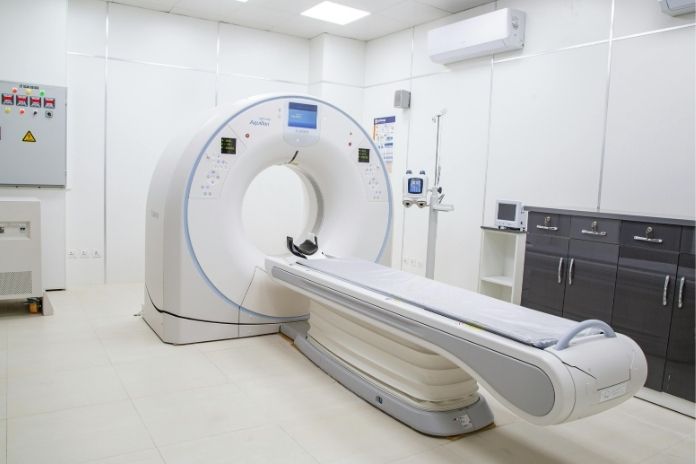
When a patient has a high PSA, there are two basic approaches to using magnetic resonance imaging (MRI). Initially, suspicious spots can be highlighted on an MRI, suggesting the possibility of malignant lesions and helping assess whether a biopsy is required.
Doctors use an organized reporting system called PI-RADS (Prostate Imaging Reporting and Data System) to assess the likelihood of prostate cancer based on an MRI scan. Scores range from 1 (extremely low/clinically significant cancer is very unlikely to be present) to 5 (very high/clinically significant cancer is very likely to be present).
PI-RADS 4 or 5 lesions usually require targeted biopsy for confirmation, as they have a high likelihood of becoming clinically relevant. If a biopsy is very necessary, certain facilities perform the MRI-targeted, also known as fusion, biopsies, where doctors use both the MRI and ultrasound to visualize the prostate tumors better and guide biopsy needles to the most suspicious areas.
Who Should Consider Prostate Cancer Screening?
The majority of men should begin screening for prostate cancer at age 50. Whether you have risk factors for prostate cancer may determine when to begin.
- If you have no risk factors for prostate cancer, you should start around age 50.
- Begin at 40 or 45 if you have certain prostate cancer risk factors, such as being Black, having a family history of the disease, and having a personal or family history of DNA mutations that raise the risk of prostate cancer, such as BRCA1 and BRCA2.
Tests that look for indications of prostate cancer in individuals without symptoms are known as “prostate cancer screening.” A little gland called the prostate aids in the production of semen. It is located directly beneath the bladder. The male reproductive system includes the prostate.
Read More: Do Food Preservatives Increase Cancer Risk? What Research Really Shows
What Happens if a PSA Test Is Elevated?

First of all, understand that an increased PSA does not always indicate prostate cancer. A high PSA might also result from:
- Infection, urinary tract instrumentation, disturbance, trauma, or prostate manipulation
- Several diseases, such as an enlarged prostate or prostatitis
Together, you and your physician will look for any of these potential causes of your elevated PSA, such as urinary infection, instrumentation history, inflammation, and family medical history.
Together with your physician, you can determine the cause, treat it, and then retest your PSA to see if the level has dropped. You will probably need a digital rectal exam and another PSA test if you and your doctor are unable to rule out other explanations.
Benefits and Risks of Prostate Cancer Screening
In the United States, prostate cancer is the second most common cause of cancer-related deaths among males. However, not all dangers are equal. Use the following information to determine whether prostate cancer screening is appropriate for you. You may also decide to talk to a medical professional about this.
Benefits
- PSA screening may aid in the early detection of prostate cancer. Before it spreads to other regions of the body, prostate cancer is usually easier to treat and monitor.
- Some folks would rather know more about their health.
- Being informed about diagnostic procedures and treatments may be aided by awareness of the level.
Risks
- Prostate cancer typically advances slowly and may never manifest symptoms in a person’s lifetime. Since prostate cancer is not life-threatening, many patients will not need treatment.
- Anxiety and distress may result from knowing you have prostate cancer but not being advised to receive treatment right away.
- Impotence and incontinence are two serious adverse effects of prostate cancer treatment.
Read More: Prostate Massage Therapy: Evidence-Based Benefits, Safety Tips & Step-by-Step Guide
Understanding Prostate Biopsies Today
A prostate biopsy can be done in a variety of ways. Your physician will choose the best biopsy for your circumstances.
Transrectal Biopsy: An ultrasonic probe, a live-imaging tool, is introduced into the rectum during a transrectal biopsy. After that, your doctor takes several tissue samples using the image of your prostate as a guide. In the US, this is the most typical type of prostate biopsy.
Transperineal Biopsy: During a transperineal biopsy, doctors reintroduce the ultrasound probe into the rectum and collect biopsy samples through the skin between the scrotum and the anus. We refer to this as the perineum.
Compared to a transrectal biopsy, it offers a slightly different view of the prostate. When taking several tissue samples, your doctor will utilize the image of your prostate as a guide.
Questions to Ask Your Doctor About Screening
Before undergoing prostate cancer screening, patients may consider asking:
- Am I at higher risk for prostate cancer?
- What are the pros and cons of PSA testing for me?
- Would additional tests or an MRI make sense in my situation?
- How often should screening be repeated?
These inquiries help coordinate screening recommendations with individual health objectives.
Symptoms That Should Prompt Medical Evaluation

Prostate cancer screening focuses on asymptomatic people, but doctors should never ignore symptoms. Prolonged pelvic pain, blood in the urine or semen, trouble urinating, or unexplained weight loss are warning indicators.
Doctors need to evaluate these symptoms to rule out illnesses such as localized prostate cancer or other prostate disorders. However, symptoms alone do not confirm a prostate cancer diagnosis, and further testing is always required.
Read More: 9 Daily Habits That May Reduce Cancer Risk
Conclusion
Today’s changing approach to men’s health no longer restricts prostate cancer screening to a single blood test. The PSA test for prostate cancer is still a crucial first step. Still, to increase accuracy and reduce unnecessary treatments, it is now supported by sophisticated techniques such as imaging and risk-based evaluation.
This change prevents overdiagnosis in low-risk cases while helping physicians detect clinically important malignancies early. In the future, doctors will base screening on individual risk factors rather than a one-size-fits-all approach, enabling more intelligent and customized decision-making.
References
- Prostate Cancer Foundation. Screening.
- U.S. Centers for Disease Control and Prevention. Prostate cancer screening.
- Memorial Sloan Kettering Cancer Center. Prostate cancer screening.
- National Cancer Institute. Prostate cancer screening (PDQ®).
- Luke Whelan. (September 11, 2024). Prostate Cancer Screenings Have Changed — For the Better.
- Johns Hopkins Medicine. Prostate cancer advancements in screenings.
- Prostate Cancer Foundation. Prostate MRI.
- Mayo Clinic. (March 09, 2026). Prostate cancer screening: Should I get a prostate check?
- Lisa Aubry. (September 13, 2021). My PSA is elevated — what happens next?
- Stanford Health Care. Prostate cancer screening: Benefits and risks.
- Vee Garcillano. (December 12, 2023). What are the benefits, risks, and limitations of PSA screening?
- Justin Gregg, M.D. (October 22, 2024). Prostate biopsy explained: Process, recovery and results.
In this Article