
















Most people spend money on mattresses, blackout curtains, sleep supplements, smart watches, and blue-light glasses. But one sleep factor is sitting right beside the bed and costs nothing. The funny thing is, many people sleep with bedroom windows and doors fully closed every night. They worry about cold air, insects, noise, and safety.
But at the same time, they are sleeping for 7-8 hours in a room where the air quality slowly gets worse with every breath. When asking if it is healthy to sleep with the window open, science is looking less at “fresh air” and more at ventilation.
Bedroom ventilation sleep research has become more interesting in recent years because scientists realized that the indoor air quality and sleep have a much stronger relationship than people thought.
- Sleeping with the window open is healthy for most people because it reduces overnight CO₂ buildup in the bedroom.
- Lower CO₂ levels are linked with better sleep quality, fewer sleep disruptions, and improved next-day concentration. The biggest benefit comes from ventilation.
- A partially open window that maintains room temperature between 18°C and 22°C is often the best balance.
Read More: What Is Sleep Inertia and Why Do You Feel Groggy After a Nap?
The CO₂ Problem in Your Sealed Bedroom
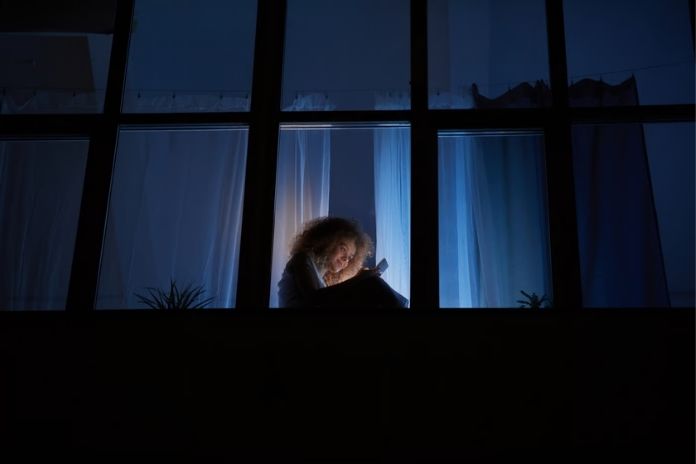
You breathe in oxygen. You breathe out carbon dioxide. That sounds obvious. But now imagine doing that for eight hours inside a closed bedroom. CO₂ keeps building up. Many people assume bedroom air is basically the same quality at midnight and 7 am. It is not.
In a sealed room, especially with two people sleeping, carbon dioxide levels can climb dramatically through the night. Outdoor air today sits around 420 ppm of CO₂. Inside a poorly ventilated bedroom, levels can easily move above 1,000 ppm. In some situations, they can cross 2,000 ppm by morning.
That matters because your body notices. You don’t wake up gasping. You don’t feel suffocated. Instead, the effects are subtle. Sleep becomes fragmented. The body works a little harder to breathe. Sleep continuity gets disturbed. Some people wake more often without remembering it.
Then the next morning, they blame stress, age, work pressure, hormones, and a poor mattress. Meanwhile, the room air was bad all night. ASHRAE research found that the bedroom CO₂ sleep quality relationship is real. Once levels move above 1,000 ppm, sleep quality measurably declines. Very high levels affect next-day cognitive performance too.
What the Danish Field Study Found

The reason this topic needs attention is that researchers actually tested it in real bedrooms. Not in laboratories but in actual homes. A Danish sleep window study looked at bedrooms under different conditions. Windows open versus windows closed. Results were interesting.
When windows remained open, average bedroom CO₂ levels were around 717 ppm. When windows stayed closed, levels increased to around 1,150 ppm. That is a huge difference. Participants reported fresher air. They also reported better sleep quality and improved concentration the following day.
Another field intervention study looking at 29 bedrooms found similar results. When windows were open, indoor air quality improved. Sleep duration increased. People rated sleep quality as better. One detail often missed is that opening only the bedroom door did not create the same benefit.
“Lowering your core body temperature by using cooler air will help you fall asleep faster,” says Dr. James J. Chao, a plastic surgeon. “However, using unfiltered cool air will introduce pollutants (i.e. allergens) that can cause inflammation in your nose, sinuses, and upper airways,” he adds.
Many people think leaving the door open solves ventilation problems. Not really. The important thing is outdoor air exchange. Air needs somewhere to come from. Moving stale air around the house is not the same as bringing fresh air into the room. That distinction matters.
The Temperature Consideration: The Legitimate Counterargument
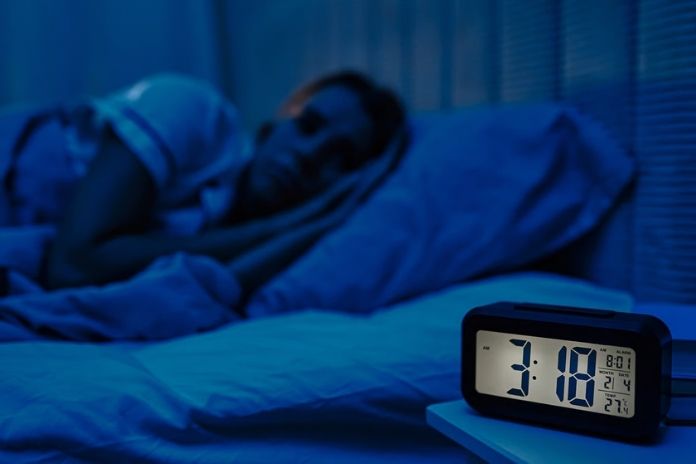
Some articles make open windows sound universally perfect. Reality is a little more complicated. Cold bedrooms are not always better bedrooms. Sleep science consistently shows that body temperature plays a major role in sleep quality. If the room becomes too warm, sleep gets disrupted. But if it becomes too cold, the same thing happens.
The body starts spending energy maintaining temperature instead of focusing on normal sleep processes. Research reviews generally place optimal sleep temperature somewhere between 18°C and 22°C for most adults. Not everyone is identical.
Some like cooler rooms. Some prefer slightly warmer. But once temperatures drop much lower, problems can appear. This is why sleeping with a fully open window during freezing weather is not automatically beneficial.
Ventilation is the goal here. So a partially open window often works best. Enough air movement to keep CO₂ under control helps, but it is not enough to create a cold draft across the bed. People often treat ventilation and temperature like opposite choices. They do not have to be. You can improve both at the same time.
The NO₂ Caveat: When Open Windows Work Against You
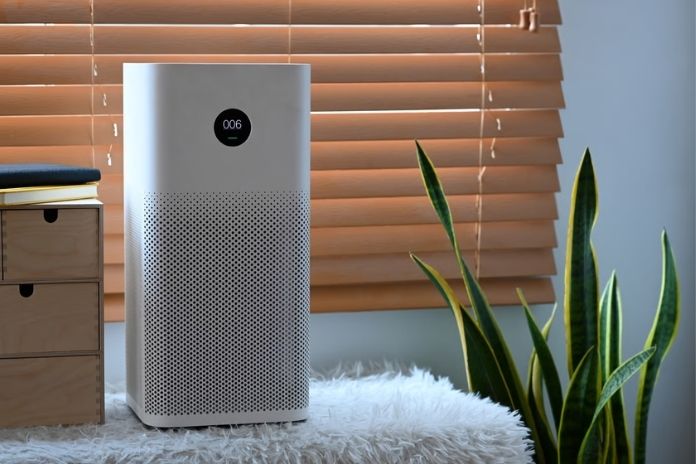
There is one important exception. The “location where you sleep.” If your bedroom faces a quiet garden, courtyard, or low-traffic area, opening windows is usually straightforward. But if your bedroom faces a busy road, the situation changes.
Traffic produces pollutants, including nitrogen dioxide (NO₂). When windows open, some of that pollution enters the room. Research has found that while CO₂ levels improve with window ventilation, NO₂ levels can sometimes rise slightly, depending on the surroundings.
This does not automatically mean closing the window. It means balance matters. For somebody living beside heavy traffic all night, opening the window fully may not be ideal. A partly open window may provide enough ventilation while limiting pollutant exposure.
“If you want to have your window open pre-slumber, setting up an air purifier in your bedroom is a solid play. They’re helpful to filter out any pollutants from outside,” says Dr. Mia Kazanjian, a board-certified radiologist.
Air quality sleep research increasingly shows that not all outdoor air is equal. Where the air comes from matters almost as much as how much enters the room.
Read More: Tryptophan vs. Sleep Apnea: Can Lean Protein Help Support Airway Stability During Sleep?
Optimal Bedroom Conditions for Sleep: The Full Picture
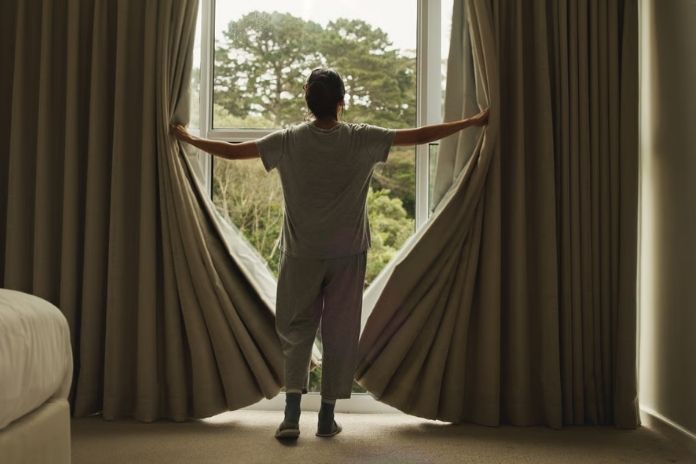
Window ventilation helps. But it is only one part of the sleep environment. Sometimes people open a window, then keep bright lights, a loud TV, and a hot room, and wonder why sleep is still poor.
Sleep quality depends on several things working together. First is temperature. Around 18°C to 22°C tends to work well for most adults. The second is CO₂ control. Below 1,000 ppm is generally considered desirable. Third is darkness.
Even small amounts of light can interfere with melatonin production. Streetlights, blinking electronics, and hallway lights all add up. Fourth is noise. This is where window ventilation sometimes creates a trade-off. More fresh air may also mean more traffic noise. For some people, white noise machines help. Others prefer earplugs.
The point is that one has to focus on reducing the biggest sleep disruptors at the same time. Many people obsess over supplements while sleeping in a hot, bright, noisy, poorly ventilated room. But the environment often comes before supplements.
Read More: How Deep Sleep Affects Muscle Growth, Fat Loss, and Growth Hormone
Conclusion
Sleeping with the window open appears healthy for most people because it improves bedroom ventilation and reduces overnight CO₂ accumulation. Research consistently shows that lower bedroom CO₂ is linked with better sleep quality, fresher air perception, and better next-day performance.
The ideal setup is usually not a fully open window in freezing weather but enough ventilation to keep air moving while maintaining a comfortable bedroom temperature. For many people, this may be one of the simplest sleep improvements available.
FAQs
1. Does sleeping with the window open improve sleep quality?
Yes. Sleeping with the window open can improve sleep quality by increasing bedroom ventilation and lowering carbon dioxide levels. Better air exchange may support longer sleep duration and improved comfort.
2. Is it better to sleep with the window open or closed in winter?
Usually, sleeping with the window open or partially open is better if the bedroom remains comfortably warm. Winter studies suggest that improved ventilation can enhance sleep quality, provided indoor temperature remains within a comfortable range and excessive cold is avoided.
3. Can sleeping with the window open affect allergies or asthma?
Yes. Sleeping with the window open can worsen allergies or allergic asthma by allowing pollen, mold spores, and outdoor air pollutants indoors. People with seasonal allergies should consider local pollen counts and air quality before leaving windows open overnight.
References
- Ahmed, F., & Rahman, S. M. H. (2025). Effect of window openings on indoor air quality and CO2 concentration in classrooms: A Case Study of Primary School, Dhaka. International Journal of Science and Research Archive, 14(1), 400–409.
- ASHRAE. (n.d.). Using Indoor Air Quality Tactics To Sleep Better At Night, Perform Well The Next Day | ashrae.org. Www.ashrae.org.
- Fan, X., Liao, C., Bivolarova, M. P., Sekhar, C., Laverge, J., Lan, L., Mainka, A., Akimoto, M., & Wargocki, P. (2022). A field intervention study of the effects of window and door opening on bedroom IAQ, sleep quality, and next-day cognitive performance. Building and Environment, 225, 109630.
- Harding, E. C., Franks, N. P., & Wisden, W. (2019). The Temperature Dependence of Sleep. Frontiers in Neuroscience, 13(31105512).
- Mishra, A. K., van Ruitenbeek, A. M., Loomans, M. G. L. C., & Kort, H. S. M. (2017). Window/door opening-mediated bedroom ventilation and its impact on sleep quality of healthy, young adults. Indoor Air, 28(2), 339–351.
- Semih Ayta. (2023). THE EFFECT OF AIR POLLUTION AND CLIMATE CHANGE ON SLEEP. Nöropsikiyatri Arşivi.
In this Article