











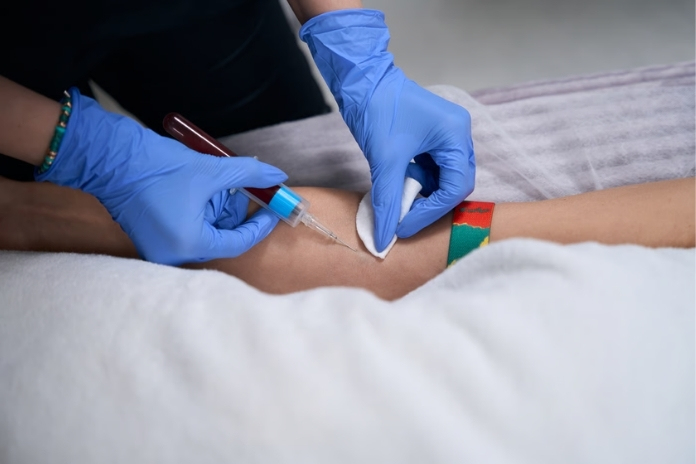
The confusion around cholesterol testing is surprisingly really common. One person does not have breakfast, never takes tea, drinks just water for 12 hours, and then arrives at the lab feeling really hungry. Another person comes in just after having a sandwich and coffee. Both get a cholesterol test. Both may receive perfectly valid results. This is where many patients become confused.
For years, fasting was treated almost like a rule. Then people started hearing that fasting was no longer necessary. Some laboratories stopped insisting on it. Others continued. Different countries adopted different recommendations. Even different doctors in the same city sometimes gave different instructions.
That leaves many people asking the same question: if one test requires fasting and another doesn’t, which one is actually correct? The answer is more interesting than most articles make it seem.
The debate around the fasting vs non-fasting cholesterol test is not really about convenience. It is about how cholesterol is measured, how cardiovascular risk is estimated and how laboratory science has evolved.
- Most people no longer need to fast before a cholesterol test. Older LDL calculation methods were dependent heavily on fasting triglyceride levels, but newer equations have improved non-fasting accuracy.
- Current major guidelines support non-fasting lipid testing for routine cardiovascular risk assessment.
- Fasting is still advisable for hypertriglyceridaemia evaluation, some baseline assessments, and when combined fasting glucose testing is being performed.
Read More: Blood Tests for Heart Disease: Beyond Cholesterol — What Markers Really Matter?
What a Cholesterol Test Actually Measures
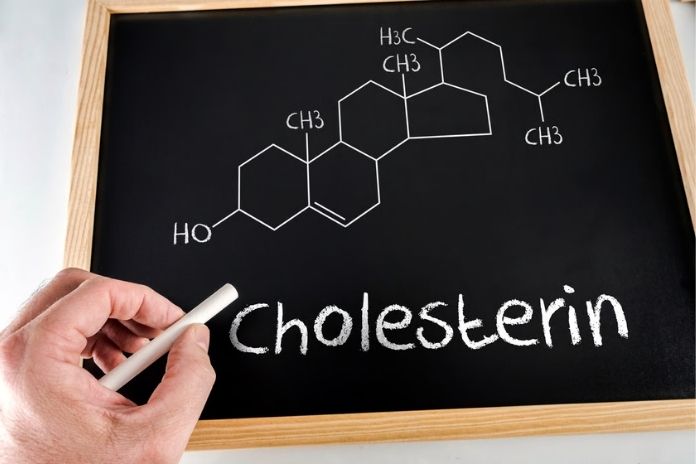
Before discussing fasting, it helps to understand what a lipid panel is actually measuring. Many people think a cholesterol test gives one number. In reality, it gives several. The standard lipid panel contains total cholesterol, LDL cholesterol, HDL cholesterol and triglycerides. Each tells a slightly different story.
LDL cholesterol gets most of the attention because it is the main driver of atherosclerotic cardiovascular disease. Dr. Molly Maloof, a functional medicine physician, says, “LDL is the cholesterol that clogs blood vessels. It is called “bad” cholesterol because it can transport lipids into artery walls and harden the arteries.” When doctors talk about lowering cholesterol, they are usually talking about lowering LDL.
HDL cholesterol works differently. It helps transport cholesterol away from tissues and back toward the liver. Then there are triglycerides. This is where fasting becomes important. Triglycerides are not cholesterol. They are another type of fat circulating in the bloodstream. Unlike LDL and HDL, triglycerides change noticeably after meals.
The lipid panel also allows calculation of something called non-HDL cholesterol. This number receives less public attention, but many lipid specialists like it because it captures all potentially harmful cholesterol-containing particles, not just LDL.
One important detail many patients never hear. LDL cholesterol is often not directly measured. It is usually estimated using mathematical equations based on the other values. And that is where the fasting discussion begins.
Why Fasting Was Originally Required and What Changed

The idea of fasting before a cholesterol test did not appear randomly. There was a technical reason behind it. For decades, most laboratories estimated LDL cholesterol using something called the Friedewald equation.
The equation worked well under many conditions, but had an important assumption built into it. It assumed a fairly predictable relationship between triglycerides and very-low-density lipoprotein cholesterol (VLDL).
That assumption became a problem after meals. When people eat, triglycerides rise. Usually not forever. Typically, they rise over the next few hours and then gradually return toward baseline. Because the Friedewald equation relied partly on triglyceride values, higher post-meal triglycerides could distort the LDL estimate.
This is why fasting lipid panel testing became standard practice. Not because food dramatically changes cholesterol itself. Because food temporarily changes triglycerides. And triglycerides influence the LDL calculation. What changed was mathematics. Researchers developed newer LDL estimation methods that handle triglyceride variation much better.
The Martin-Hopkins equation was one major advance. Later, the Sampson or NIH equation provided another. Instead of assuming a fixed triglyceride-to-VLDL ratio, these methods use more flexible approaches that adapt to individual lipid patterns. That sounds technical. But the practical consequence is simple.
Non-fasting lipid profile results became more reliable. The biggest reason for mandatory fasting became much weaker. Modern equations perform significantly better in real-world patients whose triglyceride levels are not perfectly predictable. So the laboratory science changed. And eventually, the guidelines started changing too.
The 2026 ACC/AHA Guideline: The Most Current Position
One reason the fasting debate still exists is that people often hear recommendations from different eras at the same time. Someone may repeat advice from ten years ago. Another person may be following newer guidelines.
The most recent major guidance comes from the 2026 ACC/AHA dyslipidaemia guideline. Its position is fairly straightforward. For most people, a non-fasting lipid profile is sufficient. That represents a significant shift compared with older practice.
The reasoning is practical as much as scientific. Non-fasting testing is easier. More convenient. People are more likely to complete testing when they do not have to schedule appointments around fasting windows.
Missed tests are a bigger problem than whether someone had breakfast. There is also a biological argument. Most people spend the majority of their day in a fed state, not a fasting state. The arteries do not experience cholesterol only at 7 a.m. before breakfast. They experience cholesterol throughout daily life.
Non-fasting measurements may actually reflect ordinary physiology more closely. This does not mean fasting results are wrong. It means both approaches can provide clinically useful information. For routine cardiovascular risk assessment, the evidence increasingly supports non-fasting testing.
What the 2024 Meta-Analysis of 244,665 Patients Found

One reason confidence in non-fasting testing has grown is the sheer amount of data now available. A 2024 systematic review and meta-analysis examined eight studies involving more than 244,000 participants. That is not a small study. It is the kind of evidence that helps shape guideline recommendations.
Researchers compared fasting and non-fasting lipid measurements across large populations. They found measurable differences. Total cholesterol changed. HDL cholesterol changed. LDL cholesterol showed variations. Triglycerides showed the biggest differences. That last finding was expected.
Triglycerides have always been the most meal-sensitive part of the lipid panel. If someone eats a particularly large or fatty meal, triglycerides may rise quite substantially afterwards. This is not new information.
What matters is the size of the difference. The meta-analysis showed that while statistical differences exist, they are generally small enough that cardiovascular risk assessment remains clinically useful in the non-fasting state. This is an important distinction.
A laboratory difference does not automatically mean a clinically important difference. Many patients hear that results differ slightly and assume one test must therefore be invalid. That is not what the evidence suggests. The exception remains triglycerides. When triglycerides are the main clinical focus, fasting still becomes much more important.
When Fasting IS Still Required

The shift toward non-fasting testing sometimes creates another misunderstanding. People assume fasting is now obsolete. Not true. There are situations where fasting remains the better choice. One of the clearest examples is hypertriglyceridaemia. If triglycerides are already elevated or suspected to be elevated, doctors often want the most precise measurement possible.
Food affects triglycerides more than any other lipid panel component. For this reason, fasting for nine to twelve hours is still commonly recommended. “Fasting ensures your blood test results will not be influenced by foods you eat in the hours before your blood is drawn,” Dr. Robert Krajcik, a family medicine specialist, says. “The results could be affected because the food may not be fully absorbed by your body. You must give it eight to 12 hours to digest.”
Another situation involves treatment planning. Some clinicians prefer a fasting lipid panel before starting statins or other lipid-lowering therapies. Not because non-fasting testing lacks value. Simply because they want baseline measurements collected under highly controlled conditions.
Follow-up testing for triglycerides may also require fasting. When comparing results over time, using the same conditions reduces noise in the data. Otherwise, it becomes harder to know whether a change reflects treatment or simply a different testing state. There is another practical reason. Sometimes cholesterol testing is ordered alongside fasting glucose testing.
Glucose measurement requires fasting. So even if the lipid panel itself does not require fasting, the combined test does. Finally, there is the simplest reason of all. If your doctor specifically requests fasting, follow those instructions. Individual clinical situations sometimes justify different approaches.
Read More: Fibermaxxing for Cholesterol: Why Psyllium Husk May Lower LDL Better Than “Heart-Healthy” Cereals
How to Prepare for a Cholesterol Test: Practical Guidance
Preparation depends on the type of test being performed. If the test is non-fasting, life remains fairly normal. Eat as you usually would. Drink water normally. Take medications unless specifically instructed otherwise. The key point is avoiding unusual behaviour.
Some people hear about a cholesterol test and suddenly eat an extremely healthy dinner the night before. Others avoid food completely despite being told fasting is unnecessary. Neither approach helps.
The goal is to measure your usual lipid profile. Not a special version created for the test. If fasting is required, most laboratories recommend nine to twelve hours without food. Water is encouraged. Hydration helps blood collection and does not meaningfully affect lipid results. Black coffee is generally acceptable as well, provided it contains no milk, cream, or sugar.
Alcohol deserves separate mention. Whether fasting or non-fasting, avoiding alcohol for roughly 24 hours beforehand is sensible because alcohol can significantly raise triglyceride levels. One final practical tip. Always confirm requirements with the laboratory or healthcare provider beforehand. Policies still vary. Assumptions create unnecessary repeat visits.
Does It Matter Which Method Your Doctor Uses?
For a single cholesterol test, usually not. For comparing multiple cholesterol tests over time, yes. This is where many patients unknowingly create confusion. Imagine someone has a fasting lipid panel this year and a non-fasting lipid panel next year.
The numbers may differ slightly even if their actual cardiovascular risk has not changed much. That does not mean either result is wrong. The testing conditions changed. Doctors are often more interested in trends than isolated measurements.
Response to treatment is typically assessed through percentage reductions in LDL cholesterol, achievement of LDL goals, and achievement of non-HDL cholesterol goals. These comparisons become easier when testing conditions remain consistent.
In other words, the question is not necessarily fasting versus non-fasting. The more useful question may be whether you are comparing similar tests with similar tests. Consistency improves interpretation. That matters more than many people realise.
Read More: Statins: Everything You Need to Know About Cholesterol-Lowering Drugs
Conclusion
The confusion around fasting versus non-fasting cholesterol testing comes from the fact that medical practice changed faster than public understanding. Current evidence and major guidelines support non-fasting lipid profiles for most routine cholesterol assessments because they are accurate, practical, and improve testing adherence.
Fasting still has an important role when triglycerides require precise measurement or when specific clinical circumstances exist. When uncertain, the simplest solution remains the best one: ask the doctor or laboratory before your appointment.
- The fasting requirement for cholesterol testing was largely driven by limitations of older LDL calculation methods.
- Modern LDL estimation equations, such as Martin-Hopkins and Sampson, have reduced many of the historical accuracy concerns around non-fasting testing.
- Non-HDL cholesterol captures multiple atherogenic lipoproteins and performs well regardless of fasting status.
- One research gap still being explored is whether specific meal types before testing influence cardiovascular risk prediction differently despite similar cholesterol values.
- Patient convenience is not a minor issue. Easier testing often means better long-term screening adherence, which may have a greater public health impact than small laboratory differences.
FAQs
1. Do you need to fast for a cholesterol test?
No, fasting is usually not required for a cholesterol test in routine assessment. Most guidelines accept non-fasting lipid profiles for cardiovascular risk evaluation. Fasting may still be advised for high triglycerides, combined glucose testing, or specific clinical situations.
2. How long should I fast before a cholesterol blood test?
If fasting is required, you should fast for nine to twelve hours before a cholesterol blood test. Water is allowed and recommended. Black coffee may be acceptable, but alcohol should be avoided for at least 24 hours due to its effect on triglycerides.
3. Are non-fasting cholesterol tests accurate?
Yes, non-fasting cholesterol tests are generally accurate for routine cardiovascular risk assessment. Modern calculation methods improve LDL estimation without fasting. However, fasting may still be needed when triglycerides are very high or when results appear clinically inconsistent.
References
- Blumenthal, R. S., Morris, P. B., Gaudino, M., Johnson, H. M., Anderson, T. S., Bittner, V. A., Blankstein, R., Brewer, L. C., Cho, L., de Ferranti, S. D., Gianos, E., Gluckman, T. J., Gradney, K. F., Isiadinso, I., Lloyd-Jones, D. M., Marrs, J. C., Martin, S. S., McLain, K. H., Mehta, L. S., & Mora, S. (2026). 2026 ACC/AHA/AACVPR/ABC/ACPM/ADA/AGS/APhA/ASPC/NLA/PCNA Guideline on the Management of Dyslipidemia: A Report of the American College of Cardiology/American Heart Association Joint Committee on Clinical Practice Guidelines. Circulation.
- Farukhi, Z., & Mora, S. (2021). Assessing the dyslipidemias: to fast or not to fast? Current Opinion in Endocrinology, Diabetes & Obesity, 28(2), 97–103.
- Györfi, I., Oprea, O. R., Mănescu, I. B., Curici, A., & Dobreanu, M. (2025). Comparative Evaluation of 24 LDL-C Estimation Equations Against Direct Assays in Two Independent Cohorts. Diagnostics, 15(18), 2298.
- Kannan, S., Mahadevan, S., Ramji, B., Jayapaul, M., & Kumaravel, V. (2014). LDL-cholesterol: Friedewald calculated versus direct measurement-study from a large Indian laboratory database. Indian Journal of Endocrinology and Metabolism, 18(4), 502–504.
- Naugler, C., & Sidhu, D. (2014). Break the fast? Update on patient preparation for cholesterol testing. Canadian Family Physician, 60(10), 895.
- Suzuki, T., Fukui, S., Shinozaki, T., Asano, T., Yoshida, T., Aoki, J., & Mizuno, A. (2025). Lipid Profiles After Changes in Alcohol Consumption Among Adults Undergoing Annual Checkups. JAMA Network Open, 8(3), e250583.
- Zaid, A. B., Awad, S. M., El-Abd, M. G., Saied, S. A., Almahdy, S. K., Saied, A. A., Elmalawany, A. M., AboShabaan, H. S., & Saleh, H. S. (2024). Unraveling the controversy between fasting and nonfasting lipid testing in a normal population: a systematic review and meta-analysis of 244,665 participants. Lipids in Health and Disease, 23(1).
In this Article