










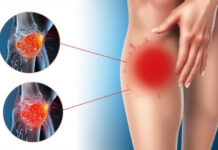








It starts with an itch along the jaw or a patch of red skin on the forearm that appears just as the sneezing starts. Most people associate hay fever with the nose and eyes, and for good reason. But for some, the allergic response extends beyond the skin, appearing as redness, raised bumps, or patches that itch intensely during peak pollen season.
Allergic rhinitis, the clinical name for hay fever, affects roughly 20 to 30 percent of adults in the United States. Not everyone with hay fever develops a hay fever rash, but skin symptoms are a documented and underappreciated dimension of the same immune response driving nasal and ocular symptoms.
Understanding what causes these reactions, what they look like, and how to treat them effectively can make a meaningful difference during allergy season and beyond. This article covers the science behind allergic rhinitis skin rash, the different types of skin reactions that can occur, how to distinguish them from other conditions, and what both over-the-counter and clinical approaches can offer.
- Hay fever can cause skin reactions, including hives, contact dermatitis, and eczema flare-ups, all driven by the same histamine-mediated immune response that produces nasal symptoms.
- Skin symptoms typically appear on exposed areas such as the face, neck, and arms, often after direct or airborne contact with pollen.
- Second-generation antihistamines, gentle skincare, barrier creams, and allergen avoidance are the cornerstones of managing a pollen allergy rash..
- Persistent, worsening, or recurrent rashes warrant allergy testing and specialist evaluation to rule out other causes and guide long-term management.
Read More: 12 Home Remedies For Hay Fever – Get Those Sneezes Out
Can Hay Fever Cause a Rash?
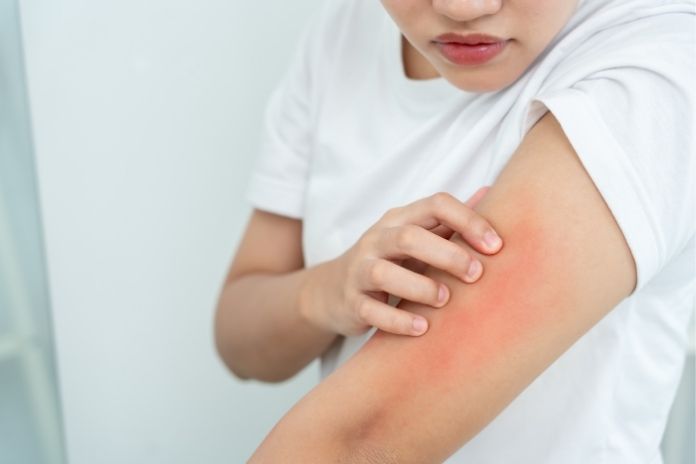
Yes, hay fever can cause a rash, though it is less common than nasal and eye symptoms. The mechanism is the same: when the immune system detects an allergen such as pollen, mast cells release histamine and other chemical mediators. In the nose and eyes, this causes sneezing and watering. In the skin, histamine release triggers vasodilation, increased vascular permeability, and pruritus, the clinical triad that produces visible skin reactions.
A review published in the Journal of Allergy and Clinical Immunology confirmed that in the skin, the cardinal features of urticaria, including vasodilation, vascular permeability, and pruritus, are mediated through stimulation of the histamine H1 receptor. This is the same receptor pathway blocked by antihistamine medications.
Dr. Clifford Bassett, an allergist and immunologist at Schweiger Dermatology Group and author of The New Allergy Solution, explains the broader picture: “Allergic rhinitis, commonly known as hay fever, occurs when your immune system overreacts to harmless substances like pollen.” The resulting histamine release can cause inflammation beyond the nasal passages, reaching the skin in susceptible individuals.
Not everyone with hay fever will develop skin symptoms. Genetic predisposition, skin barrier integrity, and total allergen load all influence whether the immune response recruits the skin. People with atopy, a broader tendency toward allergic conditions including asthma, eczema, and hay fever, are more likely to experience skin involvement.
What Does a Hay Fever Rash Look Like?
A pollen allergy rash does not have a single fixed appearance. The presentation depends on the type of allergic skin response involved.
Red, itchy patches are the most common presentation, appearing as areas of flushed, inflamed skin that may feel warm to the touch. These can be localized or spread across a wider area, depending on the intensity of allergen exposure and the immune response. Small raised bumps, similar in appearance to hives but sometimes finer, may form on exposed skin and cause persistent itching.
In some cases, the skin becomes dry and irritated without obvious welts, presenting more like a rough or sensitive texture rather than distinct lesions. This is particularly common when airborne pollen repeatedly settles on the face over hours of outdoor exposure.
The face is frequently affected, especially around the eyes, forehead, and chin. The neck, forearms, and any exposed skin are also common sites. Areas under clothing are typically spared, a clinically useful distinguishing feature. The rash usually appears within minutes to hours of allergen exposure and may resolve within hours to days, depending on continued exposure.
Types of Skin Reactions Linked to Hay Fever
Hives (Urticaria)
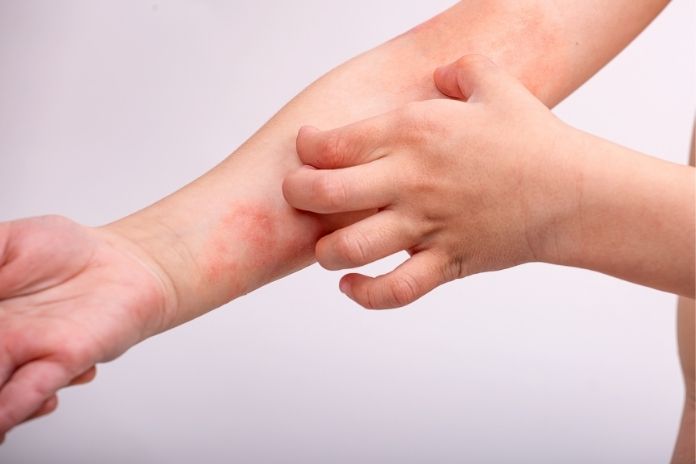
Hives are among the most recognizable allergic skin reactions. They present as raised, clearly defined welts that appear suddenly, itch intensely, and characteristically turn white when pressed in the center. Individual hives typically resolve within 24 hours, but new ones may continue to form as long as allergen exposure persists.
Pollen exposure is a documented trigger for urticaria during peak allergy seasons. Dr. Florence Ida Hsu, assistant professor of Clinical Medicine at Yale School of Medicine, explains that “everyone with hay fever has mast cells that get activated by allergen, i.e., pollen, exposure,” and that this activation releases histamine and other mediators that produce urticarial skin reactions.
Contact Dermatitis
Contact dermatitis occurs when an allergen comes into direct physical contact with the skin. During hay fever season, this most commonly happens when pollen settles on exposed skin during outdoor activities like gardening, exercising, or sitting in grassy areas.
The rash produced by allergic contact dermatitis tends to be localized to exact areas of contact. It presents as redness, swelling, and sometimes small blisters that itch intensely. The face, forearms, and hands are most often affected. Concentration on exposed areas with sharp borders corresponding to clothing lines is a clinically useful distinguishing feature that separates it from systemic allergic reactions.
Eczema Flare-Ups
Hay fever does not cause eczema, but it can significantly worsen existing atopic dermatitis in people who already have it. The connection is rooted in shared immunology: atopic dermatitis, allergic rhinitis, and asthma are all expressions of the same atopic tendency, often appearing together or progressing in sequence, a phenomenon known as the atopic march.
Research supports this link directly. A controlled study in the Journal of Allergy and Clinical Immunology found that exposure to grass pollen significantly worsened atopic dermatitis, with pronounced eczema flare-ups occurring specifically on air-exposed rather than covered skin. This provides experimental evidence that airborne pollen contacts the skin and provokes localized immune reactions in sensitized individuals.
What Triggers a Hay Fever Rash?
The same outdoor allergens that cause nasal symptoms also trigger skin reactions. Tree pollens, prominent in early spring; grass pollens, peaking in late spring through summer; and weed pollens, especially ragweed, dominating late summer through fall, are the primary seasonal triggers. Hot, dry, and windy days tend to have higher pollen concentrations, making reactions more severe.
Indoor allergens, including dust mites and pet dander, also produce skin reactions in sensitized people and are relevant year-round. These explain why some individuals experience itchy rash symptoms outside of the traditional pollen season.
Environmental factors compound seasonal skin responses. Heat and sweat lower the skin’s tolerance threshold, making reactions more likely. Pollution interacts with pollen particles, potentially amplifying their immunogenic potential. Friction from clothing and prolonged sun exposure also compromise the skin barrier, reducing its capacity to exclude allergens.
Hay Fever Rash vs. Other Skin Conditions
Several common skin conditions can appear similar to an allergic rhinitis skin rash. Distinguishing between them matters for treatment.
Eczema, when not allergen-triggered, typically appears in the body’s flexural folds: the insides of the elbows, the backs of the knees, and the insides of the wrists. It tends to be chronic, dry, and scaly. A hay fever rash predominantly appears on exposed areas and has a clear seasonal or exposure-based pattern. It is also more likely to present acutely as raised or urticarial.
Heat rash is caused by blocked sweat glands, not immune activation, and produces small, prickly red bumps in sweating-prone areas: the torso, back of the neck, and skin folds. It responds to heat and humidity rather than to allergens, and it lacks the sharp, histamine-driven itch.
An infectious rash is typically accompanied by fever, fatigue, or progressive spreading that does not correlate with outdoor exposure. Timing remains the most reliable clinical clue: if rash symptoms consistently appear or worsen during specific pollen seasons, improve indoors, and correlate with nasal or eye symptoms, a pollen allergy rash is the probable cause.
How to Treat a Hay Fever Rash
Over-the-Counter Options
Second-generation oral antihistamines are the first-line treatment for itchy rashes during hay fever. Cetirizine, loratadine, fexofenadine, and levocetirizine block the H1 receptor, reducing histamine’s ability to drive skin inflammation, vasodilation, and pruritus. These are preferred over first-generation antihistamines such as diphenhydramine because they are non-sedating and suitable for consistent daytime use throughout allergy season.
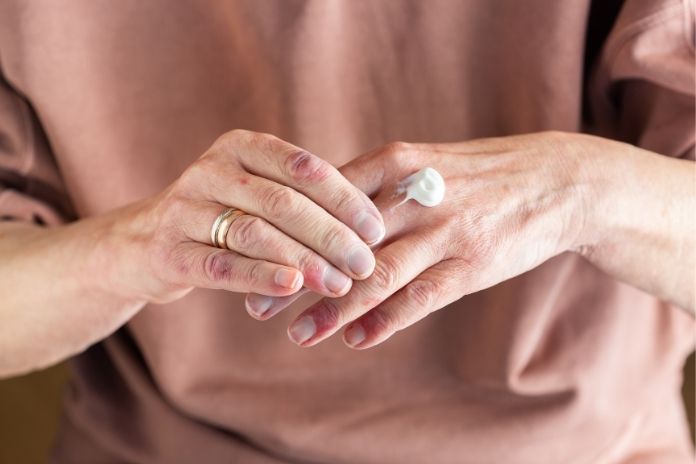
For localized redness and itching, over-the-counter hydrocortisone 1% cream reduces inflammation when applied to affected areas for limited periods. Colloidal oatmeal lotions and calamine lotion provide symptomatic soothing for mild or diffuse reactions without the steroid load.
Prescription Treatments
When antihistamines do not provide adequate control, a physician may prescribe higher-dose antihistamines, combination regimens, or short courses of oral corticosteroids for acute, severe reactions. Topical corticosteroid creams of medium to high potency can be prescribed for contact dermatitis or pollen-triggered eczema flare-ups. These reduce localized inflammation more effectively than over-the-counter hydrocortisone but require appropriate duration limits.
Gentle Skincare Practices
During pollen season, the skin barrier is the first line of defense against allergen penetration. Fragrance-free, hypoallergenic cleansers remove surface pollen without stripping natural skin lipids. Washing exposed skin promptly after outdoor time removes allergen deposits before they provoke sustained reactions.
Thick, ceramide-containing moisturizers repair and reinforce the barrier, reducing permeability to airborne allergens. Exfoliating or harsh formulations should be avoided during active flare-ups, as they can worsen barrier disruption and reactive skin.
Practical Ways to Prevent Flare-Ups
Reducing pollen exposure is the most effective upstream intervention. Monitoring daily pollen counts and limiting outdoor time on high-count days, particularly in the morning when pollen peaks, reduces the allergen dose reaching both the airways and the skin.
Showering promptly after outdoor activities removes pollen deposited on skin, hair, and clothing before it can provoke further reactions. Changing clothes after returning indoors prevents tracked-in pollen from continuing to come into contact with the skin. Wearing long sleeves and loose, breathable fabrics during high-pollen periods reduces direct skin-to-pollen contact on exposed areas.
Barrier creams applied to the face and exposed skin before outdoor activities create a physical layer that limits pollen adherence and reduces the likelihood of contact-triggered reactions. Keeping windows closed and using HEPA-filtered air conditioning reduces indoor allergen accumulation. Wiping down surfaces and washing bedding more frequently during peak season further limits ongoing exposure.
When to See a Doctor
Mild, predictable seasonal rashes that respond to antihistamines and improve with allergen avoidance can often be managed at home. Medical evaluation is warranted when the rash is severe, covers large areas of the skin, involves blistering or skin breakdown, or is accompanied by systemic symptoms.
Rashes that do not respond to two to three weeks of consistent over-the-counter treatment should be evaluated. A dermatologist or allergist can determine whether the reaction is truly allergy-related or whether another condition, such as an autoimmune skin disease or a different form of dermatitis, is responsible.
Signs of secondary skin infection, including increasing warmth, pain, yellow or green discharge, or fever, require prompt medical attention. Repeatedly scratching a rash can introduce bacteria into compromised skin. Bassett emphasizes that understanding what you are allergic to is “the key to taking back control,” and that consulting an allergist enables targeted, effective management of both respiratory and skin allergy symptoms.
Can Hay Fever Rash Be Prevented Long-Term?

Allergen immunotherapy, via subcutaneous allergy shots or sublingual tablets, is the most established approach to reducing long-term allergic sensitivity. By gradually exposing the immune system to increasing doses of a confirmed allergen, immunotherapy shifts the immune response from a reactive to a tolerant state.
A 2025 study in Frontiers in Immunology noted that allergen immunotherapy provides meaningful long-term benefits in both allergic rhinitis and urticaria when treatment is matched to confirmed sensitivities.
Bassett notes that allergen immunotherapy can “gradually desensitize patients to specific allergens, providing long-term relief” from both nasal and skin symptoms. Sublingual immunotherapy for grass and ragweed pollen is available without injections and is a practical option for many patients who prefer avoiding regular shots.
For people with co-existing eczema and hay fever, starting emollient therapy and maintaining a consistent skin barrier before pollen season, rather than reacting to flares, reliably reduces seasonal severity. Daily moisturizing with a ceramide-rich product thickens the barrier over time, making it less permeable to airborne allergens.
Key Takeaway
Hay fever primarily affects the respiratory system, but for many people, the immune response can spread to the skin. Hives, contact dermatitis, and pollen-triggered eczema flare-ups are all documented manifestations of the same histamine-driven allergic response responsible for sneezing and watery eyes.
Identifying the pattern, seasonal timing, correlation with allergen exposure, and location on exposed skin provides strong evidence that a rash is allergy-related rather than caused by infection or a separate skin condition. Treatment for hay fever rash is effective: antihistamines reduce the histamine response at its source, gentle skincare maintains the barrier, and allergen avoidance reduces the overall immune burden.
For those whose allergic rhinitis skin rash recurs every season, worsens despite management, or significantly affects quality of life, allergy testing and specialist care open the door to targeted, long-term solutions. Managing skin symptoms is an extension of managing the allergy itself, and with the right approach, meaningful relief is consistently achievable.
FAQs
Can hay fever cause a skin rash?
Yes. Hay fever triggers systemic histamine release that can spread to the skin, causing rashes such as hives, contact dermatitis, and eczema flare-ups. Skin symptoms are more likely in people with atopic conditions and typically appear on exposed areas during peak pollen season.
What does a hay fever rash look like?
It most commonly appears as red, itchy patches or raised welts on exposed skin such as the face, neck, and forearms. Hives produced by hay fever are raised, clearly bordered welts that turn white when pressed and resolve within 24 hours, though new ones may continue to appear during ongoing allergen exposure.
What is the best treatment for a pollen allergy rash?
Second-generation oral antihistamines such as cetirizine, loratadine, or fexofenadine are the first-line treatment. Hydrocortisone 1% cream can be applied topically to localized areas. If over-the-counter options are insufficient, a physician can prescribe prescription-strength topical steroids or short-course oral corticosteroids.
How do I know if my rash is from hay fever or something else?
Timing is the most reliable indicator. A hay fever rash typically appears or worsens during specific pollen seasons, improves when indoors or after showering, and occurs on exposed skin alongside nasal and eye symptoms. Rashes with no seasonal pattern, body-fold involvement, fever, or progressive spread are more likely to have another cause.
Can hay fever rash be prevented?
Reducing pollen exposure through monitoring pollen counts, showering after outdoor time, wearing protective clothing, and using barrier creams lowers the risk of skin reactions. Long-term prevention through allergen immunotherapy can reduce sensitivity to specific pollens and decrease both respiratory and skin symptoms.
References
- Bassett, C. (2025). Expert commentary on hay fever, mast cells, and histamine response. Newsweek.
- Hsu, F. I. (2025). Expert commentary on mast cell activation and hay fever. Newsweek.
- Kulthanan, K., Church, M. K., Hawro, T., et al. (2022). Evidence for histamine release in chronic inducible urticaria: A systematic review. Frontiers in Immunology, 13, 901851.
- Murota, H., & Katayama, I. (2011). Assessment of antihistamines in the treatment of skin allergies. Current Opinion in Allergy and Clinical Immunology, 11(5), 428-437.
- Rhyner, C., et al. (2015). Exacerbation of atopic dermatitis on grass pollen exposure in an environmental challenge chamber. Journal of Allergy and Clinical Immunology, 136(1), 96-103.
- Simons, F. E. R. (1992). The role of histamine in allergic diseases. Journal of Allergy and Clinical Immunology, 86(4 Pt 2), 628-632.
- Thongsupap, T., et al. (2025). Allergic rhinitis and urticaria burden and antihistamine treatment options in Thailand: A modified Delphi study. Frontiers in Immunology, 16, 1591402.
- Usatine, R. P., & Riojas, M. (2010). Diagnosis and management of contact dermatitis. American Family Physician, 82(3), 249-255.
In this Article