


















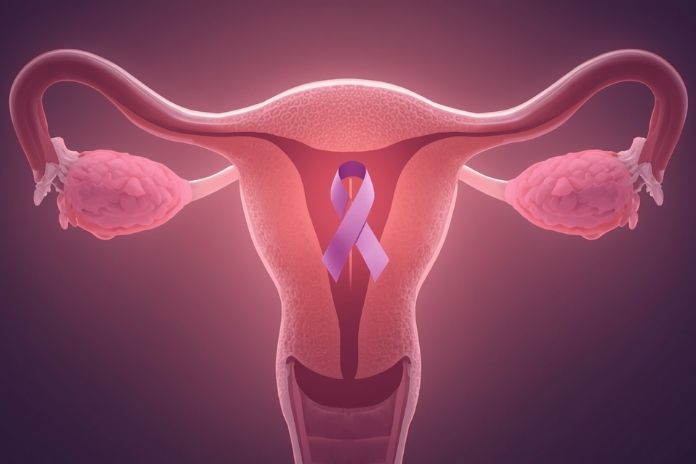
PCOS and endometrial cancer are closely linked because both involve hormonal imbalance and abnormal changes in the uterine lining. Many people wonder, can PCOS cause endometrial cancer?
PCOS itself does not directly cause cancer, but it can increase the risk over time due to irregular ovulation and prolonged exposure to estrogen without enough progesterone. Both conditions may share symptoms such as irregular periods, heavy bleeding, and fertility issues, which can make diagnosis difficult.
However, warning signs such as bleeding after menopause, persistent pelvic pain, unusually heavy bleeding, or sudden menstrual changes should never be ignored, as they may point to endometrial cancer rather than PCOS alone.
Read More: PCOS Belly Fat: Why It Happens and How to Reduce It Naturally
- PCOS and endometrial cancer share symptoms such as irregular periods, heavy bleeding, and pelvic discomfort, making an accurate diagnosis essential.
- Long-term irregular ovulation in PCOS can increase endometrial cancer risk because excess estrogen continuously stimulates the uterine lining.
- Warning signs such as postmenopausal bleeding, worsening bleeding patterns, persistent pelvic pain, or treatment-resistant symptoms should never be ignored.
Why PCOS and Endometrial Cancer Overlap — the Shared Biology

PCOS and endometrial cancer share hormonal pathways, making abnormal bleeding and irregular periods important symptoms that should never be ignored.
Hormonal Imbalance and Irregular Ovulation
The connection between PCOS and endometrial cancer begins with chronic anovulation, a common feature of PCOS where the ovaries do not release eggs regularly. This is why PCOS anovulation cancer risk has become an important area of medical research.
Normally, ovulation triggers progesterone production, which balances estrogen and helps the uterine lining shed during menstruation. Without regular ovulation, progesterone levels remain low while estrogen continues stimulating the uterine lining.
How the Uterine Lining Changes
Over time, constant estrogen exposure can cause the uterine lining to thicken excessively, a condition called endometrial hyperplasia. Many women with PCOS may also develop progesterone resistance, meaning the uterine lining does not respond properly to hormones that control its growth.
Why the Risk Increases
This hormonal imbalance explains the growing concern around PCOS and endometrial cancer risk. Both conditions can share symptoms like irregular periods and heavy bleeding. If these abnormal changes continue untreated for years, they may increase the likelihood of developing endometrial cancer.
“PCOS does increase the risk of endometrial cancer,” Kristina Butler, M.D., a Mayo Clinic Comprehensive Cancer Center gynecologic oncologist, says. That’s because patients with PCOS may miss menstrual cycles. “This, over time, can lead to thickening of the uterine lining and can predispose a woman to get endometrial cancer,” she explains.
Read More: Perimenopause vs. PCOS: Overlapping Symptoms You Shouldn’t Ignore
The Cancer Risk — How Much Does PCOS Increase It?

PCOS can significantly increase endometrial cancer risk, especially when abnormal bleeding and irregular menstrual cycles remain untreated for many years.
A Higher Risk Than Many Realize
Research consistently shows that women with PCOS have a significantly higher chance of developing endometrial cancer compared to those without the condition. Discussions around endometrial cancer vs PCOS are important because both conditions can involve abnormal bleeding and hormonal imbalance, yet one carries a serious cancer risk.
Studies estimate that women with PCOS may face nearly three times higher risk due to prolonged estrogen exposure affecting the uterine lining.
Why Premenopausal Women Need Attention
The risk appears especially high in younger women, making endometrial cancer premenopausal cases increasingly important for doctors to recognize. Although endometrial cancer is often linked to menopause, PCOS can change that expectation.
Symptoms Should Never Be Ignored
Irregular periods, heavy bleeding, or prolonged bleeding should never be dismissed as “just PCOS.” Persistent abnormal bleeding may sometimes indicate precancerous changes or early endometrial cancer and requires proper medical evaluation.
“Having PCOS does not mean you will get endometrial cancer, but it’s a reason to be proactive and aware of symptoms,” said Eleonora Teplinsky, MD, an American Society of Clinical Oncology expert and Head of Breast and Gynecologic Medical Oncology at Valley Health System.
Read More: Endometriosis vs. PCOS: What’s the Difference?
Overlapping Symptoms — What Both Conditions Can Cause

Irregular menstrual cycles and abnormal bleeding can appear in both PCOS and endometrial cancer, making proper diagnosis especially important early.
Irregular Periods and Abnormal Bleeding
A major reason doctors investigate irregular bleeding, PCOS, or cancer carefully is that all three conditions can produce similar menstrual symptoms. Irregular periods caused by endometrial cancer may look very similar to cycle changes in PCOS.
Periods can become unpredictable, extremely heavy, prolonged, or disappear for months. Abnormal uterine bleeding in PCOS cases often happens because the uterine lining builds up without regular shedding, while cancer-related bleeding may result from abnormal tissue growth inside the uterus.
Pelvic Pain, Weight Gain, and Fertility Issues
Pelvic discomfort or pressure may occur in both PCOS and endometrial cancer, although persistent pain is usually more concerning in cancer cases. Weight gain and obesity are strongly linked to both conditions because excess fat tissue increases estrogen production.
Fertility problems are also common. In PCOS, infertility mainly develops from irregular ovulation, while endometrial cancer can affect the uterine lining and implantation.
Symptoms More Specific to PCOS
Some symptoms are more closely linked to PCOS than endometrial cancer. Elevated androgen levels may cause acne, excess facial or body hair, and hair thinning, helping doctors distinguish PCOS from cancer-related conditions.
Read More: Top PCOS-Friendly Protein Powders for Energy & Metabolism Support
Symptoms That Point Toward Endometrial Cancer Rather Than PCOS

Abnormal bleeding, pelvic pain, and menstrual changes can overlap in PCOS and endometrial cancer, making symptom recognition extremely important.
Bleeding Changes That Should Never Be Ignored
Understanding PCOS symptoms vs endometrial cancer is important because certain bleeding patterns are more strongly linked to cancer. Bleeding after menopause is a major warning sign since PCOS mainly affects reproductive-age women.
New or suddenly worsening bleeding in someone with previously stable PCOS symptoms also requires urgent medical attention. Bleeding that continues despite hormonal or progesterone treatment may suggest abnormal changes in the uterine lining rather than routine PCOS symptoms.
These symptoms can be important warning signs of both PCOS and possible endometrial cancer and should never be ignored.
Other Concerning Symptoms
When comparing PCOS vs uterine cancer symptoms, unexplained weight loss is more concerning for cancer because it is not commonly linked to PCOS.
Persistent pelvic pain, pressure, or a uterine mass may also point toward endometrial cancer rather than ovarian cysts associated with PCOS.
Age and Cancer Risk
Women over 45 with new irregular bleeding have a higher risk of endometrial cancer than younger women with longstanding PCOS-related menstrual irregularities.
Read More: Understanding Insulin Resistance in the Context of PCOS
Diagnosis — How Each Condition Is Confirmed and Why Both Need Assessment

Proper diagnosis is essential because PCOS and endometrial cancer can share symptoms, yet require very different medical evaluation and treatment.
How PCOS Is Diagnosed
Doctors usually diagnose PCOS and endometrial cancer differently because the conditions affect the body in distinct ways. PCOS is commonly diagnosed using the Rotterdam criteria.
A person generally needs at least two signs: irregular ovulation, elevated androgen levels causing symptoms like acne or excess hair growth, and multiple ovarian cysts visible on ultrasound. Diagnosis mainly focuses on hormones and ovarian function rather than direct examination of the uterine lining.
How Endometrial Cancer Is Confirmed
Endometrial cancer is confirmed through an endometrial biopsy, where tissue from the uterine lining is tested for abnormal cells. Transvaginal ultrasound PCOS cancer evaluation is also important because doctors can measure endometrial thickness in women with abnormal bleeding.
Why Monitoring Matters
Regular PCOS cancer screening becomes important for women who go months without periods. Doctors may recommend progesterone-based treatment to trigger bleeding, reduce uterine lining buildup, and lower long-term cancer risk.
Read More: 16 Home Remedies For PCOS
When to See a Doctor — the Non-Negotiable Triggers

Long-term hormonal imbalance in PCOS can lead to changes in the uterine lining, making unusual bleeding patterns important signs that should be medically evaluated.
Bleeding Changes That Need Attention
Women with PCOS endometrial hyperplasia risk should see a doctor if bleeding becomes heavier, more frequent, unusually prolonged, or different from their usual pattern.
Going more than three months without a period without hormonal treatment may increase the risk of uterine lining buildup linked to unopposed estrogen endometrial cancer.
Symptoms That Should Never Be Ignored
Bleeding after age 45 or any postmenopausal bleeding should always be investigated, regardless of PCOS history. Persistent pelvic pain, unexplained weight loss, or a new pelvic mass alongside bleeding changes may signal serious uterine disease.
In some cases, doctors may recommend an endometrial biopsy or PCOS evaluation to check for abnormal or precancerous cells in the uterine lining.
Read More: How to Lose Weight with PCOS? 15 Science-Backed Ways for Better Recovery
FAQs
1. Can PCOS cause endometrial cancer?
PCOS does not directly cause endometrial cancer, but significantly increases the risk through chronic anovulation and unopposed estrogen, stimulating the uterine lining. A 2024 nationwide cohort study found women with PCOS had three times the risk of endometrial cancer compared with women without PCOS, and seven times the risk in premenopausal women specifically. The risk is real but manageable with appropriate monitoring and hormonal management.
2. How do I know if my irregular bleeding is PCOS or cancer?
Irregular bleeding in PCOS is typically longstanding and consistent with your established pattern. Bleeding that represents a change, heavier, more frequent, more prolonged, or new, is more suspicious. Bleeding that does not respond to progestogen treatment, occurs after menopause, or accompanies weight loss or pelvic pain warrants an endometrial biopsy to rule out cancer. A clinical assessment, not a self-assessment, is the only way to reliably distinguish them.
3. Should women with PCOS be screened for endometrial cancer?
There is no universal PCOS-specific endometrial cancer screening program, but women with PCOS who have infrequent periods are recommended to induce regular withdrawal bleeds with progestogen to prevent endometrial build-up. Women with PCOS and risk factors (obesity, diabetes, family history, age over 35 with persistent anovulation) should discuss endometrial surveillance with their gynecologist. Any new or changed bleeding should be investigated promptly rather than managed empirically.
4. Is endometrial cancer more common in young women with PCOS?
The 2024 Danish cohort study found the greatest elevation in endometrial cancer risk was in premenopausal women with PCOS, with a hazard ratio of 7.0 compared with premenopausal women without PCOS. This finding challenges the assumption that endometrial cancer is primarily a postmenopausal disease; in the context of PCOS, risk is meaningfully elevated in reproductive-age women. Younger women with PCOS should not assume abnormal bleeding is benign without assessment.
Conclusion
PCOS and endometrial cancer are different conditions, but they are strongly connected through hormonal imbalance and abnormal uterine lining changes. Because both can cause irregular or heavy bleeding, it is easy to mistake serious symptoms for routine PCOS problems.
However, persistent, worsening, or treatment-resistant bleeding should never be ignored, especially in women with long-standing PCOS. Early evaluation, including ultrasound or endometrial testing when needed, can help detect precancerous changes before cancer develops.
Paying attention to changes in menstrual patterns and seeking medical advice early can significantly improve diagnosis, treatment, and long-term outcomes.
References
- How PCOS can impact cancer risk. (2025, September 24). American Cancer Society.
- Oncology, H. (2025, August 29). Endometrial cancer – causes, symptoms, and treatment options | HCG Oncology. HCG.
- Mayo Clinic Staff. (n.d.). Polycystic ovary syndrome (PCOS): Diagnosis and treatment.
- Barry, J. A., Azizia, M. M., & Hardiman, P. J. (2014). Risk of endometrial, ovarian and breast cancer in women with polycystic ovary syndrome: A systematic review and meta-analysis. Human Reproduction Update, 20(5), 748–758.
- Winfrey, S., Valdez-Rojas, L., & myEndometrialCancerTeam. (2025, January 6). PCOS and endometrial cancer: How are they related? MyEndometrialCancerTeam.
- Ding, D., Chen, W., Wang, J., & Lin, S. (2018). Association between polycystic ovarian syndrome and endometrial, ovarian, and breast cancer. Medicine, 97(39), e12608.
- Shetty, C., Rizvi, S. M. H. A., Sharaf, J., Williams, K. D., Tariq, M., Acharekar, M. V., Saldivia, S. E. G., Unnikrishnan, S. N., Chavarria, Y. Y., Akindele, A. O., Jalkh, A. P. C., Eastmond, A. K., & Hamid, P. (2023). Risk of gynecological cancers in women with polycystic ovary syndrome and the pathophysiology of association. Cureus, 15(4), e37266.
- Huffman, E. (2025, May 5). Connecting the dots between irregular periods, polycystic ovary syndrome, and endometrial cancer risk |. Harvard T.H. Chan School of Public Health.
- How PCOS can impact cancer risk. (2025b, September 24). American Cancer Society.
- Ferrara, N. (2024, December 19). Endometrial cancer associated with polycystic ovary syndrome. Mayo Clinic Comprehensive Cancer Center Blog.
- Watson, S. (2025, February 26). How PCOS may increase the risk of endometrial cancer. WebMD.
- Uterine cancer (Endometrial cancer). (2026, April 6). Cleveland Clinic.
- Mayo Clinic Staff. (2025, July 29). Endometrial cancer – Symptoms and causes.
- Winfrey, S., Valdez-Rojas, L., & myEndometrialCancerTeam. (2025b, January 6). PCOS and endometrial cancer: How are they related? MyEndometrialCancerTeam.
- Endometrial cancer. (n.d.). ACOG
- Medigrace. (2026, January 15). Top 4 uterine polyps cancer symptoms | Uterine polyps Treatment. Medigrace Hospital.
- Khalenko, V. V., Guiglia, R. A., & Alioto, M. (2023). Are women with PCOS more at risk for endometrial cancer? What approach for such patients? PubMed, 94(2), e2023081.
- Hospital, P. D. H. (n.d.). Overlapping symptoms of ovarian cancer, PCOS and endometriosis: what to watch for | Hinduja Khar CMS. P. D. Hinduja Hospital.
In this Article