







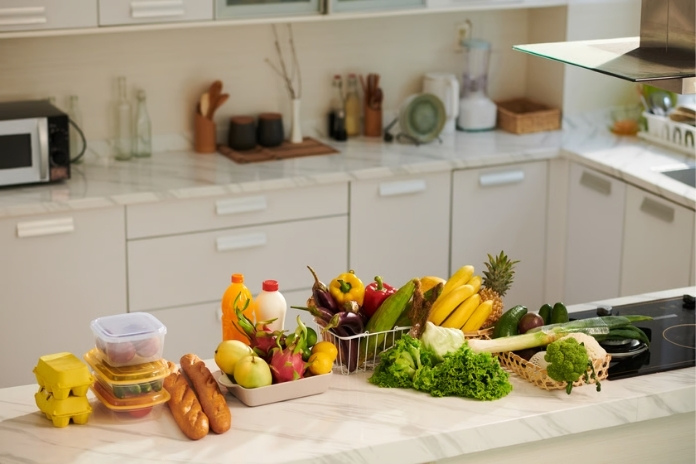
The kitchen counter becomes temporary storage for almost everything. Grocery bags sit there after shopping. Leftovers cool there after dinner. Meat packets wait while vegetables get chopped. Many people think food poisoning mostly comes from restaurants or street food, but home kitchens are actually one of the biggest sources of foodborne illness.
The problem is not usually dramatic food storage mistakes on the kitchen counter affecting food safety. They are small everyday habits repeated again and again. Food safety experts say many risky foods stay out because people judge safety visually. If it still smells normal, feels cold enough, or “was only out for a little while,” people assume it is safe.
But bacteria do not work according to smell or appearance. Some dangerous bacteria multiply quietly without changing taste, color, or texture at all. The foods below are the ones most commonly left sitting on kitchen counters longer than they should. Some spoil quickly. Some create cross-contamination risk.
- Raw meat, seafood, leftovers, thawing food, and cut fruit are the foods to never leave on the kitchen counter.
- The bacterial “danger zone” is between 40°F and 140°F, where germs multiply very fast.
- Most food poisoning at home happens from normal habits, not obviously spoiled food. Opened canned food and many condiments become perishable after opening.
Read More: Are Peanut Butter and Jelly Sandwiches Healthy? Nutrition, Pros, and Cons
The Science Behind the Risk: The Danger Zone
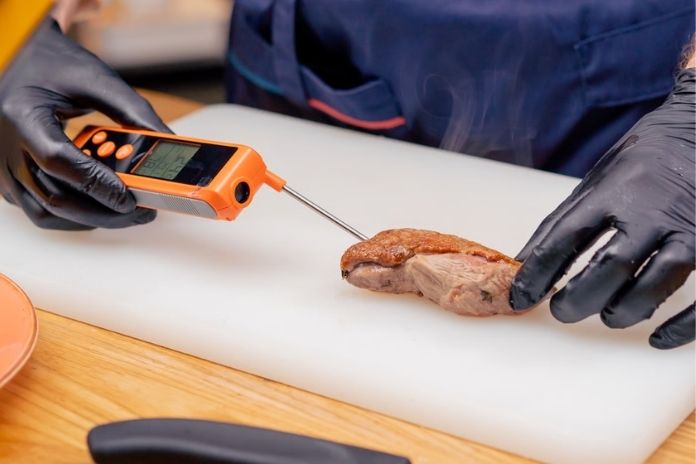
Food safety experts use one important term called the “danger zone.” This means a temperature between 40°F and 140°F (4°C to 60°C). In this range, bacteria grow very fast. Bacteria like Salmonella, E. coli, Campylobacter, and Listeria can multiply quickly when food stays outside the fridge for a long time. Sometimes numbers can double in just 20 minutes.
Rice, chicken curry, cut fruits, and leftover pasta all may look totally fine from the outside. But bacteria can already become high enough to cause vomiting, loose motion, stomach pain, and fever.
Because of this, doctors and food safety experts follow the “two-hour rule.” If food stays outside for more than 2 hours, the risk starts increasing more. In very hot weather above 90°F (32°C), safe time becomes only 1 hour.
“A simple guideline is the ‘rule of 2-2-2‘ — do not leave cooked food outside for more than two hours, consume refrigerated food within two days and avoid reheating more than twice,” says Dr. Adarsh CK, gastroenterologist.
1. Raw Meat, Poultry, and Seafood
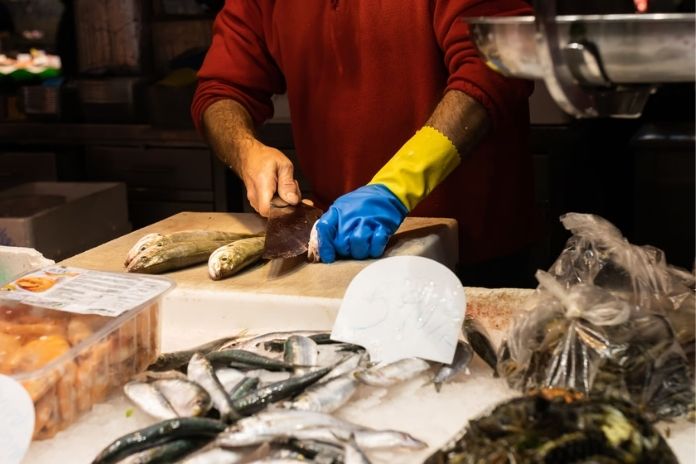
If you ever wonder, “What foods should not be left on the counter?” Raw meat on the counter is probably the most dangerous thing commonly left. The issue is not only the meat itself. Raw chicken, meat, fish, and seafood naturally carry bacteria.
Poultry, especially, often contains Salmonella and Campylobacter. When raw juices touch the kitchen counter, bacteria spread easily to nearby food. Room temperature mainly affects the outer layer first. This creates ideal conditions for rapid bacterial multiplication. Another problem is invisible contamination. Raw meat liquid spreads much farther than people think. One small drip from chicken packaging can contaminate a whole section of the counter.
The safest habit is direct movement from the refrigerator to the pan or from the refrigerator to preparation and immediate cooking. Not a refrigerator to “sit for a while.” Place them in the refrigerator below 40°F (4°C) until cooking.
2. Frozen Food Being Thawed
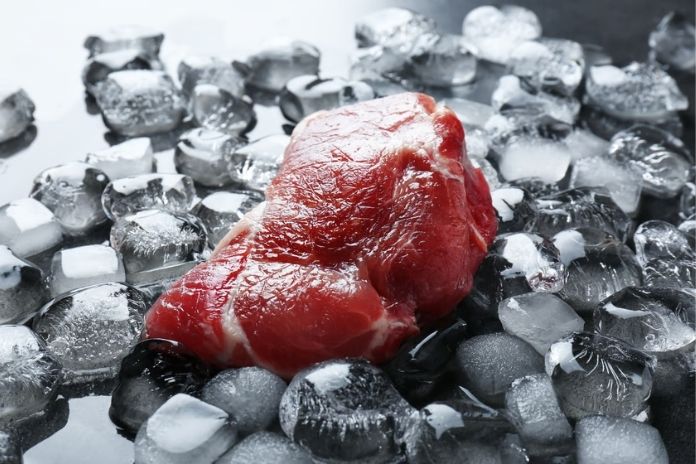
Counter thawing is still one of the most common unsafe kitchen habits. Many people leave frozen chicken, fish, or meat outside for faster thawing. But the outer layer becomes warm quickly while the inside is still frozen. This lets bacteria grow fast on the surface for hours. This is exactly why food safety agencies warn strongly against thawing on counters.
Large cuts of meat are even worse because they thaw unevenly. A frozen chicken breast may still contain ice internally while bacteria are already multiplying heavily on the outside layer. Freezing never kills all bacteria. Many survive freezing and simply become inactive. Once the surface warms up again, they continue multiplying.
Safe thawing methods are slower but much safer:
- Thawing inside the refrigerator
- Cold water thawing with water changed every 30 minutes
- Microwave thawing followed by immediate cooking
Planning matters more than people think in food safety. Most unsafe thawing happens because people decide on meals at the last minute.
3. Cut Fruit and Vegetables
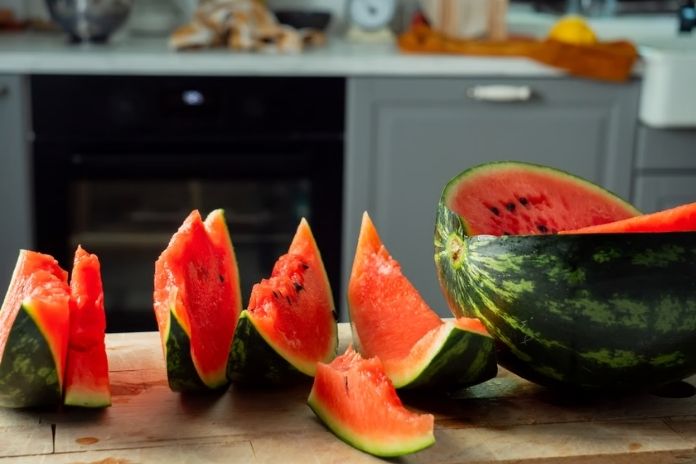
Whole fruits and vegetables stay protected by the outer skin. Once cut or peeled, bacteria can grow more easily on the moist inner part because it gets moist, nutrient-rich, and ideal for bacterial growth. Cut watermelon that can rot on the counter. This is especially risky because bacteria multiply fast in it because of the high water content in it.
Fruits and salad vegetables become perishable after cutting. Many people wrongly assume fruits are automatically safe because they are “natural” foods. But cut produce has caused many food poisoning outbreaks worldwide over the years.
Meal-prep culture also increased this risk. Chopped fruits or salad vegetables often stay outside too long during cooking. Warm kitchens make bacteria grow even faster. Another overlooked issue is knife contamination.
If cutting boards have previously touched raw meat, bacteria transfer easily onto cut produce because fruits and vegetables are usually eaten raw afterward. Cut produce should go into airtight containers and back into the refrigerator quickly. Even during meal prep, leaving them outside for long periods is never a good idea.
4. Cooked Leftovers
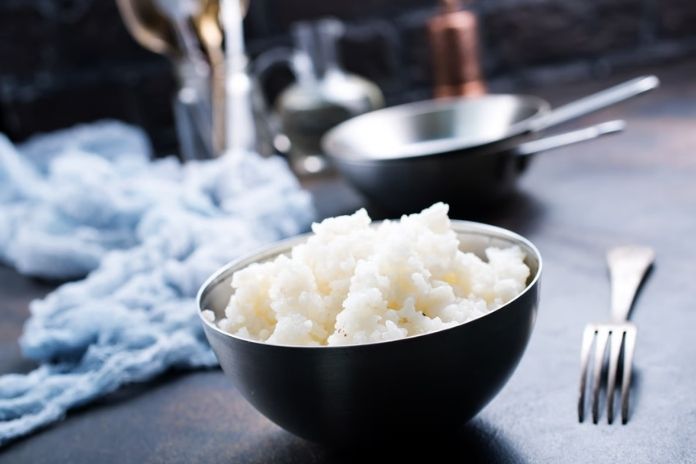
One of the biggest food safety myths is “hot food must cool completely before refrigeration.” Because of this idea, people leave rice, curries, soups, pasta, and cooked meat outside overnight very often. But cooling too slowly is exactly what creates bacterial risk.
Large pots trap heat internally. The surface may feel cool while the center remains warm for many hours. This warm middle zone becomes perfect for bacterial multiplication. Bacteria introduced after cooking, from spoons, air exposure, hands, or containers, begin growing again quickly.
Rice is important here because Bacillus cereus spores can survive cooking. If cooked rice stays outside too long, bacteria may produce toxins that reheating can never fully destroy. “Bacteria such as Salmonella and E coli multiply rapidly in cooked rice and leftovers,” said Aditi Prasad Apte, a clinical nutritionist.
People usually think food poisoning comes only from undercooked food. Actually, many cases come from properly cooked food stored badly afterward.
Shallow containers cool much faster than deep vessels. Dividing leftovers into smaller portions is one of the easiest food safety improvements most homes never do. Store in shallow covered containers inside the refrigerator within two hours.
5. Opened Canned Food
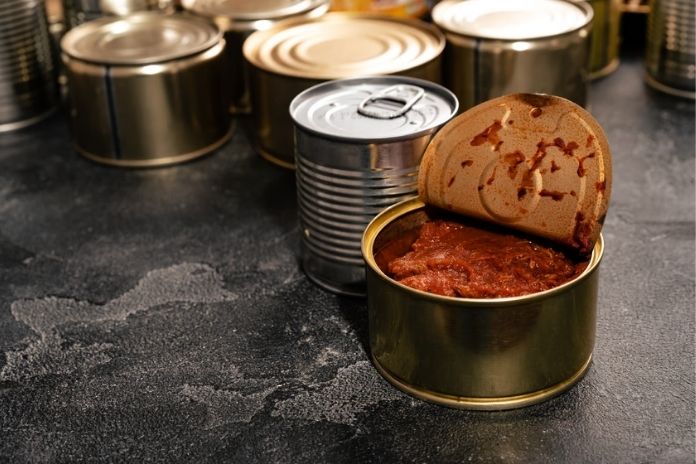
Unopened canned food is designed for shelf stability. Once opened, that protection ends immediately. Many people open canned beans, tomato puree, coconut milk, tuna, or fruit and simply cover the can loosely before leaving it outside. But once opened, canned food becomes perishable very quickly.
Acidic foods like tomatoes and pineapple can also slowly react with the can’s inner lining after opening. Opened canned food on the counter, once exposed to air and utensils, behaves like regular cooked food. Bacteria can enter and multiply rapidly if left outside. Transfer immediately into a glass or food-safe plastic container and refrigerate.
Read More: Foods High in Choline (Other Than Eggs): Best Alternatives for Daily Intake
6. Eggs (In Most Countries)
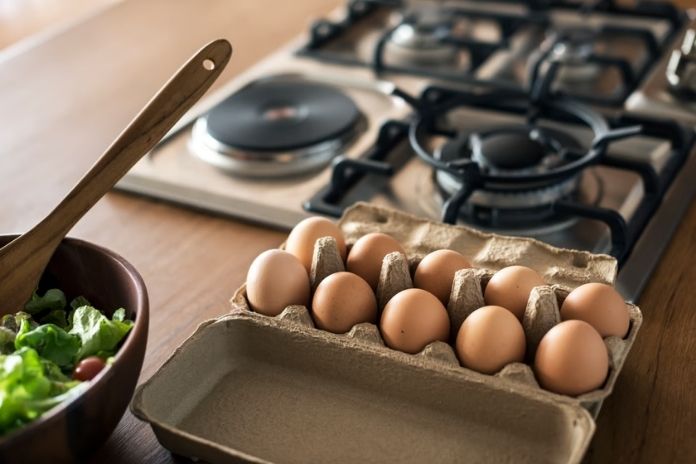
Egg storage rules confuse many people because practices differ between countries. In the United States and some other countries, commercial eggs are washed before sale. Washing removes the egg’s natural protective layer called the cuticle or bloom.
Without it, bacteria like Salmonella can enter more easily. In many European countries, eggs are not commercially washed, so this layer stays intact. Because of this difference, room temperature storage may remain acceptable there for limited periods.
Many people keep eggs near the stove for convenience while cooking. But warm kitchens accelerate quality loss faster than expected. Refrigeration of eggs should be consistent from purchase onward.
7. Nut Butters and Oils in Warm Kitchens
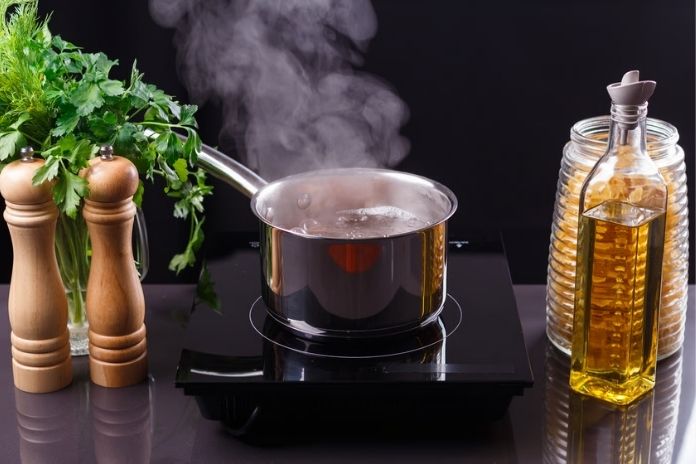
Natural nut butters and delicate oils contain unstable fats that oxidize over time, especially in warm kitchens. The difference between processed and natural nut butter matters here. Commercial peanut butter lasts longer outside because of stabilizers. Natural nut butters spoil faster as oils separate easily and oxidize easily.
Unrefined oils like flaxseed, walnut, sesame, and hemp oil are also very heat-sensitive. Keeping them beside the stove shortens shelf life heavily. Warm kitchens also speed up this process much more than people realize. Store natural nut butters and delicate oils in the refrigerator after opening.
Read More: Can Garlic and Honey Help a Cold? What the Evidence Says
8. Honey, Syrups, and Condiments After Long Counter Storage
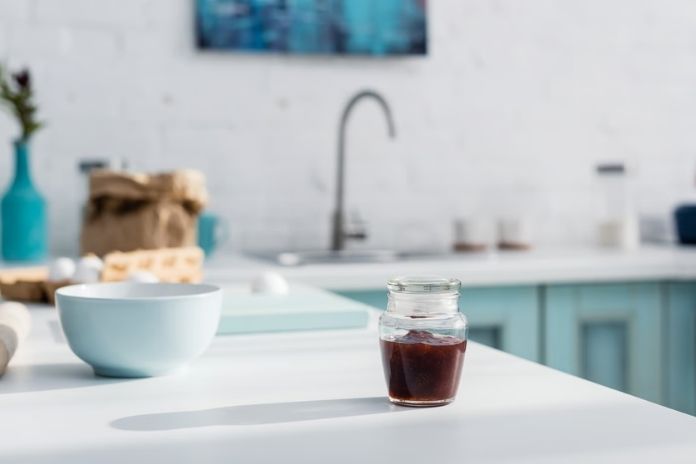
People often group all condiments as “safe pantry items,” but storage rules differ more than expected. Honey on the counter is one of the rare foods genuinely stable at room temperature because its very low water content naturally prevents bacterial growth. But many other condiments are less stable after opening.
Soy sauce, fish sauce, salad dressings, mayonnaise-based sauces, oyster sauce, and maple syrup often require refrigeration after opening. Many consumers never read storage instructions after opening. They only see “shelf stable” on the front label and assume the same applies forever.
Warm kitchens worsen the quality decline, too. Heat exposure slowly damages flavor compounds, oils, and preservatives. Check the label after opening instead of assuming all condiments behave the same way.
Read More: High-Protein Canned Foods That Keep You Full Longer (Nutritionist-Approved Choices)
Conclusion
Kitchen counters create a false sense of safety because food there still looks “normal.” But bacterial growth is usually invisible during the early, dangerous stages. The biggest food safety mistakes at home are rarely dramatic.
Common habits like thawing chicken outside, leaving leftover foods on the counter overnight, or keeping cut fruits out too long increase the risk of food poisoning. The two-hour food safety rule exists because bacteria grow fast in warm temperatures. Food safety is mostly about avoiding these small daily mistakes regularly.
- Many food poisoning cases at home happen from normal kitchen habits, not from obviously spoiled food.
- Bacteria grow very fast between 40°F and 140°F, sometimes doubling within 20 minutes.
- Many people still check food safety by smell or appearance only, which is not always reliable.
- Leaving frozen chicken or meat outside for thawing is still very common in many homes.
- Experts are still studying how meal prep habits and hotter indoor temperatures may increase food safety problems.
References
- Navaneethan, Y., & Effarizah, M. E. (2023). Post-Cooking Growth and Survival of Bacillus cereus Spores in Rice and Their Enzymatic Activities Leading to Food Spoilage Potential. Foods (Basel, Switzerland), 12(3), 626.
- Thames, H. T., & Theradiyil Sukumaran, A. (2020). A Review of Salmonella and Campylobacter in Broiler Meat: Emerging Challenges and Food Safety Measures. Foods, 9(6), 776.
- USDA. (2013). “Danger Zone” (40 °F – 140 °F).
In this Article