

















How a PET scan (Positron Emission Tomography scan ) detects cancer is not just about the machine seeing a tumor. It is more about how cells behave inside the body. A PET scan looks at activity, not just structure, like CT or MRI.
Cancer cells are very active. They use a lot of glucose, much more than normal cells. Doctors use this habit to find them. One special glucose-like substance is given in the blood. Wherever cells use more, that place becomes visible.
So those “bright spots” you see are not random. They are places where cells are working too much. Understanding this makes the PET scan vs. CT scan for cancer less confusing. Otherwise, it just looks like a glowing image without meaning.
- PET scan uses a glucose-like tracer (FDG) that cancer cells absorb more and cannot release.
- This gets trapped and emits signals, making tumors appear as bright spots.
- It shows metabolic activity, not just structure, and is used for diagnosis, staging, and monitoring treatment.
Read More: Neuroimaging Finds That Brain Uses More Power To Remember Than Forget A Memory
Why Cancer Cells Light Up: The Warburg Effect
Now the main question is, why do cancer cells take more glucose? This is not an accident. It is because of something called the Warburg effect. A long time back, scientist Otto Warburg noticed cancer cells were behaving very differently. Even when oxygen is there, they do not use the full energy process. Instead, they use a shortcut method called glycolysis.
This method is not efficient. It gives less energy. But it is fast. And cancer cells need a fast supply, not a perfect supply. Also, cancer cells are not just surviving. They are dividing again and again. For this, they need raw materials like proteins, fats, and DNA parts. This fast glucose breakdown helps in making these materials.
Because of this:
- More glucose transporters (GLUT1, GLUT3) come to surface
- More enzyme hexokinase works inside
- Fewer enzymes to send glucose out
So glucose comes in fast and stays inside. Essentially, a cancer cell becomes a glucose trap. A PET scan uses this weakness directly.
What FDG Is and How It Gets Trapped
A PET scan does not use normal glucose. It uses something very similar called FDG (fluorodeoxyglucose). Looks like glucose and behaves like glucose at the start. But a small change is there in the structure. That small change is very important.
The Metabolic Trap Explained Step By Step
First step: FDG enters the cell in the same like glucose. No difference here. Cancer cells take up more FDG because they are already hungry for glucose. Second, inside the cell, the enzyme hexokinase converts it to FDG-6-phosphate. Still the same as the normal glucose process.
Now the problem starts. Because FDG is slightly different, it cannot go forward in the energy pathway. It gets stuck. Also, cancer cells do not have enough enzymes to convert it back. So it cannot go out either. So now FDG is trapped inside. With time (around 1 hour after injection):
- Normal cells take FDG but also remove it
- cancer cells keep it and store more
So tumor areas become full of this tracer. This is called a metabolic trap. This is the main reason the PET scan works. Not just “it accumulates,” but it cannot escape. Fluorine-18 inside FDG is radioactive. It slowly decays, which is needed for imaging.
How the Scanner Turns Radioactivity Into an Image
Now, the machine part. Fluorine-18 releases something called a positron. This positron travels a small distance and hits an electron. When they meet, both get destroyed. This creates two gamma rays going in opposite directions. A scanner for PET scan cancer detection has detectors all around the body. It catches these rays at the same time.
From this, the computer calculates the exact point where the event happened. Many such events happen every second. The computer joins them and makes a full-body image. Where more FDG is present, more signals come. That area looks bright. So a PET scan does not see the tumor directly. It is seeing where energy use is high.
PET-CT: Why Both Are Used Together
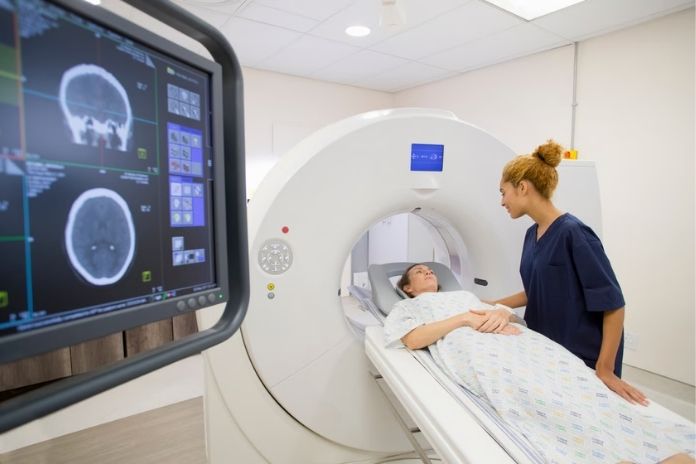
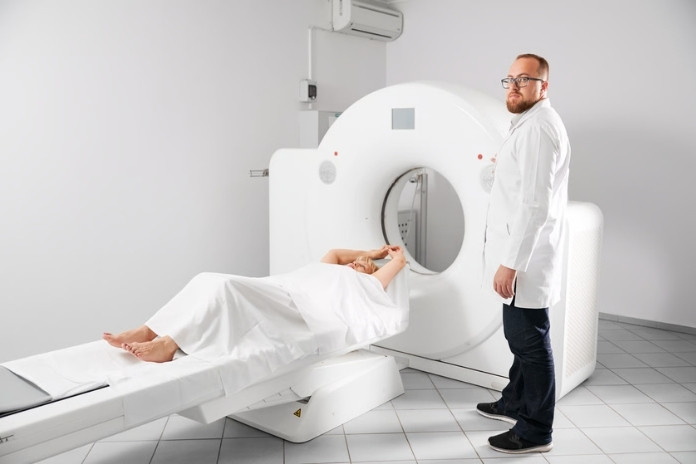
A PET scan alone shows activity, but not a clear structure. For example, a bright spot is seen, but where exactly? Node, muscle, or vessel? Hard to say sometimes. So a CT scan is added. “You can think of it as a very fancy X-ray,” says Dr. Jason Beland, a radiologist.
PET is for function (activity). CT is for structure (shape, size). Together, they give a full picture. Now the doctor can understand and confirm:
- Exact location
- Size of the lesion
- Activity level
This combination improves accuracy a lot. Yes, radiation becomes more compared to a single scan. But in cancer cases, benefit is more important.
What PET Scans Can and Cannot Detect
People often wonder: “What cancers does a PET scan detect?” A PET scan is a powerful, but not perfect, tool. It works best in metabolically active cancers. Good PET scan cancer detection seen in:
- Lymphoma
- Lung cancer
- Breast cancer
- Colorectal cancer
- Melanoma
These cancers take FDG strongly. So easy to see. But some cancers are not so clear:
- Prostate cancer (low uptake)
- Brain tumors (the brain already uses high glucose)
- Some liver cancers
So a PET scan may miss or underestimate these. Limitations and false positives every patient should know. This part is very important, but often ignored. A PET scan does not detect cancer directly. It detects high glucose usage. But immune cells also use high glucose when active. So many non-cancer things can look similar:
- Infection
- Inflammation
- After surgery
- Healing wounds
- After radiation
These can show bright spots also. This is called a false positive PET scan. Doctors do not just see brightness. They check:
- Pattern (spread or focused)
- Intensity
- Location
- Patient history
Cancer usually looks more focused and stronger. Inflammation looks more spread sometimes.
The SUV number: How doctors actually read the scan
A PET scan also gives a number called SUV. This number tells how much FDG is taken by the tissue. It is adjusted for body weight and dose. A higher SUV means more activity, which indicates more suspicion.
Doctors compare the SUV before and after treatment. If the SUV decreases, it means treatment is working, even if the size is not reduced yet. This is very useful clinically. Not just looking at the image, but measuring it.
Read More: MRI Scans Show Exercise Can Make Your Brain Look Younger
What Happens After the Scan

The PET scan result is not the final answer alone. It is used for decisions. A PET scan helps in staging cancer: only one place, lymph nodes involved, or spread to other organs.
“It’s important for the overall prognosis, how we plan to treat the patient and whether we treat or observe the patient,” said Dr. Ismael Shaukat, a medical oncologist. It helps in planning: Is surgery possible or not? Is chemotherapy needed? And what is the radiation area selection? Also used in follow-up:
- Check if the treatment is working
- Detect recurrence early
In many cancers, a PET scan is now a standard part of management.
Read More: What Is a HIDA Scan? Purpose, Procedure, and What It Diagnoses
Conclusion
A PET scan detects cancer not by seeing the tumor directly, but by using its behavior. Cancer cells consume more glucose, and FDG is designed to get trapped inside them. The scanner then detects this trapped radioactive signal and shows where the activity is high.
Once you understand this, those bright spots are not mysterious anymore. They are simply areas where cells are overactive, and that is what doctors are looking for.
- PET scan cancer detection works because cancer cells behave differently in metabolism, not just structure; this is the main idea most people miss.
- FDG gets trapped inside cells, not just enters; this trapping is the actual science behind bright spots.
- The SUV number is very important for doctors, not just image brightness, as it helps in tracking treatment.
- False positives from inflammation are common, so reports should always be seen with a clinical context.
- A PET scan is not only for finding cancer but also for staging and checking treatment response, which is its bigger role.
FAQs
1. What does a PET scan actually show?
A PET scan shows metabolic activity by tracking glucose uptake in tissues. Bright areas indicate higher activity, which may reflect cancer, inflammation, or normal processes—not all high-uptake areas are cancerous.
2. Why is fasting needed before a PET scan?
Fasting lowers blood glucose levels, allowing the tracer dye (FDG) to enter cells more effectively. This improves scan accuracy by enhancing contrast between normal and abnormal tissue activity.
3. Can a PET scan give a wrong result?
Yes, PET scans can produce false positives from inflammation or infection and false negatives in low-metabolism tumors that utilize glucose at a slower rate. Hence, the results must always be interpreted alongside clinical findings and other imaging.
4. What is an SUV in a PET scan?
SUV (Standardized Uptake Value) measures how much tracer dye a tissue absorbs. Higher SUV suggests increased metabolic activity but does not confirm cancer without clinical correlation.
5. Is a PET scan painful or risky?
A PET scan is generally painless, involving only a small tracer injection. Radiation exposure is low and medically controlled, making it safe for most patients when clinically indicated.
References
- Alauddin, M. M. (2011). Positron emission tomography (PET) imaging with 18F-based radiotracers. American Journal of Nuclear Medicine and Molecular Imaging, 2(1), 55.
- Ashraf, M., & Goyal, A. (2021). Fludeoxyglucose (18F). PubMed; StatPearls Publishing.
- Bose, S., Zhang, C., & Le, A. (2021). Glucose Metabolism in Cancer: The Warburg Effect and Beyond. In www.ncbi.nlm.nih.gov. Springer.
- DeNicola, Gina M., & Cantley, Lewis C. (2015). Cancer’s Fuel Choice: New Flavors for a Picky Eater. Molecular Cell, 60(4), 514–523.
- Haley, M., Konski, A., Li, T., Cheng, J. D., Maurer, A., Haluszka, O., Scott, W., Meropol, N. J., Cohen, S. J., & Freedman, G. (2025). Influence of Diabetes on the Interpretation of PET Scans in Patients With Esophageal Cancer. Gastrointestinal Cancer Research : GCR, 3(4), 149.
- Kinahan, P. E., & Fletcher, J. W. (2010). Positron Emission Tomography-Computed Tomography Standardized Uptake Values in Clinical Practice and Assessing Response to Therapy. Seminars in Ultrasound, CT and MRI, 31(6), 496–505.
In this Article