















You’re running late for a meeting. You skip the elevator, take the stairs two at a time, and arrive slightly breathless, heart thumping. That 90-second burst barely registered as exertion, but research now suggests it may have done more for your long-term health than you realize.
Accumulating just 15 to 20 minutes of short bursts of vigorous activity across an entire week is associated with meaningfully lower risks of cardiovascular disease, cancer, and early death, even among people who never formally exercise.
Micro-vigorous exercise, meaning brief and intense bouts woven into the fabric of a normal day, is emerging as one of the more genuinely actionable ideas in modern exercise science. This isn’t about grinding through a structured HIIT class or finding 45 minutes to carve out after work. It’s about power-walking to catch a bus, climbing stairs quickly, and hauling grocery bags at a fast clip.
These one- to two-minute moments of effort appear to carry real physiological weight. For the roughly 80 percent of middle-aged adults who don’t exercise regularly, this research represents something worth paying close attention to.
This article covers what micro-vigorous exercise actually is, what the data shows, how it affects the heart, metabolism, and cells, and how to start incorporating it safely.
- Accumulating just three 1-2 minute VILPA bouts per day is linked to a 38-40% reduction in all-cause and cancer mortality risk.
- Micro-vigorous exercise supports cardiovascular health by repeatedly challenging the heart and improving arterial elasticity over time.
- Intense muscle contractions drive glucose into cells through an insulin-independent pathway.
- These short bursts do not replace strength training or endurance exercise but offer a practical, low-barrier starting point for people with limited time.
Read More: Best Cardio Exercises for Daily Fat Burning
What Is Micro-Vigorous Exercise?
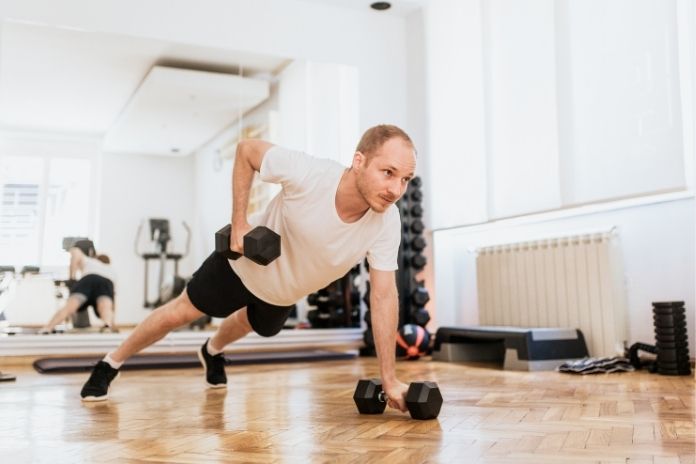
Micro-vigorous exercise refers to brief, high-intensity bouts of physical activity, typically lasting one to two minutes, that occur naturally within daily life rather than during planned workouts. The formal research term is vigorous intermittent lifestyle physical activity, or VILPA.
Professor Emmanuel Stamatakis, Director of the Mackenzie Wearables Research Hub at the University of Sydney and co-chair of the WHO Physical Activity Guidelines Development Group, defined VILPA in Sports Medicine as brief, sporadic bouts of vigorous-intensity physical activity embedded in daily life, including stair climbing, fast walking during a commute, and carrying heavy loads.
This separates VILPA from high-intensity interval training (HIIT) in a fundamental way. HIIT is scheduled and session-based. VILPA is incidental. No gym, no gear, no commute to a studio.
The intensity threshold is the same, where vigorous means effort that noticeably elevates your heart rate and makes sustained conversation difficult, but the format is entirely different. As Stamatakis put it, “VILPA is a bit like applying the principles of High Intensity Interval Training to your everyday life.”
Where the “40% Lower Risk” Claim Comes From
The headline figure comes from a 2022 study published in Nature Medicine. Stamatakis and colleagues analyzed wrist accelerometer data from 25,241 self-reported non-exercisers in the UK Biobank, followed over an average of 6.9 years during which 852 deaths occurred.
Compared to participants who did no VILPA at all, those averaging approximately three bouts per day, each lasting one to two minutes, showed a 38-40% reduction in all-cause and cancer mortality risk and a 48-49% reduction in cardiovascular disease mortality risk.
A 2026 study using US NHANES data from 3,293 non-exercising adults found a 44% lower risk of all-cause mortality at the sample median of about 5.3 VILPA bouts per day, with a total daily vigorous duration of just 1.1 minutes. These are observational associations, not causal proof.
People who move more vigorously through their day may differ in other ways that contribute to lower risk. Researchers adjusted for many confounders, but residual bias is always possible. Still, the consistency across independent datasets is notable. Short, accumulated bursts of vigorous activity have been linked to meaningful reductions in mortality risk compared to inactivity.
As Dr. Matthew Ahmadi, Deputy Director of the Mackenzie Wearables Research Hub at the University of Sydney, explained when commenting on a related Lancet Public Health study: “The idea of accruing short bouts of moderate to vigorous activity through daily living activities makes physical activity much more accessible to people who are unwilling or unable to take part in structured exercise.”
Brief daily efforts add up to meaningful totals over time.
Read More: How to Boost Endurance Without Running: Top Workouts for Stamina
The Math Behind 20 Minutes Per Week
The UK Biobank study found that the sample median was roughly three bouts per day, each lasting one to two minutes. That accumulates to approximately 21 to 42 minutes of vigorous activity per week, well below the WHO-recommended 75 minutes of structured vigorous exercise.
Even smaller amounts showed benefit: a daily median of just 4.4 minutes of VILPA was associated with a 26-30% reduction in all-cause and cancer mortality risk. Three one-to-two-minute bursts scattered across a workday barely register consciously, but over seven days, they represent a repeated and meaningful physiological stimulus.
Brief daily efforts can add up to meaningful totals over time, and that simple arithmetic is the conceptual core of micro-vigorous exercise.
How Micro-Vigorous Bursts Affect Your Heart and Arteries
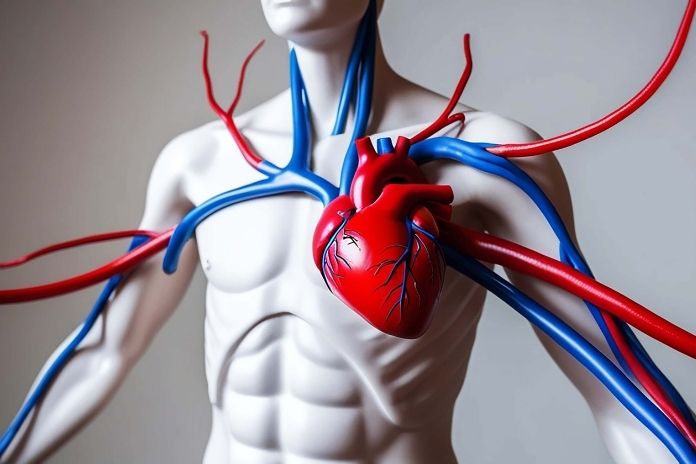
Each vigorous burst forces a sharp cardiovascular response. Heart rate climbs, cardiac output rises, blood is redirected toward working muscles, and breathing accelerates. Repeated consistently over days and weeks, this acute stress drives structural adaptations in the cardiovascular system.
Research on cardiorespiratory fitness, including a landmark American Heart Association scientific statement published in Circulation, established that VO2 max is a stronger predictor of cardiovascular mortality than established risk factors, including hypertension and smoking.
Vigorous activity drives improvements in cardiorespiratory fitness more efficiently than moderate-intensity exercise at equivalent time investment. Over time, cardiac stroke volume improves, and arterial walls become more elastic. Reduced arterial stiffness is directly linked to lower cardiovascular disease risk.
Short bursts challenge the cardiovascular system similarly to structured interval training. Stamatakis noted in Newsweek: “The magnitude of these associations is quite striking, considering how little daily physical activity we are talking about.” The pattern of frequent micro-spikes in heart rate and cardiac demand, rather than sustained elevation, appears particularly effective at producing cardiovascular conditioning.
Metabolic Effects of Short Intense Activity
When skeletal muscle contracts vigorously, glucose uptake accelerates through a pathway that bypasses insulin entirely. The glucose transporter GLUT4 is mobilized from intracellular storage sites to the muscle cell surface by AMPK activation, which is triggered by the shift in the AMP-to-ATP ratio during exertion, along with calcium and nitric oxide signaling pathways.
This contraction-stimulated glucose uptake is not impaired in type 2 diabetes, as established in a foundational review in Physiological Reviews, making vigorous activity particularly relevant for people with insulin resistance.
Intense muscle contractions help move glucose into cells quickly. Professor Jonathan Little, PhD, a researcher in the School of Health and Exercise Sciences at the University of British Columbia and a leading voice on exercise snacks and metabolic health, has studied how brief stair-climbing bouts reduce postprandial insulin in people at risk for type 2 diabetes.
His team is exploring whether brief activity after meals could be “a simple way to tell your muscles to take up some sugar from the blood and help smooth out your glucose spikes.” Repeated across a day, these brief metabolic interruptions may compound into meaningful improvements in glycemic control.
Read More: The Best Anti-Inflammatory Breakfasts for Stable Blood Sugar and Energy
Cellular Benefits: What Emerging Research Suggests
Brief vigorous efforts appear to trigger cellular-level adaptations with long-term health implications. The most studied is mitochondrial biogenesis, which is the production of new mitochondria in response to metabolic stress.
A 2025 meta-analysis of randomized trials published in PubMed found a significant increase in PGC-1alpha expression following interval-type exercise, with results comparable to continuous endurance training. PGC-1alpha is the master regulator of mitochondrial biogenesis, and its upregulation improves the cell’s capacity to produce energy and maintain metabolic function.
Vigorous exercise also activates autophagy, which is the cellular cleanup process by which damaged organelles and protein aggregates are broken down and recycled. Research published in peer-reviewed journals has linked acute intense exercise bouts to autophagic pathway activation in both skeletal muscle and liver tissue.
Brief vigorous efforts may stimulate beneficial cellular adaptations that moderate-intensity activity at the same short duration does not reliably produce, because exercise intensity is a key driver of both PGC-1alpha upregulation and autophagy signaling.
Real-World Examples of Micro-Vigorous Activity
Most people are already performing some VILPA without recognizing it. The shift required is intentionality: choosing to perform familiar activities at an effort level that genuinely challenges the cardiovascular system. Fast stair climbing, covering two to three floors taken quickly, consistently meets the vigorous threshold in accelerometer studies.
Brisk uphill walking at a pace that makes sustained conversation difficult qualifies even on a gentle incline. Rapid walking to catch transit, carrying heavy grocery bags quickly across a parking lot, and playing actively with a child or pet are all valid examples.
Daily tasks can be turned into high-effort bursts without structured exercise. The activity itself doesn’t change. Only the intensity does.
How to Tell If the Effort Is “Vigorous Enough”
Use the talk test as your primary guide. During vigorous-intensity activity, speaking in full sentences should become noticeably effortful. You can still communicate, but you need to pause more for breath, and sentences come out shorter. If conversation flows without interruption, you are likely at moderate intensity, not vigorous.
On the Borg Perceived Exertion Scale, rated from 6 to 20, vigorous activity typically falls between 14 and 17, which is described as hard to very hard. For people who have been largely sedentary, lower cardiorespiratory fitness means that everyday activities reach the vigorous threshold more easily.
Stair climbing that barely challenges a fit person may legitimately qualify as vigorous for someone inactive. That is an advantage. The less fit you are, the larger the physiological stimulus from any given bout of effort, and the faster early adaptations tend to occur.
Who May Benefit Most From Micro-Vigorous Exercise
The VILPA research was conducted specifically in non-exercisers, meaning people whose only vigorous activity came from daily life. This positions micro-vigorous exercise as most directly relevant to people with demanding or unpredictable schedules, sedentary desk workers who accumulate long seated hours, and older adults who are deconditioned but otherwise healthy.
Lower baseline fitness means vigorous intensity is reached sooner, making each short burst of genuine effort a more potent cardiovascular stimulus.
Dr. Tessa Strain, Chancellor’s Fellow in physical activity epidemiology at the University of Edinburgh, has observed, “The current 150-minute weekly physical activity guideline “can seem onerous in a busy world,” a reality that leaves many people feeling defeated before they start.”
VILPA offers a viable alternative pathway for people who have stopped trying to meet conventional targets.
Read More: Why Sitting Too Much Can Trigger Inflammation (Even If You Exercise Regularly)
What Micro-Vigorous Exercise Does NOT Replace
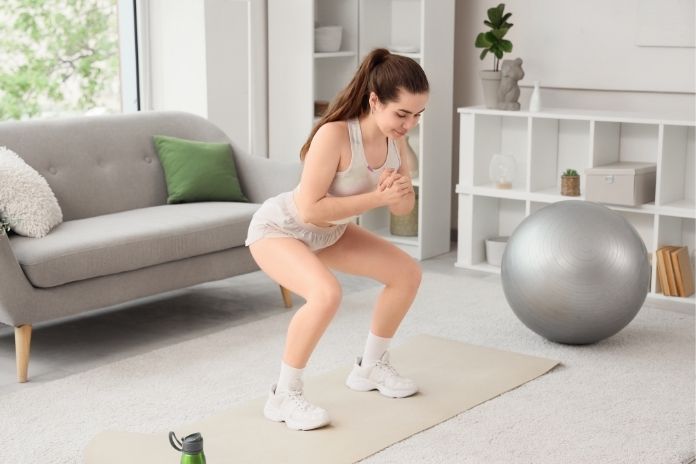
VILPA does not replicate all the benefits of a complete exercise program. Strength training, which is necessary for preserving muscle mass, bone density, and functional capacity across the lifespan, is not addressed by brief vigorous bouts.
Adults lose muscle mass progressively after their thirties, and without resistance exercise, this process accelerates in ways that no cardiovascular-type effort substitutes for. Sustained endurance exercise also offers benefits that brief bursts cannot replicate.
Longer sessions support cognitive function, mood, anxiety reduction, and aerobic capacity development in ways that partly depend on duration. The mental health benefit of a 40-minute walk is not interchangeable with four 90-second stair climbs.
These short bursts are helpful but not a complete replacement for structured exercise. VILPA is better understood as a floor, not a ceiling. It is a practical and low-barrier way to gain meaningful health protection while remaining compatible with building toward a more complete routine over time.
How to Safely Start Micro-Vigorous Activity
Begin with one intentional vigorous burst per day and sustain that for one to two weeks. A practical starting point: choose stairs over elevators every morning and climb them quickly enough that conversation would be noticeably difficult.
After two weeks, add a second burst at a different time of day, such as a fast walk to a farther lunch destination or carrying bags at a brisk pace across a building. A week or two later, add a third. That pattern replicates approximately the sample median in the UK Biobank study, which is the level associated with a 38-40% lower mortality risk.
For most healthy adults, a formal warm-up before a 90-second stair climb is not required. That said, 60 seconds of ordinary walking before transitioning to vigorous effort makes sense after extended sitting, especially for older adults who are more susceptible to musculoskeletal strain during abrupt high-intensity movement.
Gradually increase frequency over weeks rather than days. People with cardiovascular disease, uncontrolled blood pressure, diabetes complications, or significant deconditioning should consult a healthcare provider before increasing activity intensity.
Anyone who experiences chest discomfort, dizziness, or unusual shortness of breath during exertion should stop immediately and see a clinician.
Read More: Daily Mobility Routine for People Who Sit Too Much
Key Takeaway
Accumulating short bursts of vigorous movement throughout the week may significantly improve cardiovascular and metabolic health for people who struggle to sustain traditional workout routines.
The evidence linking three one-to-two-minute micro-vigorous exercise bouts per day to substantially lower mortality risk is consistent across large, well-conducted observational studies in both UK and US populations.
The underlying biology is well established: improved cardiorespiratory fitness, insulin-independent glucose clearance, mitochondrial biogenesis, and autophagy activation all point in the same direction
What makes VILPA particularly compelling is not just the physiology, but the practicality. It removes the biggest barrier most people face with exercise, which is not knowledge, but consistency.
The idea that meaningful health benefits can be achieved through brief, scattered efforts challenges the all-or-nothing mindset that often leads to inactivity. For individuals with time constraints, low motivation, or limited access to structured fitness environments, this creates a realistic entry point into movement. At the same time, it’s important to be clear about the scope.
VILPA is not a complete fitness solution. It does not replace progressive overload, structured resistance training, or sustained aerobic work needed for strength, endurance, and long-term performance. But it does address a different problem. It offers a minimum effective dose for people who would otherwise do nothing, and in that context, its impact is far from trivial.
What this really means is that exercise no longer needs to be confined to a scheduled hour at the gym to be effective. Small, intentional bursts of effort integrated into daily life can compound into measurable health outcomes. For many people, that shift in framing may be the difference between staying sedentary and finally building a sustainable relationship with movement.
References
- Stamatakis, E., Ahmadi, M. N., Gill, J. M. R., Thøgersen-Ntoumani, C., Gibala, M. J., Doherty, A., & Hamer, M. (2022). Association of wearable device-measured vigorous intermittent lifestyle physical activity with mortality. Nature Medicine, 28(12), 2521-2529.
- Ahmadi, M. N., Hamer, M., Gill, J. M. R., Murphy, M., Sanders, J. P., Doherty, A., & Stamatakis, E. (2023). Brief bouts of device-measured intermittent lifestyle physical activity and its association with major adverse cardiovascular events and mortality in people who do not exercise: A prospective cohort study. The Lancet Public Health, 8(10), e800-e810.
- Koemel, N. A., Ahmadi, M. N., Biswas, R. K., Chow, C. K., & Stamatakis, E. (2026). Vigorous intermittent lifestyle physical activity (VILPA) and mortality risk among US adults: A wearables-based national cohort study. International Journal of Behavioral Nutrition and Physical Activity, 23(1).
- Islam, H., Gibala, M. J., & Little, J. P. (2022). Exercise snacks: A novel strategy to improve cardiometabolic health. Exercise and Sport Sciences Reviews, 50(1), 31-37.
- Hargreaves, M., & Spriet, L. L. (2012). Exercise, GLUT4, and skeletal muscle glucose uptake. Physiological Reviews, 93(3), 993-1017.
- Stamatakis, E., Ahmadi, M. N., Friedenreich, C. M., Blodgett, J. M., Koster, A., Holtermann, A., et al. (2023). Vigorous intermittent lifestyle physical activity and cancer incidence among nonexercising adults: The UK Biobank accelerometry study. JAMA Oncology, 9(9), 1255-1259.
- Wan, K., Dai, Z., Wong, P., Lei, E. F., Tam, B. T., Huang, W. Y., Little, J. P., & Lin, F. C. (2025). Effects of exercise snacks on cardiometabolic health and body composition in adults: A systematic review and meta-analysis. Scandinavian Journal of Medicine & Science in Sports.
- Ross, R., Blair, S. N., Arena, R., Church, T. S., Després, J. P., Franklin, B. A., & Lavie, C. J. (2016). Importance of assessing cardiorespiratory fitness in clinical practice: A case for fitness as a clinical vital sign. Circulation, 134(24), e653-e699.
- Mannakkara, N. N., et al. (2023). Exercise and the heart: Benefits, risks and adverse effects of exercise
- Harvard Health Publishing. (n.d.). Brief bursts of vigorous activity linked to lower heart risks.
- Cleveland Clinic. (n.d.). Can too much extreme exercise damage your heart?
- Manipal Hospitals. (n.d.). Heart attacks during workouts: Warning signs & overtraining.
In this Article