



















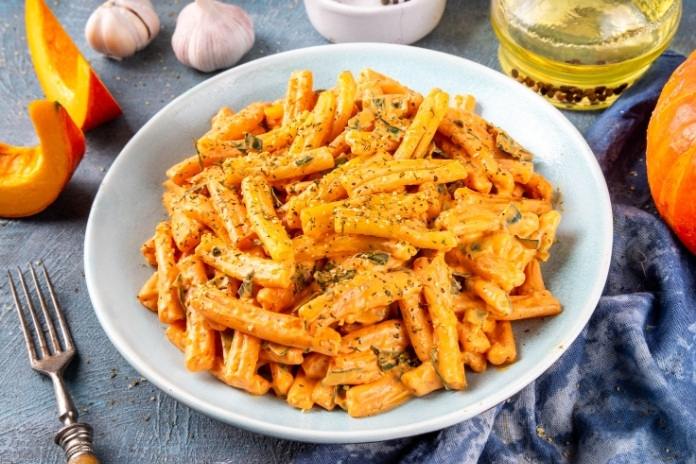
Pasta and blood sugar have a complicated reputation. But here is what the research actually shows: white pasta has a glycemic index of 42 to 45, lower than white bread at roughly 70 and white rice at around 64. That does not mean pasta is a free food, but it does mean the conversation is more nuanced than most people assume.
Type, cooking method, portion size, and what you eat alongside it all shape your glucose response. Here are 7 research-backed facts that change how you think about pasta.
Read More: 10 Science-Backed Ways to Keep Your Blood Sugar Stable All Day
- Pasta isn’t as bad as people think; its glycemic index is lower than that of white bread and rice, meaning slower blood sugar spikes.
- Cooking matters more than you think; al dente pasta and even reheated leftovers lead to a lower glucose response.
- Portion size is the real driver; even low-GI pasta can spike blood sugar if you overeat it.
- Adding protein, fats, and fiber helps flatten the blood sugar spike significantly.
1. Pasta Actually Has a Lower Glycemic Index Than Bread and White Rice
The pasta glycemic index surprises most people. White semolina pasta scores 42 to 45 on the GI scale. White bread sits around 70. White rice lands near 64. Pasta scores lower because of its compact protein matrix; gluten forms a dense network around starch granules that physically slows enzymatic digestion, releasing glucose into the bloodstream more gradually.
Whole wheat pasta drops lower still, around GI 37, with added fiber slowing digestion further. Legume-based varieties, chickpea, lentil, and edamame, range from 32 to 40 and carry the highest protein and fiber of any pasta type.
Kelly Gaines, RDN, a registered dietitian nutritionist at Houston Methodist, explains the mechanism: “The way I like to think about the glycemic index is how much effort your body is putting into processing an ingredient. You can just tell by chewing al dente pasta that it takes more time for you to physically break it down, and so from a digestion standpoint, the same thing is happening in your body.”
That said, GI alone does not tell the full story. Portion size and meal composition both determine the actual blood sugar impact. GI is a useful starting point, not a complete answer.
2. How You Cook Pasta Changes Its Blood Sugar Impact
Cooking time directly affects the pasta glycemic index. Al dente pasta, cooked firm, with starch granules still intact, produces a measurably lower glucose response than soft-cooked pasta. Overcooking gelatinizes the starch structure, making it significantly easier to digest and faster to raise blood sugar.
Shape also matters. Research published in the Journal of Nutrition found that spaghetti produced a lower postprandial glucose response than penne, even when both were cooked identically. The longer, denser structure of spaghetti slows digestion compared to the open tube shape of penne.
The practical rule: pull pasta from the water 1 to 2 minutes before the package instructions. That single adjustment consistently lowers the glycemic response without changing the meal.
3. Leftover Pasta Is Better for Blood Sugar Than Freshly Cooked
Cooling cooked pasta for 24 hours in the refrigerator triggers a process called retrogradation. Starch molecules realign into a tighter crystalline structure that resists digestion; this is resistant starch, and it behaves more like fiber than a digestible carbohydrate in the gut, producing a smaller, slower glucose rise.
Research from the University of Surrey found that participants eating reheated pasta returned to baseline glucose levels faster than those eating freshly cooked pasta. Reheating largely preserves the resistant starch benefit; the structural change is not fully reversed by heat.
Lauri Wright, PhD, RDN, former president of the Academy of Nutrition and Dietetics and director of nutrition programs at the University of South Florida, puts the benefit in plain terms: “It can modestly blunt or shift the glucose rise, but it does not make pasta free from a blood sugar standpoint.”
Retrogradation blunts the glucose rise; it does not eliminate it. Portion control still applies.
4. Portion Size Matters More Than Pasta Type
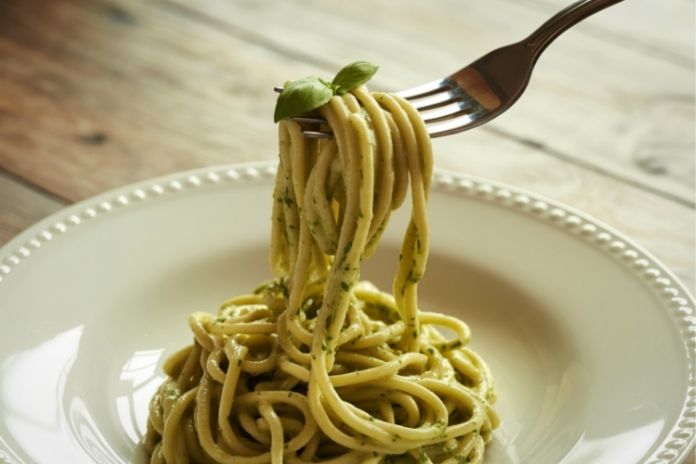
This is where the glycemic index versus glycemic load distinction becomes practical. GI measures how fast a food raises blood sugar per gram of carbohydrate. Glycemic load accounts for how much carbohydrate is actually in a serving: GL = GI x grams of carbohydrate per serving, divided by 100.
A 75 to 80g dry serving of white pasta, roughly one cup cooked, produces a moderate glycemic load despite a medium GI. Double that portion, and you double the glycemic load, regardless of pasta type or cooking method.
Pasta type, cooking method, and food pairing all reduce the glucose response at the margins. Portion size drives the outcome. Starting at 75 to 80g dry weight is a more reliable lever than switching pasta brands.
5. What You Eat Pasta With Changes Your Blood Sugar Response
Pasta eaten alone produces a faster, higher glucose rise than pasta eaten as part of a mixed meal. The mechanism is gastric emptying: fat and protein slow the rate at which stomach contents move into the small intestine, flattening the glucose curve.
To measurably blunt the pasta glucose spike, aim for 20 to 30 grams of protein per meal; a palm-sized portion of chicken, fish, or legumes covers this. Add 1 to 2 tablespoons of olive oil or a moderate amount of cheese for fat. Non-starchy vegetables like spinach, broccoli, or zucchini add fiber and bulk without a meaningful carbohydrate load.
The classic structure of pasta with tomato sauce, a side salad, and olive oil already follows this pattern. It is not accidental that traditional Mediterranean pasta portions are smaller and surrounded by protein and vegetables.
6. Not All Pasta Types Affect Blood Sugar the Same Way
White semolina pasta has a GI of 42 to 45. Whole wheat pasta sits around 37 and delivers more fiber per serving. Fresh egg pasta has a higher GI than dried; its less dense starch structure digests more quickly than the compact matrix of dried semolina.
Legume-based pastas, chickpea, lentil, and edamame, carry a GI of 32 to 40 and the highest protein and fiber content of any pasta type. That combination produces the lowest and slowest glucose response across the category.
For anyone managing white pasta vs. whole wheat blood sugar differences, the practical upgrade is legume-based pasta rather than whole wheat, which offers a more meaningful improvement in both GI and satiety.
7. Individual Responses Vary, and That Is the Most Important Variable
GI values are measured in metabolically healthy individuals. People with insulin resistance, type 2 diabetes, or prediabetes will typically see larger glucose responses to the same portion of pasta. Two people eating identical plates can produce glucose curves that look completely different based on gut microbiome composition, insulin sensitivity, activity level, stress, and sleep.
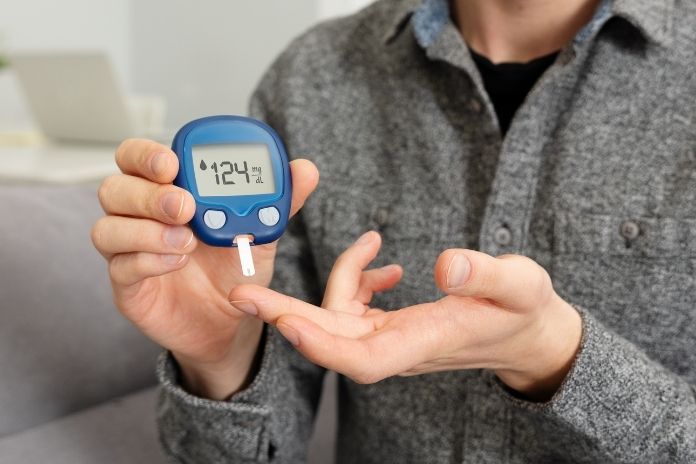
The most reliable approach is to measure your own response. A glucometer or continuous glucose monitor used 60 to 90 minutes after eating gives you personalized data that no population average can replicate. Use the evidence in this article as a starting framework, then adjust based on what your own numbers show.
Read More: Low-Carb Zucchini Noodles with Pesto: A Healthy Pasta Alternative
The Bottom Line
Pasta’s effect on blood sugar depends on preparation and context, not on whether it is on your plate. Cook it al dente or eat it as leftovers, keep portions to around one cup cooked, and pair it with protein and non-starchy vegetables.
These three adjustments consistently reduce the pasta blood sugar response without eliminating the food. For anyone managing diabetes, individual glucose monitoring remains the most reliable guide; population averages are a starting point, not a prescription.
Frequently Asked Questions
1. Does pasta spike blood sugar?
It can, but less than most people assume. White pasta has a glycemic index of 42 to 45, lower than bread or white rice. Cooking method, portion size, and meal composition all affect how much glucose rises after eating.
2. Is whole wheat pasta better for blood sugar than white pasta?
Modestly. Whole wheat pasta has a GI of around 37 versus 42 to 45 for white semolina. The more meaningful upgrade is legume-based pasta, chickpea or lentil varieties, which score 32 to 40 and carry significantly more protein and fiber.
3. Can people with diabetes eat pasta?
Many can, in controlled portions and with the right meal structure. Al dente cooking, a 75 to 80g dry portion, and pairing with protein and vegetables all lower the glycemic response. Individual monitoring with a glucometer or CGM is the most reliable guide.
4. Does cooling pasta really lower its glycemic index?
Yes. Refrigerating cooked pasta for 24 hours increases resistant starch through retrogradation, producing a smaller, slower glucose rise. Reheating largely preserves this effect. It reduces the response; it does not eliminate it.
References
- Björck, I., Granfeldt, Y., Liljeberg, H., Tovar, J., & Asp, N. G. (1994). Food properties affecting the digestion and absorption of carbohydrates. American Journal of Clinical Nutrition, 59(3), 699S-705S.
- Atkinson, F. S., Foster-Powell, K., & Brand-Miller, J. C. (2008). International tables of glycemic index and glycemic load values. Diabetes Care, 31(12), 2281-2283.
- Brighenti, F., Casiraghi, M. C., Pellegrini, N., Riso, P., & Testolin, G. (1998). Digestibility of resistant starch and effects on postprandial glycaemia. European Journal of Clinical Nutrition, 52(1), 67-74.
- EatingWell. (2026, March 2). What happens to your blood sugar when you eat pasta.
- Health.com. (2026, March 26). What happens to your blood sugar when you eat pasta several times a week.
- Banza. (n.d.). Does pasta spike blood sugar? What you need to know.
- American Society for Nutrition. (n.d.). Pasta structure may influence post-meal blood glucose and insulin response.
- Bregano. (n.d.). Is pasta healthy?
- Diabetes Canada. (n.d.). The glycemic index and you.
- U.S. Department of Veterans Affairs. (n.d.). Glycemic index.
- Wildgrain. (n.d.). Healthier pasta vs brown rice vs white rice.
- Zhang, Y., et al. (2021). [Article title not specified]. PubMed Central.
In this Article