
















- Period acne is driven by a predictable hormonal sequence, not poor hygiene or a failing skincare routine.
- The pathophysiology is largely hormonal: androgens such as dihydrotestosterone (DHT) stimulate androgen receptors found in sebaceous glands, resulting in sebum accumulation and keratin buildup that provides a growth medium for Cutibacterium acnes bacteria, driving inflammatory lesions.
- Adjusting your skincare by cycle phase, using evidence-backed OTC actives, and knowing when to seek prescription treatment gives you real, lasting control over hormonal breakouts.
You wash your face twice a day, drink your water, and sleep reasonably well. And yet your skin breaks out every month in the week before your period. Period acne isn’t a hygiene failure. It’s a hormonal cascade, and your skin is caught directly in the middle of it.
If you keep getting the same pimples every month before your period, it is not random and not because you did something wrong. Around 60–65% women notice breakouts before periods, so this is a very common pattern, not some rare skin issue.
Period acne is mostly hormonal. They follow a biological sequence tied to estrogen, progesterone, and androgens cycling through your body every month. To understand why you break out before your period, you need to grasp the hormonal sequence, and once you do, proactive management becomes genuinely possible.
Still, many people think it is because of dirt, food, or a “bad skincare routine.” That is not correct. What is happening is inside your body: hormones change, skin reacts, and acne shows.
If you understand this cycle properly, then you can actually manage hormonal breakouts instead of just reacting every month. In this article, we will break down what exactly happens in the skin at each phase and what you can do, from basic skincare to proper medical treatment for period acne.
What’s Actually Happening to Your Skin During Your Cycle
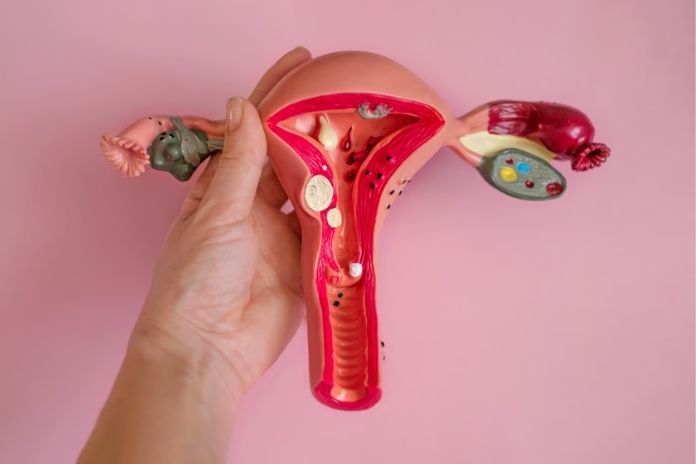
Your skin is not the same the whole month. It changes with hormones, but we only notice when acne comes.
1. Follicular phase (Day 1–13)
This starts from the first day of the period. Estrogen slowly increases. This hormone is good for the skin. It controls oil production, improves hydration, and supports collagen. That is why many people notice: skin looks better, smoother, and more balanced in this phase.
Also important, this is the best time to use strong skincare like retinoids, exfoliating acids, and vitamin C. Skin tolerates them better here.
2. Ovulation (~Day 14)
Around ovulation, there is slight androgen (testosterone) activity. It is not that testosterone suddenly increases a lot, but its effect becomes more visible because of hormonal balance. Some people may notice small breakouts here, especially if skin is already acne-prone.
3. Luteal phase (Day 15–28)
This is the main problem phase for period acne. An increase in progesterone increases sebum production (oil). At the same time, the skin slightly swells. Sounds like a small thing, but it matters. When skin swells, pores become tighter. Oil cannot come out easily and gets stuck inside. Now, inside that pore, oil with dead skin and bacteria forms, which causes inflammation, and this combination causes deep acne.
One more thing that most generic content doesn’t mention: The skin barrier becomes weaker in this phase. In the luteal phase, transepidermal water loss (TEWL) from skin increases. So skin becomes more sensitive, more reactive. This is why products that were normal earlier suddenly start burning or irritating before your period, causing a premenstrual acne flare.
4. Menstrual phase (Day 1–5)
Now both estrogen and progesterone drop to the lowest level. Acne that formed in the last phase now becomes visible, red, painful, and sometimes cystic. Skin also feels dry and irritated. So now you have both acne with sensitivity at the same time, which makes things confusing.
Important point: testosterone is not “high.” It just becomes dominant compared to other hormones (estrogen and progesterone). That difference is enough to trigger acne.
Where Period Acne Appears, and Why Location Matters
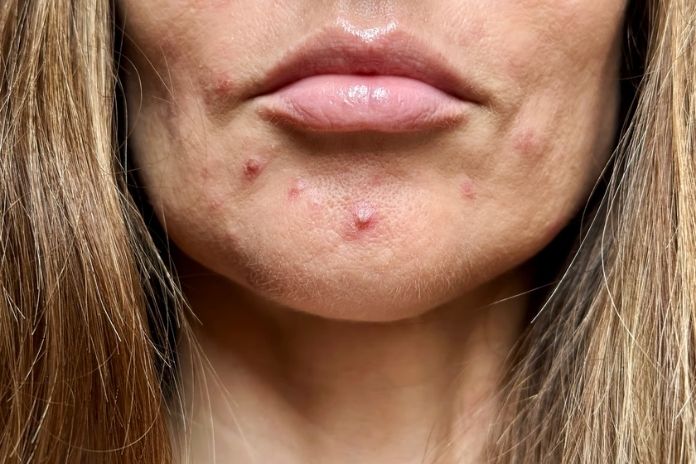
Hormonal acne is not random. It has a pattern. Mostly, hormonal acne comes on the chin, jawline, and neck area. This area has more androgen receptors. That means it reacts more to hormonal changes. That is why the same spot, same type of pimple keeps coming every month. It can also come on the cheeks, around the mouth, and even on the back or shoulders. But the lower face is most common.
The type of acne is also different. Not small whiteheads usually. Mostly deep, painful, under-skin bumps. They don’t come to head easily and take time to go.
Timing is the biggest clue: If it comes 7–10 days before the period, reduces after bleeding starts, and repeats every cycle, then this is hormonal acne.
How to Adjust Your Skincare Routine Through Your Cycle
This is where most people go wrong. They use the same routine the whole month. But skin is changing, so the routine also should change.
1. Luteal Phase – go on the offensive
When someone wonders how to prevent period breakouts, this is the prevention phase. If you miss this, then later you are just dealing with damage. Start using salicylic acid (1–2%) for period breakouts from around Day 14–15. This goes inside pores and breaks oil buildup early. If you wait till acne comes, it is already late. Add niacinamide (5–10%) for acne. This helps control oil and reduces inflammation, too. Simple ingredient but useful.
Now, an important warning: Don’t overdo actives in the late luteal phase. Because the barrier is weaker (TEWL increases), the skin becomes more sensitive. If you use retinoids daily normally, reduce to alternate days. If using exfoliating acids, don’t increase frequency.
Many people think: “more acne coming, use more actives,” but this actually makes irritation worse. You can use a clay mask 1–2 times a week to absorb extra oil. But not daily. Over-drying will trigger more oil.
2. Menstrual Phase – switch to barrier support
Now, acne is already there. Skin is also sensitive. So this is not the time to attack aggressively. Switch to a gentle cleanser (cream or micellar). Avoid strong foaming or acid cleansers. Focus on barrier repair, ceramides, and hyaluronic acid. Skin needs support now, not stripping.
For pimples, use benzoyl peroxide (2.5%) only on spots. Don’t apply full face, it can dry and irritate more. Once the period ends and the follicular phase starts, slowly bring back stronger actives. That is your recovery window.
Over-the-Counter Treatments That Actually Work
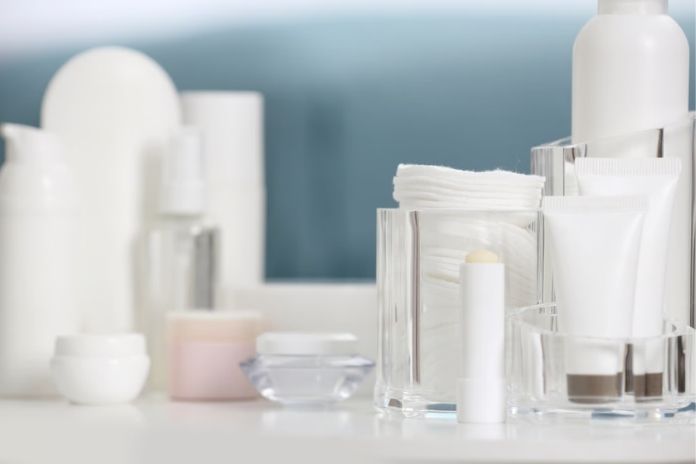
Not all acne products work for hormonal acne. Some are only for surface pimples. The 2024 AAD guidelines for acne management present 18 evidence-based recommendations. Strong recommendations cover benzoyl peroxide and topical retinoids.
Conditional recommendations include salicylic acid and azelaic acid, with isotretinoin strongly recommended for acne causing psychosocial burden, scarring, or treatment failure. Here’s how each maps specifically to hormonal, cycle-driven acne:
- Salicylic acid (0.5–2%) → best for prevention, works inside pores in oil dominant environment. Use as a leave-on toner or cleanser starting at mid-cycle.
- Benzoyl peroxide (2.5–5%) → kills acne bacteria, use as spot treatment. The AAD guidelines strongly recommend topical benzoyl peroxide due to its direct antibacterial mechanism and its role in preventing antibiotic resistance when combined with other therapies. Start at 2.5 percent, which research shows is as effective as higher concentrations with significantly less irritation.
- Niacinamide (5–10%) → reduces oil (sebum) and redness; supports skin barrier function simultaneously. Suitable throughout the cycle and especially useful in the follicular and menstrual phases when barrier integrity is a priority. Safe for daily use.
- Adapalene 0.1% → OTC retinoid, helps keep pores clear when used on a long-term basis (takes 2–3 months). Regulates cell turnover and prevents follicular clogging at the source. Use during the follicular phase when your skin tolerates it best.
- Azelaic acid (10%) → good for inflammation, antibacterial, and effective at clearing the dark marks left after a breakout clears (post-inflammatory hyperpigmentation or PIH). Particularly valuable for people with deeper skin tones where PIH persists long after the active lesion has resolved.
If acne is mild to moderate, these can help. But if you keep getting the same deep acne every cycle, then the root cause is hormonal.
Prescription Options: Targeting the Hormonal Root Cause
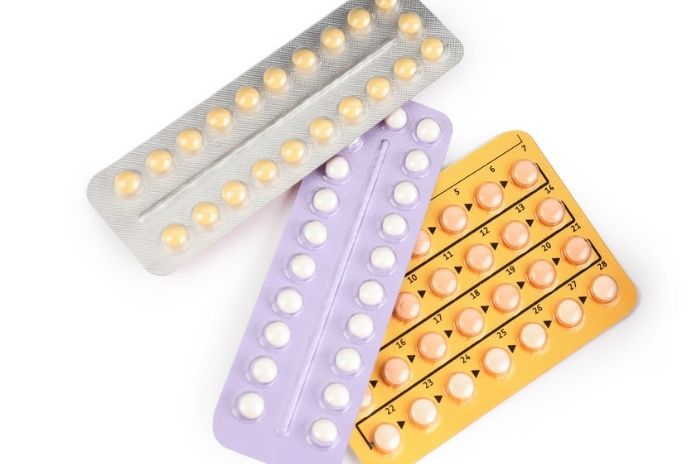
When OTC treatments have not shown significant improvement after two to three months of consistent use, prescription options directly target the hormonal mechanism instead of merely managing symptoms at the skin’s surface.
1. Spironolactone
This medicine does not just “reduce testosterone hormone.” Spironolactone for hormonal acne blocks androgen receptors in the sebaceous glands from activating them. Means the hormone is definitely produced in the body, but it cannot activate the oil glands. So, oil production reduces. It takes around 2–3 months to show real benefits. But it is not usually prescribed in pregnancy.
A retrospective study of 70 women with acne treated with low-dose spironolactone found that remission, defined as fewer than five retentional and two inflammatory lesions, was achieved in 71 percent of patients, with a median treatment period of six months.
As Dr. John S. Barbieri, dermatologist and epidemiologist at Brigham and Women’s Hospital, Boston, and co-chair of the AAD’s 2024 Acne Guideline Workgroup, noted in those updated guidelines, spironolactone represents a meaningful option for women with hormonally driven acne that hasn’t responded to topical therapy alone, particularly when the pattern is clearly cycle-linked.
2. Combined birth control pills
Oral contraceptives (OCP) decrease free testosterone levels through multiple mechanisms: reducing testosterone production by the ovaries and adrenal glands and increasing sex hormone-binding globulin (SHBG), a carrier protein that binds and inactivates free testosterone. So less hormone is available to affect the skin.
Pills with drospirenone work better for acne. But progestin-only pills, including depot injections, implants, and hormonal IUDs, can sometimes worsen acne.
A retrospective analysis of 2,147 patients using hormonal contraception found that combined oral contraceptives improved acne on average, with drospirenone-containing formulations showing the greatest benefit, followed by norgestimate and desogestrel.
- Prescription retinoids (tretinoin, adapalene, stronger)
Better control of skin cell turnover. Usually, these prescription retinoids are combined with other period acne treatments such as spironolactone or OCPs to provide a combined topical and systemic approach.
4. Isotretinoin
Used in severe cases like those involving scarring or failing standard oral or topical therapy. Reduces oil gland size itself. Strong medicine needs proper supervision. Requires ongoing dermatologist supervision, baseline bloodwork, and, for people who can become pregnant, consistent contraceptive use throughout treatment.
Diet and Lifestyle: What the Evidence Actually Says

Diet is not the main cause, but it can make acne worse.
A systematic review found that a high-glycemic diet increases insulin secretion, which causes an increase in IGF-1 (insulin-like growth factor 1). IGF-1 increases sebaceous (oil) gland growth, sebum (oil) production, keratinocyte (skin cell), and sebocyte (sebum gland cells) proliferation, contributing to comedone formation. Research also confirms that it directly activates androgen synthesis, further contributing to acne.
So it is not sugar “causing pimples” in some vague way. It’s a hormonal chain with each link well-supported by research. This chain is most relevant during the luteal phase, when your sebaceous glands are already primed by progesterone. Reducing
Intake of high sugar / refined carbs happens; it increases insulin, so IGF-1 increases, thus androgens increase, thus oil increases; hence, acne forms. So reducing high-GI foods such as refined sugar and processed carbohydrates in the second half of your cycle, esp. just before your period is a targeted strategy to reduce hormonal breakouts.
Dairy, some link found, especially skim milk. But not the same for everyone.
Stress management is direct physiology, not wellness advice. Stress is known to cause increase in the cortisol hormone; this leads to increase in androgen activity, which stimulates more oil production. For supplements like zinc and spearmint tea, the evidence is not strong. Don’t depend on them fully.
When to See a Dermatologist, Specific Red Flags
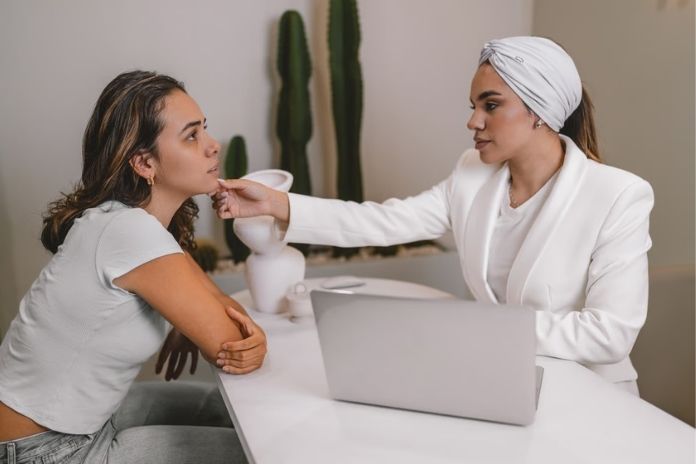
Don’t wait too long if the pattern is clear. See a doctor if:
- Acne leaving scars or dark marks
- Spreading to the back, chest, and shoulders
- No improvement after 2–3 months of proper OTC use
- Affecting your confidence or daily life
- Sudden severe acne in later age, 30 or 40’s, without a history is a specific red flag for PCOS (polycystic ovary syndrome, a hormonal condition) or adrenal dysfunction.
Better to see a dermatologist or a gynecologist with endocrine expertise (who understands hormonal acne).
As Dr. Andrea Zaenglein, Professor of Dermatology and Pediatric Dermatology at Penn State Hershey Medical Center and co-author of the 2024 AAD acne management guidelines, has noted in those guidelines, the psychological impact of acne is a valid and clinically important driver for escalating treatment, independent of how many lesions you can count.
Final Word
Here’s what changes everything about managing period acne: understanding that your skin isn’t randomly breaking out. It’s responding to a hormonal sequence that repeats every month. That sequence is well-mapped. And biology that’s well-mapped can be worked with.
The breakouts aren’t a sign that you’re doing something wrong. They’re a sign that your skin is doing exactly what hormones tell it to do. Period acne is very common and also manageable; it just needs the correct timing and approach, not more random products.
Start in the luteal phase. Adjust at menstruation time. If OTC options aren’t enough, know that prescription treatments exist specifically because this is a documented, common, and very treatable condition. You now have the science. The rest is just building the habit. And always consult a healthcare professional for personalized and professional advice.
- Period acne follows a predictable hormonal pattern. That predictability is your advantage.
- The cause of acne before the period is not just an oil problem; it is also pore compression with barrier weakness.
- Skin becomes more sensitive before the period because of higher water loss.
- Salicylic acid from mid-cycle, barrier support during menstruation, and a prescription referral if OTC options fail at the three-month mark – that’s the practical roadmap.
- The good thing is period acne is one of the most common and most treatable forms of adult acne. You don’t have to accept it as inevitable.
- Prevention of acne in the luteal phase is more effective than treatment after acne appears
- Spironolactone works by blocking hormone action, not just reducing levels
- Big gap in current advice: almost no one explains cycle-based skincare for acne timing, properly.
FAQs
1. Why do I break out before my period?
Progesterone increases oil production in the luteal phase, which can clog pores. Premenstrual acne increases by about 25% during this phase, but lesion counts usually return to follicular-phase levels once estrogen rises at the start of the next cycle.
2. Can period acne appear on my cheeks, not just my jaw?
Yes. Although the chin and jawline have the highest androgen receptor density, hormonal acne can also appear on the cheeks and neck. Many women notice it recurring in the same areas each cycle.
3. How long does spironolactone take to work for hormonal breakouts?
With low-dose Spironolactone, improvement usually appears around 3 months, with remission occurring over a median of 6 months. Higher baseline inflammatory lesion counts often predict a better response.
4. When does period acne start?
It usually begins 7–10 days before menstruation, during the luteal phase of the cycle.
5. Does diet during the luteal phase affect hormonal breakouts?
Yes. High glycemic-load foods can worsen acne because increased insulin stimulates androgen and sebum production. Reducing sugary and highly processed foods during the luteal phase may help limit breakouts.
References
- Geller, L., Rosen, J., Frankel, A., & Goldenberg, G. (2014). Perimenstrual flare of adult acne. Journal of Clinical and Aesthetic Dermatology, 7(8), 30–34.
- Lucky, A. W. (2004). Quantitative documentation of a premenstrual flare of facial acne in adult women. Archives of Dermatology, 140(4), 423–424.
- Stoll, S., Shalita, A. R., Webster, G. F., Kaplan, R., Danesh, S., & Penstein, A. (2001). The effect of the menstrual cycle on acne. Journal of the American Academy of Dermatology, 45(6), 957–960.
- Haedersdal, M., & Togsverd-Bo, K. (2017). Characteristics of premenstrual acne flare-up and benefits of a dermocosmetic treatment: a double-blind randomised trial. Journal of the European Academy of Dermatology and Venereology, 31(4), 674–681.
- Lovell, C. R., & Smolenski, K. A. (2015). The menstrual cycle and the skin. Clinical and Experimental Dermatology, 40(2), 111–115.
- Reynolds, R. V., Yeung, H., Cheng, C. E., Cook-Bolden, F., Desai, S. R., Druby, K. M., & Zaenglein, A. L. (2024). Guidelines of care for the management of acne vulgaris. Journal of the American Academy of Dermatology, 90(5), 1006.e1–1006.e30.
- Layton, A. M., Eady, E. A., Whitehouse, H., Del Rosso, J. Q., Fedorowicz, Z., & van Zuuren, E. J. (2017). Oral spironolactone for acne vulgaris in adult females: a hybrid systematic review. American Journal of Clinical Dermatology, 18(2), 169–191.
- Lurie, G., Wilkens, L. R., Thompson, P. J., & Carney, M. E. (2017). Adult female acne treated with spironolactone: a retrospective data review of 70 cases. European Journal of Dermatology, 27(4), 393–398.
- Zimmerman, Y., Eijkemans, M. J. C., Coelingh Bennink, H. J. T., Blankenstein, M. A., & Fauser, B. C. J. M. (2014). The effect of combined oral contraception on testosterone levels in healthy women: a systematic review and meta-analysis. Human Reproduction Update, 20(1), 76–105.
- Melnik, B. C., John, S. M., & Schmitz, G. (2009). Role of insulin, insulin-like growth factor-1, hyperglycaemic food and milk consumption in the pathogenesis of acne vulgaris. Experimental Dermatology, 18(10), 833–841.
- Meixiong, J., Ricco, C., Vasavda, C., & Ho, B. K. (2022). Diet and acne: a systematic review. JAAD International, 7, 95–112.
In this Article