





















- Cardio helps burn sugar. Strength training can significantly improve how your body handles blood sugar.
- Muscle is your biggest glucose sink. More muscle means better blood sugar control.
- If you are not doing resistance training at least twice a week, you are missing a major part of diabetes management.
For many years, exercise advice for type 2 diabetes was very simple: more and more physical exercise. The image was always the same: treadmill, cycling, long walks after dinner. Cardio became the default prescription. But now something is shifting quietly.
Recent research shows that while both running and weight training help clear glucose from the bloodstream, resistance training goes a step further. It more strongly improves insulin sensitivity, reduces visceral fat, and reshapes how muscle tissue itself processes and stores glucose.
This doesn’t mean that cardio is useless. It is incomplete on its own. The real question is not “Which burns more calories?” or “Does weight training lower blood sugar?” or “How does resistance training improve insulin sensitivity? The real question is, which approach builds a body that can manage sugar better, all day, even at rest?
To understand why lifting weights in Type 2 diabetes can often outperform running for blood sugar control, you first need to look at what your muscles actually do with glucose, not just which exercise is considered “best.”
The Muscle-Glucose Connection: The Biology That Makes This Work
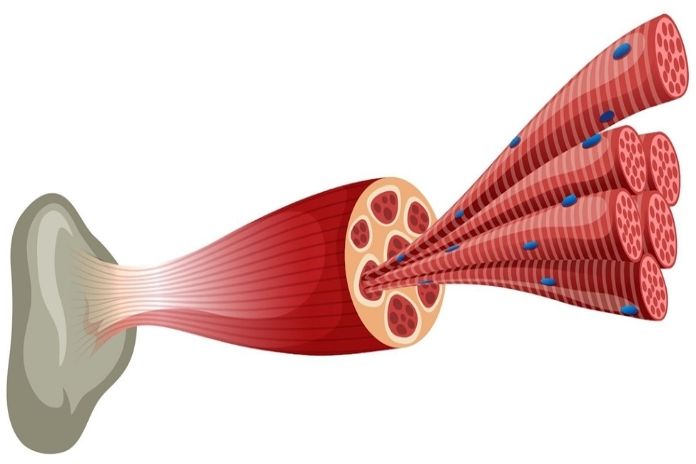
1. Your Muscles Are the Body’s Largest Glucose Storage Organ
Most people think the liver controls blood sugar. It does. But it isn’t the biggest player. The skeletal muscle glucose uptake handles around 70–80% of glucose uptake after meals. That means your muscles are primarily where sugar gets deposited after you eat.
Now, simple logic:
- More muscle → more space to store glucose
- Less muscle → glucose stays longer in the blood
This is why people with type 2 diabetes often have low muscle mass without realizing it. It is not always about obesity. Sometimes it is about a missing muscle.
There is also a silent cycle:
- Insulin resistance → less glucose enters the muscle
- Less glucose in muscle → muscle weakens
- Less muscle → worse blood sugar
This loop continues unless something breaks it. Strength training for diabetes, blood sugar, and insulin resistance exercise breaks it.
2. GLUT4—The Mechanism That Changes Everything
There is one small component inside your muscle cells doing very big work: GLUT4. This protein acts like a gate. When it moves to the surface of the cell, it allows glucose to enter from the bloodstream.
Now, an important point:
- Insulin activates GLUT4
- Exercise also activates GLUT4
- But both use different pathways
In type 2 diabetes, the insulin pathway becomes weak. But the exercise pathway still works properly. That means even when insulin is not doing its job well, exercise can still pull glucose into muscle. Strength training does something extra:
- Increases the number of GLUT4 transporters
- Improves their efficiency
- Enhances glycogen storage capacity
Even short programs, 6 weeks, 3 sessions per week, show the following:
- Increased GLUT4 content
- Better insulin receptor function
- Higher glucose clearance
Simple explanation: GLUT4 is like a door for sugar. Exercise for type 2 diabetes opens the door. GLUT4 strength training builds more doors.
What the Research Shows – Strength Training vs Cardio For Diabetes

1. The 2025 Virginia Tech Study
In this study, researchers created a resistance training blood sugar control model where animals had to push weighted lids to access food. It sounds basic, but it mimics progressive overload. They compared this with running-based exercise. Both groups improved their blood sugar. That is expected. But the resistance training group showed:
- Better insulin signaling in muscle
- Greater reduction in visceral fat
- A greater improvement in glucose tolerance
So the difference is not just burning glucose; it is changing how the body responds to glucose.
2. The Stanford RCT – Where Strength Training Clearly Wins
Now comes more practical human data. In a controlled trial, researchers compared:
- Strength training for diabetes blood sugar
- Aerobic training
- Combined training
In people with type 2 diabetes and normal BMI (not overweight), strength training showed a greater reduction in HbA1c than cardio alone. Why? Because these individuals often have low muscle mass (sarcopenia). Cardio burns calories. Strength training for HbA1c builds metabolic tissue. And in this group, muscle gain directly improved glucose control.
3. The Honest Truth – Combined Training Still Wins
Let’s not distort the conclusion. Across long-term studies, the best results come from combining both:
- Cardio improves heart and endurance
- Strength training improves glucose handling and insulin sensitivity
But here is an important practical point: If someone cannot do both due to joint pain, obesity, or fatigue, strength training alone is not the second-best option. It is a powerful primary strategy.
The Sarcopenia Factor – Why This Matters More as You Age

1. Muscle Loss and Diabetes Are Connected More Than You Think
After age 30, muscle mass starts declining slowly. Around 3–8% loss per decade and faster after 60. At the same time, sarcopenia and type 2 diabetes risk increase. This is not a coincidence. Less muscle means:
- Less glucose storage
- Lower insulin sensitivity
- Higher blood sugar spikes
“The more muscle you have, the better your blood sugar control, as the muscles are able to take that sugar up from the blood and use it to create energy,” Dr. Janelle Duah, an internal medicine physician, says.
In many “normal weight diabetes” cases, the problem is not fat; it is a lack of muscle. Strength training for diabetes blood sugar directly targets this. When muscles increase:
- GLUT4 increases
- Glycogen storage improves
- Insulin sensitivity improves
This is not a short-term effect. This is a structural change. You are not just controlling sugar after one meal. You are building a body with glycogen storage and strength training that handles sugar better every day.
Read More: How to Make a Sweet Tooth Go Away (Without Feeling Deprived)
How to Apply This – Practical Strength Training Framework
Most people overcomplicate exercise. Research protocols are actually very simple.
- Frequency: 2–3 times per week is enough to start
- Session Duration: 30–45 minutes Not long sessions.
“One should incorporate at least two strength training sessions, around 45 to 60 minutes long, every week,” says Dr. Banshi Saboo, a diabetologist.
- Intensity: Moderate to high effort. Light weights without progression will not work.
- Progression: Weights must increase slowly over time. This is key.
- Best Exercises: Focus on large muscle groups:
- Squats
- Deadlifts
- Rows
- Chest press
- Shoulder press
These movements activate more muscles, which means more glucose uptake.
1. Timing Matters More Than People Think
Doing resistance training after meals has an additional benefit. It helps reduce post-meal glucose spikes and improve glucose clearance.
Even short sessions after lunch or dinner can help.
2. Important Safety Note
If someone is on insulin and sulfonylurea, they must monitor blood sugar before and after exercise. Strength training can lower glucose significantly. Medication adjustment may be needed.
This should be done with a healthcare professional’s guidance.
Read More: Waking Up Sweaty? Why Your “Night Terrors” Might Actually Be Nocturnal Hypoglycemia
What ADA Guidelines Say and Where Things Are Moving
Earlier, resistance training was an optional suggestion. Now it is a clear recommendation. Current combined exercise diabetes ADA guidelines say the following:
- At least 2 sessions of resistance training per week
- Along with 150 minutes of aerobic activity
But new research is slowly shifting thinking. It is becoming clear that strength training is not “extra,” and it is a core metabolic intervention. Even drug research is now studying pathways activated by resistance exercise. That means exercise is not just lifestyle advice anymore. It is becoming a biological therapy.
Read More: Is Protein Powder Safe for People With Diabetes? What Research and Experts Say
Conclusion
Strength training changes blood sugar in ways cardio cannot fully match. It improves insulin sensitivity, increases GLUT4 expression, builds muscle for glucose storage, reduces visceral fat, and lowers HbA1C. But the real value is deeper.
It builds a system inside your body that keeps working, even when you are resting. Yes, the best results come from combining cardio and strength training. But if you are doing only cardio and ignoring resistance training, you are missing one of the strongest tools available for diabetes control. This is not about fitness. This is about metabolic capacity.
- Muscle is not just for strength; it is the main site of glucose disposal in the body.
- Exercise activates glucose uptake even when insulin is not working properly.
- Strength training increases GLUT4, making muscles more efficient at pulling glucose.
- People with normal-weight diabetes may benefit more from strength training than cardio.
- Research gap: Long-term human trials comparing strength-only vs combined training across different age groups are still limited, especially in Asian populations.
FAQs
1. Is strength training better than cardio for diabetes?
Not always better, but often equally effective or more effective for improving insulin sensitivity and HbA1c, especially in individuals with low muscle mass and insulin sensitivity.
2. Does lifting weights help blood sugar immediately?
Yes, lifting weights in type 2 diabetes can reduce blood glucose acutely and improve glucose handling for up to 24 hours.
3. How many times per week should I do strength training?
At least 2–3 sessions per week are recommended.
4. Can beginners with diabetes start weight training safely?
Yes, but start with guidance and monitor blood sugar, especially if on medication.
5. Should I stop cardio if I start strength training?
No. Best results come from combining both, but strength training should not be ignored.
References
- Bacchi, E., Negri, C., Zanolin, M. E., Milanese, C., Faccioli, N., Trombetta, M., Zoppini, G., Cevese, A., Bonadonna, R. C., Schena, F., Bonora, E., Lanza, M., & Moghetti, P. (2012). Metabolic Effects of Aerobic Training and Resistance Training in Type 2 Diabetic Subjects: A randomized controlled trial (the RAED2 study). Diabetes Care, 35(4), 676–682.
- ElSayed, N. A., Aleppo, G., Aroda, V. R., Bannuru, R. R., Brown, F. M., Bruemmer, D., Collins, B. S., Hilliard, M. E., Isaacs, D., Johnson, E. L., Kahan, S., Khunti, K., Leon, J., Lyons, S. K., Perry, M. L., Prahalad, P., Pratley, R. E., Seley, J. J., Stanton, R. C., & Young-Hyman, D. (2022). Facilitating positive health behaviors and well-being to improve health outcomes: Standards of care in diabetes—2023. Diabetes Care, 46(Supplement_1), S68–S96.
- Kobayashi, Y., Long, J., Dan, S., Johannsen, N. M., Talamoa, R., Sonia Sunita Raghuram, Chung, S., Kent, K., Basina, M., Lamendola, C., Haddad, F., Leonard, M. B., Church, T. S., & Palaniappan, L. (2023). Strength training is more effective than aerobic exercise for improving glycaemic control and body composition in people with normal-weight type 2 diabetes: A randomised controlled trial. Diabetologia, 66(10), 1897–1907.
- Michielsen, M., Yagiz, J., Hanssens, M., Claes, J., Geuns, L., Gojevic, T., Hansen, D., Claessen, G., De Craemer, M., & Cornelissen, V. (2025). The effect of exercise characteristics on HbA1c and other cardiovascular risk factors in adults with type 2 diabetes: a systematic review and meta-analysis of randomised controlled trials. Cardiovascular Diabetology.
- Shute, R. J., Montalvo, R. N., Shen, W., Guan, Y., Yu, Q., Zhang, M., & Yan, Z. (2025). Weightlifting outperforms voluntary wheel running for improving adiposity and insulin sensitivity in obese mice. Journal of Sport and Health Science, 101100.
In this Article