




















For good reason, planks are among the most well-liked core workouts. When done properly, they support the lumbar spine and enhance posture and core stability. The catch is that something is wrong if your plank is making you uncomfortable, especially if you have back pain during the plank.
Many individuals believe they must “push through” the timer, but in reality, the body adapts in ways that can strain the core when the core fatigues early.
This article will explain why planks hurt your back, identify the most common plank form mistakes, and outline the key indicators that your core has silently “quit” before your timer goes off. To safeguard your spine, you’ll also learn how to improve your technique, steer clear of plank exercise mistakes, and choose safer substitutes.
- Keep your body in a straight line, avoid sagging hips to prevent lower back strain.
- Engage your core and breathe steadily; don’t hold your breath.
- Stop at 30–60 seconds longer; holds reduce form and increase injury risk.
Read More: Sit-Ups vs. Crunches vs. Planks: Which Exercise Is Best for Your Core?
Why Planks Can Cause Lower Back Discomfort
One of our top picks for strengthening your abdomen is the plank exercise. In terms of core workouts, it would be difficult to find a single exercise that targets as many muscles as planks.
When performed properly, the plank can improve your strength, posture, pelvic position, and core.
However, if you perform any exercise improperly, you could get hurt. The majority of health and all fitness professionals are teaching and performing the plank, one of the most basic exercises, incorrectly. The most frequent errors are as follows:
You have a pronounced low back curve, sometimes called lumbar lordosis or lumbar hyperextension. These conditions prevent the core from functioning. Additionally, it puts the core at a biomechanical disadvantage during muscle contraction.
Your anterior deltoid, pec minor, and pec major are all shortened as a result of your rounded upper back, sometimes referred to as thoracic flexion or thoracic kyphosis. It creates a biomechanical disadvantage for your thoracic erector spinae muscles.
It frequently results in compression or depression of the rib cage, restricting your breathing and your ability to activate your core. Move your hips correctly, either anteriorly or posteriorly, to avoid straining your spine.
Your hips are forward-tilted at the top, or anteriorly tilted. This essentially shuts off your core by lengthening your transverse abdominus (TA or TVA)! The joints at the back of your spine, such as the facet joints or zygapophyseal joints, are subjected to increased or aberrant stress if your core is not functioning. It can result in mechanical stress, which can trigger early-onset osteoarthritis.
Sign #1: Your Hips Start to Sag Toward the Floor
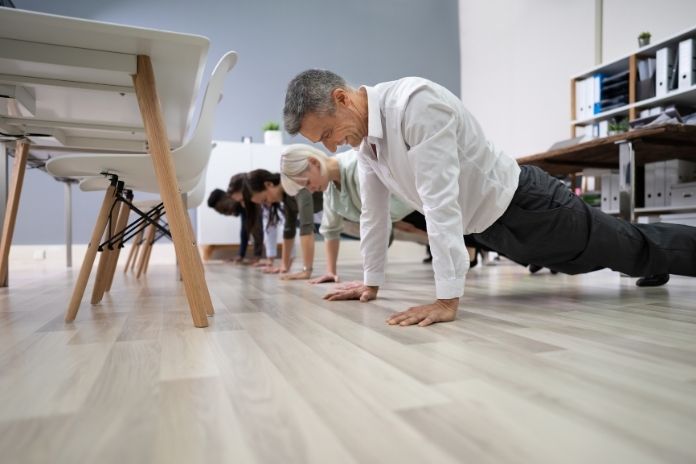
When your hips start to drop, it’s one of the most obvious signals that your plank core isn’t engaged. One characteristic of plankers is that they allow their pelvis to descend too far toward the ground.
Your knees, hips, and shoulders should form a lovely straight line when performing a proper plank. People who make this mistake will allow their knees and hips to drop beyond their shoulder line, resulting in a “rounded” return to the ground.
Your spine slips into excessive extension as your hips sag. Back pain during the plank may result from this increased compression on the lumbar spine.
The Fix:
- To lessen anterior pelvic tilt, slightly tuck your pelvis
- Gently contract your glutes
- “Pull ribs toward hips” is a thought
- If you lose control, reset
Sign #2: You Feel Pressure or Pinching in the Lower Back
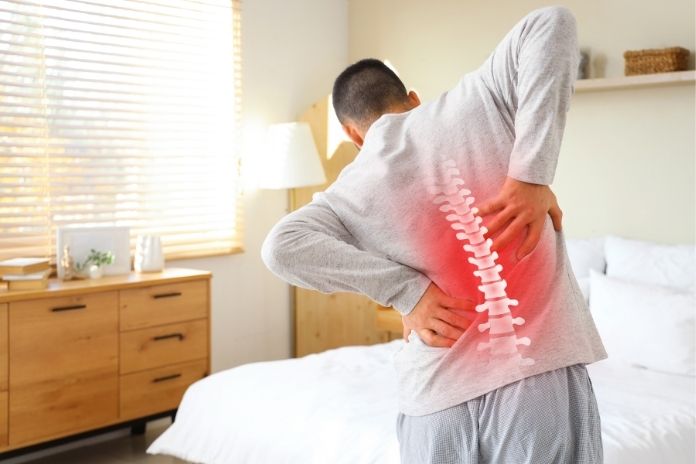
Not every discomfort is created equal. Joint strain and muscle effort are two different things. Instead of applying intense pressure on your lower back, a correct plank should cause tension in your abs. If you feel pinching, it’s a red flag for proper plank form back pain issues.
Sharp or localized discomfort, a sensation of compression in the spine, and pain that worsens over time are warning signs to stop right away. These signs clearly show why planks hurt my back.
The Fix: Re-engage your core, drop to your knees, and start over with improved alignment. If pain persists, switch to modified versions to address lower back pain during planks.
Sign #3: Your Breathing Becomes Shallow, or You Hold Your Breath
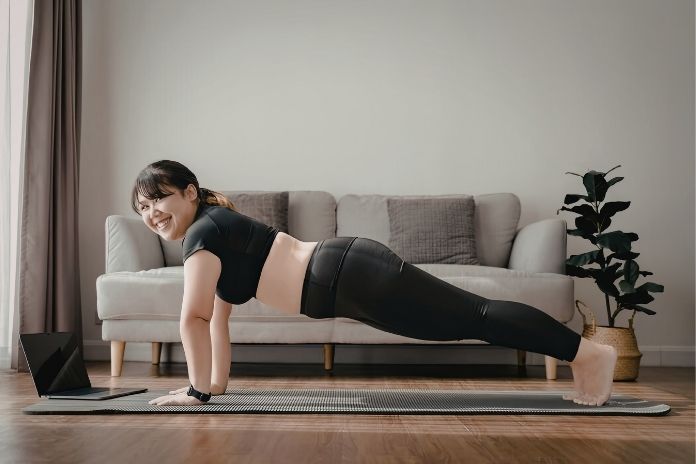
Although people sometimes disregard it, breathing plays an essential role in maintaining good form. You may unintentionally hold your breath when your core tires. It reduces effective core engagement and plank activation.
Abdominal bracing is essential for proper planks and works best with regulated breathing. This process is interfered with by holding your breath. Inadequate breathing decreases intra-abdominal pressure, increasing strain on the lumbar spine, and is a primary factor in the plank hurting the lower back.
How to keep your breathing under control:
- Breathe in using your nose
- Breathe out slowly while maintaining a tight core
- Keep your breathing rhythm constant
Read More: Your Guide to Beginner Strength Training: How to Build a Sustainable Fitness Routine
Other Subtle Signs Your Core Has Quit
Not every indication is clear. Some are more subtle but equally important indicators of signs that the plank core is not engaged:
- Shoulders edging closer to the ears
- Elevated hips that divert the weight from the core
- Poor spinal alignment and shaking
- Strain on the neck due to incorrect posture
These symptoms, which point to a breakdown in core stability, frequently accompany muscular fatigue.
How Long Should You Hold a Plank Instead?

Instead of working harder, work smarter. You may already have adopted that mindset in your training regimen, choosing an active recovery day over another taxing HIIT class, or replacing aimless 60-minute exercises with deliberate 30-minute sessions.
What about your planks, though? You’re squandering time if you keep holding for extended periods. When it comes to this original core workout, at least in terms of the time on the clock, less really is more.
The exercise can help increase intra-abdominal pressure and develop isometric, anti-extension strength in the rectus abdominis and obliques, regardless of your level of experience. It’s a great tool for developing anterior core strength and for statically controlling your pelvis, rib cage, and spine in the sagittal plane.
You may easily hold a front plank for up to 30 seconds before increasing it to a maximum of one minute. It is because planks are not a functional exercise; you don’t perform them in your daily life, and your form may deteriorate the longer you practice them, which can lead to low back pain.
You start to see declining returns after 60 seconds; therefore, it’s definitely advisable to move toward more dynamic or multi-planar activities.
“Generally speaking, time under tension is a great thing for growing muscles. However, anything beyond two minutes for a plank is at best, meaningless, or at most, harmful.” “Enough is enough,” Dan John, Men’s Health contributor and author of “Can You Go?” He adds, “It’s just a plank. More is not better.”
Quick Fixes to Protect Your Back During Planks
Retraining your core system to function as a cohesive unit is more important than simply exerting more effort:
Build with Your Breath: Breathe 360 degrees; inhale to expand your belly and ribcage; exhale to contract your pelvic floor and abs gently. Start where your body is: Until your core is strong enough for the full version, try wall planks, knee planks, or side planks.
Pay Attention to Your Body’s Feedback: If you feel bulging, leaking, or heavy, it’s time to make adjustments rather than push through.
Get Professional Advice: A pelvic floor physical therapist can evaluate the coordination between your pelvic floor and core, customize adjustments for your body, and help you make safe progress.
Read More: How to Break Through a Fitness Plateau: 7 Strategies That Actually Work
Safer Plank Modifications
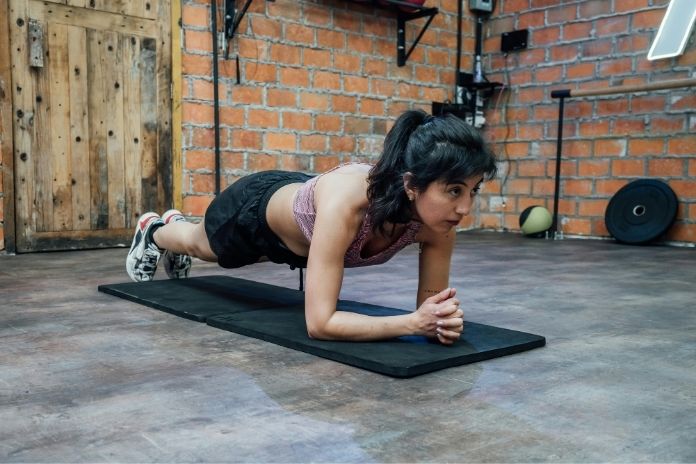
If you frequently get back pain when performing planks, you might want to think about these options:
Kneeling Plank: Practice core stability while reducing strain on knees.
Elevated Plank: Using a wall or a bench reduces the hip compensation and also the intensity.
Short Interval Planks: To prevent muscle fatigue, perform 10–20 second holds interspersed with breaks.
Variations of the Side Plank: Improve total core activation and target various muscle groups.
Who Is More Likely to Experience Back Pain During Planks
Certain individuals are more prone to a plank hurting their lower back:
Beginners: Poor technique and ignorance of plank form errors.
Sedentary Lifestyles: Weak core muscles lead to compensatory movements and decreased core stability.
People with Weak Glutes: This leads to hip compensation and puts more strain on the lumbar spine.
Individuals Experiencing Back Pain: Due to pre-existing conditions, they are
more sensitive to back pain during planks.
When to Stop and Seek Guidance
Sometimes the issue is more complicated than straightforward technical mistakes. Get assistance if you encounter:
- Persistent pain following physical activity.
- Radiating or acute discomfort.
- Discomfort during regular activity.
- Inability to keep the spinal alignment.
Read More: Toning Workouts for Men vs Women: What’s the Difference?
Conclusion
Back pain during plank is frequently an indication that your form or endurance needs to be adjusted rather than that the exercise is dangerous. The body compensates when your core becomes tired, putting undue tension on your lower back.
Identifying early warning signs and correcting plank-form mistakes can greatly improve safety and effectiveness. Instead of seeking longer holds, focus on maintaining proper posture, controlled breathing, and shorter, higher-quality holds.
References
- Fitstoppt. (12 August, 2015). Why does planking hurt my back?
- Pelvic Prescription. Why planks hurt your core (and how to fix it).
- Myprotein. (2023, February 14). How long do you need to hold a plank? Everything you need to know about planks.
- Sparacino, A. (2025, April 3). The Average Amount of Time to Hold a Plank.
- Bremner, L. (2021, May 16). Top three ways to eliminate lower back pain and get the most out of a plank
In this Article