


















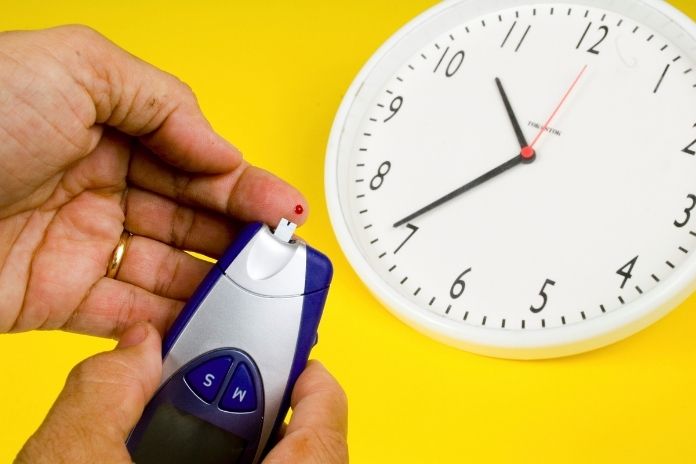
Here’s something most people don’t realize: your blood sugar starts rising before you even get out of bed. Between roughly 3 a.m. and 8 a.m., your body triggers a hormonal surge that’s been happening since before you were born.
It is called the dawn phenomenon (a predictable early-morning rise in blood glucose triggered by your own hormones), and it’s one of the most important reasons your morning routine to lower blood sugar matters more than any other time of day.
In the early morning hours, your body releases a surge of hormones, including cortisol and growth hormone. These hormones signal your liver to boost its production of glucose, which provides energy that helps you wake up. In healthy individuals, the pancreas compensates quickly.
But if you have diabetes, you may not make enough insulin or may be too insulin-resistant to counter the increase in blood glucose, which means your levels may be elevated when you wake up.
That’s the gap this article addresses. Each of these morning habits for blood sugar is backed by specific research on the mechanism, not just the outcome. And none of them require a gym membership, a prescription, or a dramatic life overhaul. These habits are designed to support, not replace, your medication and your healthcare provider’s guidance.
- Small targeted changes to your morning routine can meaningfully improve blood sugar levels.
- The dawn phenomenon triggers a surge of cortisol and growth hormone between 3 a.m. and 8 a.m.
- A 10-minute walk after breakfast and carbohydrate intake are shown to reduce morning glucose levels in people with diabetes and prediabetes
Read More: Signs Your Cortisol Levels Are Too High (and What to Do About It Naturally)
Habit 1: Take a Short Walk After Breakfast, Not Before It

The mechanism is straightforward. When you walk, your muscle cells activate something called GLUT4 transporters (specialized proteins that pull glucose directly out of your bloodstream and into muscle cells, with very little need for insulin). That’s a meaningful glucose drop without requiring your pancreas to work harder.
But here’s the distinction that almost no one mentions: fasted morning exercise can actually push blood sugar up temporarily in people with insulin resistance, because exercise itself triggers cortisol and adrenaline, which tell your liver to release more glucose. Doing that in an already elevated dawn phenomenon window can backfire.
Post-meal is different. A randomized crossover study found that the post-meal glucose area under the curve was significantly lower when participants with type 2 diabetes walked after meals compared with walking on a single daily occasion. The effect is practical and immediate.
A randomized study published in Diabetologia found that 10-minute walks after each main meal lowered post-meal glucose more effectively than a single 30-minute daily walk in people with type 2 diabetes. Taking the walk immediately after glucose ingestion yielded significantly lower two-hour glucose areas under the curve and a meaningfully lower peak glucose level compared with resting.
Ten to twenty minutes, 40 to 45 minutes after breakfast. That’s the window. It doesn’t have to be brisk; a comfortable pace is enough to activate those GLUT4 transporters and start clearing the post-breakfast glucose rise before it peaks.
Habit 2: Eat a Protein-Forward Breakfast — and Eat the Protein First

Skipping breakfast looks like a blood sugar win on paper. It isn’t. When you skip the morning meal, you leave your body at the peak of the dawn phenomenon with no insulin response triggered, which can amplify the glucose rise into the mid-morning. The fix isn’t just eating breakfast. It’s eating the right breakfast in the right order.
Protein slows gastric emptying (how quickly food leaves your stomach), stimulates GLP-1 (glucagon-like peptide-1, a gut hormone that helps regulate insulin release), and blunts the carbohydrate absorption rate.
Research comparing high-protein and high-carbohydrate breakfasts in people with type 2 diabetes found that post-breakfast glucose and GIP areas under the curve were significantly lower after the protein condition compared with the carbohydrate condition. And then there’s meal sequencing, which is genuinely one of the more interesting findings in recent nutrition research.
A study in people with prediabetes found that eating protein and vegetables before carbohydrates attenuated glucose peaks by more than 40% compared with eating carbohydrates first, and the incremental area under the glucose curve was 38.8% lower when protein and vegetables were consumed first.
A Weill Cornell Medical College study on patients with type 2 diabetes found similar results: glucose levels were much lower at the 30, 60, and 120-minute checks – by about 29 percent, 37 percent, and 17 percent, respectively – when vegetables and protein were eaten before carbohydrates.
Practical Target: 20 to 30 grams of protein at breakfast. Two eggs plus Greek yogurt get you there. So does cottage cheese with a protein smoothie. Eat your eggs or yogurt first, then add the toast or oats after. It’s not about cutting carbs. It’s about sequencing them.
Habit 3: Get 10 to 15 Minutes of Natural Morning Light

Your body’s circadian rhythm (your internal 24-hour biological clock) doesn’t just govern sleep. It coordinates insulin sensitivity, glucose metabolism, and cortisol timing across every organ system, including your liver, skeletal muscle, and pancreas.
Light is the primary signal that sets that clock each day. Most people spend 80 to 90 percent of their time indoors under artificial lighting that is dimmer, spectrally static, and poorly aligned with natural daylight patterns – and this disrupts circadian rhythms that govern glucose regulation.
In a randomized crossover design, 13 individuals with type 2 diabetes were exposed to natural daylight facilitated through windows versus constant artificial lighting during office hours for 4.5 consecutive days.
Continuous glucose monitoring revealed that participants spent more time in the normal glucose range during daylight exposure, and whole-body substrate metabolism shifted toward a greater reliance on fat oxidation.
When exposed to natural light, participants exhibited more stable blood glucose levels and an overall improvement in their metabolic profile, providing the first evidence of the beneficial impact of natural light on people with type 2 diabetes.
You don’t need to stand outdoors in the sun. Sitting near a window counts. Combining this with your post-breakfast walk is the easiest way to cover both Habit 1 and Habit 3 simultaneously. Ten to fifteen minutes of morning light, ideally within the first hour of waking, helps synchronize the clock systems that govern how well your cells respond to insulin throughout the day.
Read More: 10 Morning Habits Cardiologists Recommend for a Healthier Heart
Habit 4: Drink a Glass of Water Before Anything Else

This one takes about 30 seconds and costs nothing. When you’re dehydrated, your blood becomes more concentrated. That means the same amount of glucose is dissolved in a smaller volume of fluid, which makes your blood sugar reading read higher.
Being dehydrated, having less water in your bloodstream, has the potential to contribute to high blood sugar by concentrating the amount of glucose in your blood. Your kidneys also rely on adequate hydration to filter and excrete excess glucose efficiently.
Dehydration can affect blood sugar levels, and it is recommended to drink plenty of water or other fluids, particularly around exercise. Starting your morning in a mildly dehydrated state, which most people do after seven or eight hours of sleep without fluids, puts you at a small but unnecessary disadvantage right at the dawn phenomenon peak.
Drink 250 to 300 milliliters (about one full glass) of water before your coffee, food, or medication. Avoid fruit juices and sweetened drinks first thing in the morning. They deliver a rapid glucose load directly into the dawn phenomenon window, which is exactly when you don’t want an additional spike.
The evidence that cinnamon meaningfully lowers blood sugar in humans is modest and inconsistent, so don’t count on it doing any metabolic heavy lifting.
Habit 5: Spend 5 Minutes Managing Cortisol Before You Check Your Phone

Cortisol is already elevated in the morning as part of the dawn phenomenon. And cortisol is a direct insulin antagonist, which means it signals your liver to release glucose while simultaneously reducing your cells’ response to insulin. Starting your day with a cortisol spike before the physiological one has even settled is not a recipe for stable blood sugar.
The phone problem is real physiology, not moralizing. Research confirms that cortisol dysregulation represents an important biological link between stress and type 2 diabetes mellitus, with elevated or dysregulated cortisol patterns strongly associated with insulin resistance.
Checking news, email, or social media first thing creates a low-grade stress response. Even mild anxiety measurably raises cortisol. And high cortisol tells your pancreas to release less insulin while also triggering your liver to release more glucose as a stress response, making blood sugar harder to manage.
The good news: you don’t need an hour of meditation. Research in women with type 2 diabetes found that slow deep breathing and mindfulness meditation had measurable effects on decreasing cortisol levels, consistent with previous studies supporting these techniques for stress and cortisol reduction.
Five minutes. Deep breathing, journaling, gentle stretching, or simply sitting with your water (Habit 4) in silence before reaching for your phone. That’s enough to interrupt the morning cortisol spike cycle and protect the blood sugar window that follows.
Read More: 22 Ways To Lower Cortisol Levels For A Healthier Life
Final Word
Your blood sugar doesn’t wait for you to finish breakfast before it starts moving. It’s already been rising for hours by the time your alarm goes off, driven by hormones doing exactly what they’re designed to do.
But predictable biology is manageable biology. These five morning habits work because each one addresses a specific mechanism, not because they’re magic, and not because willpower alone makes the difference.
Small, consistent changes to the first hour of your day can meaningfully shift the metabolic trajectory of what follows. Start with one. Tomorrow morning. The biology will do the rest.
- The dawn phenomenon is a predictable biological phenomenon. Your morning habits can either compound it or counteract it.
- None of these five habits requires equipment, a gym, or significant time. A 10-minute post-breakfast walk, a protein-first breakfast, a glass of water, ten minutes near a window, and five cortisol-free minutes before your phone—collectively, they target five distinct mechanisms driving morning blood sugar..
- If your fasting blood sugar is consistently elevated despite these changes, speak with your healthcare provider before adjusting your medication or routine independently.
FAQs
1. Why is my blood sugar high in the morning even though I haven’t eaten anything?
This is known as the dawn phenomenon. Early-morning hormones like growth hormone and cortisol signal the liver to release glucose into the bloodstream. If insulin is insufficient, blood sugar can rise before breakfast. It’s a predictable hormonal pattern, not necessarily something you did wrong.
2. What is the best morning exercise to lower blood sugar?
Post-meal walking is one of the most effective morning routines to lower blood sugar. Walking for about 10 minutes after meals improved post-meal blood glucose control in people with type 2 diabetes more than a single 30-minute daily walk.
3. What should I eat for breakfast to lower my blood sugar in the morning?
To help lower blood sugar in the morning, have a high-protein breakfast (20–30 g protein) and eat protein before carbohydrates. Studies show protein-rich meals reduce postprandial glucose spikes. Practical choices include eggs, Greek yogurt, cottage cheese, or unsweetened protein smoothies.
4. Does drinking water in the morning actually lower blood sugar?
Drinking water in the morning doesn’t directly lower blood sugar like medication. However, proper hydration helps the body eliminate excess glucose through urine and may prevent higher blood sugar levels, especially in people with diabetes or prediabetes.
5. Can I drink coffee first thing in the morning if I have high blood sugar?
It’s worth reconsidering. Black coffee raises cortisol, and cortisol is a direct insulin antagonist. High cortisol triggers your liver to release more glucose while reducing insulin sensitivity, making elevated morning blood sugar harder to bring down.
References
- Cleveland Clinic. (2025). Dawn phenomenon.
- American Diabetes Association. (n.d.). High morning blood glucose.
- Reynolds, A. N., Mann, J. I., Williams, S., & Venn, B. J. (2016). Advice to walk after meals is more effective for lowering postprandial glycaemia in type 2 diabetes mellitus than advice that does not specify timing: a randomised crossover study. Diabetologia, 59(12), 2572–2578.
- Hashimoto, K., Dora, K., Murakami, Y., Matsumura, T., Yuuki, I. W., Yang, S., & Hashimoto, T. (2025). Positive impact of a 10-min walk immediately after glucose intake on postprandial glucose levels. Scientific Reports, 15, 22662.
- Baum, J. I., Gray, M., & Binns, A. (2015). A high-protein breakfast induces greater insulin and glucose-dependent insulinotropic peptide responses to a subsequent lunch meal in individuals with type 2 diabetes. Journal of Nutrition, 145(3), 452–458.
- Shukla, A. P., Iliescu, R. G., Thomas, C. E., & Aronne, L. J. (2015). Food order has a significant impact on postprandial glucose and insulin levels. Diabetes Care, 38(7), e98–e99.
- Shukla, A. P., Dickison, M., Coughlin, N., Karan, A., Mauer, E., Truong, W., Casper, A., & Aronne, L. J. (2019). The impact of food order on postprandial glycemic excursions in prediabetes. Diabetes & Obesity and Metabolism
- Harmsen, J. F., Wefers, J., Doligkeit, D., Schellen, L., Mensink, R. P., Schrauwen-Hinderling, V. B., Phielix, E., Hoeks, J., Dibner, C., & Schrauwen, P. (2025). Natural daylight during office hours improves glucose control and whole-body substrate metabolism. Cell Metabolism.
- American Heart Association. (2024). Role of circadian health in cardiometabolic health and disease risk: A scientific statement from the American Heart Association. Circulation.
- Hackett, R. A., & Steptoe, A. (2017). Cortisol dysregulation: the bidirectional link between stress, depression, and type 2 diabetes mellitus. Annals of the New York Academy of Sciences, 1391(1), 20–34.
- Abdelbasset, W. K., Tantawy, S. A., & Kamel, D. M. (2023). Effect of aerobic exercise, slow deep breathing and mindfulness meditation on cortisol and glucose levels in women with type 2 diabetes mellitus: a randomized controlled trial. Frontiers in Psychology
- Mayo Clinic. (2024). Diabetes management: How lifestyle, daily routine affect blood sugar.
In this Article