
















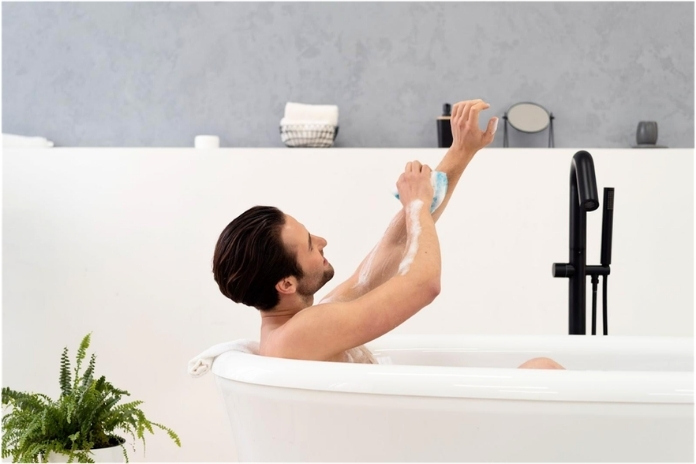
Winter comes, and suddenly, eczema does not behave the same way. Skin becomes tighter, itchier, and more irritated. Many patients say, “I was fine in the summer. Now every patch of skin is burning.”
The reason is not only dryness but also bacteria.
Among the most discussed but misunderstood treatments in dermatology is the bleach bath for eczema. It sounds harsh. It sounds chemical. But in controlled dilution, dermatologists across the world use it for eczema infection prevention, especially in people with repeated flare-ups and crusting.
Let us understand properly, without fear, without hype.
Why Eczema-Prone Skin Is Vulnerable to Winter Infections

1. The Compromised Skin Barrier
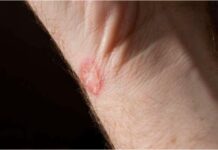
Eczema, medically called Atopic dermatitis, is not just dry skin. It is a barrier disorder.
Healthy skin has lipids, proteins, and tight junctions that act like bricks and cement. In eczema, that cement is weak. Water escapes easily. Irritants enter easily.
When the barrier breaks, microbes enter. This is where the term “eczema skin barrier repair” becomes important. Without restoring barrier strength, infections keep recurring.
2. Staph Overgrowth and Inflammation
One bacterium is very important here: Staphylococcus aureus.
Research shows up to 90% of moderate-to-severe eczema skin is colonized with Staph. That does not always mean visible infection. But even colonization increases inflammation.
Staph releases toxins that stimulate immune cells. More cytokines. More redness. More itching.
Scratching creates more breaks. Bacteria enter deeper. Now, secondary infection starts, with yellow crusting, oozing, and pain.
This is why staph infection eczema is not rare in winter.
3. Why Winter Makes It Worse
Winter changes three things:
- Low humidity dries skin more
- Thick clothing increases sweating and friction
- Less sunlight exposure reduces the natural antimicrobial effect
Dry air increases micro-cracks. Bacteria stick more easily.
So many patients report eczema winter flare-ups not only because of dryness but also because the bacterial load increases. This is where diluted bleach comes into discussion.
The Science Behind Bleach Baths for Eczema
1. How Diluted Bleach Works on the Skin
Household bleach contains sodium hypochlorite, a disinfectant widely used in hospitals. In high concentrations, it is irritating. But dermatologists do not use high concentrations.
In a properly diluted bleach bath eczema protocol, the concentration becomes similar to a mild chlorinated swimming pool.
At that dilution:
- It reduces surface bacteria
- It decreases Staph colonization
- It lowers toxin production
Importantly, it does not sterilize the skin completely. The goal is balance, not elimination. The idea is microbiome modulation, not chemical burning.
Pediatric dermatologist Dr. Sheilagh Maguiness explains that bleach baths are “a general anti-microbial treatment” and contain “about the same bleach concentration as a swimming pool” when properly diluted. She emphasizes that only plain, unscented household bleach should be used—not scented or “splash-less” variants that contain added irritants.
Dr. Sheilagh Maguiness also notes that misinformation online often pushes families toward unproven remedies. “Unfortunately, there is so much misinformation online. Many people turn to essential oils and other unproven methods—even raw beef tallow—to address skin problems.”
In children, especially, she frequently recommends pairing infection control with moisture retention techniques, such as damp “wet wrap” pajamas worn over emollients at night to help calm inflamed skin.
2. Anti-Inflammatory Benefits
Interestingly, bleach baths are not only antibacterial. Some laboratory studies show that low-dose sodium hypochlorite may reduce inflammatory signaling pathways in skin.
It appears to decrease certain cytokines linked to eczema severity. This is still under active research, but it supports why patients sometimes report:
- Less redness
- Less itching
- Fewer flare cycles
Organizations like the National Eczema Association recognize bleach baths as part of structured atopic dermatitis management when prescribed correctly.
3. Preventing Antibiotic Overuse
Repeated infections often lead to repeated use of antibiotics.
But frequent antibiotic use causes the following:
- Resistance
- Gut disturbances
- Recurrent infection cycles
Bleach baths, when used properly, reduce bacterial burden locally. That can reduce the need for oral antibiotics in patients with recurrent infected eczema. This is an important public health angle that many people ignore.
How to Prepare a Safe, Dermatologist-Approved Bleach Bath
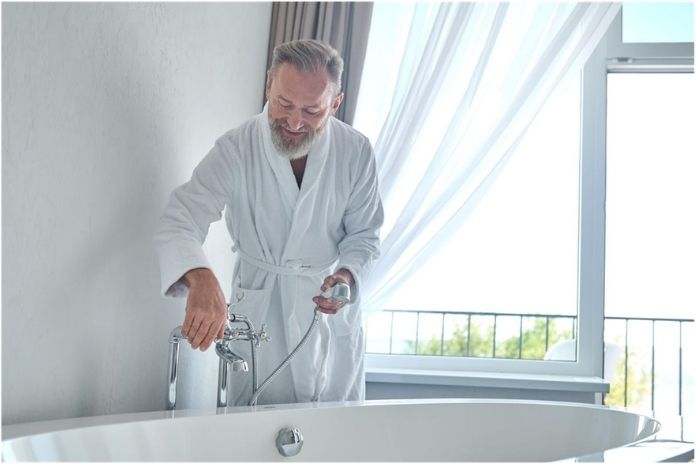
The key is correct dilution. Problems usually happen when patients guess the amount
1. Recommended Ingredients and Dilution Ratios
For a standard bathtub (~40 gallons of lukewarm water):
- Use regular 5–6% unscented household bleach
- Add ¼ to ½ cup of bleach
- Mix the water well before entering
- Soak for 10 minutes only
- Frequency: 2–3 times weekly (as advised)
This is the commonly recommended safe bleach bath ratio by dermatologists. It is not daily. It is not concentrated. And it is never used undiluted.
2. Safety Tips for Sensitive Skin
Follow strict precautions:
- Do not use scented or splashless bleach
- Avoid face immersion
- Do not apply directly to the skin
- Rinse lightly after soaking
- Pat dry gently
- Apply thick moisturizer within 3 minutes
Moisturizing is not optional. It is mandatory for barrier recovery. A bleach bath supports infection control. Moisturizer supports eczema skin barrier repair.
3. When to Avoid Bleach Baths
Avoid it or consult a dermatologist if:
- Skin has deep open wounds
- There is severe raw erosive eczema
- The burning sensation is intense
- The child is very young and unsupervised
If stinging persists beyond mild tingling, stop and consult. Always follow proper dermatologist bleach bath instructions, not internet shortcuts.
Common Myths and Fears About Bleach Baths
1. “Isn’t Bleach Too Harsh for Skin?”
Undiluted bleach is harsh. Diluted bleach at the recommended ratio is comparable to swimming pool water. Concentration makes the poison. In dermatology, dose matters.
2. “Will It Lighten or Burn My Skin?”
At the correct dilution, the bleach bath does not bleach skin color. It does not change pigmentation. It does not chemically strip melanin. If burning occurs, usually the ratio is incorrect, or the skin barrier is extremely compromised.
3. “Can Children Use Bleach Baths?”
Pediatric dermatologists commonly recommend bleach baths for children with moderate-to-severe eczema and recurrent infection, under supervision. Smaller tubs require smaller dilution. Exact measurement is important. Never estimate by “capfuls” unless instructed.
Read More: Eczema Scars: How to Heal Discoloration and Redness Safely
Integrating Bleach Baths Into an Eczema Care Routine
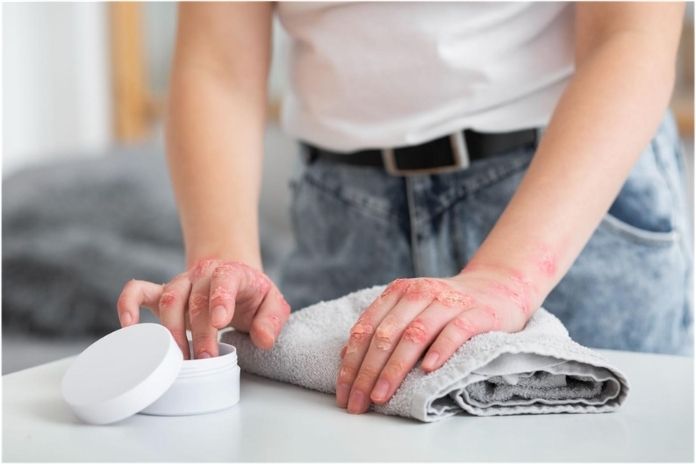
A bleach bath alone is an incomplete treatment.
1. Combine With Moisturizers and Topical Therapies
A bleach bath reduces bacteria. But inflammation still requires the following:
- Emollients
- Topical steroids (if prescribed)
- Calcineurin inhibitors in some cases
It complements therapy. It does not replace it.
2. Support Skin Microbiome Recovery
After bacterial reduction, encourage a healthy skin environment:
- Fragrance-free cleansers
- pH-balanced products
- Thick occlusive moisturizers
We do not want sterile skin. We want a balanced microbiome.
3. Frequency and Long-Term Safety
Dermatologists generally consider bleach baths safe for long-term intermittent use when monitored. According to dermatologist Dr. Ross Radusky, a bleach bath may be really very helpful a few times a week. But it’s never good to use it daily. If it is too much, then it can be too drying for eczema-prone skin.
However:
- Overuse may dry skin
- Incorrect dilution increases irritation
- Some mild cases do not require it
Treatment must match severity.
A bleach bath is not for every eczema patient. It is more useful for those with recurrent eczema infection prevention needs.
Read More: Eczema During Pregnancy: Causes, Safe Treatments, and Relief Tips for Moms-to-Be
When to See a Dermatologist
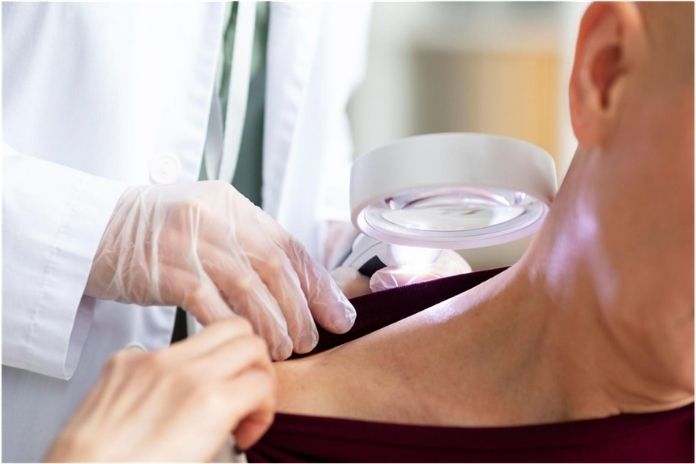
Seek medical evaluation if:
- Yellow crusting appears
- Pus or painful swelling develops
- Redness spreads rapidly
- Fever occurs
- Eczema worsens despite treatment
Professional guidance ensures correct management of atopic dermatitis.
Read More: Bathing and Eczema: How Often Should You Bathe? What the Latest Trial Shows
Final Thoughts
The phrase “bleach bath” creates fear. But in dermatology, it is not about chemical exposure. It is about controlled dilution and bacterial balance.
For patients struggling with repeated winter flares and staph infection eczema, a properly measured diluted bleach bath eczema protocol can be a simple and affordable support.
It is not a glamorous treatment. It is not new-age therapy. It is basic infection control applied carefully to sensitive skin.
When used under medical advice, bleach baths are not dangerous shortcuts. They are practical tools.
- Bleach baths target bacterial imbalance, not just dryness.
- Proper dilution (¼–½ cup per full tub) keeps concentration similar to a swimming pool; irritation risk is dose-dependent.
- They may reduce the need for repeated antibiotics in recurrent infected eczema cases.
- They are most useful in moderate-to-severe eczema with frequent Staph colonization.
- We currently know bacterial load reduces, but the optimal frequency for preserving healthy microbial diversity still needs more investigation.
FAQs
1. How often should bleach baths be done?
Usually 2–3 times per week in moderate cases. Frequency depends on severity and the doctor’s advice.
2. Can I use antiseptic liquid instead of bleach?
Not recommended unless prescribed. Different chemicals have different effects and safety profiles.
3. Is swimming pool water the same as a bleach bath?
Not exactly. Pool concentration varies and contains additional chemicals.
4. Can bleach baths cure eczema permanently?
No. They help manage the bacterial component. Eczema is a chronic inflammatory condition.
5. What if my skin feels dry after a bleach bath?
Moisturizing immediately after a bath is essential. Skipping moisturizer can worsen dryness.
References
- Krynicka, K., & Trzeciak, M. (2022). The role of sodium hypochlorite in atopic dermatitis therapy: a narrative review. International Journal of Dermatology.
- Lim, J. S., Park, H., Cho, S., & Yoon, H.-S. (2018). Antibiotic Susceptibility and Treatment Response in Bacterial Skin Infection. Annals of Dermatology, 30(2), 186.
- Wang, Z., Hülpüsch, C., Traidl-Hoffmann, C., Reiger, M., & Schloter, M. (2024). Understanding the role of Staphylococcus aureus in atopic dermatitis: strain diversity, microevolution, and prophage influences. Frontiers in Medicine, 11.
In this Article