



















Many people turn to a gluten-free diet in hopes of easier digestion, clearer skin, and a more consistent energy level. However, a surprising number of people in the U.S. and Canada find themselves feeling drained, cloudy, or simply very tired on a gluten-free diet.
This gluten-free fatigue is not just a myth; it often stems from a concept nutritionists call “nutrient debt.”
When you take out the gluten-containing grains, you are also subtracting the fortified vitamins and the vital fiber contained in them. If you don’t intentionally replace these, your body can begin to fall short on the nutrients that help your red blood cells, metabolism, and digestive system. The result? Fatigue on a gluten-free diet, even if your calorie intake appears to be normal.
In this article, we explain why gluten-free fatigue occurs, which nutrients are most often missing, and how low fiber and high-glycemic foods affect energy. We’ll also cover simple food swaps, ways to rebalance nutrients safely, and when fatigue may signal conditions such as anemia or celiac-related malabsorption.
Read More: Is Gluten Bad for Everyone? The Truth Behind the Trend
What Is “Nutrient Debt” on a Gluten-Free Diet?

“Nutrient debt” refers to the silent consequence of eliminating gluten-containing grains without replacing them with similar nutritional value. It is not about gluten, but about what is lost when wheat-based foods are replaced with low-nutrient alternatives.
In North America, refined wheat flour is supplemented with iron, folate, thiamine, riboflavin, and niacin. This public health initiative, introduced many years ago, is intended to prevent widespread deficiencies.
When consumers switch from gluten-free bread made from rice flour or tapioca starch, they may inadvertently fail to obtain these nutrients because gluten-free foods are not consistently fortified.
This problem affects both kinds of people, those with celiac disease and those without. A celiac may have difficulty absorbing nutrients in the first place due to damage to their intestinal lining. An individual avoiding gluten for personal reasons may inadvertently reduce their intake of iron, B vitamins, and prebiotic fiber. In either scenario, an imbalanced gluten-free diet can lead to nutrient deficiencies and fatigue.
Why Going Gluten-Free Can Lead to Fatigue

The Enrichment Gap — Losing Fortified Nutrients
Most wheat-based foods in North America are iron-fortified, folate-fortified, and B vitamin-fortified. These vitamins and minerals are responsible for powering energy metabolism and transporting oxygen around the body.
Iron is essential for the transport of oxygen by red blood cells, and when iron levels are low, the muscles and brain do not receive adequate oxygen, resulting in fatigue, headaches, and weakness. Folate and vitamin B12 are involved in DNA synthesis and nerve function, while thiamine is important for the conversion of carbohydrates to energy.
Gluten-free alternatives, made from rice, potato, or tapioca flour, are usually unfortified. This can lead to a deficiency of nutrients over time, resulting in anemia, weakness, and persistent symptoms of gluten-free diets, such as brain fog.
Read More: Hidden Causes of Belly Inflammation That Have Nothing to Do With Food
The Fiber Crash — Gut Health and Absorption
Whole-grain bread, pasta, and cereal are the foundation of fiber consumption. When these foods are avoided, fiber intake is likely to drop significantly.
Fiber is the food for beneficial gut bacteria. In turn, these bacteria produce substances that strengthen the intestinal lining and improve our nutrient absorption. But when prebiotic fiber is depleted, digestion slows down, nutrient absorption decreases, and inflammation increases. All these can lead to drained energy and fatigue.
Gluten-free, natural sources of fiber such as quinoa, lentils, chia and flaxseeds, beans, and a variety of fruits and vegetables can help restore balance to the body and boost energy.
The Glycemic Rollercoaster — Blood Sugar Swings
The problem with many gluten-free pre-packaged foods is that they contain refined starches that cause a rapid spike in blood sugar. These foods digest quickly, sending your blood sugar soaring and then crashing just as quickly. This roller coaster effect can give you a quick energy boost, but before long, you’re exhausted, cranky, and reaching for more.
Complex carbohydrates such as buckwheat, teff, millet, sweet potatoes, and beans digest slowly, keeping your blood sugar levels stable and your energy levels sustained.
The “Fatigue Checklist” — Nutrients Most Often Missing on a Gluten-Free Diet
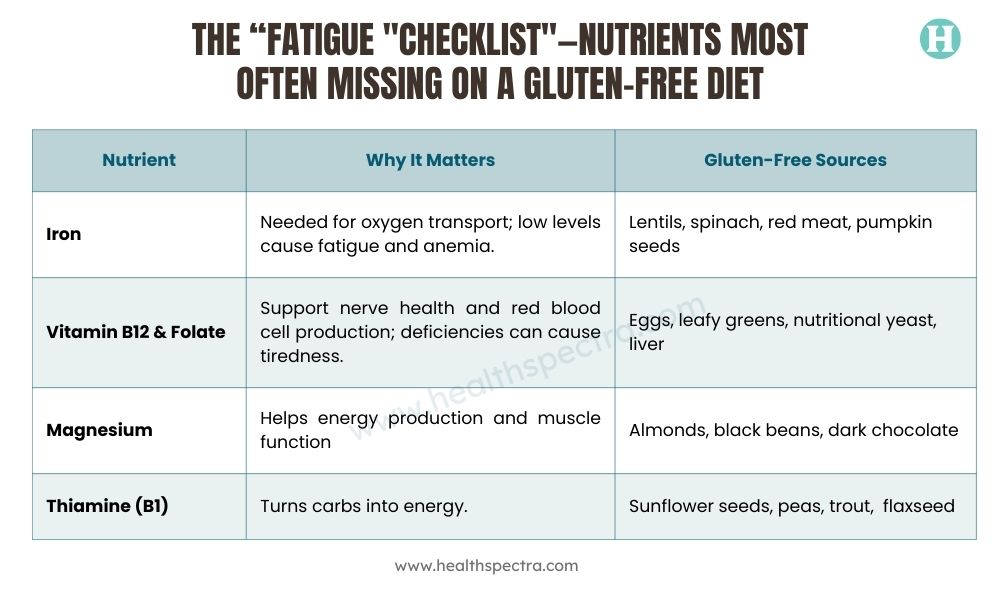 These nutrients often work together. For example, low iron combined with low B vitamins can magnify fatigue. That’s why restoring overall nutrition, not just one vitamin, is key to improving gluten-free energy levels.
Read More: Food Allergy vs. Intolerance: How to Tell the Difference and Why It Matters
How to “Refinance” Your Energy: Practical Fixes
Ditch the Processed Gluten-Free “Clones”
While gluten-free alternatives such as bread, cookies, and pasta are convenient, they are often made from refined starches that are low in fiber and nutrients. Consuming them in excess can cause extreme dips and spikes in blood sugar levels and nutritional deficiencies.
Replace them with naturally gluten-free foods such as vegetables, fruits, beans, nuts, seeds, eggs, dairy products, fish, and meats, and you will be providing your body with the best possible nutrition and energy. Home-cooked meals are the best way to control what you put into your body.
Choose Naturally Gluten-Free Whole Grains
Whole grains such as quinoa, teff, amaranth, buckwheat, millet, and gluten-free oats are rich in iron, magnesium, and B vitamins. They are closer to whole wheat than refined rice flour. Adding these whole grains to your diet in the form of quinoa bowls, buckwheat pancakes, or millet porridge can help increase your intake of micronutrients.
Balance Electrolytes and Hydration
Eating gluten-free can also lead to lower sodium and potassium levels. This is especially true if you were consuming processed wheat products. Even a slight imbalance in electrolytes can cause dizziness, fatigue, and headaches.
Drinking plenty of water and eating foods rich in potassium, such as bananas, beans, yogurt, and potatoes, can help balance it out. And if your doctors haven’t placed any restrictions on salt, a moderate amount can help boost your energy levels.
When Fatigue Signals a Bigger Issue
However, if you are still experiencing fatigue despite a balanced gluten-free diet, there may be another problem. A person with celiac disease may still be experiencing damage to the intestinal villi, which prevents the body from absorbing nutrients. Fatigue can also be caused by iron deficiency anemia, vitamin B12 deficiency, or thyroid disorders.
It is crucial to rely on medical testing rather than self-diagnosis. Blood tests for ferritin and vitamin B12, thyroid hormones, and a complete blood count can provide insight into the problem and guide treatment.
The Takeaway — Rebuilding Energy, Not Just Removing Gluten
Fatigue on a gluten-free diet does not necessarily mean that your gluten-free diet is not working. Rather, it is often a sign that your body is not getting the nutrients that were previously supplied by fortified wheat and high-fiber grains.
The goal is not to go back on gluten if that is not what your doctor recommends; it is to get those nutrients back. By turning to naturally gluten-free foods, high-fiber grains, iron-rich foods, and well-balanced meals, you can regain your energy.
A well-planned gluten-free diet can be healthy and energizing. With careful planning and a focus on nutrition, you can eliminate gluten without sacrificing strength, vitality, or overall health.
References
- BGAPC. (n.d.). Celiac disease and nutrient deficiencies.
- Health.com. (n.d.). Foods with electrolytes.
- Harvard T.H. Chan School of Public Health. (n.d.). Whole grains.
- NCBI Bookshelf. (n.d.). Celiac disease.
- The Indian Express. (2024). Many gluten-free foods are high in calories and sugar, low in fiber and protein—and they cost more.
- Down To Earth. (2024). Many gluten-free foods are high in calories and sugar, low in fiber and protein, and they cost more: New research.
- Frontiers in Pediatrics. (2019). Nutritional considerations in gluten-free diets.
In this Article