


















If you live with diabetes, sweetness becomes complicated. Not emotionally, but biologically.
Sugar response is obvious. You eat it, blood glucose rises, and insulin follows. The confusion begins when sugar is removed, but sweetness remains. Aspartame remains exactly in that uncomfortable space. No calories. No sugar. No carbs. No immediate rise in blood glucose.
But the human body doesn’t function as a chemistry lab. They are shaped by habits, hormones, hunger, stress, and long histories of insulin resistance.
So the real question isn’t “Does aspartame raise blood sugar?” Many people ask it, get a “no,” and still feel something is off. Aspartame does not increase blood glucose directly. That part is established.
But diabetes is not a math problem. It is a regulation problem. People with diabetes are not just managing glucose entering the blood. They are managing signals, hunger signals, insulin signals, reward signals, and gut signals, most of which are already unreliable.
This article explains where aspartame genuinely helps, where it quietly interferes, and why both things can be true at the same time.
What Is Aspartame and Where Is It Commonly Found?
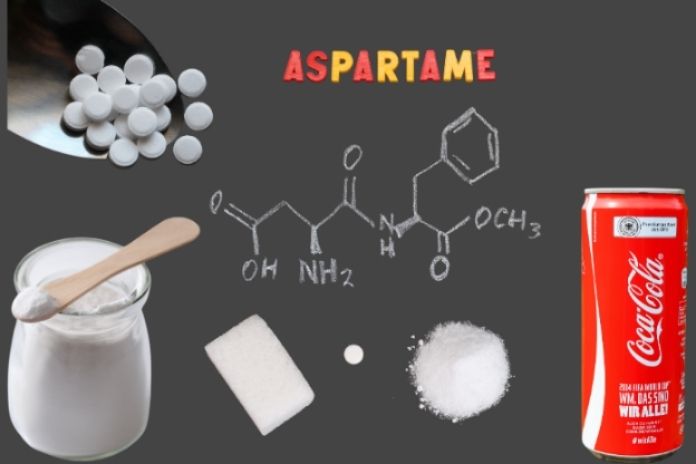
Aspartame is a synthetic sweetener made from two amino acids, phenylalanine and aspartic acid. These are not foreign substances; they already exist in normal protein foods.
What makes aspartame different is its concentration. “It is around 200 times sweeter than sugar, so the amount required is tiny,” says Dr. Alexis Sweeney, a family medicine physician. It is closer to a flavor signal than a food.
In practice, the body breaks it down quickly. Nothing stays in the gut for long. Nothing adds calories. Nothing turns into glucose.
That is why it appears everywhere sugar is “removed”: You mostly encounter it in things that do not require chewing:
- Diet sodas
- “Zero” beverages
- Flavoured water
- Sugar-free gums
- Some protein powders
- Some medications
From a chemistry perspective, it looks perfect for diabetes. From a physiological perspective, sweetness affects far more than glucose chemistry alone.
Does Aspartame Raise Blood Sugar Levels?
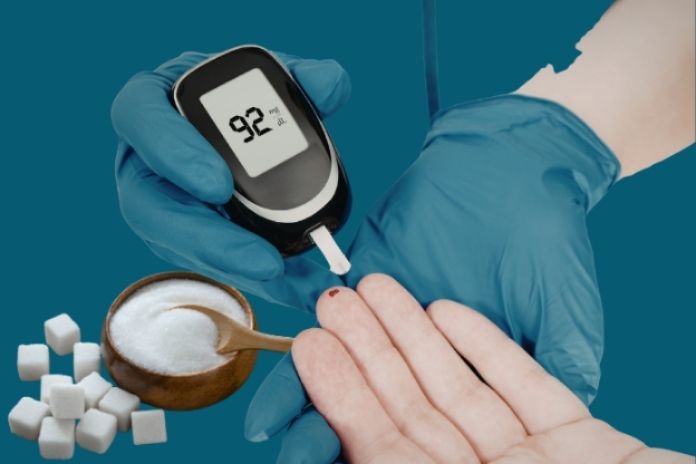
Let’s be very precise here. If you drink aspartame dissolved in water and measure blood glucose, nothing dramatic happens. That part is true.
Where confusion arises is in the indirect association.
People often say, “My sugar went up after diet soda.” But most diabetics are not drinking it in isolation, once, under lab conditions. What usually explains this:
- The soda was consumed with fast food
- The sweet taste increased appetite later
- It replaced water, not sugar
- It encouraged more snacking
Aspartame is often blamed for what the rest of the diet is doing. So the correct framing is:
- Direct effect: No glucose rise
- Indirect effect: Depends on behaviour, context, and frequency of use
Aspartame does not push glucose up as sugar does. It changes the terrain on which glucose regulation happens. This difference matters. Most online articles blur it completely.
What the Latest Research Actually Shows
A comprehensive 2025 systematic review and meta-analysis published in Advances in Nutrition examined 101 studies involving 100 experiments on aspartame’s effects on glucose and insulin.
The review, which analyzed both acute (1-day) and long-term (>30 days) studies, compared to sugar, concluded that aspartame consumption shows “little to no effect” on glucose metabolism over both the short and long term.
Aspartame and Insulin Response
This is where things get uncomfortable, because insulin is not only reactive; it is anticipatory.
When sweetness hits the tongue, the brain sometimes signals the pancreas before glucose enters the blood. This is known as the cephalic-phase insulin response. It exists to prepare the body for incoming energy.
What does aspartame do here? Studies show mixed results:
- In many people: Almost no insulin response
- In some people with insulin resistance: A small, early insulin release
- In others: Nothing measurable at all
This response, when it occurs, is much smaller than sugar-induced insulin release. It is not enough to cause hypoglycemia (low blood sugar) or major swings.
But here is the subtle issue: Repeated small insulin signals without actual glucose arrival may confuse appetite regulation in some individuals over time.
This is not overstated. It is quiet. It shows up as:
- Feeling hungry sooner
- Craving sweetness later
- Difficulty feeling satisfied
Not everyone experiences this, but those who do often dismiss it because their glucose numbers look “normal.”
Understanding Individual Variability in Insulin Response
The cephalic phase insulin response (CPIR) to aspartame remains one of the most debated topics in metabolic research. While classical teaching suggested that sweet taste alone triggers insulin release, recent evidence suggests that this process should be understood in the light of the context and may not be as simple to answer.
In 31 acute trials, insulin was unchanged versus placebo but lower than with nutritive carbs, elevated only slightly versus some sweeteners like sucralose. A 2020 review of type 2 diabetics found no insulin resistance worsening from artificial sweeteners at moderate doses.
Aspartame and Long-Term Blood Sugar Control
Short-term glucose stability does not automatically mean long-term metabolic improvement. When researchers look at HbA1c and overall glycemic control, results are split into two patterns.
When aspartame replaces sugar in an otherwise stable diet:
- HbA1c often improves slightly
- Post-meal variability reduces
- Calorie intake drops
When aspartame is added to a poor-quality diet:
- No improvement, sometimes worsening
- Appetite dysregulation increases
- Weight loss does not happen
This explains why observational studies sometimes associate artificial sweeteners with worse diabetes outcomes. The sweetener is not the cause; it is the marker of people already struggling metabolically.
Aspartame helps when it replaces sugar. It fails when it justifies poor food choices
Gut Health, Aspartame, and Diabetes
This is the most over-sensationalized part of the discussion.
Yes, some artificial sweeteners can alter gut bacteria in animals. Yes, gut bacteria influence insulin sensitivity. But translating that into “aspartame damages your gut” is scientifically lazy. Aspartame does not feed gut bacteria. It does not ferment. It does not cause bloating. That part is clear.
What we actually know:
- Human data on aspartame and gut microbiota are limited
- Effects vary dramatically between individuals
- Doses used in are often unrealistic
- Changes observed are not consistently harmful
At present, there is no strong human evidence that normal aspartame intake worsens insulin resistance via gut mechanisms.
This is an open research area, not a settled warning.
Aspartame vs Sugar for People With Diabetes
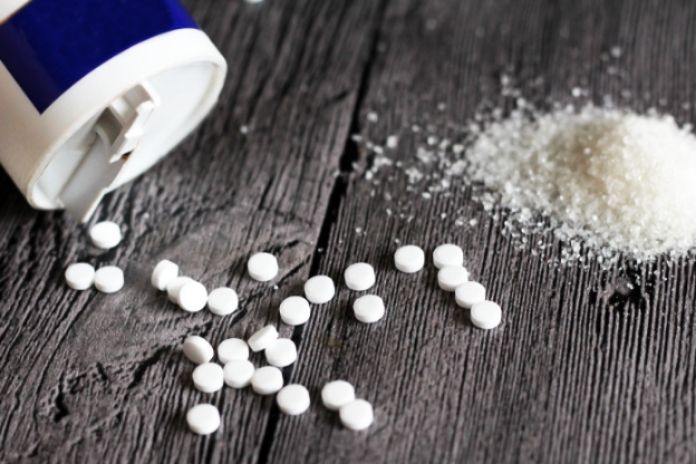
This comparison is not even close metabolically. Sugar raises glucose, raises insulin, increases calories, and worsens glycemic variability. Aspartame does none of the above directly.
From a blood sugar standpoint, aspartame is clearly better. The mistake is turning that comparison into permission for unlimited use. Sugar overwhelms the system. Aspartame confuses it.
Aspartame can reduce harm; it does not automatically restore metabolic health.
Aspartame vs Other Sweeteners
Stevia, sucralose, monk fruit—none of these are metabolically neutral.
Some people tolerate stevia better. Others find it increases cravings. Sucralose may affect insulin or gut bacteria more in some individuals. “Natural” does not mean better, and “artificial” does not mean harmful by default.
Your body’s response matters more than the ingredient list.
Potential Downsides of Aspartame for Some People With Diabetes
These are not universal effects, but they are real.
Some people notice:
- stronger sweet cravings
- feeling less satisfied after meals
- compensatory overeating later
- headaches or digestive discomfort
Importantly, glucose readings may still look normal while appetite control worsens. That’s why many people miss the connection.
A 2024 Frontiers in Nutrition meta-analysis (39 studies) found aspartame lowers short-term glucose/insulin vs. sugar but elevates them vs. other non-nutritive sweeteners (LCS) like sucralose, potentially disrupting satiety via uncoupled sweet-calorie signals.
Who With Diabetes Should Be More Cautious
- Anyone with phenylketonuria (PKU) must avoid aspartame
- People who notice appetite dysregulation after sweeteners
- Individuals relying heavily on diet drinks instead of real meals
If sweetness keeps pulling you back toward more sweetness, that’s a signal worth respecting.
Read More: What Is Sugar Withdrawal? Symptoms, Timeline & What to Expect
How to Use Aspartame Wisely if You Have Diabetes
Aspartame works best as a transition tool, not a daily dependency.
Use it:
- to replace sugar, not add sweetness everywhere
- occasionally, not reflexively
- alongside protein and fiber, not empty calories
- while monitoring hunger, not just glucose
If glucose is stable but appetite feels out of control, reassess.
Read More: 10 Healthy Natural Sweeteners You Should Be Switching To
What Major Health Organizations Say
Major regulatory bodies, including the U.S. Food and Drug Administration, the World Health Organization, and the American Diabetes Association, agree on one thing:
Aspartame is safe within the acceptable daily intake (ADI). “The approved daily intake for aspartame is 40 mg/kg of body weight/day. It is roughly equal to about 75 servings, far more than most people would eat in a day,” says Dr. Idrees Mubarik, specialist endocrinologist.
They also consistently avoid recommending heavy reliance on sweeteners for a reason.
Safety is not the same as metabolic optimization.
Read More: The Truth About Zero-Calorie Sweeteners: Are They Better for You?
Final Thoughts
Aspartame does not spike blood sugar. It does not significantly raise insulin in most people. It can help reduce sugar intake when used intentionally.
But diabetes is not managed by chemistry alone. It is managed by how the body learns, adapts, and anticipates food.
Aspartame is neither a villain nor a solution. It is a tool, and like all tools, it works only when used with awareness.
- Aspartame does not raise blood glucose directly.
- Insulin response, when present, is small and varies between individuals
- Benefits appear only when it replaces sugar.
- Gut health effects in humans remain uncertain and understudied.
- The biggest research gap is long-term behavioral and appetite impact, not glucose response.
- Interactions with metformin/SGLT2s (commonly prescribed diabetes management medications) still need to be explored.
FAQs
1. Does aspartame cause insulin spikes in diabetics?
Not significantly for most people, but small anticipatory responses may occur.
2. Is diet soda safe for diabetes?
Occasionally, yes. As a daily habit, it deserves caution.
3. Can aspartame worsen insulin resistance?
Not directly, but behavioral effects may indirectly matter.
4. Is stevia better than aspartame?
Depends on individual tolerance, not marketing claims.
5. Should diabetics avoid all sweeteners?
Not necessarily. But reducing dependence on sweetness itself matters most.
References
- Abu-Zaid, A., Kutbi, E., Alshammari, N., AlJurayyan, A. N., Adly, H. M., Saleh, Baradwan, S., Jamal, M., Zada, F. P. -, Mohamed, S., Syed, H., Ahmed, R. S., Abuzaid, M., & Alomar, O. (2025). The association of artificial sweeteners intake and risk of cancer: an umbrella meta-analysis. Frontiers in Medicine, 12.
- Boxall, L. R., Eskandari, F., Wallis, J., Bielat, A. D., & Appleton, K. M. (2025). The Effects of Aspartame on Glucose, Insulin, and Appetite-Regulating Hormone Responses in Humans: Systematic Review and Meta-Analyses. Advances in Nutrition, 100449.
- Kan, J., Wang, D., Chang, Y., Jiang, Z., Jiang, X., Xie, H., Jia, X., Chen, M., & Gu, Y. (2024). Associations of artificial sweetener intake with cardiometabolic disorders and mortality: a population-based study. British Journal of Nutrition, 1–8.
- Boxall, L. R., Eskandari, F., Wallis, J., Bielat, A. D., & Appleton, K. M. (2025). The effects of aspartame on glucose, insulin, and appetite-regulating hormone responses in humans: Systematic review and meta-analyses. Advances in Nutrition, 16(7), 100449.
- Ajuwon, K. M., Oguntibeju, O. O., & Akinloye, O. A. (2025). Effect of artificial sweeteners on insulin resistance among type-2 diabetes mellitus patients. Journal of Diabetes & Metabolic Disorders.
- Angelin, B. J., et al. (2024). Artificial sweeteners and their implications in diabetes: A review. Frontiers in Nutrition.
- Lawrence, R. S., & Sinclair, M. I. (Year). Aspartame use by persons with diabetes. Journal Title.
- Ralhan, K. (2025). Is aspartame safe? The landscape of artificial sweeteners and sugar substitutes. CAS Insights.
In this Article