















Face pulls are essential for the shoulders, posture, and balance in the back of the shoulders. Many people prefer face pulls because these exercises involve underdeveloped muscle groups, such as the back delts and rotators, while promoting healthy scapular movement.
Over time, face pulls are known to help reverse issues of rounded shoulders caused by prolonged pressing, sitting, or screen use. However, not all face pulls need to be done easily or comfortably. Some people train with no access to a cable machine. Others may have trouble isolating the correct muscles or may develop irritation with the rope system.
In such situations, having effective alternatives for the face pull exercise is better. Ideally, they are just different methods for different muscle activation. In this article, we will cover what face pulls do, when a face pull alternative is needed, and the best exercises that work the same muscles without a cable machine.
What Face Pulls Actually Do (Muscles and Movement Pattern)
To select a proper substitution exercise for face pulls, we must understand what the exercise does biomechanically and what would be beneficial. Even though face pulls appear to be upper back exercises, they’re not really about pulling power but rather about functional correction of the muscles responsible for placing the shoulder in the proper place.
Face pulls mainly work the rear deltoids, which move the arms outwards. They also activate the rhomboids and mid-trapezius, which pull the shoulder blades back and keep them stable, along with the rotator cuff muscles that control external rotation. Together, these muscles help keep the shoulder joint centered and stable during both pushing and pulling movements.
What makes the face pull unique is that it combines pulling the arms out to the side with shoulder rotation. This helps balance out the constant inward rotation caused by pressing exercises and daily activities like sitting and typing.
Hence, face pulls are often recommended for improving shoulder stability and supporting upper-back posture. Exercises that don’t include this rotation can still strengthen the upper back, but they don’t fully replace what face pulls do.
Read More: Resistance Bands for Arm Strength: A Beginner’s Guide
When You Should Use a Face Pull Alternative
There are practical, real-world reasons to use face pull alternatives instead of the traditional exercise without losing its benefits. First, you might not have a cable station in your home gym. Additionally, if your gym equipment leans toward dumbbells and resistance bands, face pulls via cable would be required.
Secondly, comfort is important. Some individuals may be affected by elbow, wrist, or shoulder discomfort when performing rope face pulls. As a result, alternatives such as dumbbell or band face pulls are an easy way to continue progressing.
Finally, having variety in your exercise routine is also essential. Repeating the same exercise every week might bring negative results due to the stress it causes to your muscles. Alternating exercises that target the same muscles could be effective for you, such as switching between face pulls with dumbbells and bands.
Best Face Pull Alternatives That Hit the Same Muscles
Resistance Band Pull-Aparts
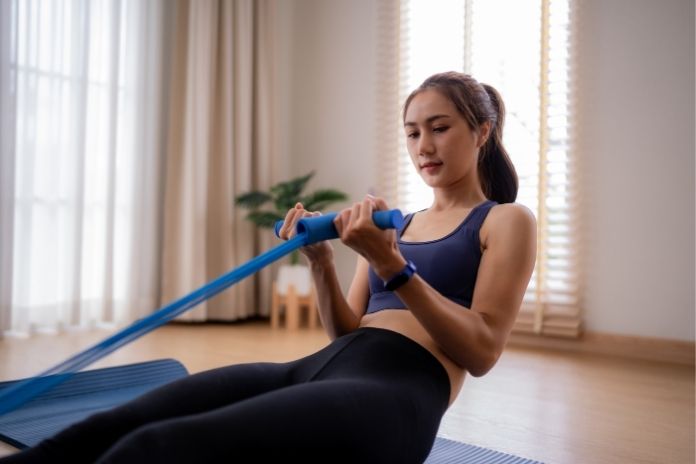
As far as resistance band exercises go, pull-aparts deserve more credit. When done correctly, a pull-apart simulates the retraction of the scapula found in a face pull. When separated at chest to shoulder height, the posterior deltoid and upper back muscles must cooperate to hold the shoulder blade in place.
The magic isn’t in the resistance itself but in the tension and control. The lighter bands allow you to specifically target the movement of the scapula and the outside rotation without letting momentum dictate the movement. By adopting this routine regularly, band pull-aparts can significantly help in improving the posture of the upper back and could be highly beneficial for those with desk jobs.
Band Face Pulls (Cable-Free Option)
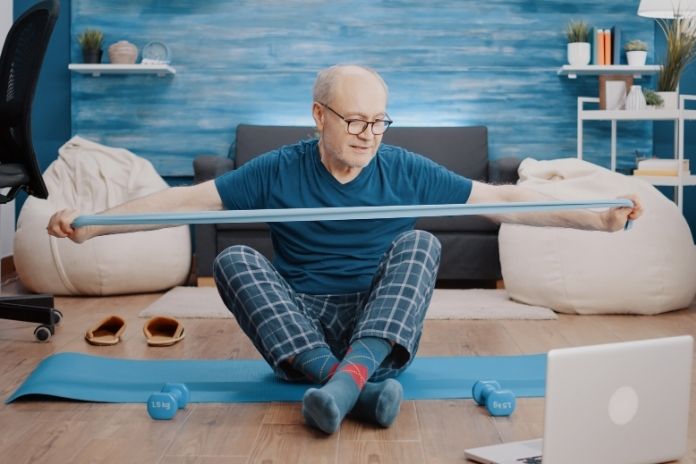
Of all options to substitute for face pulls, band face pulls most closely emulate the mechanics of the movement. Anchor the band at eye level, and you’ll get the same elbow track, shoulder rotation, and scapular motion that you would with cables. Because the band’s resistance increases with its stretch, you’re naturally encouraged to keep control through every point in the range.
This makes them well-suited to home workouts and rehab-focused training. If you want a face pull alternative that doesn’t involve a cable yet still hits the rotator cuff and shoulder stability, band face pulls are the best option.
Rear Delt Dumbbell Fly (Chest-Supported)

The chest-supported rear delt fly is arguably the best dumbbell substitute for face pulls and for targeting the rear deltoids. With the chest leaning on the incline bench, you reduce lower-back stress and limit excessive swinging, forcing the shoulders to do most of the work.
Compared to face pulls, this movement does not rely as much on external rotation. However, it is better when you want to isolate the rear delts, done with control. Lighter weights and slower tempos are the keys. Lugging around heavy dumbbells shifts the stress away from the target muscles and cuts effectiveness.
In the hypertrophy-focused phases where rear delt growth is a goal, this exercise will often be superior to face pulls.
High Rows With External Rotation
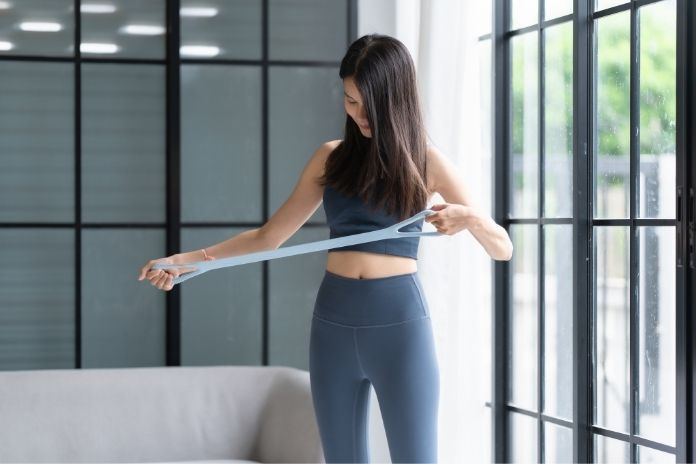
High rows with external rotation are positioned between traditional rows and face pulls. By extending the elbows and allowing the shoulders to rotate outward at the top of the movement, this exercise isolates the face pull pattern while allowing enough weight to be used.
High rows can be completed with cables, bands, or dumbbells, but bands are commonly less stressful on the shoulders. The primary difference between this exercise and the face pull is the larger path of shoulder elevation, which requires effective shoulder mobility. When properly completed, high rows develop both the rotation of the shoulders and the rotator cuff.
Reverse Pec Deck (If Available)
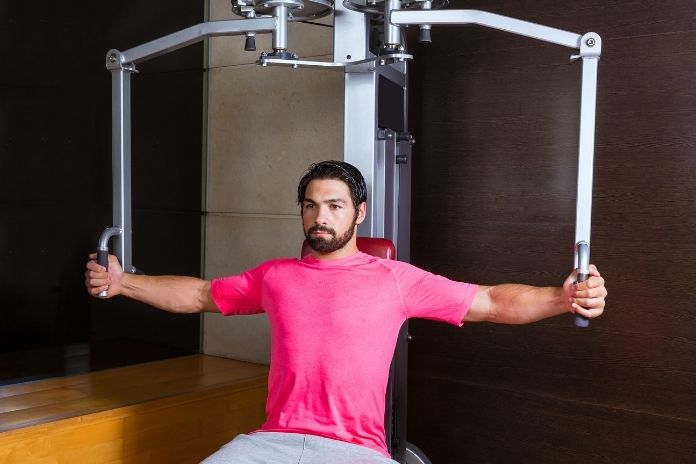
The reverse pec deck is a machine-based option that does a good job isolating the rear deltoids. It offers steady resistance and lowers the coordination required, which can be a big plus for beginners or someone coming back from an injury.
However, the movement involves very little external rotation, which means the rotator cuff is only lightly engaged. While the reverse pec deck can help build rear delt strength, it doesn’t train the shoulder-stabilizing muscles the way face pulls do. For this reason, it works best as a supplement, not a replacement, when shoulder health or posture correction is the main goal.
Read More: 12 Best Fabric Resistance Bands- Must Have For our fitness
Face Pull Alternatives for Shoulder Health and Rehab
When shoulder health is the primary concern, exercise selection should prioritize control over intensity. Lighter resistance allows the rotator cuff muscles to engage without being overwhelmed by stronger prime movers.
Movements such as band face pulls and controlled pull-aparts are especially effective because they reinforce proper joint positioning throughout the range of motion.
In rehabilitation-focused training, range of motion and pain-free execution matter more than resistance levels. Slow tempos and consistent repetition are far more beneficial than heavy loading.
Alternatives to Face Pulls on Back and Shoulders
For improved posture, the emphasis is no longer on weight but rather on sustained strength. You can perform band pull-aparts and low-load band face pulls with reasonable frequency before risking joint impingement and with limited load. Aim for high reps with brief rest periods in between and work them into your weekly routine.
This helps the upper back develop the habit of keeping the scapula in the correct position with everyday activities, effectively tightening the shoulders and relieving the upper back and cervical regions of tension.
What NOT To Use As a Face Pull Replacement
One thing to avoid is thinking that any kind of upper back movement can substitute for face pulls. A lot of people might be tempted to use rows or lat pulldowns for this, but these exercises only address shoulder extension and elbow flexion.
They do not focus on external rotation and scapular control as face pulls do, so these components have to be present to substitute for face pulls in this movement.
How to Choose the Right Face Pull Alternative for Your Goals

Your choice depends on your purpose. Shoulder stabilization and injury prevention can be obtained by band-based movements that you can adjust precisely. Perhaps you would benefit from a different exercise, like variations of chest-supported dumbbell flies or machines, to help develop your rear delts.
You might benefit from a lighter and higher-rep exercise for posture that you perform daily. Ultimately, it is not the exercise that matters, but whether it teaches you the proper movement pattern.
Freestyle Version:
Consider face pulls as a nice finisher for your workout or as a breather in between pressing sets. Keep the volume steady and moderate rather than chase occasional heavy blasts. Many individuals find it useful to have a face-pull alternative 2-4 times per week so that it does not exhaust them.
Programming Tips When Replacing Face Pulls
When replacing face pulls, moderate volume and control in execution are advisable. Two to four sets with 10-20 reps, carried out in a controlled manner, would suffice, particularly if the goal is shoulder stability rather than pure muscle strength.
Such exercises are best done at the end of an upper body workout routine or sandwiched between pressing exercises to balance the strain on the shoulders. Finishers following intense pushing workouts will also help.
Since they are relatively joint-friendly exercises, you can perform face pull exercises two to four times a week in an alternate form so that you can avoid overdoing them and keep your shoulders supported in the process.
Read More: 10 Best Finger Resistance Bands and Their Benefits
Bottom Line
Face pulls are important, but they’re not the only solution. What matters is training the elements that support healthy shoulders: external rotation, scapular retraction, and control of the rear deltoids.
Understanding the movement patterns beats chasing specific exercise names. Pick substitutes that match your goals, and your shoulders will thank you, no matter what equipment you use.
References
- Fukunaga, T., Fedge, C., Tyler, T., Mullaney, M., Schmitt, B., Orishimo, K., … McHugh, M. (2022). Band Pull-Apart Exercise: Effects of Movement Direction and Hand Position on Shoulder Muscle Activity. International Journal of Sports Physical Therapy, 17(3), 400–408.
- Hinge Health. (n.d.). How to do band pull aparts: Tips and recommended variations. Hinge Health.
- Legion Athletics. (2025). 7 face pull alternatives for home & gym workouts. Legion Athletics.
- BarBend. (n.d.). How to do the reverse pec deck — Tips, tricks, & variations. BarBend.
- SOLE Treadmills. (n.d.). Face pulls vs rear delt flys: Proper forms, benefits & muscles worked.
- OriGym. (n.d.). How to do the face pull: Alternatives & videos. OriGym.
- HealthKart Connect. (n.d.). How to do face pull exercise for strong shoulders. HealthKart Connect.
In this Article