















Picture this: You wake up, lace up your shoes, and step outside for just 20 minutes. By the time you return, you’ve already boosted your creativity by 60%, strengthened your heart, fired up your metabolism, and set yourself up for better sleep tonight. Sounds too good to be true?
It’s not. Morning walks provide much more than just a caloric burn—they increase brain function, regulate hormones, reduce stress, and strengthen your immune system. In this article, we’ll explore in detail how walking benefits both physical and mental well-being, backed by science-based explanations.
Benefits of a Morning Walk
Here are the unmissable benefits that make morning walks a total game-changer:
1. Promotes Mental Health and Decreases Stress

Brisk walking naturally releases endorphins, dopamine, and serotonin—neurochemicals linked to pleasure, calmness, and emotional well-being. It also reduces cortisol, the primary stress hormone, helping you begin your day less anxious and more resilient.
A 2023 review in Frontiers in Psychology found that as little as 10 minutes of brisk walking can significantly diminish depression and anxiety symptoms.
Bottom line: A morning walk recalibrates your mood, enhances emotional control, and keeps daily stress in check.
2. Boosts Brain Function and Creativity
Walking increases oxygenated blood flow to the prefrontal cortex and hippocampus, brain regions that handle decision-making and memory formation. It also elevates levels of brain-derived neurotrophic factor (BDNF), which helps neurons grow and adapt.
Stanford University researchers discovered that walking enhances creative thinking by up to 60%. Participants generated significantly more novel ideas during and immediately after walking sessions.
Bottom line: Need improved concentration or a burst of inspiration? Start brainstorming with a stroll.
3. Improves Sleep Quality
Early morning walks expose you to natural light, helping regulate your circadian rhythm—the body’s internal clock. This synchronization improves your sleep-wake cycle, promoting deeper, more restorative sleep at night.
Research shows that people who walked in the morning experienced longer sleep duration and better sleep quality compared to those who exercised later in the day.
Bottom line: A daily morning walk can help you fall asleep faster and wake up feeling more refreshed.
4. Supports Heart Health and Blood Pressure

Walking strengthens the heart muscle, improves circulation, and reduces arterial stiffness. It also encourages angiogenesis (new blood vessel development), which helps maintain healthy blood pressure over time.
Regular brisk walking lowers LDL (bad cholesterol) while increasing HDL (good cholesterol), improving overall cardiovascular health. The American Heart Association reports that brisk walking can reduce the risk of heart disease and stroke by up to 30%.
A 2022 meta-analysis on hypertension found that walking can lower systolic blood pressure by up to 11 mmHg in individuals with high blood pressure.
Bottom line: Morning walks are a heart-healthy habit that reduces your risk of cardiovascular disease and enhances long-term heart function—no gym membership required.
5. Aids Weight Management and Fat Burning
Brisk walking engages large muscle groups and boosts your metabolism, especially when done on an empty stomach. It prompts the body to use stored fat for fuel and helps curb appetite later in the day.
Studies show that walking at a moderate pace for 50–70 minutes three times per week effectively reduces belly fat in overweight participants.
Bottom line: A morning walk supports weight control and reduces abdominal fat without requiring intense exercise.
6. Strengthens the Immune System
Early morning walks stimulate white blood cell circulation and enhance lymphatic system function, enabling your body to identify and fight infections more effectively. Walking also reduces chronic inflammation and supports healthier long-term immune responses.
Harvard researchers found that individuals who walked for at least 20 minutes daily, five days per week, took 43% fewer sick days and recovered more quickly when they did fall ill.
Multiple studies confirm that moderate exercise, like brisk walking, boosts immune function, enhancing resistance to common illnesses like colds and flu.
Bottom line: Daily walking can help you avoid seasonal bugs and recover faster from illness.
Read More: The Power of “Awe Walks” – How Experiencing Wonder Can Reduce Stress
7. Enhances Lung Function and Oxygen Intake

Walking increases your respiratory rate, encouraging deeper breathing and more efficient oxygen-carbon dioxide exchange. Over time, this trains your lungs and diaphragm to work more effectively.
A study published in Respiratory Medicine found that daily walking improved lung function and endurance in individuals with mild respiratory issues.
Bottom line: You’ll breathe easier and build stamina that benefits everyday activities.
8. Reduces Joint Pain and Strengthens Muscles
Walking lubricates joints, strengthens supporting muscles (particularly in the hips, knees, and lower back), and improves overall mobility. It also counteracts the stiffness and pain associated with sedentary lifestyles.
Walking is one of the most effective low-impact exercises for people with joint issues, improving range of motion and decreasing pain over time.
Bottom line: Walking isn’t just safe for your joints—it’s therapeutic.
Read More: Color Walk Therapy: How Walking with Colors Can Boost Your Mood and Creativity
9. Helps Prevent Type 2 Diabetes
Morning walks enhance glucose metabolism in muscles and increase insulin sensitivity, helping your body better regulate blood sugar levels.
Research shows that even a brief 2-minute walk can help stabilize blood sugar levels after meals.
Bottom line: Daily walking is an effective and underappreciated tool for diabetes prevention.
10. Protects Against Cognitive Decline and Dementia
Walking enhances brain plasticity and helps preserve gray matter volume, which typically decreases with age. It also supports cardiovascular health, which is directly linked to dementia risk.
Studies indicate that people who walk regularly maintain larger brain volumes and better cognitive function well into older age.
Bottom line: Daily walking may protect your brain as much as your body.
11. Balances Cholesterol Levels
Morning walks help regulate lipid levels by reducing triglycerides and LDL cholesterol while raising HDL (good cholesterol). This balance maintains arterial health and reduces heart disease risk.
A study in Preventive Medicine found that walking 30–60 minutes daily significantly improved cholesterol profiles and decreased cardiovascular disease risk.
Bottom line: Walking is a simple yet powerful way to keep cholesterol levels balanced and arteries clear.
Read More: 9 Tips to Boost Fitness and Manage Diabetes Through Walking
What to Wear for a Morning Walk
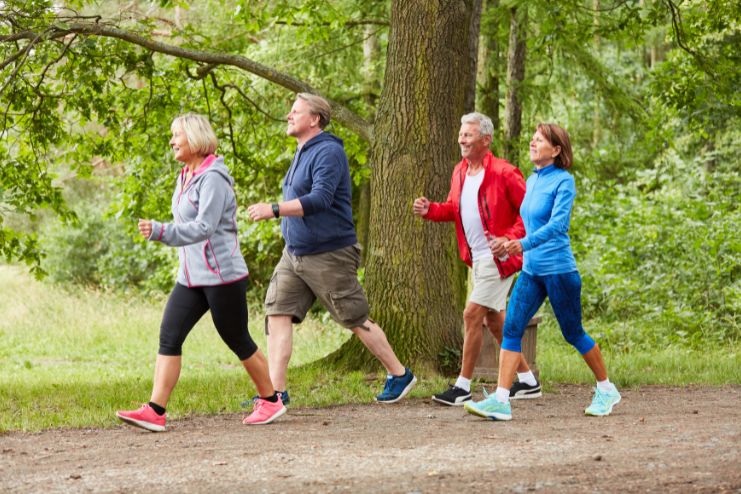
How you dress for your morning walk can significantly impact your comfort, performance, and results. Since walking is a moderate cardiovascular activity that enhances fat burning and calorie expenditure, proper attire is essential.
Choose breathable, supportive clothing that allows for unrestricted movement and effective sweat management. Avoid loose, heavy garments that could compromise your natural walking posture or conceal progress over time.
Recommended Morning Walk Gear
For Men:
- Lightweight jogger shorts or moisture-wicking track pants
- Breathable, moisture-wicking t-shirt
- Quality walking or running shoes with proper support
- A fitness tracker or smartwatch to monitor steps, calories, and heart rate
- Water bottle to stay hydrated
For Women:
- Compression shorts or fitted leggings
- Moisture-wicking activewear t-shirt or tank top
- Supportive sports bra
- Well-cushioned, comfortable walking shoes
- Fitness tracker or smartwatch
- Water bottle
Dressing appropriately not only ensures comfort but also boosts confidence and motivation for consistency. Prepare your gear the night before to set yourself up for success—you’ll be halfway to establishing a lasting habit.
Final Thoughts

That morning walk might seem insignificant, but it creates a powerful ripple effect throughout your body and mind. You don’t need high-tech equipment or a personal trainer—just comfortable shoes and a commitment to consistency.
The next time you’re tempted to hit the snooze button, remember: a 20-minute walk could be your key to a healthier, sharper, and more resilient you.
References
- https://pmc.ncbi.nlm.nih.gov/articles/PMC3098122/
- https://www.heart.org/en/healthy-living/fitness/walking/why-is-walking-the-most-popular-form-of-exercise
- https://pmc.ncbi.nlm.nih.gov/articles/PMC7387807/
- https://pmc.ncbi.nlm.nih.gov/articles/PMC5564417/
- https://www.health.harvard.edu/staying-healthy/5-surprising-benefits-of-walking
- https://www.ncbi.nlm.nih.gov/search/research-news/17034/
- https://www.arthritis.org/health-wellness/healthy-living/physical-activity/walking/5-walking-strategies
- https://www.frontiersin.org/journals/psychology/articles/10.3389/fpsyg.2019.02942/full
- https://news.stanford.edu/stories/2014/04/walking-vs-sitting-042414
In this Article