

















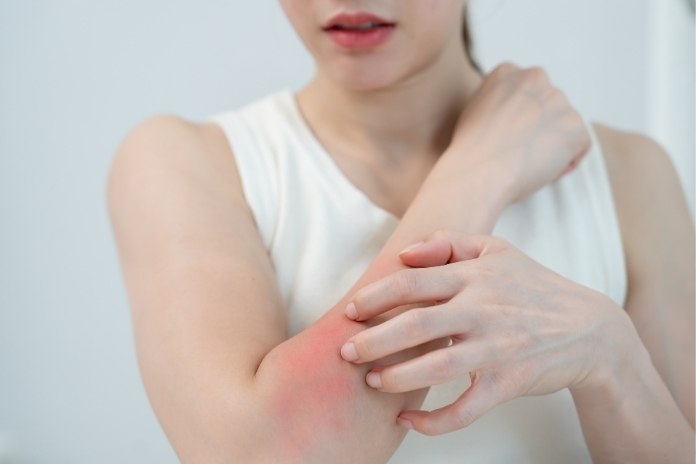
You wake up with a red, sensitive patch on your skin that appears overnight. Right away, you think it’s an infection since it’s warm, possibly even blistering. However, it’s crucial to know the distinction between cellulitis vs plant burn before thinking the worst.
Furocoumarins are compounds found in some plants that, when exposed to sunlight, cause a plant sap reaction. Known for its unique phytophotodermatitis symptoms, this illness commonly results in a red blistering rash after sun exposure and is often a component of a cellulitis misdiagnosis rash scenario.
Unlike bacterial cellulitis, this reaction happens from UV light and plant exposure, not infection. This article explains the true nature of plant burns, the reasons for their frequent misdiagnosis, and how to tell them apart.
Read More: Food Allergy vs. Intolerance: How to Tell the Difference and Why It Matters
Why Cellulitis Is So Often Misdiagnosed
Cellulitis is a bacterial infection of the skin’s deep layers and subcutaneous tissue. About 14.5 million cases of cellulitis occur in the US alone each year and account for 10% of infection-related hospitalizations in the United States.
An estimated 650,000 hospital admissions are attributed to cellulitis each year. Clinicians often misdiagnose cellulitis because of its clinical nature and the lack of conclusive laboratory, microbiologic, or imaging results, leading to unnecessary hospitalization, medications, and diagnostic delays.
In a meta-analysis, researchers calculated the risk of misdiagnosis of cellulitis across seven studies involving 858 inpatients first diagnosed with the illness; in these studies, every patient diagnosed with cellulitis underwent a second evaluation by an infectious disease specialist or dermatologist.
The two most recent studies (published in 2020) found that 60% of patients who were initially diagnosed with cellulitis received alternative diagnoses from specialists, and nearly all of those patients received specialist evaluations within 24 hours of admission (39%).
Patients with dermatitis, such as stasis, eczema, or allergy, and infections such as abscess, septic bursitis, or osteomyelitis, accounted for almost one-third of misdiagnoses, while 4% had gout or pseudogout.
“Cellulitis is often overdiagnosed or misdiagnosed, and there are many conditions that can mimic it,” says Rachel Bystritsky, MD, an infectious disease specialist at UCSF Health in San Francisco.
The Look-Alike: What Is a Plant Burn?
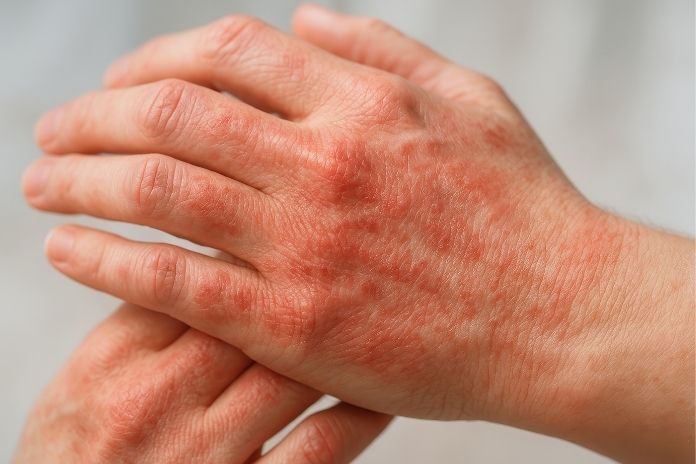
Phytophotodermatitis, the medical term for a plant burn, occurs when specific plant compounds called furocoumarins come into contact with your skin, and sunlight activates them. Certain invasive, non-native plants can cause second- or third-degree burns when their sap contacts your skin and sunlight triggers the reaction. We call this process phototoxicity.
Plants such as citrus fruits (including cases of lime burn mistaken for cellulitis), celery, parsley, wild parsnip, giant hogweed, fennel, dill, hogweed, figs, bergamot, and anise are common triggers. The rash often appears as a red, blistering rash after sun exposure, leading to frequent confusion with cellulitis vs. plantar burn cases.
The majority of these plants cause blistering, burns, or a severe rash 24 to 48 hours following exposure. It might only take a quick brush with them to leave the damaging residue on your skin and clothes.
Additionally, some of these plants are categorized as noxious weeds, meaning they are not allowed to be sold, transported, or planted because they are harmful to public health, crops, livestock, agricultural land, or other property.
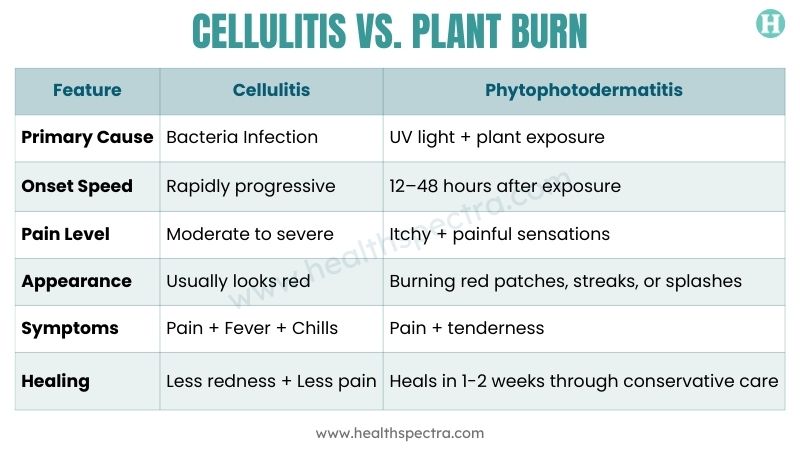
One of the most significant hints is the timeframe. The rash typically appears around 12 to 48 hours after contact with the plant and sun exposure, rather than instantly. Following the pattern of plant sap on the skin, it could manifest as uneven blisters, a drip-like mark, or streaks, often contributing to a cellulitis misdiagnosis rash scenario.
Read More: Planning the Perfect Allergy-Friendly Party: Tips for Hosts and Guests
5 Signs Your Rash Might Be a Plant Burn, Not Cellulitis
An infection is not always the cause of a red, puffy rash. Sunlight’s interaction with the plant sap can cause certain types of skin reactions, resulting in patterns and symptoms that convey a completely different message.
You can choose the best care from the start and avoid unnecessary antibiotics by recognizing these subtle signs.
1. The Rash Appears in Streaks, Drips, or Irregular Shapes
Plant burns don’t always show up as one even patch. Sometimes they look more like abstract art, thin lines, odd splashes, or uneven shapes that trace where the sap had hit your skin. You might notice marks that remind you of brush strokes, fingerprints, or even paint drips. It happens because the reaction occurs only where sunlight and plant compounds meet.
2. It Itches More Than It Hurts
The feeling may serve as a powerful indicator. Usually, severe itchiness, tingling, or a burning feeling on the skin’s surface precedes plant burns. Instead of being excruciatingly painful, the soreness could feel bothersome.
3. It Appears After Sun Exposure
Timing is important. Burns on plants often may not develop immediately. Instead, they typically appear after you engage in outdoor activities, especially when you handle plants, fruits, or herbs in the sunlight. At first, you may not even be able to link the rash to the exposure. One day, your skin looks totally fine. Next, you spot blisters or these weird red streaks.
4. You Don’t Have a Fever or Feel Ill
Usually, plant burns mess with the top layer of your skin. They might look pretty bad, but honestly, they don’t mess with your health much. Besides some skin discomfort, most people with plant burns feel just like they always do.
5. Antibiotics Aren’t Helping
Now, if you don’t get better after taking antibiotics, that’s a big red flag, especially with cellulitis. When you’re on the right meds, cellulitis usually starts to calm down in a couple of days. You’ll notice less pain, the redness fades, and the swelling goes down.
But antibiotics don’t really do anything for plant burns, since there’s no bacterial infection. With plant burns, the skin needs time to heal. The redness fades on its own, sometimes leaving behind patches that appear brown or purple.
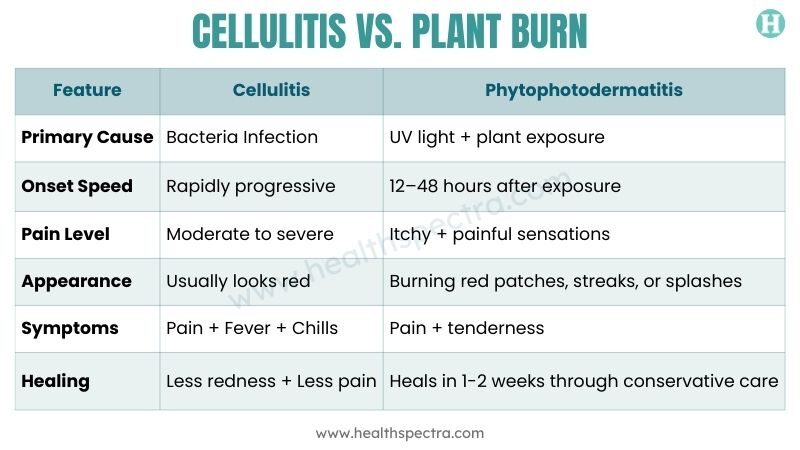
Comparison Table — Cellulitis vs. Plant Burn
 What to Do If You Suspect a Plant Burn
This skin problem is frequently treatable at home. Try these suggestions:
- For ten to fifteen minutes, apply a cool, damp towel to the rash. It reduces swelling and pain.
- Use warm water and a gentle soap to wash your skin. Using a fresh towel, pat it dry.
- Put a small amount of simple petroleum ointment and a fresh bandage.
- Avoid sun exposure on the affected region. Cover the skin with protective clothing and sunscreen outside to avoid the response intensifying or discoloring.
If it still bothers you, grab an over-the-counter remedy for relief:
- Painkillers work for mild pain, so take one if you need it.
- If itching’s a problem, try an oral antihistamine.
- For both discoloration and itching, use a 1% hydrocortisone cream.
- Calamine lotion helps with itching, too.
If the rash worsens, becomes very painful, shows signs of infection such as increased redness, warmth, pus, or post-inflammatory hyperpigmentation, or if you develop a fever, see a healthcare professional for evaluation.
When to Seek Medical Attention Immediately
If you’re dealing with severe pain or any swelling, fever, chills, or redness that is spreading faster than where you first got the rash, it’s probably more than just a simple plant burn. You might have a serious skin infection. You should also get checked out right away if you notice pus, bleeding, or any rashes on sensitive areas like your face, eyes, or genitals.
It’s very critical to distinguish cellulitis vs plant burn or between skin infection vs allergic reaction. To avoid consequences such as post-inflammatory hyperpigmentation, a clinician may assess whether antibiotics for cellulitis are necessary or whether the reaction is due to UV light + plant exposure.
Read More: Is It Safe to Take Allergy Medicine Every Day? What Experts Want You to Know
Conclusion
Not every angry, blistering rash comes from a bacterial infection, and reaching for medicine every time you spot something red can actually make things worse. Take sunburn from plant sap, for example: it’s pretty common, but most people ignore it.
The problem is, these burns often look a lot like cellulitis, with all the redness, swelling, and pain. That confusion leads to wrong diagnoses, unnecessary treatments, and slower healing.
You can start to identify when a rash might not represent an infection by keeping an eye out for certain telltale signs.
References
- Harvard Health Publishing. (2024, May 21). Cellulitis.
- Ubie Health. (30 January, 2026). Is This Cellulitis? The “Red Flags” That Mean You Should Go to Urgent Care Today.
- NHS. (2024, April 18). Cellulitis.
- Healthdirect Australia. Cellulitis.
- Juan N. Lessing, MD, FACP. (December 1, 2023). Cellulitis is Frequently Misdiagnosed.
- Dressler, D. D. (2023, March 28). Cellulitis misdiagnosis is common.
- ArcGIS StoryMaps. (June 29, 2022). Plants that burn?
- Commonwealth of Pennsylvania.Controlled plant and noxious weed lists.
- Cleveland Clinic. (23 January, 2026). Phytophotodermatitis.
- Harvard Health Publishing. (May 1, 2013). Dodging skin irritations from problem plants.
- AFC Urgent Care. How to identify and avoid plants that cause skin rashes.
In this Article