

















You’re standing in the produce aisle, debating between green beans and asparagus. Both look fresh. Both feel like the healthy choice. So which one actually deserves the spot on your plate?
Here’s the thing. The green beans vs. asparagus debate isn’t about which vegetable is healthier in general. It’s about which one supports your health goals right now. Digestion. Blood sugar control. Weight management. Heart health. Kidney considerations. Pregnancy nutrition. Those details matter more than a nutrition label ever will.
On paper, they look similar. Both are low-calorie, fiber-rich, and packed with micronutrients. But inside the body, they act differently. One is easier on digestion and more blood-sugar friendly. The other delivers specific nutrients that matter more in certain situations.
This isn’t about declaring a winner. It’s about understanding fit. The better choice depends on what your body needs today, not on a generic idea of healthy. Let’s break down how green beans and asparagus actually compare, using physiology and evidence instead of hype.
What Are Green Beans and Asparagus, Nutritionally?
Before comparing benefits, you need to understand what these vegetables actually are. Not culturally. Not visually. Biologically. Because plant structure determines how nutrients are packaged, absorbed, and used in the body.
Different plants, different strengths
Green beans and asparagus often get grouped together as interchangeable green vegetables. Nutritionally, that’s misleading.
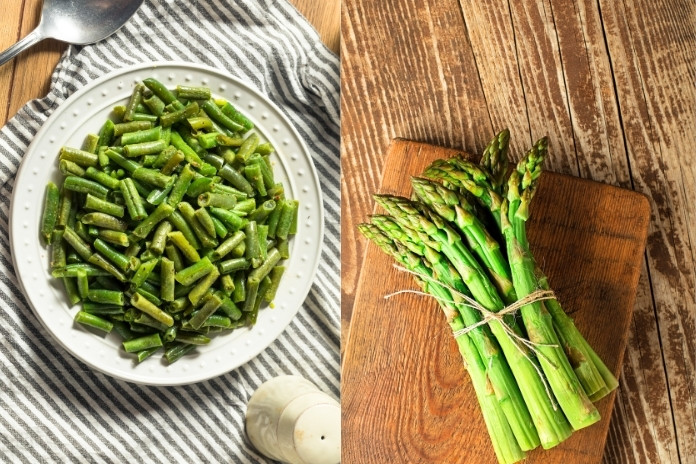
Green beans are immature pods from the Phaseolus vulgaris plant. That puts them in the legume family. But unlike dried beans, green beans are harvested before starch accumulation. As a result, they behave more like non-starchy vegetables in the body. Low glycemic impact. Moderate fiber. Minimal effect on blood sugar.
Asparagus, on the other hand, is the young shoot of Asparagus officinalis, harvested before it develops into a fern. Nutritionally, it behaves more like a leafy green. It’s lighter in carbohydrates but richer in certain micronutrients and bioactive compounds, especially folate and sulfur-containing antioxidants.
This distinction matters. Legume pods like green beans tend to deliver more insoluble fiber and structural carbohydrates. Tender shoots like asparagus deliver more soluble fiber, prebiotics, and micronutrients tied to cellular repair and methylation pathways.
Same plate. Different physiological roles.
Low-calorie doesn’t mean low-impact
Yes, both vegetables are low in calories. That’s where the similarity often ends.
Green beans provide more volume and chew, contributing to fullness through bulk and insoluble fiber. Asparagus provides fewer calories per cup but packs a higher concentration of folate, potassium, and prebiotic fibers that feed beneficial gut bacteria.
In simple terms:
- Green beans lean toward satiety and digestive regularity.
- Asparagus leans toward micronutrient density and gut signaling.
Neither is better universally. They just solve different problems.
Preparation changes the nutrition equation
Cooking method matters more than people think. Water-soluble vitamins like vitamin C and folate are vulnerable to boiling. According to researchers cited by Harvard Health Publishing, boiling can significantly reduce these nutrients, especially in vegetables like asparagus that are naturally rich in folate.
Steaming and roasting preserve more vitamins in both vegetables. Asparagus, however, is more sensitive to overcooking. Even a few extra minutes can degrade its folate and antioxidant content. Green beans are more forgiving structurally but still lose vitamin C when boiled aggressively. How you cook them can quietly change which one comes out nutritionally ahead.
Read More: High-Protein Beans: Top Varieties, Benefits, and How to Use Them
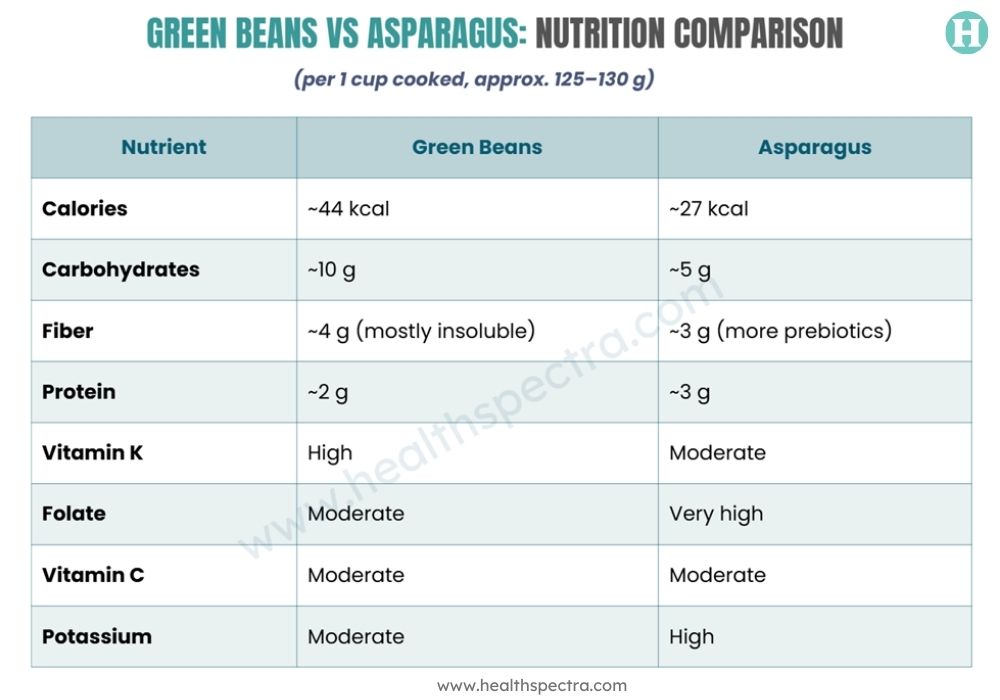
What is the purpose of this table: grounding the discussion in facts before making health claims. Both vegetables are nutrient-dense. The difference lies in emphasis. Which nutrients dominate, how they’re absorbed, and who benefits most from them.
From here, the real comparison begins.
Fiber and Digestive Health
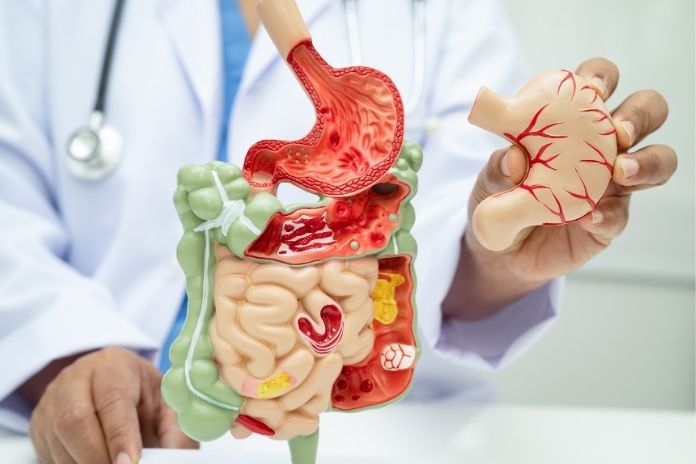
Fiber isn’t just about how much you eat. It’s about how that fiber behaves once it hits your gut. Green beans and asparagus contain different fiber types, and that difference shapes digestion, comfort, and tolerance.
Green beans: steady, low-fermentation fiber
Green beans are higher in insoluble fiber, which adds bulk to stool and helps food move through the digestive tract efficiently. This fiber type passes through the gut largely intact, meaning it causes minimal fermentation. What that translates to is consistency. Less gas. Less bloating. More predictable bowel movements.
Because of this, registered dietitians often suggest green beans for people with sensitive digestion, frequent bloating, or IBS-like symptoms. The National Institute of Diabetes and Digestive and Kidney Diseases notes that insoluble fiber helps prevent constipation by speeding intestinal transit time rather than feeding gut bacteria.
Green beans don’t actively stimulate the microbiome, but they keep digestion calm and regular.
Asparagus: microbiome-active fiber
Asparagus contains inulin, a fermentable prebiotic fiber. Instead of moving through unchanged, inulin feeds beneficial gut bacteria such as Bifidobacteria. This supports microbiome diversity, immune signaling, and long-term gut health.
The tradeoff is fermentation. As gut bacteria break down inulin, gas is produced. Dr. Emeran Mayer, a gastroenterologist and gut-brain researcher at UCLA, has noted that prebiotic fibers can be beneficial overall but may cause bloating or discomfort in people with sensitive digestion.
For some, this effect fades as the gut adapts. For others, it remains a consistent issue.
Which one is easier on digestion?
- Better for sensitive digestion or IBS: green beans
- Better for microbiome support: asparagus
- More likely to cause gas: asparagus, especially in larger portions
Neither option is better universally. Green beans favor digestive comfort and regularity. Asparagus favors long-term gut health if your system can tolerate fermentation.
Blood Sugar and Carbohydrate Impact

When it comes to blood sugar, vegetables rarely cause problems. But subtle differences in carbohydrate load, fiber structure, and eating experience can still matter, especially for insulin resistance or diabetes management.
Glycemic load comparison
Both green beans and asparagus have a low glycemic load, meaning they produce minimal rises in blood glucose when eaten in typical portions.
Green beans contain slightly more total carbohydrates, but much of that is offset by fiber and slower digestion. Asparagus contains fewer total and net carbs, making its blood sugar impact almost negligible.
A review published in The American Journal of Clinical Nutrition consistently links non-starchy vegetables like these to improved glycemic control in people with type 2 diabetes, regardless of whether total carb intake is tightly restricted.
Diabetes-friendly, with subtle differences
For most people managing diabetes or prediabetes, both vegetables are safe daily choices. The difference shows up more in how they feel and how they fit into specific eating patterns.
Green beans tend to feel more filling due to higher volume, fiber content, and chewing time. That can help with appetite control and meal satisfaction, which indirectly supports blood sugar stability.
Asparagus works especially well in very low-carb or ketogenic diets, where minimizing net carbs matters more than volume.
Tegan Bissell, a registered dietitian, emphasizes that “one size fits all” doesn’t exist with diabetes diets. “Many people incorrectly believe they need to cut out all carbs or ‘white foods,’” she says, “but you don’t have to eliminate, just limit carbohydrate portions to amounts that work for you. And try to choose more complex carbs in the right portion sizes.”
In practical terms, both keep glucose steady. The better choice depends on dietary context, not fear of carbs.
Read More: How Digestive Health Impacts Glucose Absorption and Diabetes
Heart Health and Micronutrients

Heart health isn’t driven by a single nutrient. It’s the cumulative effect of micronutrients that influences blood pressure, vascular function, inflammation, and metabolic markers. Green beans and asparagus support cardiovascular health in different ways, through different pathways.
Asparagus: folate and potassium support
Asparagus is one of the richest vegetable sources of folate, a B vitamin essential for homocysteine metabolism. Elevated homocysteine levels are associated with higher cardiovascular risk, particularly for stroke.
Meta-analysis of folic acid supplementation and stroke risk – shows that folic acid (the supplement form of folate) significantly reduces stroke risk and that the benefit is stronger in areas without fortified grains (implying larger effects where baseline folate intake is lower).
Asparagus also provides potassium, a key mineral for blood pressure regulation. Potassium helps counteract sodium’s effects, supports proper vascular tone, and reduces strain on the cardiovascular system.
Its contribution is subtle but consistent, especially for people managing hypertension risk.
Green beans: vitamin K and flavonoids
Green beans support heart health through a different nutrient profile.
They’re rich in vitamin K, which plays a critical role in blood clotting and helps regulate calcium deposition in blood vessels. Adequate vitamin K intake is associated with better arterial flexibility and reduced vascular calcification.
Green beans also contain flavonoids such as quercetin, compounds known for their antioxidant and anti-inflammatory effects. These help reduce oxidative stress, a contributor to atherosclerosis and endothelial dysfunction.
Mayo Clinic diet experts note that vegetables provide nutrients tied to heart health, including vitamin K, which may help reduce the hardening of the arteries, a key component of cardiovascular resilience.
Different paths, same goal
- Asparagus supports heart health through folate-driven homocysteine control and potassium-mediated blood pressure regulation.
- Green beans support it through vitamin K–dependent vascular health and antioxidant protection.
Neither vegetable replaces medication, exercise, or broader lifestyle changes. But both contribute meaningfully to cardiovascular health, just through different nutritional routes.
Weight Management and Satiety

Weight management isn’t just about calories. It’s about how full you feel, how long that fullness lasts, and how easily a food fits into your usual meals. Green beans and asparagus approach satiety in different ways.
Volume-to-calorie ratio
Asparagus is extremely low in calories, which makes it useful for increasing plate volume without significantly increasing energy intake. You can eat a large portion for very few calories, especially when it’s steamed or lightly roasted.
Green beans contain slightly more calories per cup, but they’re still firmly in low-calorie territory. For most people, the difference is negligible in real-world meals.
Chewing and fullness
Green beans require more chewing, which slows down eating and gives satiety hormones more time to activate. That mechanical aspect of eating matters more than people realize.
Research published in Appetite shows that foods requiring greater mastication are associated with reduced overall calorie intake, likely due to slower eating speed and increased sensory exposure.
Asparagus, while filling in volume, is softer and faster to eat, which may blunt that effect for some people.
Which works better?
- Meal bulking, stir-fries, and mixed dishes: green beans
- Light sides and tight calorie control: asparagus
Both can support weight loss. The better option depends on whether you need volume, chewing-driven fullness, or simple calorie control.
Asparagus-Specific Benefits
Asparagus contains asparagine, an amino acid with mild diuretic properties. This can temporarily increase urine output, which some people find helpful for fluid balance. This effect is mild and not a treatment for edema or hypertension.
One cup of asparagus provides over 60% of daily folate needs. Adequate folate intake before and during early pregnancy reduces neural tube defect risk, according to the CDC.
Asparagus contains sulfur-containing compounds that break down into volatile byproducts during digestion. Some people can smell these compounds; others cannot. Genetics determines both production and perception. It’s harmless, temporary, and medically irrelevant.
Green Bean-Specific Benefits
Green beans are low in fermentable carbohydrates, making them better tolerated by people following low-FODMAP diets. Gastroenterology guidelines published in Gut identify green beans as one of the safer vegetables for functional gut disorders.
Asparagus is high in FODMAPs due to inulin content. For people prone to bloating, green beans are often the safer choice.
Green beans blend easily into large portions without flavor fatigue, making them practical for meal prep and family cooking.
Read More: 18 Foods That Suppress Appetite for Weight Management
Who Might Want to Choose One Over the Other
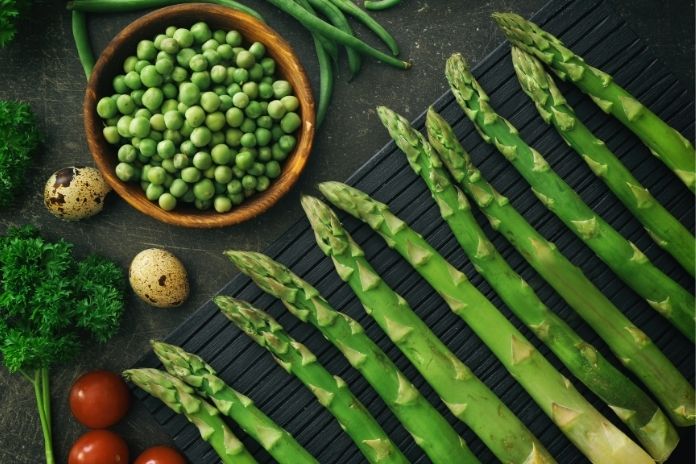
Choosing between green beans and asparagus often comes down to physiology and context, not preference or trends. For people with digestive sensitivity, green beans are usually the safer option. They’re low in fermentable carbohydrates and tend to move through the gut without triggering excess gas or bloating.
If you’re FODMAP-sensitive or prone to IBS symptoms, asparagus is more likely to cause discomfort due to its inulin content, especially in larger portions. That doesn’t mean asparagus is off-limits, but portion size matters more.
Kidney-related concerns introduce another layer. Asparagus contains moderate levels of purines, which can be relevant for individuals prone to gout. While it’s not a high-purine food, frequent large servings may contribute to a uric acid load in sensitive people.
Both vegetables, however, are low in oxalates compared to spinach or beet greens, making them generally kidney-friendly for most diets.
During pregnancy or when folate needs are elevated, asparagus clearly stands out. Its folate density makes it an efficient way to meet increased requirements through food alone. Green beans still contribute nutrients, but they don’t offer the same folate advantage.
For people following very low-carb or ketogenic diets, asparagus fits more easily. Its net carbohydrate content is lower, allowing for larger portions without disrupting carbohydrate targets. Green beans, while still low-carb, require slightly more portion awareness in these patterns.
Cooking Methods and Nutrient Loss
How you cook these vegetables can matter more than which one you choose.
Generally, the shorter the cooking time, the more nutrients are preserved. Partly because they take relatively little time, steaming and microwaving are considered the most nutritious methods (also because they require no fat to cook), said Amber Pankonin, a dietitian in Lincoln, Nebraska.
Steaming consistently preserves more folate and vitamin C than boiling for both green beans and asparagus. Boiling allows water-soluble vitamins to leach into the cooking water, which reduces nutritional value unless that liquid is consumed.
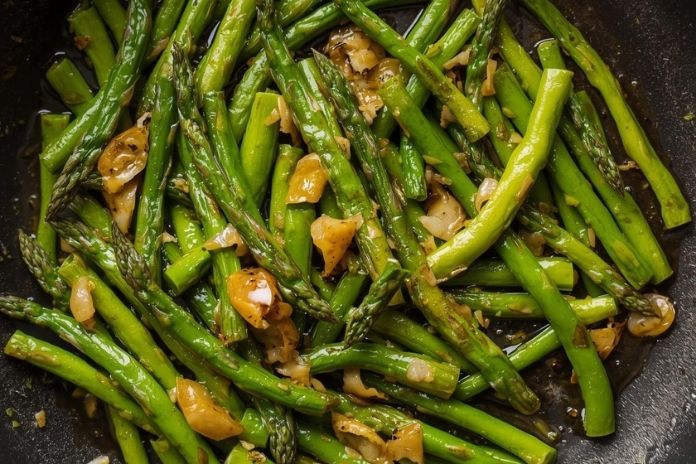
Roasting enhances flavor and improves palatability, but it comes with tradeoffs. High heat and prolonged cooking can degrade heat-sensitive nutrients, particularly folate. Asparagus is more vulnerable here because of its delicate structure and thinner cell walls.
Overcooking affects asparagus more dramatically than green beans. Thin asparagus spears lose nutrients quickly and shift from tender to limp fast. Green beans are structurally sturdier and tolerate longer cooking without the same level of nutrient loss. For asparagus, cooking until just tender preserves both texture and nutrition.
Read More: Top 6 Healthy Cooking Appliances: Must-Have Kitchen Gadgets for Nutritious Meals
Taste, Texture, and Practical Use
Beyond nutrition, how a vegetable fits into real meals determines whether it gets eaten consistently.
Green beans pair well with heavier proteins and richer dishes. Their neutral flavor and firmer texture balance fatty meats, sauces, and complex meals without overwhelming the palate. They also hold up well in reheating, making them practical for meal prep and family-style cooking.
Asparagus works better with lighter dishes. Its sharper flavor profile pairs naturally with eggs, fish, and simple preparations where it can stand on its own. That intensity can be appealing in small portions but tiring in large ones.
Portion tolerance matters. Green beans are easier to eat in large volumes without flavor fatigue or digestive discomfort. Asparagus tends to feel more intense, both in taste and digestive impact, which naturally limits portion size for many people.
Raw versus cooked also matters. Green beans are best cooked for digestibility and texture. Raw green beans can be tough and harder on the gut. Asparagus, by contrast, can be thinly shaved and eaten raw in salads, offering a different texture while retaining heat-sensitive nutrients.
Which Is Healthier Overall?

Here’s the honest answer. There is no universal winner in the green beans vs asparagus debate, and anyone claiming otherwise is oversimplifying nutrition. Health doesn’t come from ranking foods in isolation. It comes from how those foods fit into your body, your digestion, and your broader eating pattern.
Asparagus is the better choice when folate intake matters, when you’re supporting gut microbiome diversity, or when you’re eating very low carb and want maximum nutrition with minimal net carbs. Its benefits show up more at the micronutrient and metabolic level than on the calorie scale.
Green beans shine when digestive comfort is the priority. They’re easier to tolerate, easier to portion generously, and contribute meaningful vitamin K and antioxidants without triggering bloating for most people. Their value is consistency. They’re a vegetable you can eat often without friction.
What this really means is simple. Different vegetables solve different problems. No single food covers all bases. And this is where the science is clear. Dietary variety consistently outperforms optimizing one “perfect” food. People who eat a wider range of vegetables tend to have better nutrient coverage, healthier gut profiles, and more sustainable eating habits over time.
The Practical Takeaway
Both green beans and asparagus are highly nutritious vegetables with distinct strengths. The differences between them matter more for digestion, micronutrient intake, and individual tolerance than for calories, weight loss, or fat gain.
If you’re choosing between them, think in terms of context. What does your body need right now? Comfort, folate, volume, simplicity, or gut support?
The smartest approach isn’t picking sides. It’s rotating both into your diet. Use green beans when you want easy digestion and generous portions. Use asparagus when you want folate density and microbiome support. That kind of flexibility beats perfection every time.
References
- A-Z Animals. (n.d.). Asparagus vs. green beans: What are the differences?
- Associated Press. (n.d.). Healthiest ways to prepare vegetables.
- Bayev’s Kitchen. (n.d.). Green beans vs. asparagus.
- Cleveland Clinic. (n.d.). 7 strategies for a diabetic diet.
- EatingWell. (n.d.). 5 powerful health benefits of asparagus you probably didn’t know.
- FoodStruct. (n.d.). Nutrition comparison: Green beans vs. asparagus.
- GardenLife (Decorexpro). (n.d.). Differences between asparagus beans and green beans.
- Harvard Health Publishing. (n.d.). Microwave cooking and nutrition.
- Learn Your Lipids. (n.d.). Roasted greens and asparagus.
- Mayo Clinic Press. (n.d.). Best vegetables for heart health.
- MindHealth360. (2021). Interview transcript with Emeran Mayer, MD.
- National Institute of Diabetes and Digestive and Kidney Diseases. (n.d.). Eating, diet, & nutrition for constipation.
- PubMed. (2014). Vegetarian dietary patterns and glycemic control in type 2 diabetes.
- PubMed. (2024). Folic acid supplementation and stroke risk: A meta-analysis.
- ScienceDirect. (2018). Influence of oral processing on appetite and food intake.
- ScienceDirect. (2022). Effects of cooking and processing on vegetable nutrient retention.
- Soupersage. (n.d.). Asparagus vs. green beans nutrition comparison.
- U.S. Department of Agriculture. (n.d.). Vegetables. MyPlate.
- Versus. (n.d.). Asparagus vs. green beans.
In this Article