










You’re probably fine – but the next 6 hours are the ones to watch.
Taking two doses of Claritin (loratadine) in 24 hours isn’t usually dangerous for healthy adults. The drug has a wide safety margin, and a one-time double dose rarely causes anything worse than a headache or dry mouth – if anything at all.
But “probably fine” isn’t the same as “do nothing.” What’s actually happening in your body right now, and what symptoms would mean you need to act? That’s what this guide covers – starting with the hour-by-hour breakdown below.
A double dose of Claritin is rarely dangerous for healthy adults. The risk window is the next 2–6 hours, when drug levels peak. Most people feel nothing. Some get a mild headache or dry mouth. A racing heart or confusion means call your doctor. Use the checklist and timeline below to know exactly what to watch for.
Read More: 9 Medication Mistakes We Didn’t Know We Were Making
What Happens in Your Body – Hour by Hour
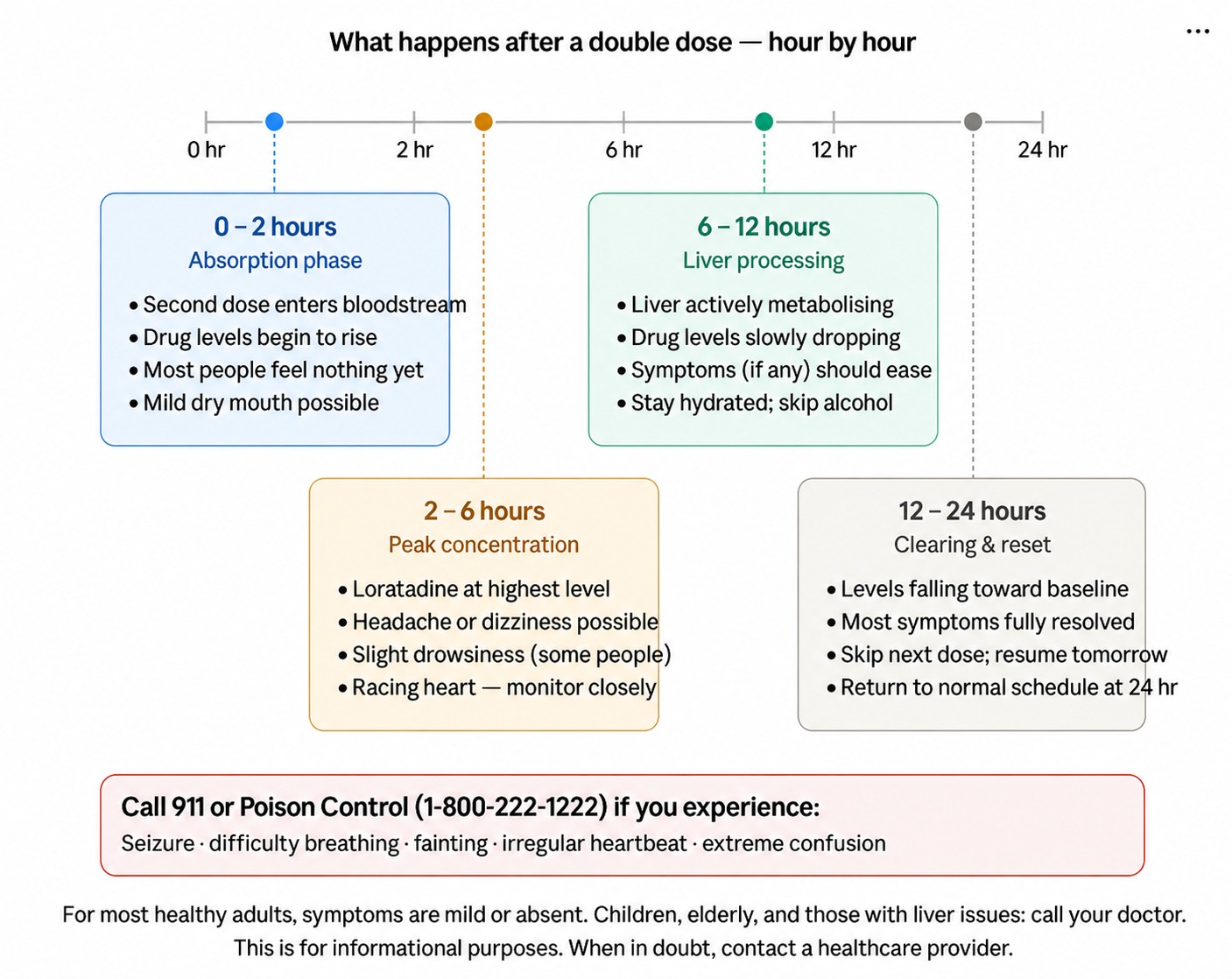
0–2 Hours: Absorption phase
The second dose enters your bloodstream, and drug levels begin to rise. For most people, nothing feels different yet. Some may notice mild dry mouth – that’s the antihistamine effect kicking in, and it’s normal.
2–6 Hours: Peak concentration
This is the window to pay attention to. Loratadine reaches its highest level in your system, which is when any side effects are most likely to show up. Possible symptoms include headache, dizziness, or slight drowsiness. A racing heart is less common but worth monitoring closely. If anything feels off, don’t brush it aside.
6–12 Hours: Liver processing
Your liver is now actively working to metabolise the extra dose. Drug levels are slowly dropping. If you experienced any symptoms during the peak window, they should begin to ease during this phase. Stay hydrated and avoid alcohol – both help your body process the medication more comfortably.
12–24 Hours: Clearing and resetting
Levels are falling back toward your normal baseline. For most people, any symptoms are fully resolved by this point. Skip your next scheduled dose and return to your regular routine at the 24-hour mark from your last dose.
Symptoms Checklist
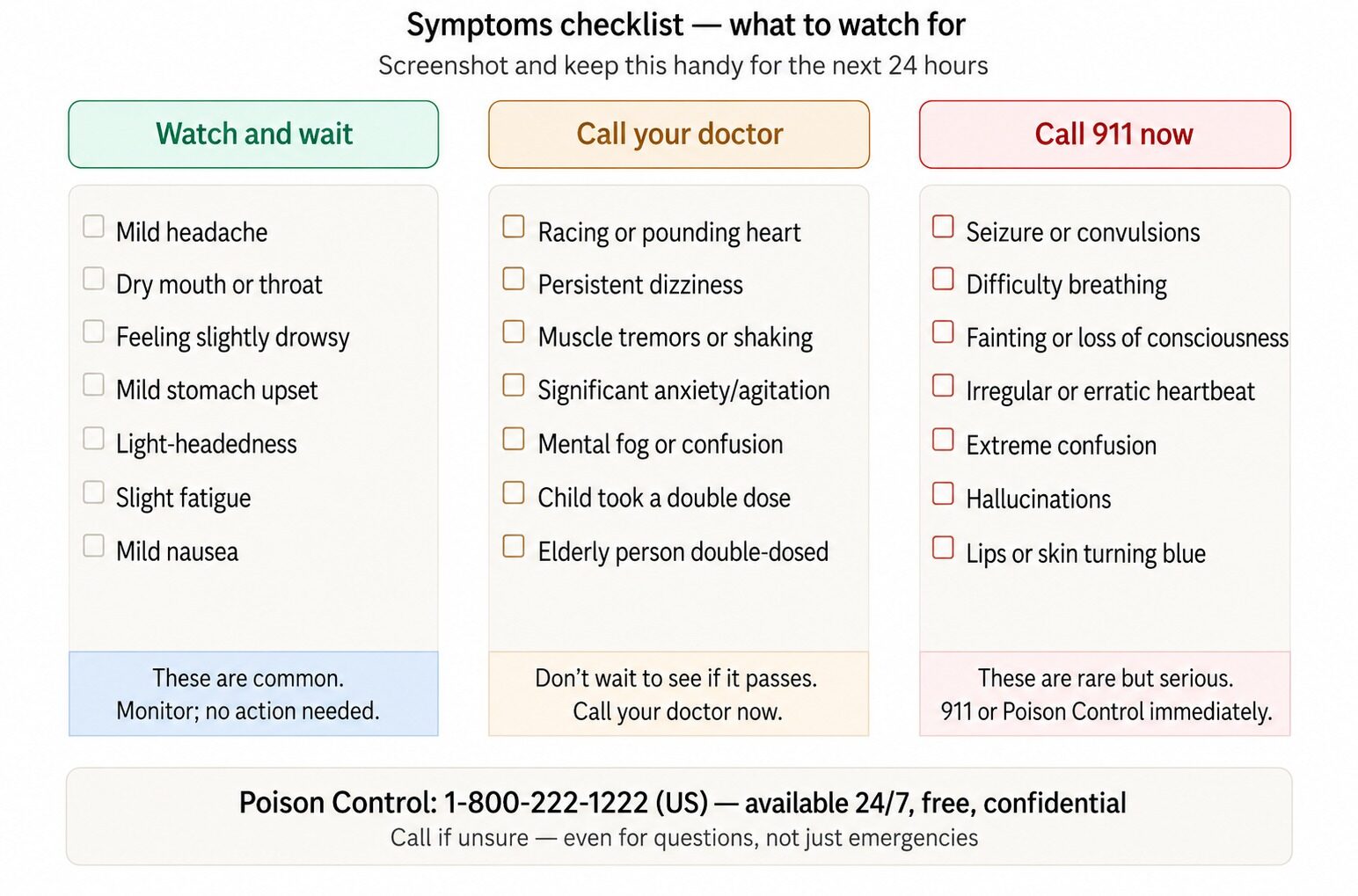 Not sure whether what you’re feeling is serious? Use this to guide your next step.
Watch and wait
These are common side effects. Monitor how you feel, but no immediate action is needed.
- Mild headache
- Dry mouth or throat
- Feeling slightly drowsy
- Mild stomach upset
- Light-headedness
- Slight fatigue
- Mild nausea
Call your doctor
Don’t wait to see if these pass on their own. Call your doctor or an urgent care line now.
- Racing or pounding heart
- Persistent dizziness
- Muscle tremors or shaking
- Significant anxiety or agitation
- Mental fog or confusion
- A child accidentally took a double dose
- An elderly person accidentally double-dosed
Call 911 or Poison Control immediately
These reactions are rare but serious. Do not wait.
- Seizure or convulsions
- Difficulty breathing
- Fainting or loss of consciousness
- Irregular or erratic heartbeat
- Extreme confusion
- Hallucinations
- Lips or skin turning blue
Poison Control: 1-800-222-1222 – available 24/7, free, and confidential. Call even if you’re just not sure.
What Is Claritin and How It Works

Claritin is the brand name for loratadine, a second-generation antihistamine widely used to manage allergy symptoms, including:
- Seasonal allergies like pollen (hay fever)
- Indoor allergens such as pet dander, dust mites, or mold
- Chronic skin conditions like hives and other allergic rashes
What makes Claritin different from older antihistamines is its non-drowsy formula. It works by blocking H1 histamine receptors, which are responsible for the itching, sneezing, and runny nose that come with allergic reactions.
Unlike older drugs such as diphenhydramine (Benadryl), Claritin doesn’t easily cross the blood-brain barrier, meaning it’s far less likely to cause drowsiness or dizziness.
A clinical pharmacology review explains that first-generation antihistamines readily cross into the brain, causing sedation and cognitive impairment, whereas second-generation antihistamines like loratadine cross the blood-brain barrier to a significantly smaller extent.
Why it’s taken once a day
Loratadine has a long half-life – usually 8 to 28 hours, depending on the individual. A single 10 mg dose stays active in your system for most of the day, which is why the standard dosing is once every 24 hours.
Taking a second dose doesn’t make your allergies go away faster. It simply increases the level of loratadine in your body, offering little additional benefit while raising the chance of side effects.
Is It Dangerous to Take 2 Claritin in 24 Hours?
For most healthy adults, no – a single accidental double dose is unlikely to cause serious harm. Loratadine has a wide safety margin, and one extra tablet usually doesn’t cause anything worse than mild, temporary side effects, if anything at all.
That said, how your body handles the extra dose depends on several factors:
- Age and body weight. Smaller or older bodies may not clear the drug as efficiently.
- Overall health. Pre-existing conditions can change how your body processes medication.
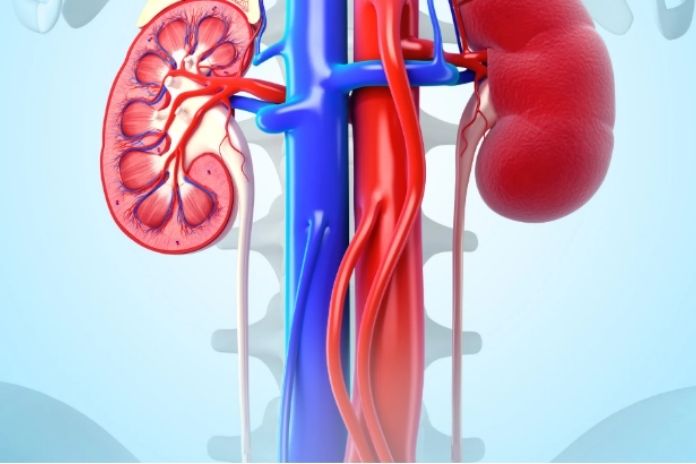
- Liver or kidney function. Loratadine is processed by the liver and excreted by the kidneys. If either system is compromised, drug levels may build up faster than normal.
- Other medications. Some drugs interact with loratadine or compete for the same metabolic pathways, potentially amplifying side effects.
- Sensitivity to antihistamines. Some people don’t tolerate them well and may feel off-balance or wired even at standard doses.
In healthy adults with no complicating factors, the liver will typically metabolize the extra loratadine without much difficulty. But for children, older adults, or anyone with liver disease, the effects of a double dose could be more noticeable.
One accidental double dose is not a crisis. But it’s not something to make a habit of – and if you’re in a higher-risk category, calling your doctor is always the right call.
Possible Side Effects of Taking Too Much Claritin

Common side effects
These mild symptoms may appear within a couple of hours of the second dose. They typically ease as your body processes the excess loratadine.
- Headache – the most commonly reported side effect, even at standard doses
- Dry mouth or dry throat – a result of reduced mucus production from blocked histamine
- Drowsiness – Claritin is marketed as non-drowsy, but some individuals still experience a dip in energy
- Dizziness or light-headedness – especially in people sensitive to antihistamines
- Increased heart rate (tachycardia) – the body’s response to elevated drug levels
Rare but serious reactions
These aren’t common, but they can happen – particularly in people with underlying health conditions or when very high doses are involved:
- Heart palpitations or a fluttering sensation
- Tremors or involuntary muscle twitching
- Anxiety, jitteriness, or uncomfortable restlessness
- Mental fog, confusion, or slowed thinking
- Seizures – extremely rare, and typically only seen with very large overdoses
If any of these show up – especially anything affecting your heart or mental clarity – don’t wait. Call your doctor or visit urgent care. It’s always better to get checked and be told you’re fine than to ignore a warning sign.
What to Do If You Accidentally Took Two Doses

First, don’t panic. Here’s what to do in the hours after the second dose.
Skip your next dose
Do not take any more Claritin or any other antihistamine for at least 24 hours from your last dose. That gives your body enough time to process the extra loratadine and return to normal.
Monitor how you feel
Pay attention to how your body responds over the next few hours, particularly during the 2–6 hour peak window. Most people notice nothing at all. If symptoms appear – even mild ones – keep track of them and use the checklist above to decide whether action is needed.
Drink water
Loratadine can cause mild dehydration and dry mouth. Drinking water won’t flush the medication out instantly, but it helps your body process it more comfortably and reduces the chance of headaches.
Avoid alcohol, other antihistamines, and stimulants
Until the extra Claritin clears your system, steer clear of alcohol, caffeine, other antihistamines, decongestants (especially those with pseudoephedrine), and sleeping aids. These can either amplify the sedating or stimulating effects of loratadine and make you feel worse.
Do not induce vomiting
A second 10 mg dose does not require emergency intervention in healthy adults. Unless specifically directed by a medical professional, do not attempt to induce vomiting or take other drastic measures.
As Dr. Meredith Goodwin, MD, FAAFP, notes: “If a healthy adult takes only a slightly higher dose of antihistamine, such as accidentally taking two pills instead of one, their symptoms may not be serious, or they may not have any symptoms.”
When to Call a Doctor or Go to the ER
Most cases of accidental double-dosing don’t require emergency care. However, get help if:
- You experience a rapid or irregular heartbeat
- You feel dizzy to the point of losing balance, or you faint
- You notice severe agitation, shaking, or tremors
- You took other medications that interact with Claritin
- A child or elderly person accidentally took two doses
- You have a heart condition and feel off in any way
- Symptoms escalate rather than ease after the 6-hour mark
Go to the ER immediately if you experience:
- Extreme lightheadedness or fainting
- Seizures
- Breathing difficulties
- A fast or erratic heartbeat that doesn’t settle
Don’t feel embarrassed about calling – many people double-dose by mistake, and medical professionals would always rather hear from you than not.
When to Call Poison Control
Contact Poison Control if you’re unsure about your symptoms or if more than two tablets were taken:
1-800-222-1222 – available 24 hours a day, 7 days a week, free and confidential.
Call if:
- Your symptoms are unusual or getting worse
- A child took an extra dose
- You combined Claritin with other medications and aren’t sure about interactions
- You’re not sure how many doses you’ve taken
Tips to Avoid Double-Dosing in the Future
Accidental double-doses typically happen during busy mornings, allergy flares, or late-night brain fog. A few simple habits can prevent it from happening again.
Use a medication tracker. Apps like Medisafe or CareClinic log each dose so you can check whether you’ve already taken it, rather than trying to remember.
Take it at the same time every day. Link your dose to something you already do – brushing your teeth, making coffee, or your morning skincare routine. Building it into an existing habit reduces the mental effort and the chance of a mistake.
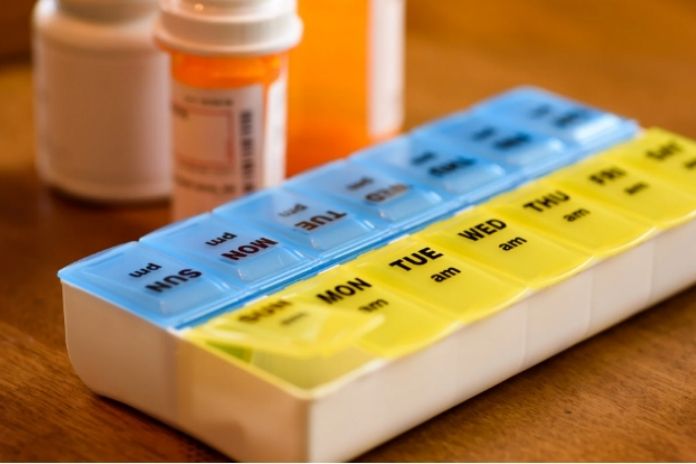
Use a pill organizer. Even if Claritin is your only daily medication, a simple weekly pill box makes it obvious at a glance whether today’s dose has been taken.
Set a visual cue. Leave the medication near something you touch every morning – your keys, coffee mug, or toothbrush. The physical reminder does the work for you.
Keep others in the loop. If a partner, parent, or caregiver also helps manage your medications, make sure you’re communicating about doses – especially during travel, illness, or schedule changes.
Read More: Medications That Don’t Mix Well With Coffee: What to Know & How to Stay Safe
Conclusion
Taking two doses of Claritin in 24 hours isn’t usually dangerous, but it isn’t something to ignore either. For most healthy adults, the body handles the extra loratadine without serious trouble. The key is knowing what to watch for, when to act, and how to avoid it happening again.
The hour-by-hour timeline and symptom checklist at the top of this article give you a clear picture of what’s happening in your body and what each symptom means. Keep them handy for the next 24 hours, then reset your routine and use it as a prompt to put a simple tracking habit in place.
When it comes to medication, a little structure goes a long way. And when in doubt – about your symptoms, about interactions, about anything – Poison Control is available 24/7 at 1-800-222-1222.

References
- Aungst, T. (n.d.). Claritin dosage guide: Claritin allergy relief for kids, adults. GoodRx.
- Goodwin, M. (n.d.). Faculty profile: Meredith Goodwin, MD, FAAFP. California Northstate University College of Medicine.
- Healthdirect Australia. (2025, November 6). Accidental overdose of medicine. Healthdirect.
- Johnson-Arbor, K. (n.d.). Loratadine (Claritin): Uses, dosage, and safety info. Poison Control.
- Mayo Clinic. (n.d.). Loratadine and pseudoephedrine (oral route).
- Medical News Today. (2020, April 21). Berry, J. Antihistamine overdose: Symptoms and what to do.
- NHS. (2025, April 29). Common questions about loratadine.
- Simons, F. E. R. (2004). H1 antihistamines: Current status and future directions. The World Allergy Organization Journal, 4(2), 30-36.
- Troutman, W. G. (n.d.). Double dosing: What to do if you take too much. Poison Control.
In this Article