













You bite the inside of your cheek, and a small sore forms. Annoying, sure, but you barely think about it. Two weeks later, it’s still there. Then a friend mentions a coworker who ignored something similar for months before getting checked, and what was diagnosed wasn’t a normal sore at all.
That kind of story is more common than most people realize, and it’s exactly why understanding oral cancer symptoms matters. Oral cancer can develop in the lips, tongue, cheeks, gums, floor of the mouth, hard palate, or other areas of the oral cavity, and because its early signs are frequently painless or easy to dismiss as routine irritation, diagnosis is often delayed.
Knowing which changes are normal and which deserve prompt evaluation can meaningfully improve the chances of early detection and successful treatment.
- Oral cancer often begins with subtle, painless symptoms such as a sore that won’t heal, unusual patches, or a persistent lump. Because early signs are easy to dismiss, routine dental exams play an important role in early detection.
- Persistent white, red, or mixed red-and-white patches deserve medical attention. Red and mixed-color lesions are particularly concerning because they are more likely to contain precancerous or cancerous cells.
- Tobacco use, heavy alcohol consumption, HPV infection, older age, and excessive sun exposure to the lips are among the most significant risk factors for oral cancer. Avoiding tobacco and limiting alcohol can substantially reduce risk.
- Any mouth sore, patch, lump, hoarseness, swallowing difficulty, or neck swelling that persists beyond two to three weeks should be evaluated by a healthcare professional. Early diagnosis greatly improves treatment options and outcomes.
What Is Oral Cancer?
Oral cancer can develop anywhere in the mouth, but it most commonly affects the tongue and floor of the mouth. It may also occur on the gums, inner cheeks, lips, or the hard palate. Because these areas play different roles in chewing, swallowing, and speech, early symptoms can vary depending on where the tumor develops.
The American Cancer Society reports that five-year survival rates for oral cavity cancers are substantially higher when the disease is caught at an early, localized stage compared to when it has spread to nearby tissue or distant sites. This stark difference is precisely why early signs of oral cancer deserve serious attention rather than being written off as minor irritation.
One of the biggest challenges is that early oral cancer is often painless and causes few noticeable symptoms. As a result, early detection frequently depends on a person’s awareness or a routine dental exam rather than obvious warning signs.
Most mouth sores, bumps, and areas of irritation are harmless and heal within one to two weeks. What raises concern is persistence. Any sore, patch, or unusual change that lasts longer than two to three weeks without improving, especially when there is no clear cause such as an injury, should be evaluated by a healthcare professional.
A Mouth Sore That Doesn’t Heal
Most common mouth ulcers, including canker sores, heal within seven to fourteen days as part of the body’s normal healing process. A sore that lingers well beyond this window, especially one that seems to be getting larger, more irritated, or more painful rather than improving, breaks from this expected healing pattern in a way that warrants attention. Experts stress that persistence is one of the most important warning signs.
Dr. Thomas Shellenberger notes that most minor mouth problems heal quickly and that any concerning symptom lasting more than a week or two should be evaluated by a healthcare professional. In practice, this means that a sore, patch, lump, or area of irritation that remains unchanged for two to three weeks, especially without an obvious cause such as an injury, warrants further examination rather than continued observation.
Concerning lesions can present as open ulcers with irregular, raised, or hardened borders, sores that bleed easily or spontaneously without an obvious cause, or areas that look distinctly different in texture or color from the surrounding tissue. Unlike a typical canker sore, which tends to be shallow and uniform in appearance, a cancerous lesion is more likely to have an uneven, asymmetrical quality to it.
Any mouth sore lasting longer than two to three weeks, particularly one that is enlarging, bleeding, or recurring in the same location, should prompt an appointment with a dentist or physician. Dentists are often the first to notice these changes during routine exams, which is one of several reasons regular dental checkups matter beyond cavity prevention.
White, Red, or Mixed-Colored Patches in the Mouth
Leukoplakia appears as thickened white patches on the gums, inner cheeks, or tongue. Often linked to chronic irritation, such as tobacco use, most cases are benign, but some can develop into cancer over time. Because appearance alone cannot reliably distinguish harmless lesions from precancerous or cancerous ones, professional evaluation and, in some cases, a biopsy may be necessary.
Erythroplakia, which presents as red patches in the mouth, is less common but generally more concerning. These lesions are significantly more likely than leukoplakia to contain precancerous or cancerous cells and should be evaluated promptly.
Research has consistently shown that erythroplakia, a red patch that develops in the mouth, carries a significantly higher risk of precancerous or cancerous changes than leukoplakia, a white patch. Studies have found that most erythroplakia lesions already contain dysplasia, carcinoma in situ, or invasive cancer at the time of diagnosis, which is why unexplained red patches in the mouth typically warrant prompt evaluation.
Mixed red-and-white patches, known as erythroleukoplakia, combine features of both leukoplakia and erythroplakia. Among these oral patch types, they are considered to carry the highest risk of harboring precancerous or cancerous changes. Any lesion with this appearance warrants prompt evaluation by a dental or medical professional, often including a biopsy to determine its nature.
Persistent Pain, Tenderness, or Burning in the Mouth
Temporary irritation from a hot beverage, a sharp piece of food, or minor trauma typically resolves within a few days. Persistent burning, tenderness, or discomfort that continues without an identifiable cause and doesn’t respond to basic measures like avoiding irritating foods is a different pattern that deserves closer attention.
Discomfort that worsens with chewing, swallowing, or speaking, particularly when localized to a single consistent area, can indicate that an underlying lesion is affecting the function of nearby tissue or muscle. This kind of functional pain is generally more concerning than diffuse, generalized mouth discomfort.
Pain alone is rarely diagnostic of anything specific, but pain combined with other symptoms, such as a visible lesion, a lump, or difficulty moving the tongue normally, significantly raises the overall level of concern. Evaluating symptoms in combination, rather than in isolation, is part of how clinicians assess risk.
A Lump, Thickened Area, or Unusual Growth
New lumps, thickened patches of tissue, or raised areas anywhere inside the mouth, including the cheeks, gums, or floor of the mouth, are changes worth tracking closely. Most lumps in the mouth are benign, often related to irritation, cysts, or minor salivary gland issues, but a new growth that persists or grows over several weeks needs professional assessment to rule out more serious causes.
A lump or area of thickened tissue on the lip or tongue that feels distinctly different from the surrounding tissue, whether firmer, more raised, or differently textured, is a meaningful symptom to bring up at a dental or medical visit, particularly if it has appeared without an obvious cause like a bite injury.
Distinguishing a benign cyst or irritation-related lump from one that requires further workup typically can’t be done through visual inspection alone. A clinician examining the lump in person, sometimes supplemented by imaging or biopsy, is necessary to determine whether it’s a routine finding or requires additional follow-up.
Read More: Early Signs of Oral Cancer You Shouldn’t Ignore
Difficulty Chewing, Swallowing, or Moving the Tongue

As lesions grow or affect deeper tissue, they can begin to interfere with the basic mechanics of eating, speaking, and swallowing. Tongue mobility, in particular, can become restricted if a tumor affects the muscles or connective tissue involved in tongue movement, which may show up as difficulty articulating certain sounds or maneuvering food while chewing.
These functional changes often develop slowly enough that they’re easy to adapt to without consciously registering them as a problem. A person might unconsciously start favoring one side of the mouth while chewing, or notice they’re having more trouble than usual with certain foods, without immediately connecting these adaptations to an underlying cause.
Persistent or progressively worsening difficulty with chewing, swallowing, or tongue movement, especially when it occurs alongside any of the other symptoms discussed here, is a combination that should prompt a medical evaluation rather than continued accommodation.
Ongoing Hoarseness or a Feeling That Something Is Stuck in the Throat
While these symptoms are more classically associated with oropharyngeal or laryngeal cancers, the oral cavity and throat are anatomically closely connected, and oral cancers, particularly those involving the back of the tongue or the oropharynx, can produce symptoms that overlap significantly with those of throat cancer.
A hoarse voice from a cold or temporary irritation typically resolves within one to two weeks. Hoarseness that persists well beyond this window without an obvious explanation, especially in someone with risk factors like tobacco use, is a symptom worth discussing with a physician.
A persistent sensation of something being lodged in the throat, ongoing throat discomfort, and difficulty swallowing that develops alongside hoarseness together paint a more concerning picture than any one symptom alone, and this combination is one that an ear, nose, and throat specialist is well-equipped to evaluate.
Loose Teeth or Changes in Denture Fit
Teeth becoming loose without an obvious dental cause, such as gum disease or trauma, can occasionally reflect changes happening in the underlying jawbone or gum tissue. While periodontal disease remains the far more common explanation for loose teeth, unexplained looseness deserves a thorough dental evaluation rather than a default assumption.
Structural changes to the jaw or surrounding gum tissue, including swelling or shifts in shape, can affect how well a denture fits, sometimes well before any other symptom becomes apparent. A denture that suddenly fits differently after years of consistent fit deserves a conversation with a dentist about what might be causing the change.
Persistent dental changes that occur despite good oral hygiene and routine dental care, particularly when paired with other symptoms on this list, should prompt a more detailed evaluation that goes beyond a standard cleaning and checkup.
Swollen Lymph Nodes in the Neck
The lymphatic system serves as a drainage and immune surveillance network throughout the body, and the lymph nodes in the neck are closely connected to the tissues of the mouth and throat. When cancer cells spread beyond their original site, the lymph nodes in the neck are often among the first places they travel to, which is why neck swelling is a meaningful symptom in the context of suspected oral cancer.
A persistent lump or area of swelling in the neck that feels firm and doesn’t go away after a few weeks is different from the temporary lymph node swelling that often accompanies a cold or minor infection. Painless, persistent swelling is generally considered more concerning than tender swelling that resolves alongside an obvious infection.
Any neck swelling or lump that persists beyond two to three weeks, particularly without an accompanying infection or illness that would explain it, should be evaluated by a physician, especially when it appears alongside any of the oral symptoms described earlier in this article.
Read More: Lymph Nodes Can Detect Recurrence Of Esophageal Cancer, New Study Suggests
Who Is The Most at Risk for Oral Cancer?

Tobacco use, including cigarettes, cigars, and smokeless tobacco products like chewing tobacco and snuff, remains one of the most significant risk factors for oral cancer. The Centers for Disease Control and Prevention states that tobacco use is linked to a substantial proportion of oral cavity and oropharyngeal cancer cases, with the carcinogens in tobacco products directly damaging the cells lining the mouth over repeated exposure.
Alcohol consumption independently increases oral cancer risk, and when combined with tobacco use, the two substances interact synergistically to elevate risk well beyond what either would produce alone. This combined effect is one of the most well-established findings in oral cancer epidemiology.
HPV, particularly HPV-16, has emerged as a significant and increasing cause of oropharyngeal cancers in recent decades. A study published in the Journal of Clinical Oncology documented a substantial rise in HPV-related oropharyngeal cancers, particularly among populations without traditional tobacco and alcohol risk factors, reshaping the understood risk profile for this category of cancer considerably.
Increasing age remains one of the strongest risk factors for oral cancer generally, with most diagnoses occurring in people over 55. Excessive, unprotected sun exposure to the lips raises the risk of lip cancer, similar to how sun exposure affects skin cancer risk elsewhere on the body. A personal history of previous head and neck cancers also increases the likelihood of a subsequent diagnosis, making ongoing surveillance particularly important for cancer survivors in this category.
What Happens During an Oral Cancer Evaluation?
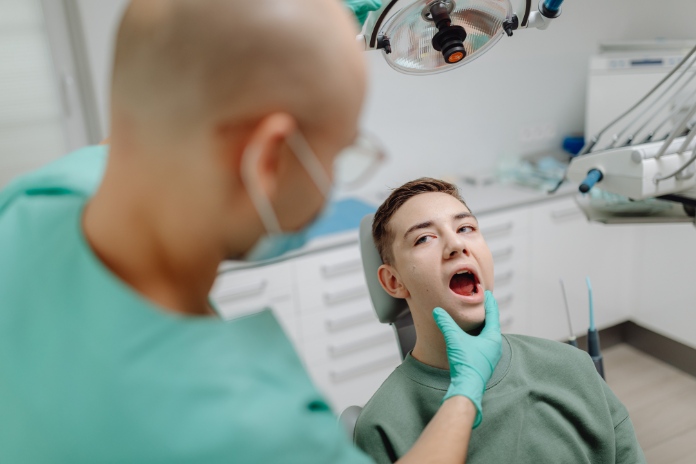
An oral cancer screening usually begins with a visual examination of the lips, gums, cheeks, tongue, roof, and floor of the mouth and throat. The clinician may also feel the jaw, neck, and oral tissues for lumps or other abnormalities. Because these screenings are often part of routine dental visits, regular checkups can play an important role in early detection.
If a suspicious lesion is found, imaging tests such as CT, MRI, or PET scans may be used to determine its size, depth, and whether it has spread to nearby tissues or lymph nodes. These scans provide information that cannot be obtained through a physical exam alone.
A biopsy remains the gold standard for diagnosing oral cancer. By examining a tissue sample under a microscope, clinicians can determine whether abnormal cells are present and whether cancer has developed. For this reason, persistent suspicious lesions generally require biopsy rather than continued observation.
How to Reduce Your Risk of Oral Cancer
Avoiding all forms of tobacco, including cigarettes, cigars, and smokeless tobacco, remains the most effective way to reduce the risk of oral cancer. Limiting alcohol consumption is also important, particularly because alcohol and tobacco together create a substantially greater risk than either exposure alone.
Regular dental checkups play a key role in early detection. Because oral cancer often develops without pain or obvious symptoms, dentists may identify suspicious changes during routine examinations before they become more advanced. Maintaining good oral hygiene through consistent brushing and flossing also supports healthy oral tissues and helps reduce chronic irritation.
HPV vaccination can help lower the risk of HPV-related cancers, including certain cancers of the throat and mouth. In addition, protecting the lips from excessive sun exposure by using SPF-containing lip balm and practicing sun safety may reduce the risk of lip cancer. A healthcare provider can offer guidance on vaccination eligibility and other individualized prevention strategies.
Read More: 9 Daily Habits That May Reduce Cancer Risk
The Takeaway
Oral cancer often begins with symptoms that are easy to dismiss: a sore that lingers a bit too long, a patch that looks slightly different, a lump that wasn’t there before. Many of these early signs are painless, which makes regular self-awareness and consistent dental examinations genuinely important rather than just routine advice.
Not every mouth abnormality is cancer, and the vast majority of sores, bumps, and patches turn out to be benign. But oral cancer symptoms that persist for more than two to three weeks deserve professional evaluation rather than continued waiting. Early detection consistently leads to better treatment options and outcomes, making prompt attention to these warning signs one of the most practical steps you can take for your long-term health.
References
- American Cancer Society. (n.d.). Survival rates for oral cavity and oropharyngeal cancer.
- Banner Health. (2023, April 20). Why you should never ignore that mouth sore that won’t go away.
- Centers for Disease Control and Prevention. (n.d.). Cancer.
- Chaturvedi, A. K., Engels, E. A., Pfeiffer, R. M., Hernandez, B. Y., Xiao, W., Kim, E., Jiang, B., Goodman, M. T., Sibug-Saber, M., Cozen, W., Liu, L., Lynch, C. F., Wentzensen, N., Jordan, R. C. K., Altekruse, S., Anderson, W. F., & Gillison, M. L. (2011). Human papillomavirus and rising oropharyngeal cancer incidence in the United States. Journal of Clinical Oncology, 29(32), 4294–4301.
- National Institute of Dental and Craniofacial Research. (n.d.). Oral cancer.
- Rajendran, R., & Sivapathasundharam, B. (2023). Oral potentially malignant disorders and oral cancer: Current concepts and management. Journal of Oral and Maxillofacial Pathology, 27(Suppl 2), S171–S180.
In this Article